


Russian jet-powered drones attacked civilian and scientific facilities in Kyiv, resulting in deaths and injuries. The strike on the National Academy of Sciences of Ukraine building drew reactions from American academies, as well as EU and French leadership. Meanwhile, Poland is preparing to expand cooperation on Patriot missile production, Britain is maintaining its policy of limiting direct contact with Russian officials, and Russia continues to replace Ukrainian institutions with its own administrative system in occupied territories.
Russian jet-powered drones attacked Kyiv during the day: casualties reported
On September 28, Kyiv was subjected to a massive attack by Russian jet-powered drones that struck the city center. Damaged facilities included the building of the National Academy of Sciences of Ukraine and the Dobrobut medical center. The series of strikes left at least two people dead and 24 others injured, including three children. Six medical workers were among the injured at the medical center.
The Washington Post notes that in recent weeks, Russia has been using faster and more technologically advanced drones against Kyiv, while Ukraine currently lacks a sufficient number of new interceptors to counter them. The strikes also targeted food and medical supply warehouses, gas stations, and data centers. The Kremlin stated that Ukraine is allegedly "paying the price" for attacks on Russia, while Russian forces "strike targets they deem appropriate." Meanwhile, Volodymyr Zelenskyy called on partners to provide more interception capabilities and stated: "Every Russian terrorist act results in casualties that could have been avoided had the pressure on Russia been total."
US Academies, Macron, and von der Leyen Condemn Russian Strike on the National Academy of Sciences of Ukraine
The presidents of three US national academies—Sciences, Engineering, and Medicine—condemned the Russian drone strike on the building of the National Academy of Sciences of Ukraine in Kyiv on September 28. The American academies announced their support for the Ukrainian scientific community and pledged to continue assisting Ukrainian researchers. "We condemn this direct attack on the country's scientific infrastructure," the US National Academy of Sciences stated. The statement also noted that since the start of the full-scale war, the American academies, together with international scientific and charitable organizations, have been supporting researchers working in Ukraine or those forced to leave. "We know that the Ukrainian scientific community is strong, and we will continue to support it," the statement read.
The attack was also condemned by French President Emmanuel Macron and European Commission President Ursula von der Leyen. Von der Leyen stated that "science has become a target for Russia" and expressed support for rescue workers and the families of the victims. "These strikes are further evidence of the Russian regime’s hostile disregard for science and truth. They add to the barbarism of the daily attacks targeting peaceful Ukrainians," Macron wrote. European Commissioner for Startups, Research, and Innovation Ekaterina Zaharieva also stated: "Science is about creating the future, not destruction." In the US, Congressman Don Bacon reacted to the attack, while the Ukrainian Studies Centre at the University of Cambridge described the Presidium building of the National Academy of Sciences of Ukraine as a hub of Ukrainian science, knowledge, and intellectual life.
Poland Ready to Host Patriot Missile Production Plant
Poland is prepared to consider hosting a plant for the production of missiles for Patriot air defense systems on its territory, particularly if Ukraine obtains a US license for their manufacture. This was stated by Poland’s Deputy Minister of National Defence, Magdalena Sobkowiak-Charnecka. According to her, the Polish side proposes locating the facility within its borders to ensure production takes place in a relatively safe zone. She also noted that Poland is already working on the possibility of establishing a service center for Patriot systems and the prospect of launching the production of interceptor missiles.
"On Friday, Ukrainian President Volodymyr Zelenskyy announced that Donald Trump had made a 'final decision' to grant Ukraine licenses for the production of Patriot missiles." "We shall see if this happens... If there are plans to build such a plant in Ukraine, we propose building it in Poland instead, so that it is located in a so-called safe zone," said Sobkowiak-Czarnecka.
She added that Poland's bid to host a service center and future missile production facilities is independent of the decision regarding the Ukrainian license. According to her, even if Ukraine receives authorization to manufacture Patriot missiles, this will not halt Poland's efforts to develop its own production capabilities. Poland is also considering cooperation with Ukraine on the production of interceptor missiles for these systems.
Britain will not change its policy on direct contact with Russian officials following Putin's invitation to the G20
The UK does not plan to alter its policy regarding direct contact with Russian officials after US President Donald Trump invited Putin to the G20 summit in Miami this December. UK Foreign Secretary Ed Miliband stated that the decision to invite the Russian president is one for Washington to make independently. At the same time, London does not intend to adopt this approach itself next year.
"We have a long-standing policy of avoiding direct contact at my level with the Russian side since the invasion of Ukraine. We do not intend to change that policy," Miliband said.
The minister stated, that the British position is partly linked to demonstrating solidarity with Ukraine. However, he emphasized that different nations may make different decisions regarding engagement with Russia. "Different countries make different decisions on these matters," Miliband said. He also confirmed that Prime Minister Andy Burnham would attend the G20 summit in Miami in December. Meanwhile, the British minister declined to comment on the list of invitees for the meeting.
Russia is establishing a governance system in occupied Ukrainian territories and altering their institutions
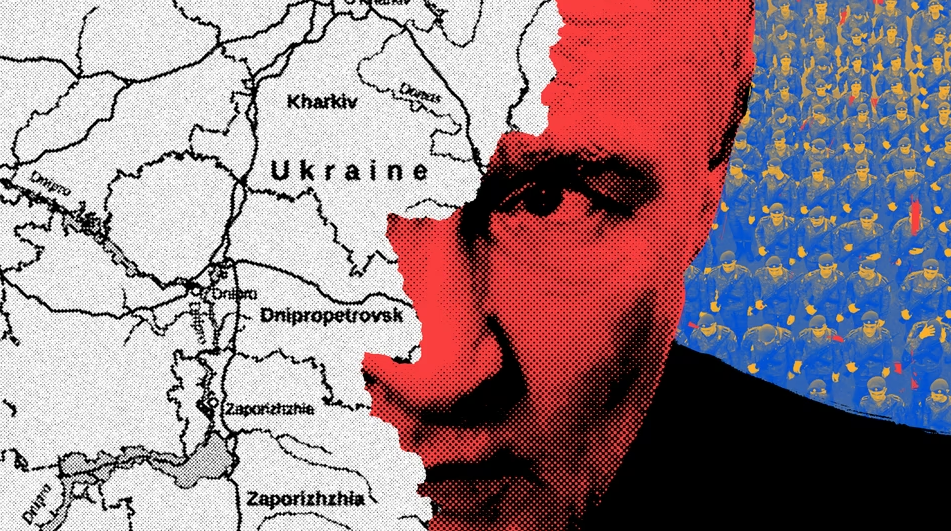
Russia is gradually building a governance system in the occupied territories of Ukraine that encompasses the administrative, legal, economic, educational, and information sectors. This concerns parts of the Donetsk, Luhansk, Zaporizhzhia, and Kherson regions, where Russian structures are replacing Ukrainian institutions. Russian authorities are implementing their own legislation, documentation, taxation systems, migration and law enforcement mechanisms, and educational curricula. According to Atlantic, on June 13, Putin told Russian officials that Moscow’s objective is to integrate these territories into a unified legal, economic, educational, cultural, and information space with Russia by 2030.
A key instrument of control remains the requirement to obtain Russian passports, which are necessary to access certain social services, employment, pensions, and education. The report also details the seizure of Ukrainian real estate, restrictions on Ukrainian media and communications, the reorientation of industrial enterprises, and the use of infrastructure for Russian military needs. A separate area of focus involves children: Russian educational curricula are being introduced in the occupied territories, and youth organizations focused on military-patriotic training are expanding their activities. Data cited in the report indicate that between February 2022 and the end of 2025, Russian forces forcibly mobilized approximately 50,000 Ukrainians in the occupied territories, while since 2024, Russian authorities have confiscated—or designated for confiscation—at least 34,000 properties belonging to Ukrainian citizens.
The political review is based on a personal special issue of VM resident Orest Deychakivsky.
Photo: Illustration by Adam Maida. Source: Sefa Karacan / Anadolu / Getty; Getty; Wikimedia
Author: Danylo Pievchev