


Sen. Lindsey O. Graham (R-S.C.), had spent more than a year pressing Congress to adopt sweeping new sanctions against Russia. Weeks after his death in July, the Senate renamed the legislation in his honor and passed it 86-11, an overwhelming bipartisan vote that sent the measure to the House.
On Aug. 10, Rep. Michael McCaul (R-Tex.), and Rep. Steny Hoyer (D-Md)., introduced the House version of the Lindsey O. Graham Sanctioning Russia and Iran Act with a bipartisan group of lawmakers. The legislation was identical to the measure approved by the Senate.
More than a month later, on Sept. 16, the House passed the bill 262-159. Shortly after the vote, standing outside the Capitol, McCaul invoked Graham and the senator’s final push to move the legislation through Congress.
“What a great day for Ukraine. What a great day for freedom and democracy,” McCaul said. “I know Lindsey Graham, my friend and mentor, is shining down upon us.”

McCaul recalled that he and Graham had both been in Ukraine shortly before the senator’s death and said Graham had described the moment as a rare opportunity to help bring the war to an end.
“He said this bill would be his greatest legislative achievement in his entire career,” McCaul said. “And I wish he was here with us today, but I’m proud to announce that the bill passed by a vote of 262 to 159.”
For Graham’s sister, Sen. Darline Graham (R-S.C.), the vote also carried the weight of her brother’s legacy.
“A critical piece of legislation that will assist President Trump in his noble efforts to bring the Russia-Ukraine war to a close and allows President Trump to continue to apply economic pressure to the Iranian regime,” Graham said.

She said her brother had worked on the measure for well over a year and believed its economic pressure could force Moscow and countries buying Russian energy to reconsider their calculations.
“Lindsey believed this bill, which he worked on for well over a year, would help achieve that goal through squeezing Putin economically and forcing his customers to reevaluate the relationship with Russia,” Graham said. “I am confident that the sanctions and other measures contained in this bill will do that and further increase the president’s negotiating leverage to secure a lasting peace.”
The White House had given Republicans political cover to support the Russia and Iran Sanction Act.
Democrats Split Over the Sanctions Act
But Democrats remained divided. Before the vote, House Minority Leader Hakeem Jeffries (D-N.Y.) and Foreign Affairs Committee ranking Democrat Gregory Meeks (D-N.Y.) opposed the Senate version, arguing that it gave President Trump overly broad tariff and waiver authority.
Rep. Gregory W. Meeks (D-N.Y.), the top Democrat on the House Foreign Affairs Committee, and Rep. Don Beyer (D-Va.) warned that they had “fundamental concerns” about the bill’s tariff provisions. The measure, they said, granted Trump “sweeping new tariff authorities that the president could weaponize with abandon.”
Other Democrats argued that those concerns should not prevent Congress from acting against Russia. Among them was Rep. Steny Hoyer (D-Md.), who joined McCaul in introducing the House version. After the Sept. 16 vote, Hoyer said he had spent eight hours that day speaking with fellow Democrats as he tried to persuade them that, despite reservations within the party, the legislation was “critical.”
But 58 Democrats supported the bill in the House final vote on Sept. 16, 2026, helping provide the votes needed for its passage.
“The no votes were not no votes on Ukraine,” Hoyer said. “Today was a statement by the Congress of the United States in a bipartisan way that that should not stand and that the voice of America spoke through the Congress of the United States was to tell Russia: no more. No more standing by and rationalizing your behavior. No more allowing Ukrainians to be killed every night.”
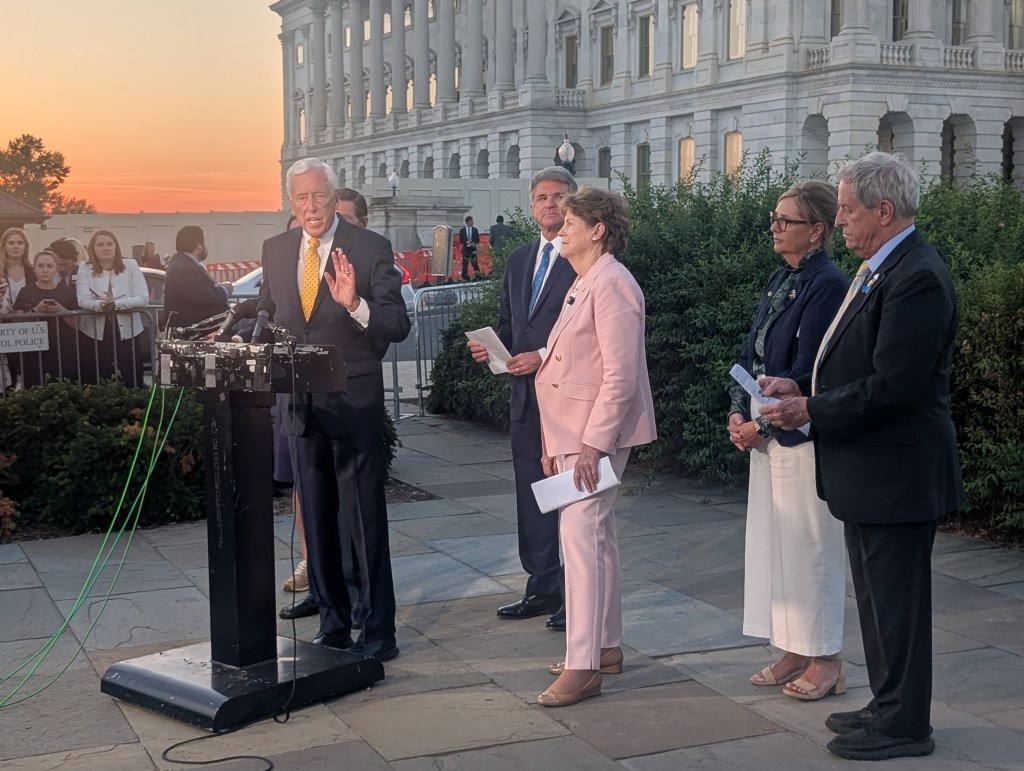
Hoyer argued that Congress needed to send an unmistakable message to Moscow.
“We’re against the action you’ve taken,” he said. “And to say to Ukraine, we’re your friends. We are for you and we will stand with you.”

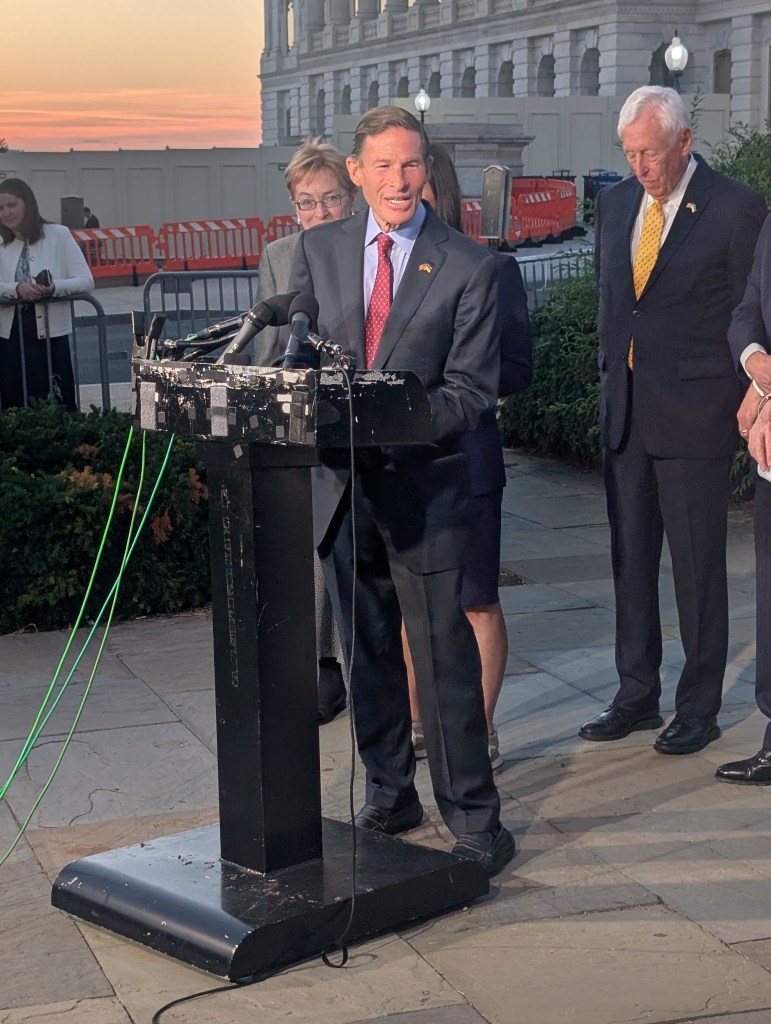
For Sen. Richard Blumenthal (D-Conn.), Graham’s longtime partner on the sanctions legislation, the House vote was also a deeply personal moment.
“This is a big friggin’ deal. We did good,” Blumenthal said, recalling the phrase as among Graham’s last words to him. “Nobody can fill his shoes, but Lindsey’s spirit is with us today. And I don’t know what he’s drinking up there, but I promise you, it is something good.”
What the Law Is About
- Sanctions on Russia
The law significantly expands U.S. economic pressure on Russia. It requires sanctions on senior Russian officials, including “any other senior official of the Government of the Russian Federation,” as well as oligarchs who “have not demonstrated opposition to the Russian Federation's war on Ukraine” and continue to “benefit from an association with” the Kremlin.
It also targets foreign actors providing “goods or services relating to the defense industrial base of the Russian Federation” and vessels used to move Russian energy and other goods “for the purpose of circumventing sanctions” - Russia’s so-called shadow fleet.
For those targeted, the law directs the president to block property and “prohibit all transactions” involving property or interests in property subject to U.S. jurisdiction.
Rep. Michael McCaul (R-Tex.) described the bill as a means of increasing economic pressure on Russia and pushing Moscow toward negotiations.
“This bill will cripple Russia’s war machine and finally bring Putin to the negotiating table,” McCaul said.
- Tariffs on Buyers of Russian Oil and Gas
The legislation also creates powerful new tariff tools. Within 30 days of enactment, the president must raise tariffs on goods imported directly from Russia to a rate of up to 500 percent.
The law directly requires the president to impose specified sanctions, repeatedly using the mandatory language “the President shall” rather than merely authorizing or urging action and sets clear deadlines for implementation. Many of its principal sanctions and tariff provisions must take effect within 30 days.
It also requires tariffs of more than zero and up to 100 percent on goods from countries that meet specified criteria, including countries among the five largest buyers of Russian crude oil or natural gas that continue making new purchases, as well as leading facilitators of Russian oil sanctions evasion.
The bill does not name specific countries, but its secondary-tariff provisions target countries that meet defined criteria based on their purchases of Russian oil and gas. In practice, much of the debate has centered on China and India, two of the largest buyers of Russian energy.
Sen. Richard Blumenthal (D-Conn.) made that point explicitly after the House vote.
“China and India, to you, you better clean up your act, buy your oil and gas somewhere else,” he said.
At the same time, the law provides an exception for countries whose imports of Russian natural gas account for less than 15 percent of Russia’s total annual natural-gas exports and that are taking significant steps to reduce those imports further.
- President’s waiver
At the same time, the law preserves substantial presidential discretion. The president may waive sanctions, restrictions or tariffs if he determines that doing so is in the national interests of the United States. Such a waiver requires written notification to Congress and an explanation of the basis for the decision.
President Trump already had broad sanctions authority under existing law through executive action. What changes under the new law is that Congress has placed additional sanctions requirements and restrictions directly into statute. The policy therefore no longer depends solely on executive orders but carries the force of legislation approved by Congress and signed by the president.
Congress also retains an oversight role. The law requires congressional notification for waivers and establishes a separate review process if the president seeks to terminate certain sanctions, restrictions or tariffs. Lawmakers can also use hearings, reporting requirements and other oversight tools to examine how the administration implements the legislation.
Ukraine welcomes the law and pushes for implementation
During his visit to New York for the U.N. General Assembly, President Volodymyr Zelenskyy raised the new sanctions law in meetings with both senators and House members, thanking lawmakers for supporting it and calling its passage “absolutely the right step.”
After meeting with President Donald Trump, Zelenskyy also pointed to the law as a potential tool if diplomacy stalled.
“Sanctions against Russia and those helping it make money must be implemented,” Zelenskyy said. “I’m very thankful to America for the support. I said that, of course, if nobody sees the negotiations (moving forward), I hope that the president will use this instrument.”
What’s next
Republicans and Democrats who backed the measure acknowledged that it was not perfect, but argued that waiting for an ideal bill would mean losing an opportunity to increase pressure on Russia now.
“We should never let perfection be the enemy of good,” said Rep. Don Bacon (R-Neb.).
The next question is how Trump will use the tools Congress has given him. The law allows the president to issue waivers, including as part of diplomatic negotiations, but requires him to notify Congress and justify those decisions. Lawmakers will retain oversight as the administration implements the measure, giving Congress an opening to challenge waivers or other decisions it believes depart from the intent of the law.
Rep. Marcy Kaptur (D-Ohio) acknowledged concerns within her party that Trump could misuse the broad authority provided by the law, particularly its tariff provisions. But she argued that Congress had given the administration a new economic tool to pressure Russia and would remain involved in ensuring that it was used.
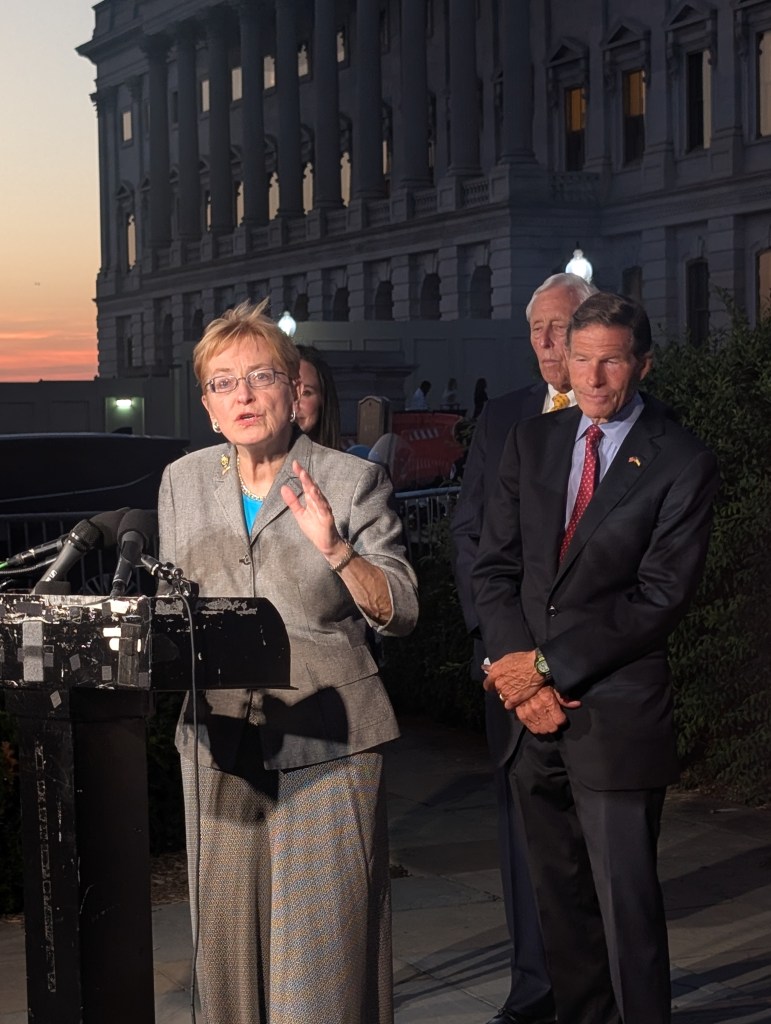
“There’s always room for abuse,” Kaptur said. “But we have equipped the administration here in Washington with new powers to help bring this war to an end by cutting off the source of funds for Russia.”
She was also emphatic about Congress’s role after passage.
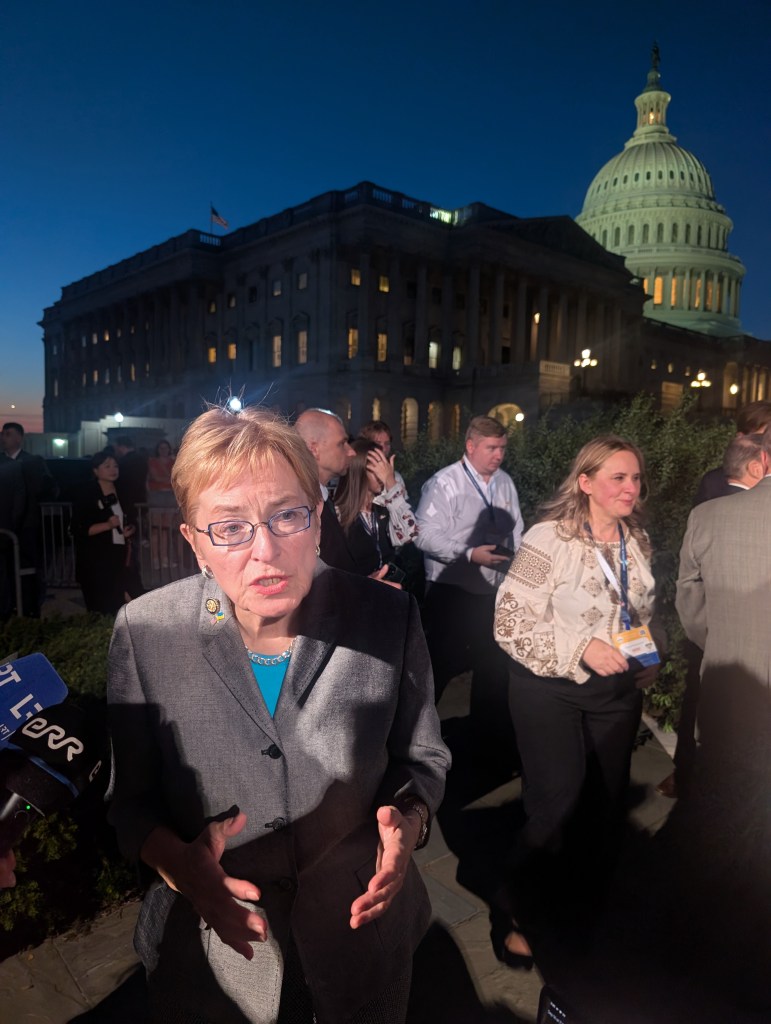
“This president may have two years left in his term, but the Congress will endure,” Kaptur said. “We will force the administration to apply the terms of this new law.”
“He could decide to waive it for negotiations,” Bacon said. “But I think it’s clear that Congress did the right thing. We know where we stand. If the president doesn’t do the right thing, well, that’s going to be in the history books on him.”
Bacon, who had returned from Ukraine days earlier, described the legislation as a starting point rather than a solution. He pointed to continued Russian strikes on Ukrainian cities and civilian infrastructure, including grocery stores, gas stations and shopping centers, and said the United States and its allies needed to do more to help Ukraine defend itself, particularly against ballistic missile attacks.
“Sanctions are a good start, but I think it’s the minimum,” he said in an interview at the Ukrainian Embassy’s Independence Day reception. “There should be so much more that we should be doing to help Ukraine win.”
Author of article and photos: Andew Getman
