


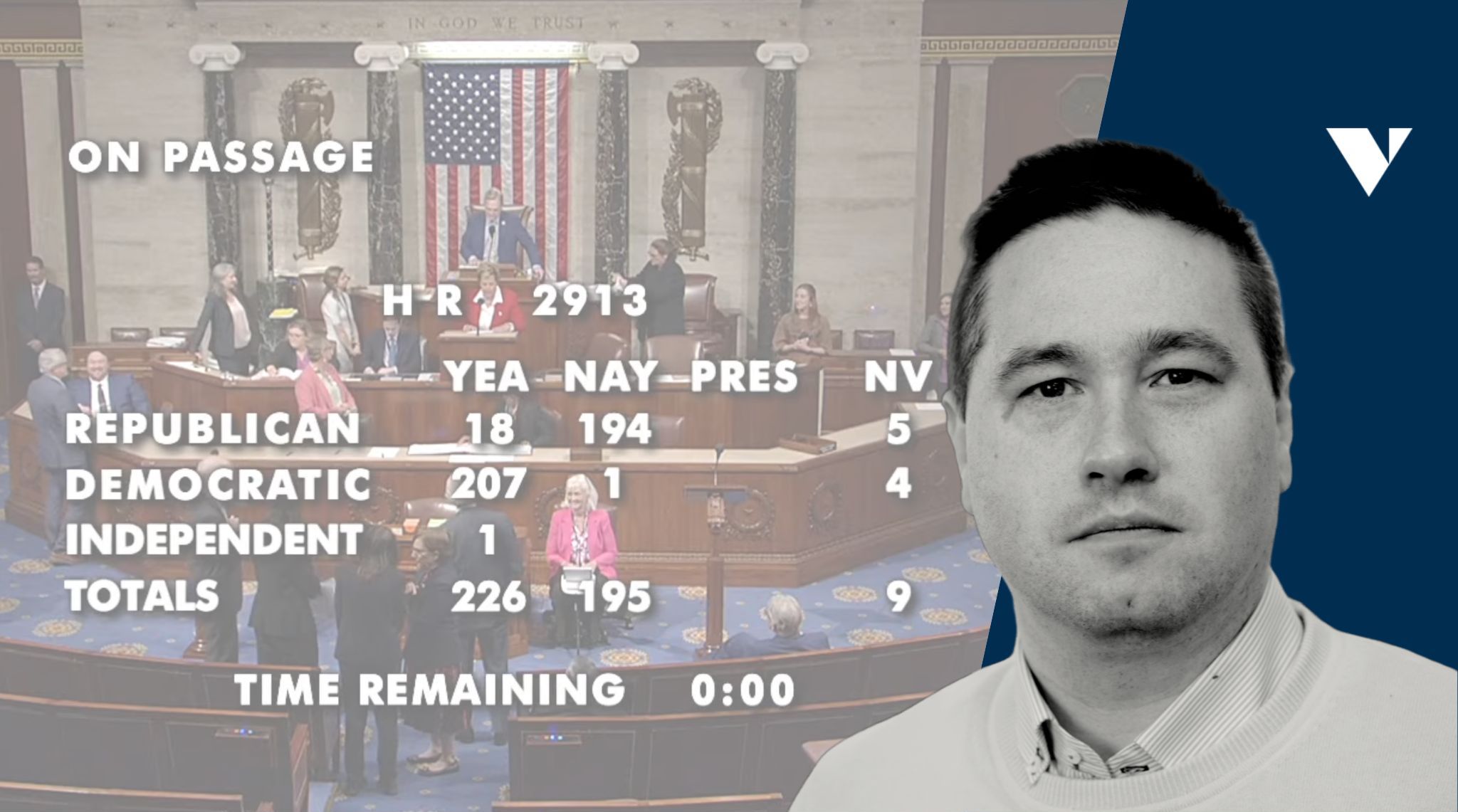
The House of Representatives approved the Ukraine Support Act on June 4, sending the legislation to the Senate after a 226-to-195 vote.
The outcome underscored the durability of bipartisan support for Ukraine in Congress, with 18 Republicans joining Democrats to push the measure across the finish line. Their votes ultimately proved decisive.
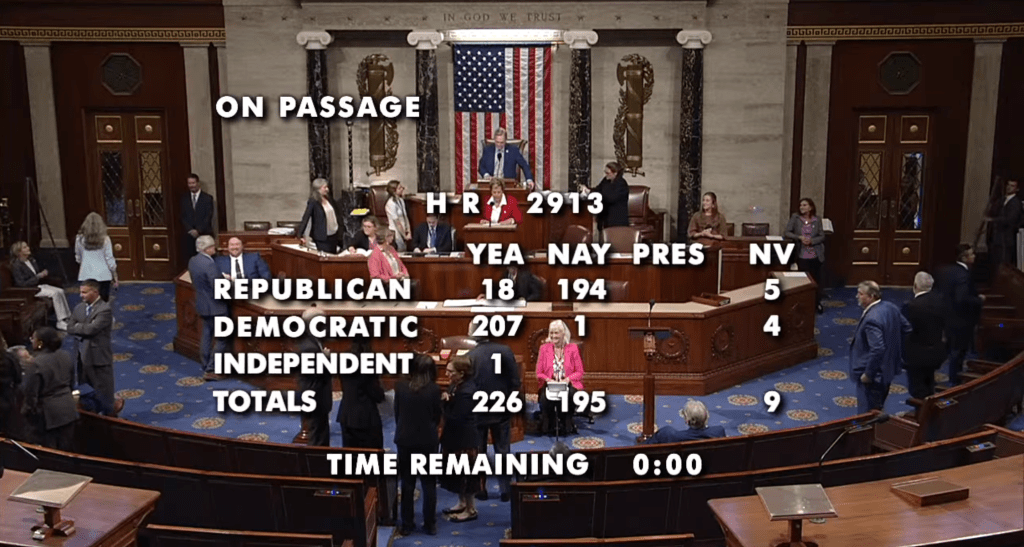
The vote marked the first major Ukraine aid package approved by the House since President Donald Trump returned to the White House.
Its passage came despite opposition from House Republican leaders and the White House. Reuters reported that Republican leadership had largely embraced the administration's view that policy on sanctions against Russia should remain closely coordinated with the president.
That is why Democrats ultimately turned to a discharge petition — a rarely used procedural tool that allows lawmakers to bypass House leadership and force a vote without the Speaker's approval. The Ukraine Support Act was introduced by Rep. Gregory Meeks (D-N.Y.) on April 14, 2025, launching what would become a year-long effort to bring the legislation to the House floor. Democrats alone did not have enough support to reach the required 218 signatures. Two Republicans — Reps. Don Bacon of Nebraska and Brian Fitzpatrick of Pennsylvania — joined the effort, while the final, decisive signature came from California independent Rep. Kevin Kiley. Once the petition reached the required threshold, House leaders moved quickly, scheduling a vote for June 4.
How Bipartisan Support Secured Passage
The vote came late in the day, and the outcome was decisive. When the House clerk announced the final tally, supporters of the Ukraine Support Act had secured a comfortable majority. Few captured the mood in the chamber better than veteran Maryland Democrat Steny Hoyer, who distilled the significance of the moment into a few brief remarks:
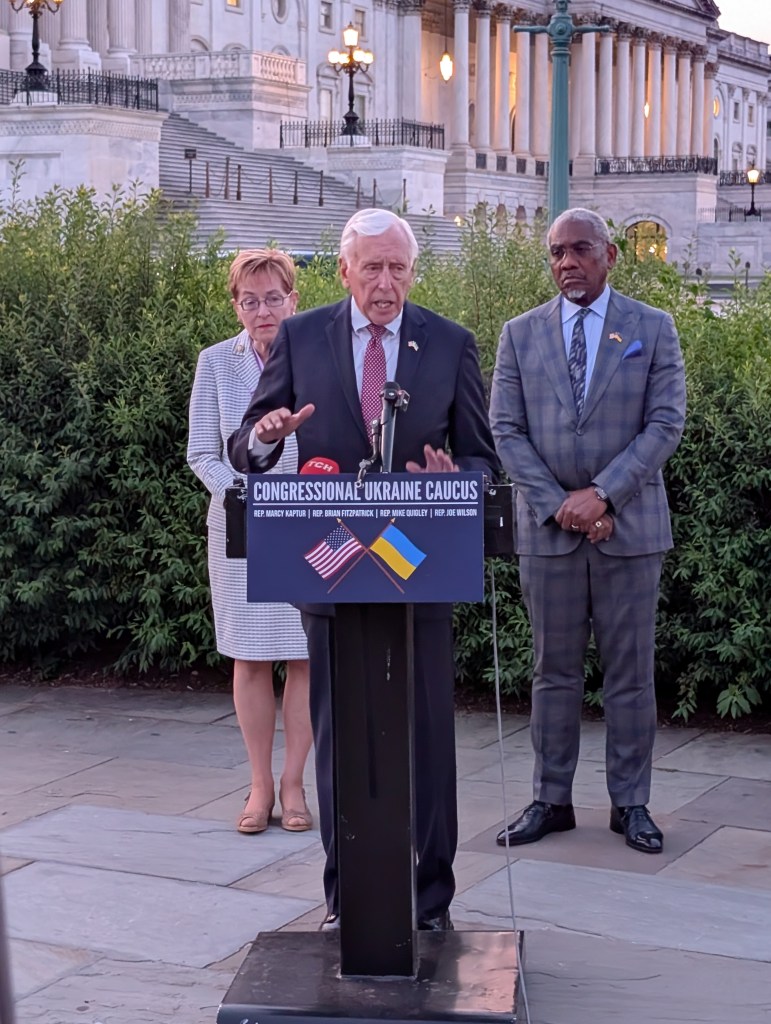
"This is a good day. It's a good day for Ukraine. It's a good day for America. It's a good day for those who oppose tyranny," he said.
Rep. Gregory Meeks (D-N.Y.) appeared to savor the victory after months of work on the legislation.
“This is not only about Ukraine. For 14 months, we've been working hard together to advance this legislation, which is about defending who we are as Americans and the principles that have defined us as the world's superpower,” Meeks said.
Meeks argued that Congress acted because Washington had not done enough in recent months to support Ukraine.
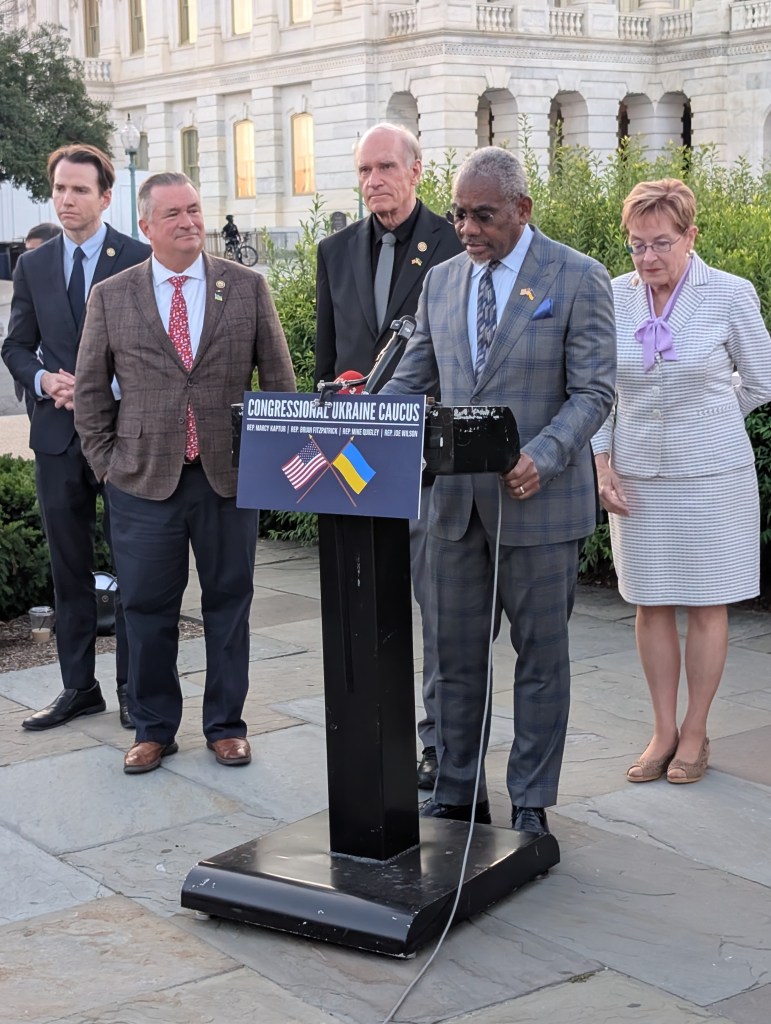
“For the last 18 months, Russia has bombed and killed with impunity. But we say no more,” Meeks said. “The House took action today to live up to the commitment the United States has made since the start of this war that we will support the brave Ukrainians fighting for their future and hold Russia accountable.”
Rep. Don Bacon (R-Neb.) explained why he chose to break with Republican leadership and vote in favor of the Ukraine Support Act.
“I got involved in politics when Ronald Reagan ran for president in 1976,” Bacon said. “I simply asked myself: What would Ronald Reagan have done? He would have voted to stand by Ukraine.”

Bacon argued that the vote was not simply about Ukraine, but about showing that support for Kyiv still commands bipartisan backing on Capitol Hill. He cast the debate in historical terms, comparing it to the choice Western democracies faced before World War II between resisting aggression and pursuing appeasement.
“It was important to demonstrate that bipartisan support exists here,” Bacon said. “This is a Churchill-versus-Chamberlain moment. Tonight, we decided to be Churchill, to stand on the right side of history and stand for freedom.”
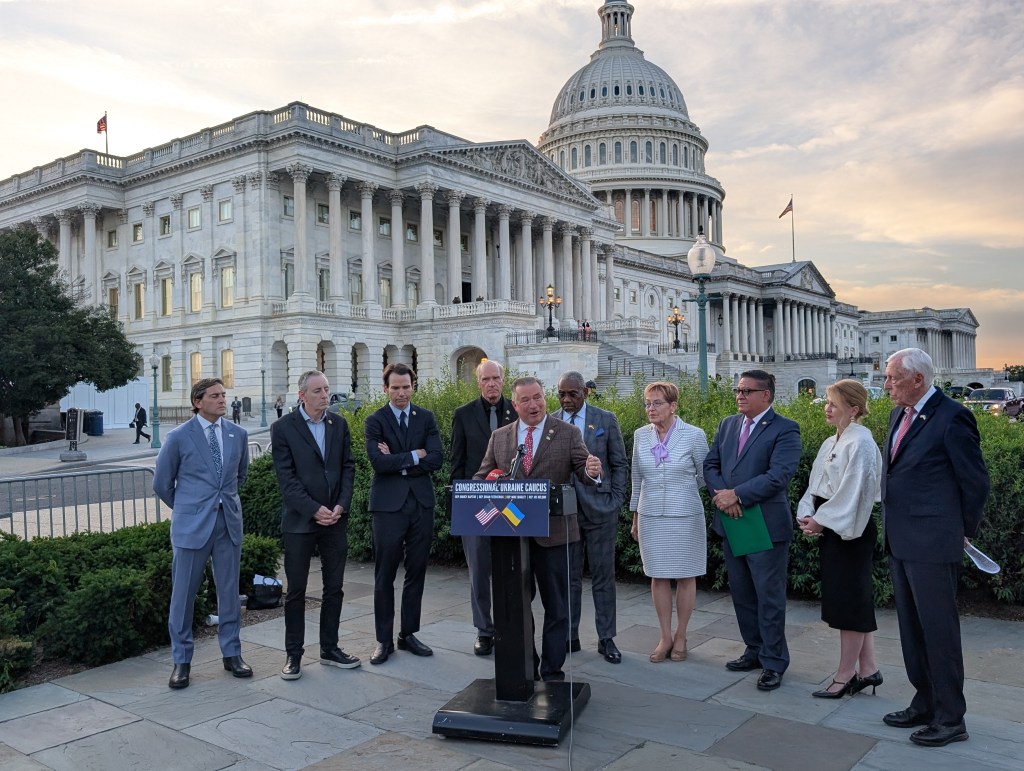
What the Ukraine Support Act Would Do
The Ukraine Support Act would provide roughly $800 million in direct assistance to Ukraine and authorize up to $8 billion in loans for weapons purchases. The legislation would also continue funding through the Ukraine Security Assistance Initiative (USAI), support efforts to return Ukrainian children forcibly deported by Russia and strengthen U.S.-Ukrainian cooperation on reconstruction.
A substantial portion of the bill focuses on sanctions. It would impose additional restrictions on Russian banks, the oil sector, the state nuclear corporation Rosatom, Russia's shadow fleet and companies helping Moscow circumvent existing sanctions. The legislation would also expand export controls on dual-use technologies.
Ukraine's ambassador to the United States, Olga Stefanishyna, said the legislation would strengthen both sanctions pressure on Russia and long-term security assistance for Ukraine.
“The legislation mandates sanctions against Russian companies, individuals and political figures who bear personal responsibility for the aggression,” Olga Stefanishyna said. “It also contains important provisions on defense support, including access to defense loans, weapons procurement opportunities and the regular inclusion of Ukraine-related funding in the U.S. defense budget. These provisions are important not only because of the funding involved, but because they place key elements of support for Ukraine into U.S. law.”
What Happens Next?
Republican Rep. Brian Fitzpatrick of Pennsylvania, one of the bill's most vocal supporters, urged Ukraine advocates not to view the House vote as the end of the fight.

“What happens tonight tonight is the beginning, not the end,” Fitzpatrick said. “We are not going to sit back and say, ‘Okay, our job is done.’ We are going to the Senate. We will knock on doors, hold press conferences on the Senate side to get them to do the right thing like the House did tonight.”
The legislation now heads to the Senate, where its future remains uncertain. Lawmakers in the upper chamber could approve the House-passed measure, rewrite key provisions or craft their own version. Republicans control the Senate and have shown little willingness to break publicly with the White House. Even if the bill ultimately passes both chambers, it would still require President Donald Trump's signature. Trump could sign the measure into law or reject it with a veto.
Supporters of the legislation acknowledge that its path forward remains uncertain. Much may depend on President Donald Trump, whose position on the bill remains the single biggest unknown.
“You never know with this president,” said Rep. Salud Carbajal (D-Calif.) when asked whether the Ukraine Support Act could survive the Senate and reach President Donald Trump's desk. “One day he has a certain disposition and another day he's not.”
Arguments Against the Bill
Senate Republican leaders have signaled that any new sanctions against Russia should be coordinated with the Trump administration rather than advanced through legislation passed by the House, according to Reuters.
That argument was echoed by Rep. Brian Mast (R-Fla.), chairman of the House Foreign Affairs Committee, who said he viewed the Ukraine Support Act less as a serious foreign-policy initiative than as a political effort aimed at President Donald Trump. Mast argued that the legislation was outdated and no longer reflected current realities.

“This bill, in my opinion, is a cudgel to fight against President Trump,” Mast said. This bill, in my opinion, is an unserious bill that was crafted basically a year and a half ago.”
Rep. French Hill (R-Ark.), chairman of the House Financial Services Committee and a longtime supporter of Ukraine, said his opposition to the Ukraine Support Act stemmed not from disagreement with aiding Kyiv but from concerns about the legislation itself.
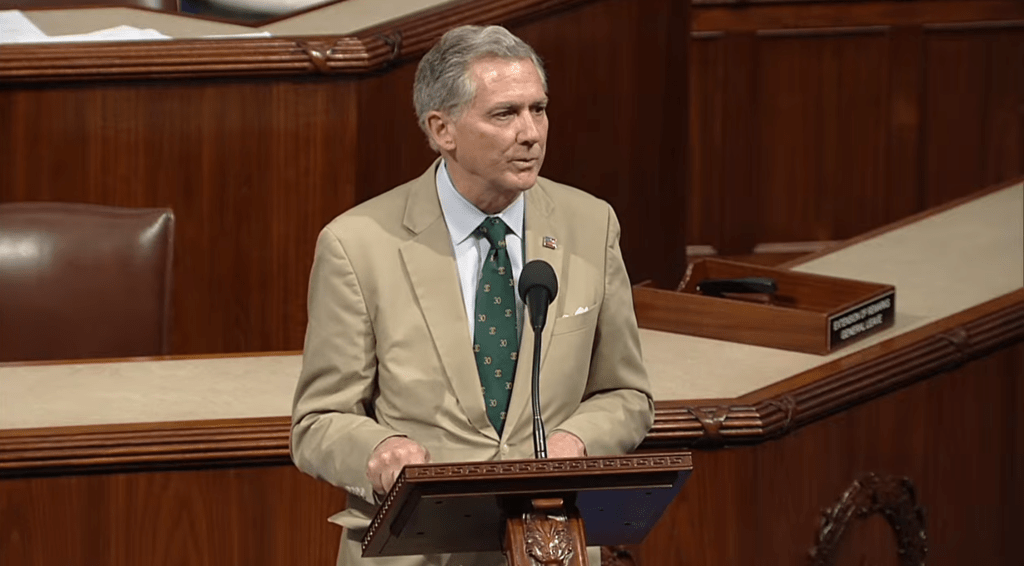
“There are no people on this floor of the House who support Putin. There are no people on the floor of the House tonight who support Russia's invasion of Ukraine.,” Hill said. “But the House was confronted with a flawed and outdated measure.”
According to Hill, the bill would authorize less security assistance for Ukraine than Congress has already approved as part of this year's defense budget. He also warned that some provisions could create unintended incentives affecting defense spending among NATO allies.
Despite near-unanimous Democratic support, the vote was not entirely unanimous. Rep. Ilhan Omar (D-Minn.) was the only Democrat to oppose final passage of the Ukraine Support Act.
In a Facebook post following the vote, Omar said she continues to support Ukraine and condemn Russia's invasion but could not support the bill's sanctions provisions.

“I have always, and will continue, to stand with the Ukrainian people and unequivocally condemn Putin's illegal and brutal invasion. I voted against the Ukraine Support Act because it included broad economic sanctions. These sanctions fail to achieve their stated goals and cause real suffering for ordinary people,” Omar wrote.
Omar also said she opposes policies that, in her view, punish ordinary civilians for decisions made by their country's political leadership. Her opposition emerged only at the final stage of the legislative process.
Omar supported procedural votes that allowed the Ukraine Support Act to advance through the House but ultimately became the lone Democrat to vote against final passage.
A Political Victory for Ukraine's Supporters
Despite the challenges that lie ahead, supporters of the legislation viewed the House vote as a significant political victory. The outcome suggested that, even in an era of sharp partisan conflict, Ukraine continues to enjoy bipartisan support on Capitol Hill.
Ukraine's ambassador to the United States, Olga Stefanishyna, called the vote historic.
“We are encouraged by the bipartisan support this legislation received,” she said. “There is difficult work ahead in the Senate, but I am confident this is the right decision both for Ukraine and for the United States.”
The Voters Behind the Vote: From Calls to Congress to Victory in the House
Behind the House vote stood not only lawmakers but also thousands of Americans and Ukrainians who spent months calling congressional offices, writing letters, attending meetings in district and urging lawmakers to support the Ukraine Support Act.
For many members of Congress, those conversations with constituents became one of the strongest arguments in favor of the legislation. After the vote, independent California Congressman Kevin Kiley singled out the Ukrainian-American community in his district for praise.

“I want to say a word about the incredible Ukrainian-American community in the Sacramento area, who I have gotten to know long before the invasion, but particularly the years since, who I have spent a lot of time with and heard from a lot, and just the absolute heartbreak that they have endured,” Kiley said. “I hope that you know that I was honored to play a very small part in making this happen.”
Kiley ultimately provided the crucial 218th signature that allowed supporters of the legislation to force a House vote.
While lawmakers cast their votes inside the Capitol, supporters of Ukraine gathered outside, carrying Ukrainian flags and signs backing the legislation. Among them was Christopher Roberts, a Washington resident. He said activists wanted to send a simple message to lawmakers: support for Ukraine remains important to many Americans.
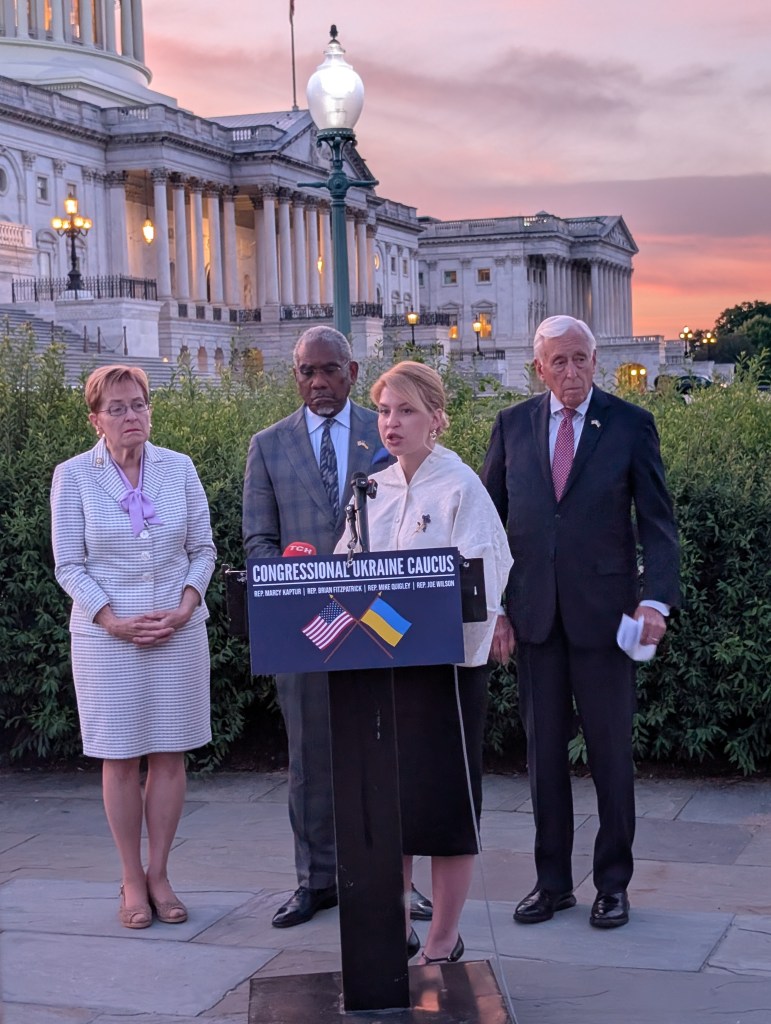
“Several members of Congress stopped by to speak with us,” Roberts said. “After the vote, several lawmakers came out to thank us for our support and offer their congratulations. Two of the co-chairs of the Congressional Ukraine Caucus also stopped by to say hello and take pictures. It was a very good evening.”

Roberts has supported Ukraine since the start of Russia's full-scale invasion. Since then, he has regularly taken part in pro-Ukraine events in Washington and looked for ways to help the cause.
“It was important for me to be here today and show members of Congress that Americans care about what happens in Ukraine,” he said. “I wanted them to know that people are paying attention to this vote and that they consider it important.”
Author: Andrew Getman
