


Washington is simultaneously making a decision to continue military support for Ukraine and reviewing the scale of its own military presence in Europe. The US Senate has supported an increase in funding for security assistance to Kyiv, while the Pentagon is preparing to reduce some of NATO’s air and naval forces in the European direction. Against this background, Ukraine continues to put pressure on Russian military and energy infrastructure, and the consequences of such strikes are already being felt in occupied Crimea.
US Senate Committee Supports Increasing Security Assistance to Ukraine to $750 Million
The US Senate Committee on Armed Services has approved its version of the annual national defense appropriations bill, which provides for the continuation and expansion of security support for Ukraine. The Document, in particular, proposes to increase funding for the Ukraine Security Assistance Initiative (USAI) to $750 million and extend its operation until 2029. These funds are used to pay American manufacturers of weapons and military equipment that supply products for the needs of the Armed Forces of Ukraine. The support of the bill in the committee was an important signal for maintaining bipartisan support for Ukraine in the US Congress.
In addition to funding, the document contains a provision prohibiting the use of defense budget funds for any actions that could mean recognizing Russian sovereignty over the internationally recognized territory of Ukraine. The bill also provides for the continuation of intelligence support for Kyiv by the Pentagon to support military operations. The document is expected to be considered by the full Senate, voted on in both houses of Congress, and approved by the final version. After that, the bill should be signed by US President Donald Trump.
NATO commander says Russia does not seek conflict with the Alliance
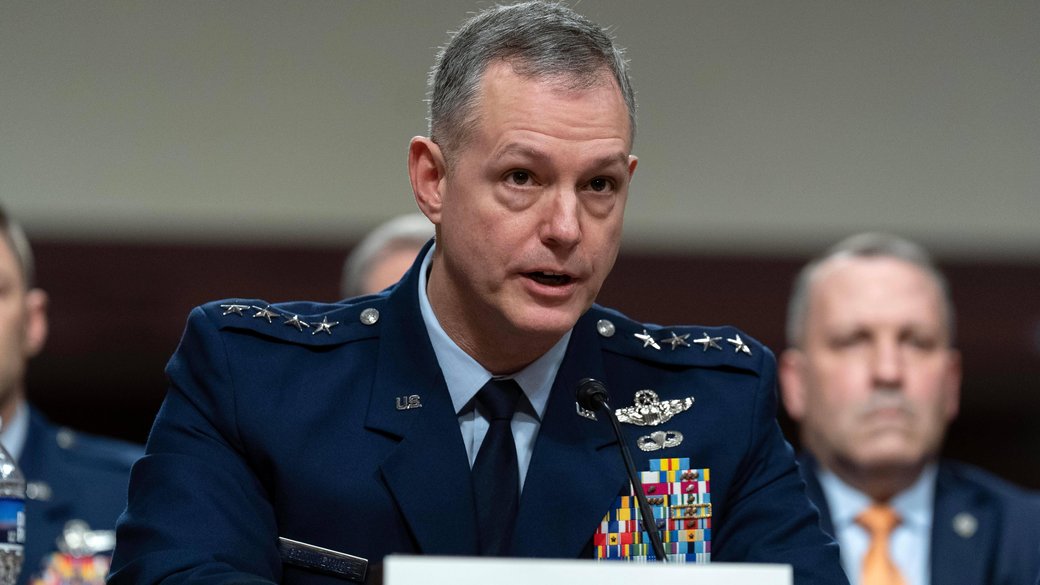
The new NATO joint forces commander and US General Alexus Hrinkevich said that Russia is not currently seeking direct conflict with the Alliance countries. In an interview with The Financial Times , he noted that he was closely monitoring intelligence and saw no signs of Moscow preparing to attack the Baltic states. According to him, the Russian leadership is aware of NATO's capabilities and understands the advantages of the defense alliance. At the same time, the general emphasized that the Alliance is ready for any development of events and is able to protect its members.
Hrynkevich also commented on the reduction of the American military presence in Europe. He explained that some of the US resources are needed to strengthen positions in the Pacific region. Earlier it became known about the redeployment of part of the American military from Germany and the possible withdrawal of a number of air and naval forces from Europe. Despite this, the general emphasized that NATO's main task remains to deter Russia and demonstrate readiness to respond to any threats.
The United States plans to reduce NATO's air and naval presence in Europe
The United States intends to significantly reduce the number of aircraft and warships involved in NATO operations in Europe. This was reported by The New York Times , citing European officials and internal documents. In particular, it concerns a reduction in the number of F-16 and F-15E fighters, maritime reconnaissance aircraft, as well as the withdrawal of all tanker aircraft currently operating in the European direction. It is also planned to redeploy part of the naval forces, including an aircraft carrier, a submarine and other ships.
According to experts, such changes may affect NATO's capabilities for long-range strikes and monitoring of Russian military activity. This is especially true for monitoring submarines and the use of long-range cruise missiles. At the same time, the United States emphasizes that American forces will remain one of the largest in Europe even after the reduction. European countries have already begun the process of rearmament and increasing their own defense capabilities, trying to reduce dependence on American military support.
India said it bought Russian oil at the request of the US
Indian Foreign Minister Subrahmanyam Jaishankar said, that after the start of the full-scale war in Ukraine, his country bought Russian oil not only because of the favorable price, but also at the request of the United States. According to him, Washington was interested in stabilizing the world oil market and curbing the sharp rise in prices. India became one of the largest buyers of Russian oil after the introduction of Western sanctions and price caps on Russian raw materials. Jaishankar noted that the then market situation actually forced New Delhi to look for new sources of supply.
The Indian Foreign Minister also criticized the periodic complaints about purchases of Russian oil. He said that many countries assess the situation selectively and do not take into account the real circumstances of the world energy market. According to him, India's decision was based primarily on issues of resource availability and economic feasibility. At the same time, the minister's words drew attention to the role of the United States in shaping global energy policy after the war.
Fuel disruptions in Crimea
Fuel supply disruptions were recorded in the temporarily occupied Crimean peninsula after a series of Ukrainian strikes on logistics and energy infrastructure facilities. According to Reuters, fuel sales were limited to no more than 20 liters per person at gas stations in Sevastopol. There were also reports of queues at gas stations and temporary difficulties with the supply of certain goods. The Russian occupation administration confirmed that the restrictions would remain in place and urged drivers to check their fuel levels before heading to the gas station.
In parallel, Ukraine continues to strike military and energy facilities in Russia and occupied Crimea. According to the Ukrainian side, the strikes targeted a military plant in Cheboksary, an oil refinery in the Samara region, oil pumping stations near Moscow, and a ship of the so-called “shadow fleet” in the Black Sea. Sevastopol also reported that drones had hit a historical museum building and that night train traffic had been restricted. The Ukrainian authorities say that such operations are aimed at weakening Russia’s ability to finance and support the war against Ukraine.
Photo: AP/Jose Luis Magana
Author: Danylo Pievchev