


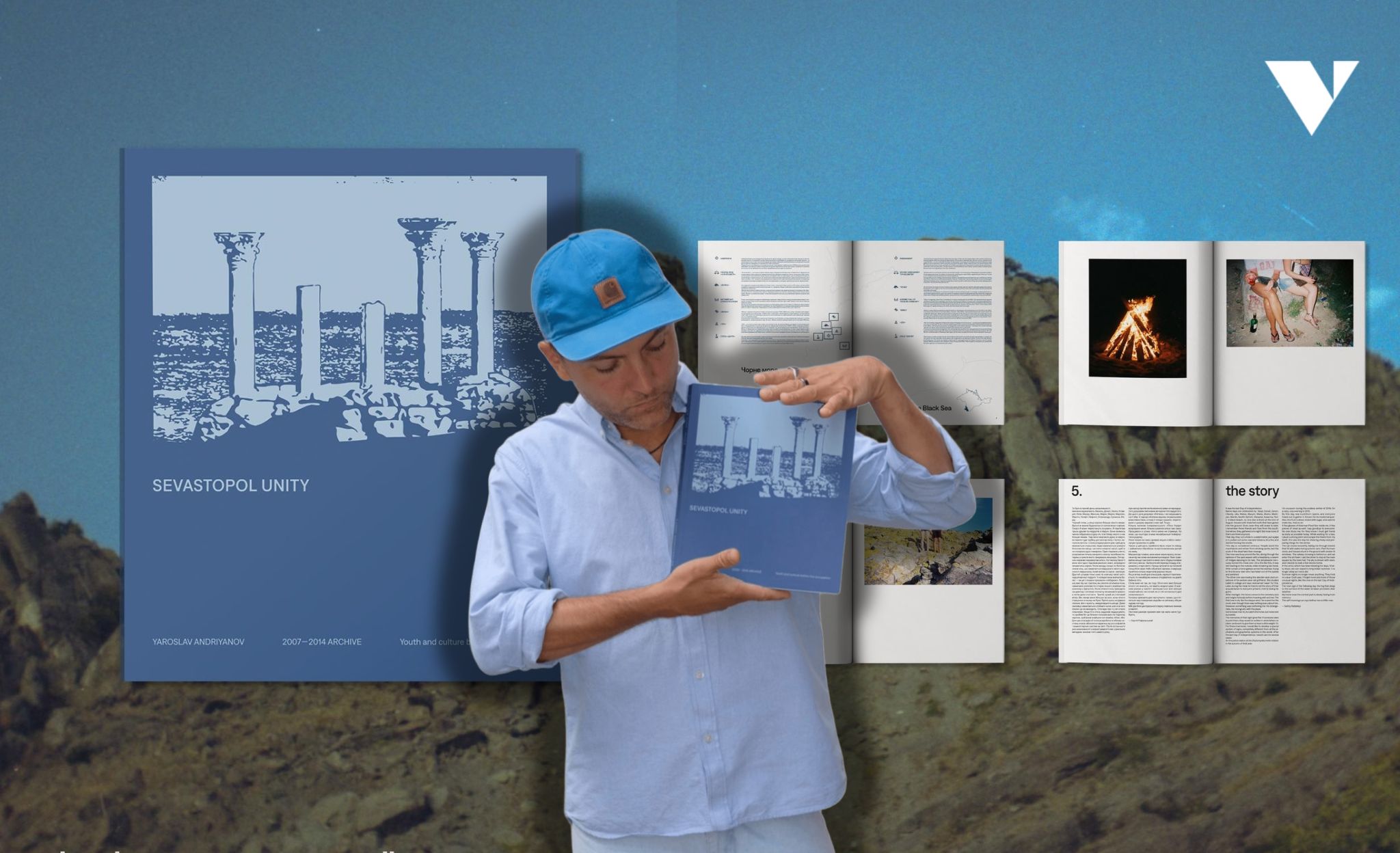
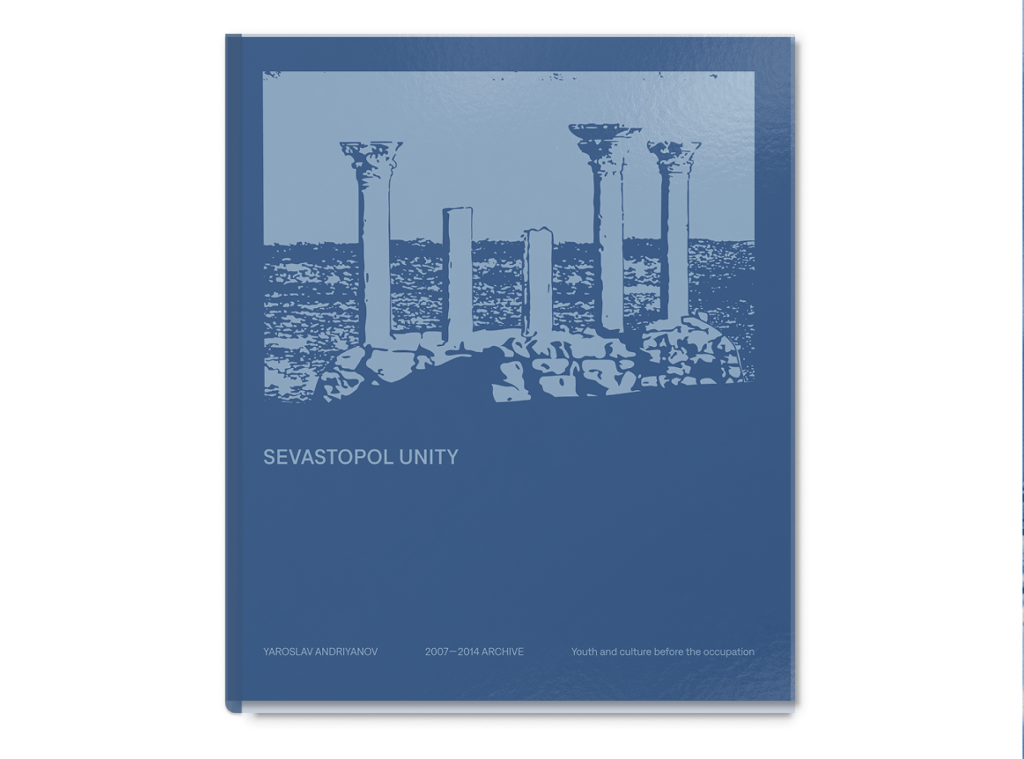
Yaroslav Andriianov, a Ukrainian who spent his childhood and youth in Crimea, has published the photo book Sevastopol Unity about his life, the city, and the people around him in Crimea. In addition to photographs, the publication includes interviews with participants and the author’s own memories. Sevastopol, like all of Crimea, was closed off during the Soviet era, and it was independent and unoccupied for only 20 years, which makes materials from this period especially valuable. Our contributor and resident Myroslav Grekh had an opportunity to speak with Yaroslav Andriianov personally. Read more in this interview for Vilni Media.
– I would first like to tell our readers that I knew Yaroslav’s grandmother, Orysia, and his grandfather Yaroslav, after whom he was named, very well, so I will allow myself to address him informally. First of all, to give readers a sense of what we will be discussing, I would like to note that on page 30 of Yaroslav’s book there is a photograph of him, followed by a description of the book’s content. If he does not mind, I would like to quote that description in full.
Yaroslav Andriianov: I don’t mind.
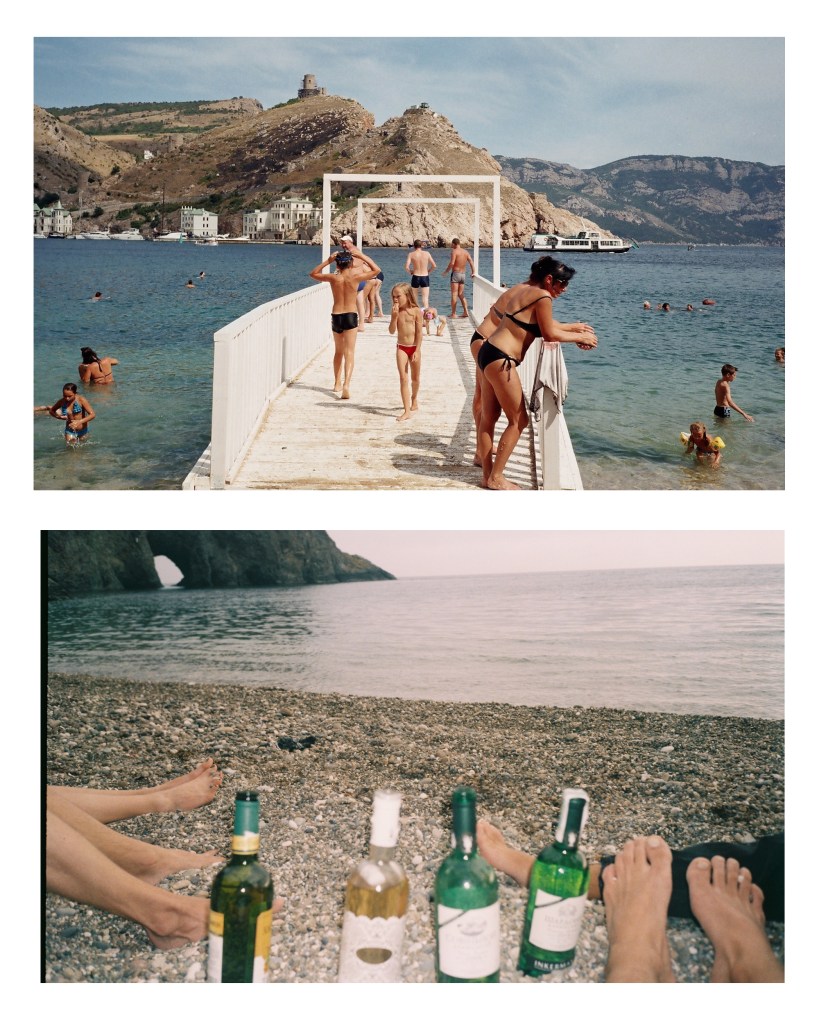
– I quote: “Sevastopol Unity is a documentary photo book created by Yaroslav Andriianov based on his own photographs and the amateur photo archives of people around him from the period between 2007 and 2014. It is a personal reflection and an invitation to return to a lost context that has survived only in memories and on photographic film.
This book documents the everyday life of the last generation that spent its youth in Ukrainian Sevastopol before the annexation, where military sites served as skate parks and meeting places, while Soviet monuments seemed like relics of the past. Sevastopol Unity captures the perspective of young people who felt that the city was their home — and still feel that way today. For those who have already forgotten; those who never had a chance to see it; and those who hope to return.”
And now, Yaroslav, please tell us in more detail how you created this book and what goal you set for yourself.
Yaroslav Andriianov: First and foremost, the photo book should be viewed as evidence that young people remembered and valued their history. My goal was to use the material I collected from people I knew to show that era, the lives of young people, and their attempts to create a new world around themselves.
All of the photographic material is amateur — there is not a single professional photograph. This was intentional, because I wanted to convey youthful emotions and feelings rather than beautiful spaces and a professional adult perspective.
I deliberately had the publication printed in Ukraine so that it would receive a Ukrainian ISSN number — the book’s “passport,” confirming that the publication had been entered into the Ukrainian registry. As of today, I have held presentations in various European cities — Barcelona, Berlin, Paris, Vienna, Brussels, and others. The book is now held in one of Berlin’s largest libraries, and I think the main goals have been achieved.
I would also like to point out that we managed to preserve the material because we shot on film. When my mother left Crimea, she took the old negatives with her. In 2024, I rescanned them and recovered photographs that had long been lost.
The book itself is part of a larger project that includes exhibitions and presentations across Europe. I am also currently creating an online archive to bring all the material together in one place and make it more accessible. This information will definitely be needed by future generations.
– You called the book Sevastopol Unity. How would it be better translated: “Sevastopol Community” or “Sevastopol Unity”?
Yaroslav Andriianov: Let me explain. It is actually a quote from one gathering. The book contains photographs from all over Crimea, but there was once a punk concert in Sevastopol. A young man who had come from another city walked out, took the microphone, and said: “You’ve got a great concert here, a great community, and Sevastopol unity is awesome.” And as soon as he said that, a massive fight broke out.
That is where the bitter irony lies, because before the occupation, a significant part of the population supported Russia. So Sevastopol Unity is a quote, an irony, while the word “unity” itself means “єдність.”
– Yaroslav, in my opinion, your book has an original format. It is not an article, not a short story, not even a painting, but rather a series of brushstrokes from youth, culture, and communication that deeply impress me and, I hope, many readers as well. In my view, this is what makes your book unique.
Yaroslav Andriianov: Thank you for that assessment and for the kind feedback. There is a specific style here: I speak from my own perspective as an individual, but at the same time I try to portray and convey the general mood of young people at that time.
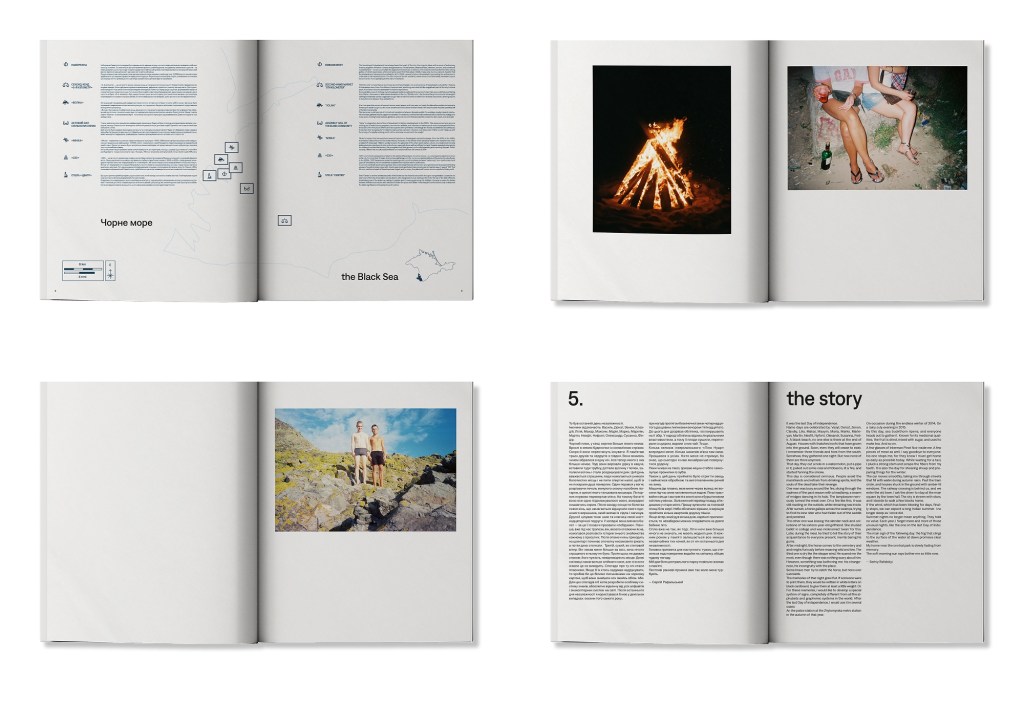
– Your book contains a number of specific terms and names that, for example, I do not understand: bombing, electroclash parties, dub system. There are also many terms in English. It is difficult, for instance, to understand a sentence like this: “They achieved the status of all city kings, but unfortunately both are already RIP” (p. 134). Perhaps these terms are more understandable to younger people, although I imagine not to everyone. For older readers, who will undoubtedly also read the book, this may be difficult. So I have one comment and suggestion: would it perhaps make sense to add footnotes explaining these terms?
Yaroslav Andriianov: The book is my first product of this kind within the project. Going forward, if possible, we will develop a platform and provide that kind of information there.
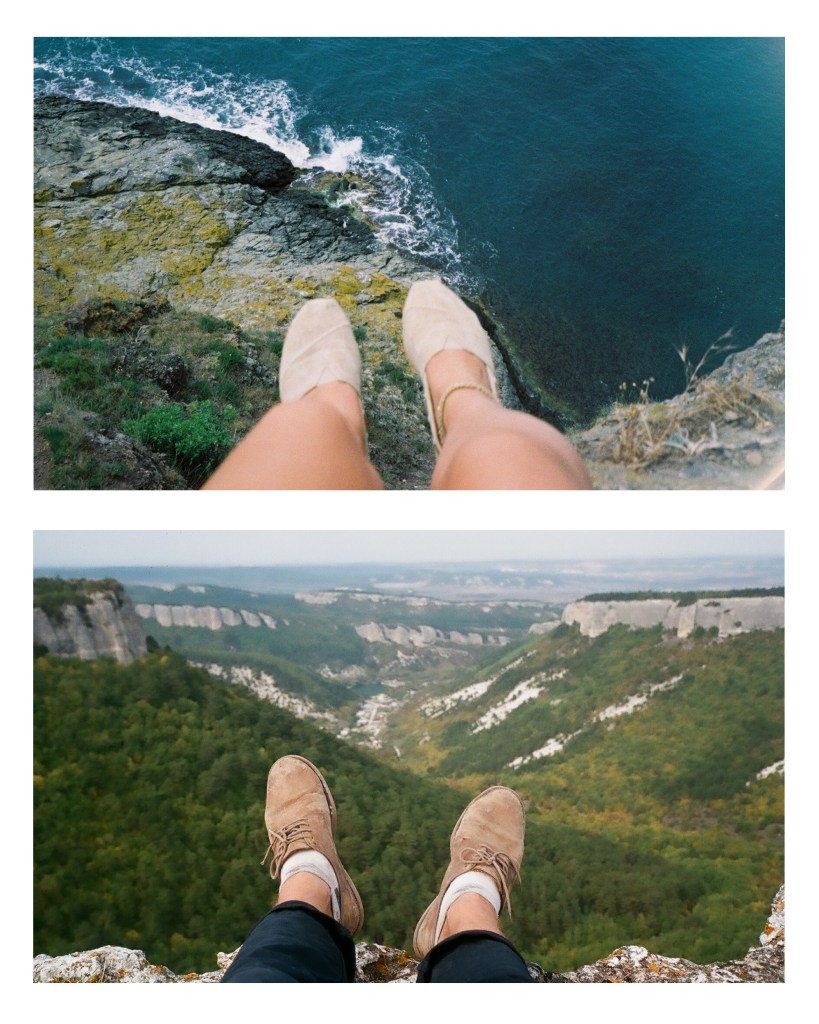
– As I understand it, this project is still being refined. The book describes many interesting episodes. Personally, I was struck by the description of how you jumped from a cliff into the water. But for some reason, the photograph of the jump appears on page 70, while its description is on page 72. There seems to be a certain inconsistency.
Yaroslav Andriianov: Yes, the photographs are not tied directly to the text and do not follow any particular sequence. This was done so that the material would continue to intrigue readers at every stage and make them return to it again.
If we had created a strict hierarchy or simply divided everything into chapters, it would have been very dry. If the photographs had been grouped together — for example, first the beach, then the city — readers would have quickly looked through them and forgotten them, focusing instead on the text.
– Do you think you achieved the goal you set for yourself with this book, and is there anything that still remains unfinished?
Yaroslav Andriianov: In the professional publishing world, people usually pursue grants or submit their projects to publishing houses. Such projects are often implemented with grant funding and produced by people with relevant experience.
I took all of those functions on myself and did everything independently. I paid for the printing myself, found contractors, and organized all of these processes. This is my first experience of this kind, so there may be many shortcomings and many things that are not entirely professional, but in my opinion that also makes the project more sincere and alive.
– Today, Ukraine is bleeding and suffering, but it continues to fight, bringing a just victory closer. We are all exhausted by the war, and all of us feel nostalgia for the places where we were born and lived. I believe the time will come when we will be able to return to them. Thank you, Yaroslav, for the book and for this wonderful interview. I wish you success and new achievements in the future.
Yaroslav Andriianov: Thank you, and I wish you the same!
Interview by: Myroslav Grekh
