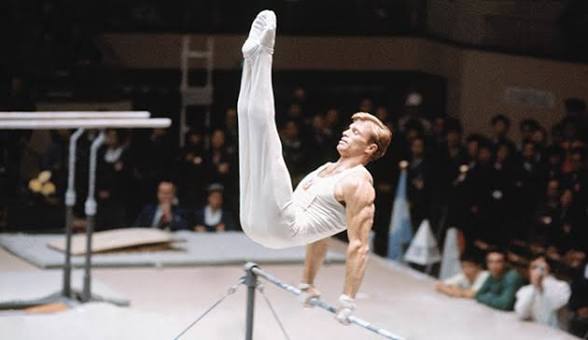
After World War II, unfortunately, the long-awaited lasting peace never came. The Cold War era began — a confrontation between at least two political systems: the capitalist system represented by the democratic West and the socialist system led by the USSR.
The geopolitical situation throughout the world remained complicated. At the same time, even at the height of this confrontation, there was a kind of opening for interaction between states — sport.
Sports diplomacy became one of the bridges for communication between the United States and the USSR, Australia and China, the United States and China, and other countries. Despite sharp disagreements between governments, sport made it possible to maintain contacts even in spite of official state policy.
As a result, international and interstate sporting meetings, matches, tournaments, and competitions in track and field, hockey, volleyball, football, table tennis, and other sports were regularly held for decades, along with exchanges of experience between athletes.
Numerous, and at times systematic, sports-diplomacy meetings created an impression of mutual understanding between countries that stood on opposite political and ideological poles.
The “Information Genocide” of Ukrainian Gymnasts
One of the many examples of Cold War sports diplomacy between the United States and the USSR was the tour of Soviet gymnasts to the United States and Cuba in 1961, and later, in 1971, to Canada.
This year marks 65 years since that little-known but significant trip. For Ukrainians, the tour is important for several reasons.
First, Ukraine was part of the USSR, and Ukrainian athletes were forced to compete under the Soviet flag.
Second, the information environment surrounding their arrival and the way the tour was covered in the American media worked against Ukrainians. They were often identified as Russians.
When the Soviet press did this, it could be explained by propaganda, distortion of facts, and the erasure of Ukrainian identity. But when the same thing regularly appeared in the press of the free world, it could have been either an unfortunate mistake or the result of a lack of understanding of just how multinational the Soviet Union actually was.
The 1961 tour of gymnasts from the USSR was also special because it was one of the first visits of this kind by Soviet athletes to the United States. At the same time, the itinerary was not limited to that country: the delegation also visited Cuba.
This was hardly surprising, since at the time Cuba and the USSR maintained close political relations, and both regimes were communist and authoritarian. Thus, including Cuba in the itinerary of this sports trip was entirely logical.
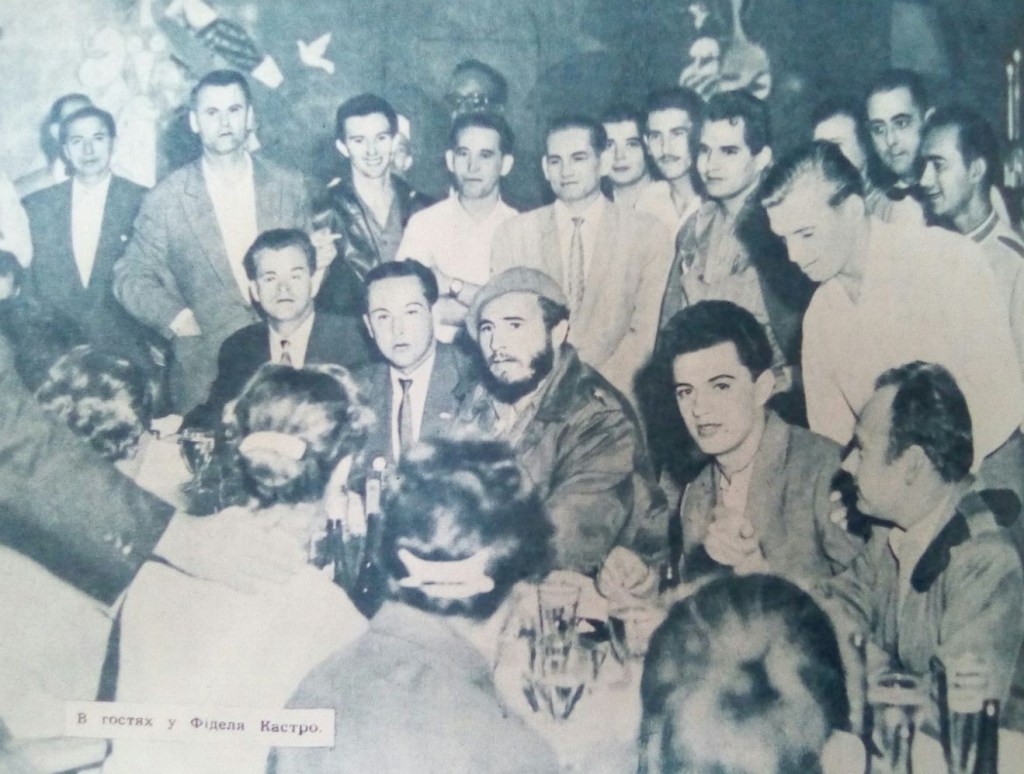
The Ukrainian Diaspora in the United States on the Arrival of Gymnasts From the USSR
I should say at the outset that I may be mistaken in claiming that the Ukrainian diaspora in the United States paid too little attention to the delegation from the USSR. In the Ukrainian American periodicals of that time, I managed to find only one short article. I assume there must have been more information, because such an event would have been difficult to ignore.
Ukrainians in the free world had an opportunity to see their compatriots from behind the “Iron Curtain” and perhaps even speak with them — provided, of course, that the strict control of Soviet security services allowed it.
At the same time, the fact that the local American press called Ukrainian athletes Russians also demanded a response from the Ukrainian diaspora. Explanations should have been provided and this false identification should have been corrected.
It would also be interesting to learn whether the Ukrainian diaspora organized any actions or demonstrations to mark the athletes’ arrival and whether it tried to create a Ukrainian atmosphere around these friendly competitions.
Although these were formally friendly performances, their ideological subtext and geopolitical significance are obvious. Under conditions in which Ukraine was subjugated by the Soviet Union, the activity of the Ukrainian diaspora was a powerful way to demonstrate the resilience of the Ukrainian nation.
So what did the Ukrainian diaspora press in the United States write about the arrival of gymnasts from the USSR? The newspaper Svoboda published an article titled “Performance of Soviet Gymnasts in New York.”
It should be noted immediately that the headline itself was accurate. However, given the misinformation among the American public, it would have been useful to emphasize that Ukrainian gymnasts were also part of the delegation. This would have helped readers understand that the athletes were not all Russians.
Svoboda wrote: “The Soviet gymnasts performed here at Madison Square Garden before a professional basketball game in the final appearance of their tour of the United States under the cultural exchange program. The spectators, mostly American youth, admired the physique and strength of the Soviet gymnasts, as well as the skill and precision with which they performed exercises on the apparatus and floor.”
From this passage, we learn that the gymnasts’ final performance took place before an NBA game between the New York Knickerbockers and the Boston Celtics. It was a unique combination of two prominent sporting events.
Basketball in the United States was already enormously popular at the time, while artistic gymnastics was only beginning to reach a broader audience. It can therefore be assumed that the organizers deliberately combined the two events in one evening.
Basketball games attracted thousands of spectators, while separate exhibition performances by gymnasts from the USSR would hardly have drawn the same audience. Performing before a popular basketball game gave the gymnasts far greater exposure.
This was precisely the kind of opportunity the Ukrainian diaspora could have used to present Ukraine to a large audience. Whether this actually happened — unfortunately, I do not yet know. In standard writing, the phrase “unfortunately” is set off by commas.
The article then directly addressed misinformation concerning the national identity of Ukrainian athletes:
“Among the Soviet athletes, the Kyiv residents stood out — winners at the most recent Olympic Games in Rome. Boris Shakhlin, winner of four gold, one silver, and one bronze medal, and Larisa Latynina, winner of two gold, two silver, and one bronze. However, one cannot remain silent about Moscow’s deception in this cultural exchange, in which Soviet masters of sport appear as amateurs and Soviet athletes of different nationalities are called Russians. Among the twelve gymnasts of ‘Russia’ were five athletes from Ukraine, four from Russia, one from Belarus, one from Armenia, and one Caucasian, a student at the Moscow Pedagogical Institute.”
This is where we find the key point the wider world should have known: Soviet athletes of different nationalities were often presented as Russians. Western media outlets frequently reproduced the same pattern.
For decades, the Ukrainian diaspora actively fought against this erasure of Ukrainian identity and tried to explain to Western audiences that Ukrainians in the USSR were not Russians. The same struggle for proper national identification can be traced in other materials published by the Ukrainian diaspora press in the United States.
Unfortunately, I have not yet been able to determine whether representatives of the Ukrainian diaspora met with the Ukrainian gymnasts who came to the United States as part of the Soviet delegation. If such a meeting took place, it could have had great symbolic significance. If not, it was a missed opportunity for direct contact between Ukrainians of the free world and Ukrainians from behind the “Iron Curtain.”
From the quotation above, we can see that Russians did not constitute the majority of the team. Of the twelve gymnasts, five were from Ukraine, four from Russia, one from Belarus, one from Armenia, and one athlete represented the Caucasus.
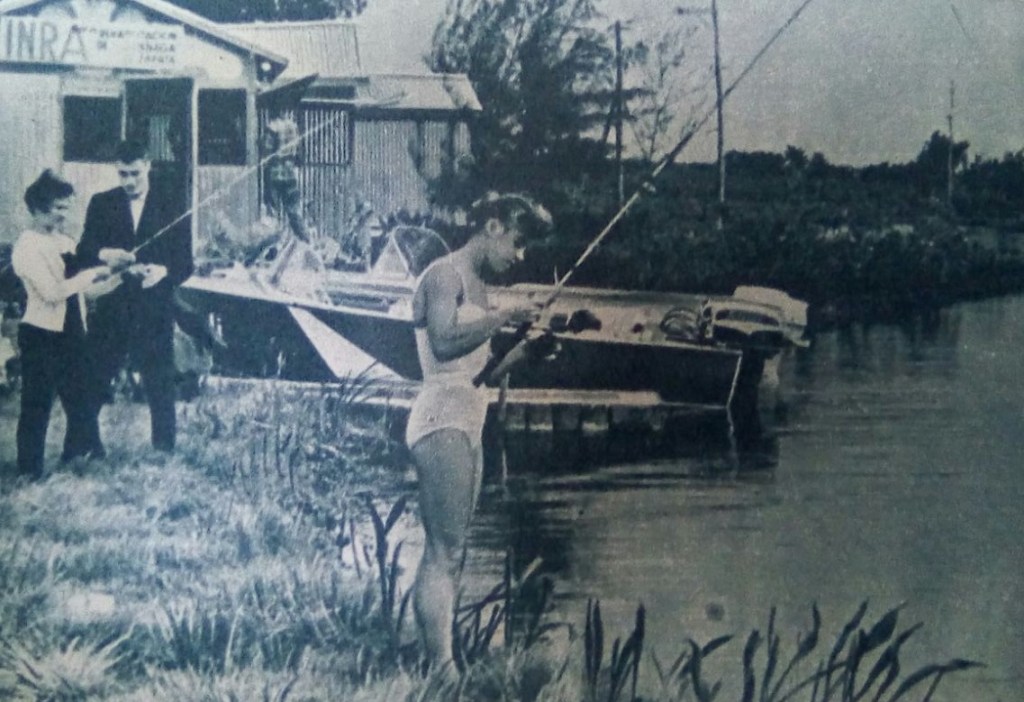
How the Armenian Diaspora in the United States Welcomed Gymnasts From the USSR
In the Soviet press, coverage of the gymnasts’ tour was, naturally, presented primarily through the lens of propaganda and Soviet identity.
Given the policies of Russification, repression, and suppression of Ukrainian national life, it would have been unrealistic to expect openly pro-Ukrainian coverage of such events. Soviet publications were also reluctant to write about the Ukrainian diaspora, and when they did mention it, it was often in an ideological context.
That makes it all the more interesting that I was able to find information about the Armenian diaspora in the United States in the Soviet sports press. The article focused on a gymnast of Armenian origin and included a description of his encounter with a member of the diaspora during the tour:
“And suddenly, unexpectedly: ‘Albert jan, barev!’ (‘Albert, my friend, hello!’) — in pure Armenian.”
A short conversation followed:
— Do you speak Armenian?
— Of course, I am Armenian. My name is Hakop!
After the performance, Albert Azaryan met his new acquaintance from the United States again. The source does not explain how exactly he managed to do so.
We know that Soviet sports delegations abroad were under strict control. That is why a potential meeting between representatives of the Ukrainian diaspora and Ukrainian athletes could have had particular significance.
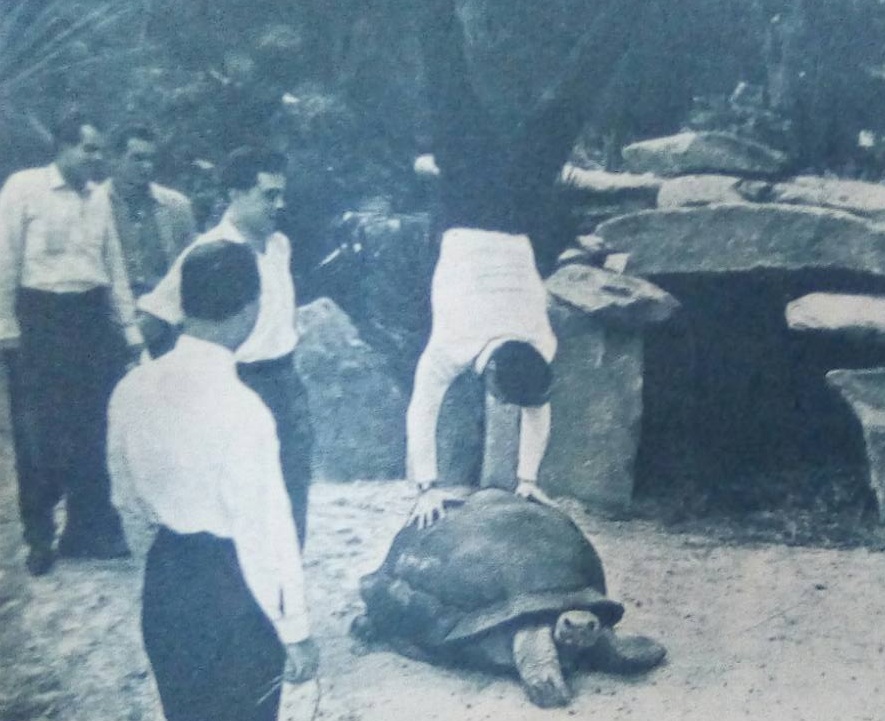
Boris Shakhlin’s Memories of His Trip to the United States
As one of the stars of world artistic gymnastics, Boris Shakhlin was a welcome guest for many editorial offices, especially after his trip to the United States — a country Soviet propaganda portrayed as the USSR’s main ideological and geopolitical adversary.
For ordinary citizens of the Soviet Union, most of whom had no opportunity to travel freely abroad, stories from people who had visited the West were of particular interest. Athletes belonged to the small number of categories of citizens who were permitted to travel internationally.
At the same time, even they could not freely enjoy the advantages of such travel. Soviet delegations were kept under constant supervision, and public accounts after their return had to conform to the approved ideological framework.
So what did Boris Shakhlin write about his trip to the United States? The Soviet sports press actively published his impressions — although it is difficult to determine how much of the text was actually his own and how much had been edited by censors:
“In our time, ‘discovering America’ is much easier than it was in the age of Columbus… We spent only a few hours on the plane, and now the Columbuses of Soviet gymnastics had stepped onto American soil. It was, so to speak, a mutual discovery. We were the first Soviet gymnasts to see America, and the Americans, also for the first time, were to see real gymnastics.”
These words sound rather arrogant, particularly the claim that Americans were supposedly seeing “real gymnastics” for the first time. The sport was indeed less popular in the United States than many others, but that does not mean artistic gymnastics did not exist there or was somehow “not real.”
Boris Shakhlin went on to describe New York, its landmarks, and other impressions from the trip. He also mentioned the “Great White Way.” Care is needed in interpreting this phrase: the name is traditionally associated with Broadway and its bright illumination, so without an additional source it should not automatically be interpreted as a reference to racial discrimination.
He and the other gymnasts were also allegedly amused by works in a museum of abstract art. Here one can already see a motif characteristic of Soviet journalism — contrasting Western culture with Soviet culture and attempting to portray the West in a less favorable light.
Such materials were aimed primarily at a domestic Soviet audience. For people who had no opportunity to see life abroad for themselves, athletes’ accounts became one of the few sources of information — and therefore a convenient tool of state propaganda.
Boris Shakhlin was already a star of world artistic gymnastics at the time, so he was in a position to assess the development of the sport in the United States as a specialist.
He wrote: “It has long been known that gymnastics in the United States cannot seem to gain popularity, and this has a negative effect on American performances at the Olympic Games. In Rome, for example, we defeated the American gymnasts by a score of 160.5 to 2 points! The Americans decided to develop gymnastics primarily in student centers… Colleges and universities differ. Some are richer, others poorer, just like the students. Every university has numerous student clubs. Membership in them depends on social standing.”
So what we have is a kind of “expert review” by Boris Shakhlin of artistic gymnastics in the United States, but presented within the ideological framework characteristic of the Soviet press.
I have doubts that all of these formulations came directly from the athlete himself. It is entirely possible that the text underwent editorial and censorship processing, but without relevant documents this remains only an assumption.
It should also be noted that the delegation of Soviet gymnasts consisted not only of athletes. It also included coaches and other people accompanying the team.
Among the Ukrainians in the delegation, I was able to identify the following athletes: Boris Shakhlin, Volodymyr Portnoi, Yurii Titov, Larisa Latynina, Polina Astakhova, and Marharyta Nikolaieva.
The well-known coach Oleksandr Myshakov also traveled to the United States. He played a significant role in the development of Ukrainian and Soviet artistic gymnastics.
Author: Oleksii Lyakh-Porodko