In 1996, the Games of the XXVI Olympiad took place in Atlanta (USA). The entire world watched the remarkable Olympic competitions in the century marking the revival of the modern Olympic Games. Perhaps the average observer did not notice that, had the International Olympic Committee adhered to the declared traditions of Olympism rooted in Ancient Greece, these Games would have justly and historically been held in Greece, for example in Athens. However, the world has changed, and the International Olympic Committee is no longer what it once was. Or perhaps this has always been its true “face.” In addition, these Olympic Games held particular significance, especially for us, Ukrainians. This was the first appearance of the national Olympic team of Ukraine at the Summer Olympic Games since the restoration of independence. In 1994, Ukrainians, under their own flag and anthem, participated for the first time–but in the Winter Olympic Games. Thus, in Atlanta, the Ukrainian team made its debut at the Summer Olympics. Of course, such a phenomenal and historic moment could not be overlooked by the Ukrainian diaspora in the United States.
For many decades, Ukrainians of the free world fought for Ukraine’s freedom and for the separate participation of Ukrainians in the Olympic Games. When we regained our independence, the Ukrainian diaspora most actively continued to support Ukrainian sport. In fact, thanks to the Ukrainian diaspora, sport in Ukraine received tremendous support. The 1996 Olympic Games were no exception. The Ukrainian team enjoyed fantastic support before the Games, during their course, and afterward, of course.
Organizing Support for Ukrainian Athletes
A vivid example of direct support for Ukrainian athletes is the work of the Ukrainian American Youth Association (SUMA). SUMA represents a unique life story intertwined with the Olympic movement. The SUMA magazine Krylati wrote about it as follows: “…all Ukrainians around the world today have something to be proud of. 235 athletes from Ukraine took part in the XXVI Jubilee Olympic Games in Atlanta, competing in 24 sports. Ultimately, Ukraine placed 10th in the overall standings… On this occasion, the editorial board of Krylati extends its heartfelt congratulations to all athletes who competed under the blue-and-yellow flag! Likewise, the editorial board of Krylati expresses great recognition to all SUMA members who served as translators during the Olympic Games. Once again, members of the Ukrainian Youth Association demonstrated their dedication and readiness to serve the Ukrainian cause. Glory to SUMA members!” This is a compelling story and a little-known fact for the broader public. It is something we should correct–by bringing back from obscurity all those SUMA members who contributed to supporting and assisting Ukrainian athletes in Atlanta. Their work deserves to be known and remembered even thirty years later.

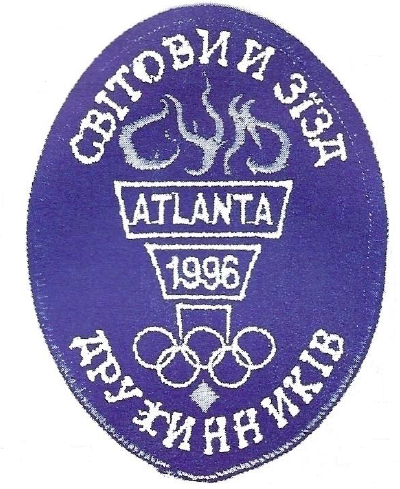
What preceded this effort, and how did the idea of combining SUMA activities with the Olympic Games arise? The answer can be found in the recollections of Halyna Holovka. She writes: “From the moment the courageous members of the Central Executive Board of the Ukrainian American Youth Association purchased tickets to the Olympic Games in Atlanta–spending a significant amount of money–there was no turning back on the decision to organize the VI World Congress of SUMA Leaders. Thus began two years of preparation so that we, the participants of the Congress, would have such an extraordinary opportunity–to take part in that year’s Olympic Games in Atlanta.” A preparatory committee was established, composed of representatives from the United States: Chair – Lida Mykytyn; members – Jessica Bodnievych, Stefa Hrytskovian, Khrystia Kosh, Yurii Mykytyn, Yurii Priatka, Tania Sava, and Khrystia Yantsiv. It is worth noting that I had the opportunity to interview Ms. Khrystia Kosh, who shared many fascinating stories, including those about Atlanta 1996.
Participants from various countries joined the Congress, including Australia, Great Britain, Canada, Germany, France, and Ukraine. In total, there were 107 SUMA members. Such a number is truly impressive. And how could it have been otherwise? A historical and global moment like this for Ukraine could not be missed. Therefore, SUMA members first decided to organize another Olympic Congress of Leaders, symbolizing the unity of Ukrainians and Olympic ideals and values. At the same time, beyond the Congress itself, they resolved to provide practical support to Ukrainian Olympians. Lida Mykytyn described this in more detail: “Approximately two years ago, the Ukrainian Youth Association undertook the organization of a group of translators and assistants for the Ukrainian Olympic Team.” This, in essence, was the form of assistance provided by SUMA members to Ukrainian athletes. It was truly vital, as effective communication for Ukrainian athletes was essential. This is one of the factors contributing to athletes’ comfort while abroad–what today might be called the athlete’s “support environment.”
Regarding the role of translators, the Ukrainian press in the United States wrote: “The role of translator-assistants was multifaceted. Each assistant was assigned to a specific team and remained with that team at all times. Every day, assistants and coaches met after breakfast for a short briefing. After the meeting, the assistant prepared the training site, ensured that any necessary equipment was obtained, and stayed with the team during training sessions to resolve any difficulties. When needed, the assistant translated for the team or individual athletes when dealing with the press.” It should be emphasized that the assistants’ work did not end there. They were constantly with the team–staying in the same accommodations, eating together, traveling with the athletes on excursions, and assisting in everyday matters. In other words, the support provided by SUMA members went far beyond translation. It was demanding, daily, around-the-clock assistance and care.
Such closeness between translators and athletes was no coincidence. What united them most was Ukraine itself. As it was written: “During these three to four weeks of team preparation for the Olympics, a special bond, deep respect, and close friendships were formed between the athletes, coaches, and translators… This spiritual connection between the assistants and the teams was strongly felt not only during training, but also throughout the Olympic Games themselves.”

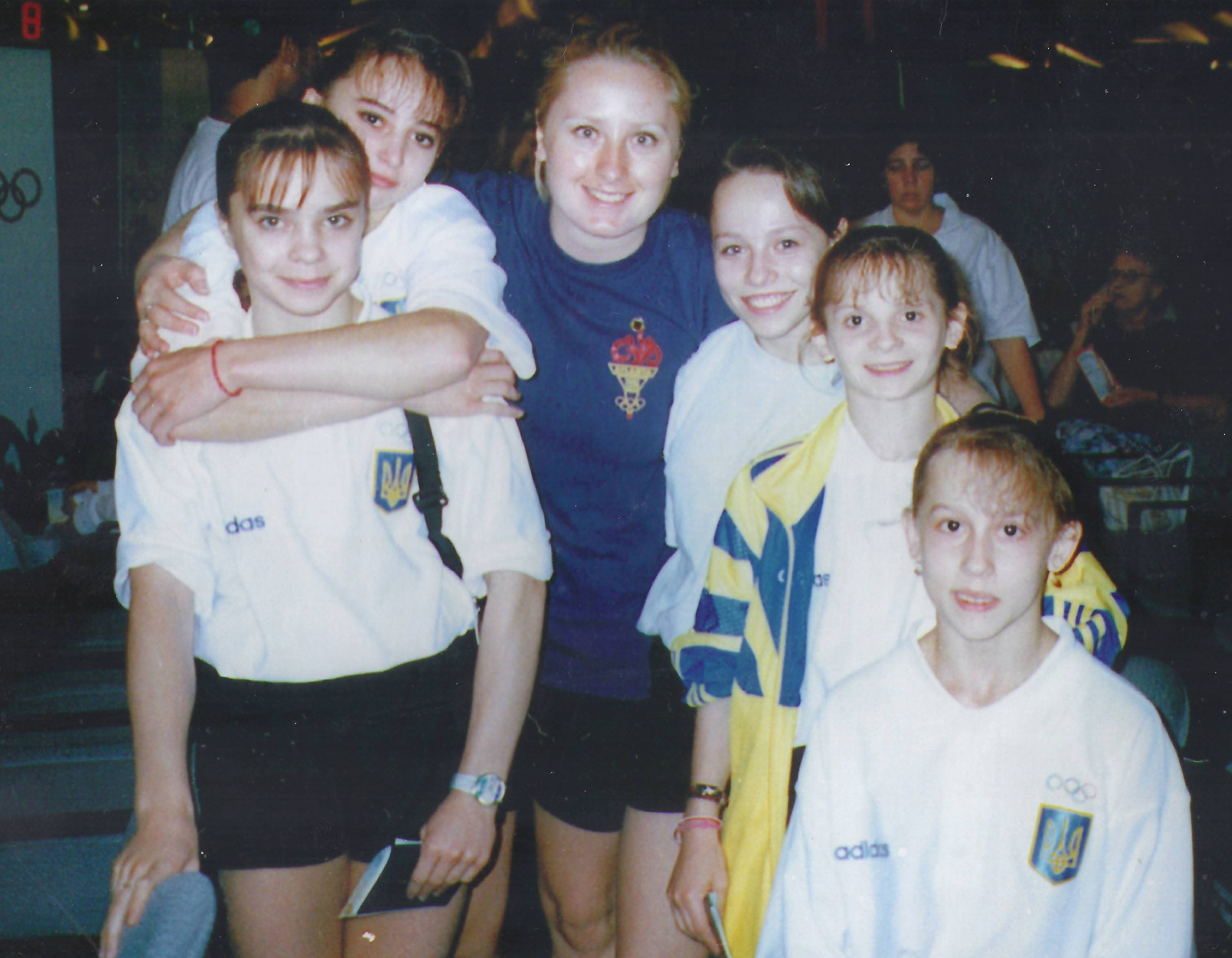
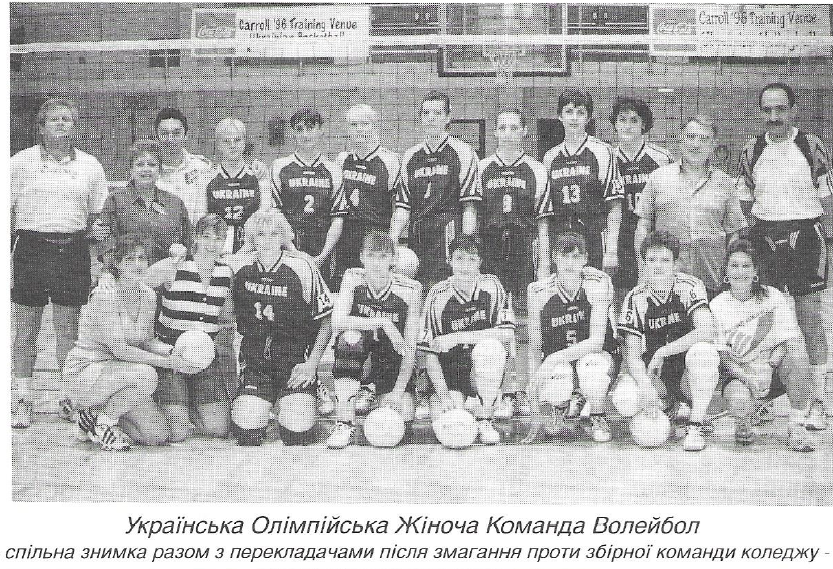
It is worth highlighting several examples of the remarkable friendship between SUMA members and the athletes. First, when Lilia Podkopayeva won her gold medal, immediately after the award ceremony, she approached Ivan Makar, an assistant to the gymnastics team, and presented him with flowers. Second, Vyacheslav Oliynyk, the Greco-Roman wrestling champion, chose to sit with the assistants during his teammates’ competitions instead of occupying the special seating areas designated for athletes by the organizers. Third, members of the women’s volleyball team called their translators every day to share their concerns and experiences. This is how Ukrainians come together.
As for the assignment of SUMA members to sports teams, everything was clearly structured, well-coordinated, and organized at a high level. The assistants’ штаб was sizable–42 individuals. They were distributed as follows: artistic gymnastics – Khrystia Kosh, Ivan Makar; swimming – Yurii Marenin, Lilia Bilyk, Olena Boyko, Lida Boyko; diving – Roman Kokolskyi, Mykola Stepaniak; badminton – Nataliia Hriha; boxing – Andrii Yuzeniv, Vlodko Stetsko, Mykhailo Roztishevskyi; Greco-Roman wrestling – Yurii Shust; judo – Sashko Koval; basketball – Myron Yaroshevych, Lida Butsyk; volleyball – Irka Shust, Lida Mykytyn, Orysia Karkots, Marta Kokolskа; rowing – Lida Dydyk, Olia Kozak, Hari Nesmashnyi; cycling – Motria Makarevych, Markiian Kuzych, Tania Mandzii; weightlifting – Taras Zaiats, Petro Tiutiunnyk; freestyle wrestling – Tania Dmyterko, Larysa Havrylyshyn, Mr. Dmyterko; canoe and kayak – Lilia Mykytyn, Tamara Kharalambii, Ivan Kharalambii, Anna O’Neill; athletics – Bohdan Oleksiv, Taras Sheli, Borys Sydoruk, Tamara Tiutiunnyk, Orest Tkachuk, Adriian Kuzych, Nadia Kichiliak, Nadia Tarashchenko.

Memories of SUMA Members About Supporting Ukrainian Athletes
We have a wonderful opportunity to immerse ourselves in the atmosphere of Ukrainian unity during the Olympic Games in Atlanta. The recollections of SUMA members who assisted Ukrainian athletes are not only highly informative and engaging but also deeply emotional. Such feelings can only be conveyed sincerely, with genuine care.
Natalka Hriha recalled her work as follows: “Who among us, in childhood, has not tried at least once to play badminton? It seems like such a simple game! And suddenly–badminton is an Olympic sport! While still in Ukraine, I was fortunate to train in competitive badminton, the kind you could see at the Olympic Games. So it was no surprise that when the time came to become a translator for Ukrainian athletes in Atlanta, I chose the badminton team… During the training period, we became very close. My fellow translators would sometimes joke: ‘Your team won’t even go to lunch without you!’… For me, it was a great honor to train alongside Olympians. And the athletes themselves jokingly called me a ‘reserve player’ on the team.”
Myron Yaroshevych, who assisted the Ukrainian national basketball team, shared equally fascinating memories: “My unforgettable adventure began at the airport in Atlanta, when I first helped carry a suitcase for a basketball player tired after her journey. That was the first time I met girls taller than me, who were representing Ukraine for the first time at the Summer Olympics… One day, I approached the table where the girls were having lunch. A conversation started. Question after question: ‘Who are you? Where are you from? How do you like Atlanta? What do you do? How much do they pay you for your work as a translator? (ha-ha-ha!!!)’ From that moment on, our conversation never stopped. We found common ground. We talked about Ukraine, about America, about clothes, about people, about sports, about music, about youth, about life. Very soon, I had new friends.”
Yurii Shust also shared his warm memories. In particular, he said: “Already last year, I was glad when SUMA took on the responsibility of organizing translators for the Ukrainian Olympic teams in Atlanta. This decision gave other SUMA members and me the opportunity to serve Ukraine, which was competing in the Olympic Games for the first time as an independent state. Moreover, I was fortunate to work with the very best and strongest teams… It was very pleasant for us when everyone welcomed us and was happy to see us; it truly felt like we had made new, sincere friends. I was glad when I met Vyacheslav Oliynyk, who won Ukraine’s first gold medal… Ukraine’s very first appearance at the Summer Olympics was already extraordinary for me. And the fact that I had the chance to take part–even in a small way–will remain in my memory forever. I thank God, Ukraine, and SUMA, especially Ms. Lida Mykytyn, who coordinated this project.”

Truly, the work of SUMA members was unique. A phenomenal project of support for Ukrainian athletes. These are memories that will last a lifetime–and even longer. Because we remember the achievements of our heroes.
We have every reason to be proud of both our people and our history. Know your history–win your future.
Author: Oleksii Lyakh-Porodko