


Ukrainian Christmas traditions were formed over centuries and combined economic customs, family rituals, and deep religious beliefs. Preparations for Christmas began long before winter. Ukrainians would set aside the first or last sheaf of rye or wheat in the summer, leaving it unthreshed. It was from it that they made Didukh, a symbol of harvest, abundance, and the bond of generations. Fragrant hay was also harvested for the Christmas holidays, and all the important work on the farm was tried to be completed: they put the house and yard in order, repaired supplies, wove cloth, and tanned leather.
This was reported by Olena Ripka.
Before the holidays, housewives paid special attention to their homes. The houses were thoroughly cleaned, whitewashed, and the chimneys were painted with floral ornaments. The table was covered with new or freshly washed tablecloths, clean tablecloths and towels were used. An important part of the preparation was the purchase of new clothes for all family members and new dishes - makiters, pots, kotsyuby and makogons. Festive candles were made from wax, accompanying this work with special prayers. Before Christmas, the owners also slaughtered a pig to prepare sausage, black pudding, jellied meat, saltison, roast with buckwheat porridge and other meat dishes intended for the festive period after Lent.
Holy Evening
Holy Evening was celebrated on Christmas Eve - December 24 according to the new church calendar. Even before dawn, the housewife began to prepare the main dishes of Christmas Eve - kuty and uzvar. For this, firewood was laid out in a special way in the oven, which was lit with "live fire" using flint and flint. It was believed that such a fire had a cleansing power. Twelve logs were placed in the oven, which were prepared and dried during the last twelve days of the month.
Kutia was cooked from crushed and soaked wheat, adding “unopened” water – collected before sunrise. It was believed that this water was consecrated by the Sun God himself at night. The same water was used to bake ritual bread – knysh, krachun or kalach, which was placed next to Didukh. Knysh was kneaded like ordinary bread, but a small loaf – “soul” – was placed on top, intended for deceased ancestors.
On the pre-dawn water and in new pots, the hostess prepared twelve lean dishes. Although they were all without meat and fat, the dinner was called “rich kutiy”, because it symbolized abundance and generosity. Honey, walnuts, poppy seeds and raisins were added to the kutya, where wheat represented eternal life, and honey – eternal happiness. The brew was made from dried apples, pears, plums and cherries.
When the kutya and knyshi were ready, with the first ray of the sun the owner opened the doors of the house, barns, barns, stables and gates. According to beliefs, it was at this moment that the God of harvest, abundance and wealth descended to earth. Domestic animals were sprinkled with poppy seeds to protect them from evil forces, and they checked whether everything was ready for Christmas Eve.
A special rite was the bringing of the Didukh into the house. The father and his eldest son went to the barn: the owner carried unboiled water, and the boy carried three ears of corn. The prepared Didukh and a bundle of hay were sprinkled with water and a prayer was said asking for a harvest, good and health in the coming year.
Grandfather in the Christmas home
Grandfather personified not only the harvest and wealth, but also the immortal ancestor, the founder of the family and the spiritual life of the family. It was a rye or wheat sheaf, usually three-legged or five-legged, decorated with viburnum, ribbons, paper or dried flowers. It was placed in the most honorable place in the house - under the icons, in the apse.
There was a belief that when Jesus Christ was born, it was very cold in the stable, and Joseph covered the gap in the wall with a sheaf of straw. That is why, for the Holy Supper, hay was spread on the floor and table in the house, creating a symbol of warmth and comfort.

After bringing in the Grandfather, the host and hostess together prepared the house for dinner. The place where Didukh stood was called "Paradise", because it was believed that from now on the souls of ancestors - the patrons of the family and home - would reside there. While Didukh stood in the penitentiary, it was strictly forbidden to do any work except caring for the livestock. Even the broom was taken out of the house so as not to sweep.
Holy Supper
First, one tablecloth was spread on the table - for good souls, and then, having spread garlic in the corners, another was laid - for the living. In the middle of the table, a knish for spirits and a palanytsia with a candle were placed. Kutya and uzvar were solemnly carried to the penitentiary, having previously set aside a dry top from the kush for the livestock.
Until dusk, the family waited for the first dawn. They fasted all day before that, so dinner had special meaning. Having seen the dawn, the children notified everyone in the house about it, and the family began the Holy Supper.
There were twelve Lenten dishes on the table - according to the number of apostles. Before the meal, everyone knelt and prayed. After the host's blessing, the dinner began with kuti. Separate plates and glasses were set for deceased relatives, into which kuti was also poured, believing that the souls of ancestors come to the house that night.
A strict order was observed at the table: the owner sat down first, followed by the rest of the family members in order of seniority. The benches were carefully dusted beforehand so as not to sit on the Spirit. During dinner, people did not get up from the table, did not speak loudly, and behaved respectfully.
After the meal, some dishes, in particular kutya, were not removed from the table - they were left for the spirits. Candles in the house were not extinguished, they were supposed to burn out on their own. All conversations were conducted calmly, without quarrels and bad words, because they believed that on this night everything said could come true.
Christmas
On Christmas Day, December 25, the family went to church in the morning for a festive service dedicated to the birth of Jesus Christ. Returning home, people greeted each other with traditional Christmas words: “Christ is born!” – “Glory to Him!”.
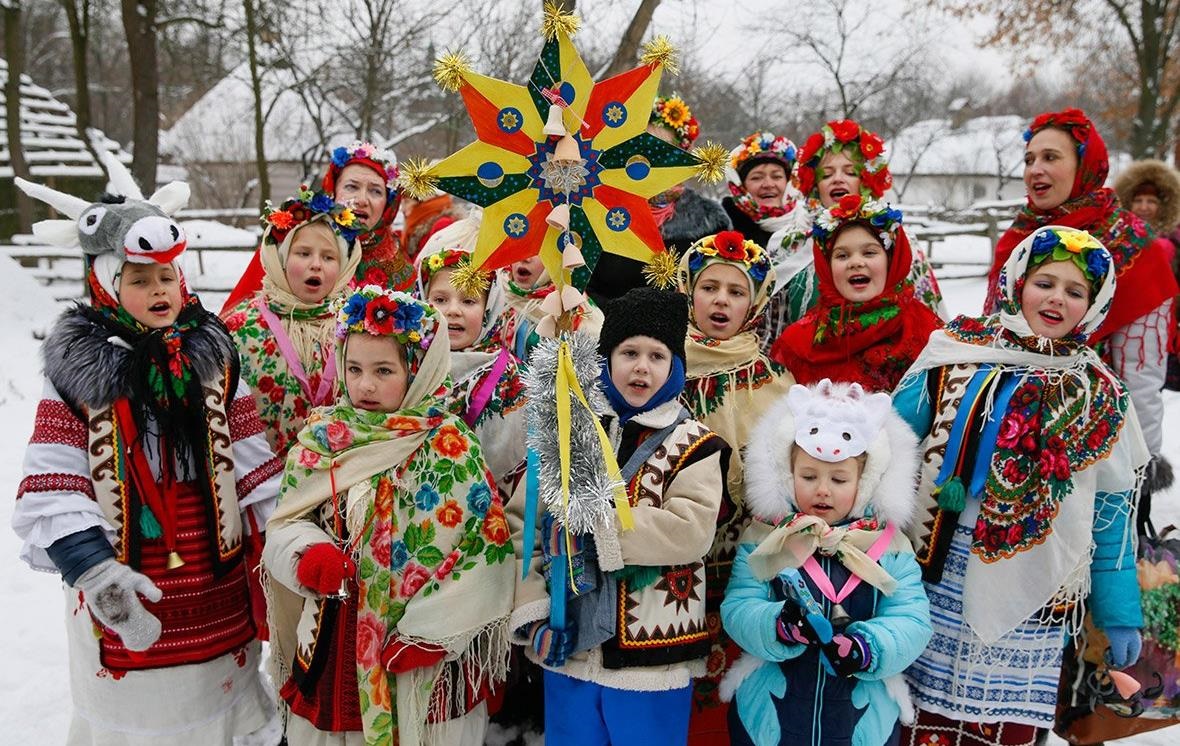
In the evening, groups of children's carol singers-boys walked through the villages. They sang carols, delivered greetings, and received gifts and money from their hosts. In the evening, male communities also joined the carol singing, which was organized in advance, elected leaders, and distributed roles. They sang carols for several nights in a row, going around all the homes, and the collected funds were transferred to the church.
Generous Evening and the End of the Christmas Cycle
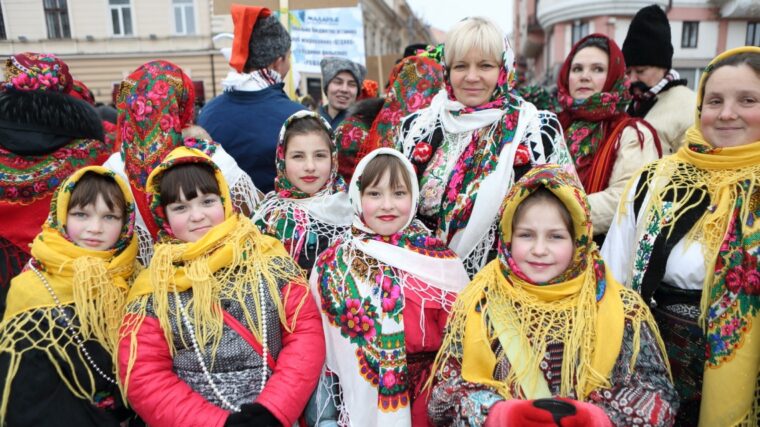
On December 31, Generous Evening, or the Feast of Malanka, was celebrated. This holiday combined pre-Christian traditions with Christian honoring of the venerable Melania of Rome. On this evening, teenage girls gave gifts under the windows, and in many localities they held a theatrical ceremony "Malanka" with masks, music, and humorous scenes.
From Christmas to Shchedryk Eve, houses were not swept, believing that good spirits of ancestors resided in them. Only on Malanka was the house thoroughly swept, and garbage was burned together with Didukh at night, symbolically cleansing the house of everything bad.
The next day, January 1, on the feast of Basil the Great, boys and men sowed their homes with grain, wishing the owners well-being and harvest. The grain was not removed until sunset, because they believed that the more sowers came, the more generous the new year would be.
A special place in the Christmas cycle is occupied by the Shchedryk carol, which over time gained world fame under the name "Carol of the Bells". On Christmas days, this melody remains one of the most famous in the world and at the same time reminds of the Ukrainian origin of the tradition, which has become a part of world culture.
Photo: ukrainianpeople.us
Автор: Данило Пєвче