The United States accepted — or, rather, saved — many Ukrainian political prisoners and dissidents from the USSR, although there were isolated cases when American authorities denied political asylum to Ukrainians who were trying to escape the “evil empire.” All those who were fortunate enough to be rescued remember with gratitude this act of humanity toward the deprived and oppressed Ukrainian people. After all, a Ukrainian in the USSR had no right to self-identification — and even less so on the international stage.
When Ukrainian political prisoners and dissidents found themselves in the free world, it was only natural that they became even more active in working for the good of Ukraine and for its liberation from Soviet occupation. Their efforts unfolded in the geopolitical, social, human-rights, and sporting spheres. This also included the struggle for a free Ukrainian Olympic movement — that is, for Ukrainians to participate in the Olympic Games separately from the USSR.
The struggle of Ukrainian dissidents became especially intense on the eve of and during the 1980 Olympic Games in Moscow.
Moscow 1980 as a challenge to Olympic values
From the very beginning, when the International Olympic Committee chose Moscow as the host city for the 1980 Olympic Games, Ukrainian political prisoners and dissidents began calling for actions and demonstrations against such a horrific and shameful decision. The most heated moment came with the USSR’s invasion of Afghanistan in 1979. This shocked the international political and sporting community and led to a boycott of the Games.
Ukrainians abroad, as well as Ukrainians under occupation, actively held large-scale protest events against the staging of Olympic competitions in the “prison of nations.” In 1980, the Ukrainian diaspora organized and took part in several global sporting events so that the international community would know about the genocide and oppression of the enslaved peoples of the USSR.
Among them were the Free Olympics in Etobicoke, Canada, in which Ukrainians, Lithuanians, Latvians, Estonians, and Armenians took part; the Olympics of Free Ukrainian Youth in Buenos Aires, Argentina; and the participation of the Ukrainian diaspora in Brazil in the Migrants’ Olympics in São Paulo. These are only a few examples of the sporting events organized by the Ukrainian diaspora. Of course, there were many more.
At that time, within the USSR itself, one could hardly expect resistance to the occupation authorities. Decades of terror were meant to eradicate any disobedience to the regime. After all, the Soviet system of fear, torture, punishment, and executions operated continuously, especially against nationally conscious Ukrainians. And yet it was precisely there, within the Ukrainian resistance movement, that the ideas of freedom and liberty remained alive.
On the eve of the Olympic Games, Ukrainian political prisoners and dissidents, unafraid of punishment and persecution, loudly called for international Olympic competitions not to be held in the USSR. They argued that this contradicted the mission and principles of Olympism, as well as the very nature of that country’s regime. The two were diametrically opposed: freedom and unfreedom, light and darkness.
It should be noted that this struggle of Ukrainian dissidents and political prisoners was deliberate and conscious. They knew what they were doing and what consequences awaited them. In other words, courage in action and decision-making is part of the Ukrainian gene.
A broader circle of dissidents: a call to stop the repressive machine
The issue of the 1980 Olympic Games was discussed at a press conference in New York on November 21, on the eve of the Third World Congress of Free Ukrainians in 1978. The press conference, organized by the WCFU Secretariat, featured Ukrainian political prisoners who had miraculously managed to escape the “communist paradise.”
General Petro Grigorenko, Leonid Plyushch, and Nadiia Svitlychna unanimously condemned the communist regime and called for a boycott of the Olympic Games.
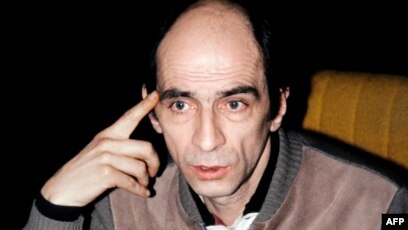
Petro Grigorenko called for a complete boycott of the Olympic Games in Moscow in 1980 if the Soviet authorities did not allow free entry into the USSR, freedom of travel, and the opportunity to meet with the population without obstruction.
Nadiia Svitlychna noted that the Soviet authorities were taking various measures to “ensure calm” during the Olympics. For that reason, some people were being arrested, some expelled, and others intimidated. She believed that those who planned to travel to the USSR for the Olympic Games should first become well acquainted with the situation in the country and with the human rights movement.
Leonid Plyushch expressed concern that the story of the 1936 Olympic Games in Berlin might be repeated, when the world appeased Nazi Germany, and two years later war had already begun. He agreed that the Olympic Games and international congresses in Moscow should be boycotted.
Other dissidents held the same view, including Vladimir Bukovsky, Natalia Gorbanevskaya, Valentyn Moroz, Nina Strokata-Karavanska, and others. They appealed to Western countries to dismantle the repressive machine that was gaining momentum in the Soviet Union by boycotting the Olympic Games.
In particular, Bukovsky, answering journalists’ questions, said that the decision to choose Moscow as the host city for the Olympic Games was irresponsible, as it sanctioned the irreversibility of repression.
At a press conference in Lake Placid, USA, Nina Strokata-Karavanska made the following appeal:
“It is not only today that grounds have arisen for objections to holding the Olympic Games in Moscow — the capital of a state that systematically violates the human rights of its own citizens, as well as the borders of sovereign nations. The world appears either enchanted by the size of the Moscow empire or lulled by its demagogic songs about national and social equality. And competent representatives of states, nations, and movements too often look with enchanted and trusting eyes at treacherous Moscow spokesmen, forgetting that before them stand representatives of a regime that is constantly preparing attacks on the fate of nations and the entire world.
This, apparently, is how one can explain the fact that Moscow was given the honor of being the Olympic city of 1980. Moscow, preparing to receive guests from all over the world, has been intensively training the cadres of those who specialize in persecuting people. The pre-Olympic period in the USSR is, above all, a period of mass repression against citizens capable of uttering even the smallest word of truth about the regime.
In the future Olympic capital and on the lands of peoples enslaved by Moscow, searches, arrests, wiretapping of private conversations, and even the resettlement of those whose words could serve as testimony to the repressive and expansionist nature of the regime are taking place. The world has already heard about the mass arrests of participants in the Helsinki movement, the arrests of clergy, and the exile of Academician Sakharov from Moscow.
The earliest arrests of members of the Helsinki movement in 1976 raised the question of whether Moscow was any better than Pretoria. Such an analogy also presented itself to the organizers of Olympic affairs, but they believed it was a sin to politicize sport. The desire of athletes to remain outside politics is understandable. Yet it is impossible to remain outside ethics — and Moscow’s ethics are the ethics of an aggressor.
Is the fresh blood of the Afghan events really needed to awaken the conscience of the world, which had been lulled to sleep during the bloody events in Ukraine, Lithuania, Latvia, Estonia, Hungary, and Czechoslovakia? By declaring Moscow an Olympic city, no one remembered those who perished as a result of Moscow’s repression and expansion. Perhaps, then, the freshest blood of Afghanistan will cry out to the sleeping conscience, and we will say ‘NO!’ to the Olympics in the capital of red fascism.
I understand that this ‘NO!’ is hardest to say for those who have devoted much effort to preparing for the Olympics. But this is not a political step — it is an ethical one, and that is precisely why it is difficult and necessary. For if, in the world of human beings, ethical principles stood above all else, the danger of destruction that hangs over the earth would disappear.”
Such powerful words from a strong Ukrainian woman rang out against holding the Olympic Games in the terrorist Soviet Union.
This same idea was also supported by Natalia Shcharanska, the wife of Ukrainian dissident Anatoliy Shcharansky. She called on “Americans to boycott the world sporting games scheduled to take place in Moscow in 1980, unless those games were moved to another country… all those who take part in the Olympics will indirectly help Soviet regime officials continue their policy of persecuting and suppressing human rights in the Soviet Union… A boycott of the Moscow Games would demonstrate Western solidarity against human rights violations and the repression of dissident movements carried out by the Soviet government. It is simply impossible to hold world sporting games in the Soviet Union — a country of terror and systematic persecution… People are sitting there in prisons, concentration camps, and psychiatric institutions, and you will go to the games?... That is the same as helping the Russians suppress human rights.”
These were wise and still deeply relevant appeals by a Ukrainian woman to the world community.
At a press conference in Lake Placid, USA, Nina Strokata-Karavanska made the following appeal:
“It is not only today that grounds have arisen for objections to holding the Olympic Games in Moscow — the capital of a state that systematically violates the human rights of its own citizens, as well as the borders of sovereign nations. The world appears either enchanted by the size of the Moscow empire or lulled by its demagogic songs about national and social equality. And competent representatives of states, nations, and movements too often look with enchanted and trusting eyes at treacherous Moscow spokesmen, forgetting that before them stand representatives of a regime that is constantly preparing attacks on the fate of nations and the entire world. This, apparently, is how one can explain the fact that Moscow was given the honor of being the Olympic city of 1980. Moscow, preparing to receive guests from all over the world, has been intensively training the cadres of those who specialize in persecuting people. The pre-Olympic period in the USSR is, above all, a period of mass repression against citizens capable of uttering even the smallest word of truth about the regime. In the future Olympic capital and on the lands of peoples enslaved by Moscow, searches, arrests, wiretapping of private conversations, and even the resettlement of those whose words could serve as testimony to the repressive and expansionist nature of the regime are taking place. The world has already heard about the mass arrests of participants in the Helsinki movement, the arrests of clergy, and the exile of Academician Sakharov from Moscow. The earliest arrests of members of the Helsinki movement in 1976 raised the question of whether Moscow was any better than Pretoria. Such an analogy also presented itself to the organizers of Olympic affairs, but they believed it was a sin to politicize sport. The desire of athletes to remain outside politics is understandable. Yet it is impossible to remain outside ethics — and Moscow’s ethics are the ethics of an aggressor. Is the fresh blood of the Afghan events really needed to awaken the conscience of the world, which had been lulled to sleep during the bloody events in Ukraine, Lithuania, Latvia, Estonia, Hungary, and Czechoslovakia? By declaring Moscow an Olympic city, no one remembered those who perished as a result of Moscow’s repression and expansion. Perhaps, then, the freshest blood of Afghanistan will cry out to the sleeping conscience, and we will say ‘NO!’ to the Olympics in the capital of red fascism. I understand that this ‘NO!’ is hardest to say for those who have devoted much effort to preparing for the Olympics. But this is not a political step — it is an ethical one, and that is precisely why it is difficult and necessary. For if, in the world of human beings, ethical principles stood above all else, the danger of destruction that hangs over the earth would disappear.” Such powerful words from a strong Ukrainian woman rang out against holding the Olympic Games in the terrorist Soviet Union. This same idea was also supported by Natalia Shcharanska, the wife of Ukrainian dissident Anatoliy Shcharansky. She called on “Americans to boycott the world sporting games scheduled to take place in Moscow in 1980, unless those games were moved to another country… all those who take part in the Olympics will indirectly help Soviet regime officials continue their policy of persecuting and suppressing human rights in the Soviet Union… A boycott of the Moscow Games would demonstrate Western solidarity against human rights violations and the repression of dissident movements carried out by the Soviet government. It is simply impossible to hold world sporting games in the Soviet Union — a country of terror and systematic persecution… People are sitting there in prisons, concentration camps, and psychiatric institutions, and you will go to the games?... That is the same as helping the Russians suppress human rights.” These were wise and still deeply relevant appeals by a Ukrainian woman to the world community.

Самвидав і “Асоціація олімпійських гарантій”
It should be noted that within the USSR itself, a resistance movement had begun to emerge several years before the Games. During the 1980 Winter Olympic Games in Lake Placid, USA, the Ukrainian Information Service “Smoloskyp” reported that it had received a new samizdat document from the Soviet Union — an appeal from the “Association of Olympic Guarantees in the USSR.” The document was translated into English and, together with an explanatory note, was handed on February 15, 1980, by a representative of “Smoloskyp” to Zbigniew Brzezinski at the White House and to official representatives of the State Department.
It is difficult to say with certainty how this document reached the free world from behind the “Iron Curtain.” Yet it did happen, and the world learned about resistance to the Soviet regime inside the USSR itself. The very existence of such an Association in the USSR deserves attention, while the presence of its appeal testifies to the exceptional importance of its activity. After all, on the eve of the Olympic Games in Moscow, calls for a boycott or for relocating the Games to another country were being heard ever more loudly and frequently.
While the appeal of the “Association of Olympic Guarantees in the USSR” was anonymous — because no one dared to sign it openly, or perhaps because it was a planned and controlled provocation by Soviet special services — another manifesto did have its authors.
In early 1980, the Ukrainian Supreme Liberation Council published an appeal by political prisoners in Mordovia to the participants of the Olympic Games, titled “The Essence of the Regime Remains Unchanged.” The authors of the appeal were Eduard Kuznetsov, Alexander Ginzburg, Balys Gajauskas, Yevhen Yevhrafov, Sviatoslav Karavansky, Levko Lukianenko, Volodymyr Murzhenko, Mykhailo Osadchy, Oleksa Rebryk, Vasyl Romaniuk, Anatoliy Stepanov, and Danylo Shumuk.
It is worth noting that the overwhelming majority of the signatories were Ukrainians. This was yet another “cry of the soul” from political prisoners in the USSR, who had endured years of suffering under the total genocide of the Soviet punitive machine.
The “Olympic Roundup”: the arrest of Vasyl Stus and the cleansing of Kyiv

Within the USSR itself, thousands of Ukrainians felt the negative consequences of the 1980 Olympic Games. Among them was Vasyl Stus, a guiding light of the national struggle, whose second arrest took place on May 15 of that same year, as did the ordeal endured by his family.
His son, Dmytro Stus, recalls those difficult times as follows:
“Our outwardly peaceful family life lasted until mid-May. And although some tension, incomprehensible to me as a 13-year-old teenager, was growing in the air, I did not understand it and therefore tried not to take it to heart. Besides, it was a lush spring, and I was staying more and more often on the forest football field that my classmates and I had built in the woods near Petro-Pavlivska Borshchahivka, living the way thousands of other carefree teenagers lived. The Soviet Union was preparing for the Olympics. A group-stage football tournament was to take place in Kyiv, and more and more often I heard talk that the city was being cleared of ‘undesirable elements.’ My mother became completely nervous and reacted strangely to every phone call. On May 14, after making up my missed work in Russian literature, I rushed home for my uniform so I could run off to play football in the forest. No one was supposed to be home in our two-room apartment on Chornobylska Street in Kyiv. But when I opened the door, someone’s strong hands gently yet firmly pressed me against the bathroom door, searched me, and tore from my hands the linen bag I used instead of a school briefcase. I did not even have time to become frightened, because I immediately saw my father’s face… Then my father said goodbye to my mother. And I still could not comprehend what I had heard. Only several decades later, when I came across this thought, I think in Umberto Eco, did I understand that on the night of May 15, 1980, I received the most important lesson of love in my life.
When the door closed at around one o’clock, all I could see were my mother’s dry, black eyes. And in the dreadful silence that settled over the apartment, I could not rid myself of the treacherous thought that those eyes were the most terrible price for the right to be oneself.”
“At the beginning of 1980, I learned that a case had been fabricated against Viacheslav Chornovil in Yakutia, and that Stus had spoken out in his defense. This statement of his became part of the new accusation against him.
In May, I was summoned by an investigator of the KGB of Zaporizhzhia Oblast, together with Bykov, the prosecutor of Vilniansk District. The investigator, struggling to speak Ukrainian, tried to interrogate me... in the case of Vasyl Stus. Thus his eight-month ‘leave’ in Ukraine had come to an end... This was the beginning of the ‘Olympic roundup.’ Stus was arrested on May 14, 1980… V. Shcherbytsky… could think of nothing better than to turn Kyiv into a ‘model communist city.’ Since his predecessors had already worked quite thoroughly in that direction, all that remained for him was to cleanse the city of prostitutes, thieves, ‘pipe-dwellers’ — the homeless — and, of course, the ‘wretched renegades.’ All the more so because some events of the Moscow 1980 Olympics were to be held in Kyiv that summer.
This sweep caught not only the people mentioned above. During 1977–1980, the following were imprisoned: Mykola Rudenko on February 5, 1977; Oleksa Tykhyi on February 5, 1977; Vasyl Barladianu, a sympathizer of the Ukrainian Helsinki Group, on March 2, 1977; Myroslav Marynovych on April 23, 1977; Mykola Matusevych on April 23, 1977; Heliy Sniehiriev, who was close to the Group, on September 22, 1977 and died in captivity on December 28, 1978; Petro Vins on December 8, 1977; Levko Lukianenko on December 12, 1977; Yosyf Zisels on December 8, 1978; Vasyl Ovsiienko on February 8, 1979; Oles Berdnyk on March 6, 1979; Mykhailo Melnyk died on March 9, 1979; Petro and Vasyl Sichko on June 6, 1979; Yuriy Lytvyn on August 6, 1979.
Before V. Stus, Petro Rozumnyi was imprisoned on October 3, 1979; Mykola Horbal on October 23, 1979; Yaroslav Lesiv on November 15, 1979; Vitaliy Kalynychenko on November 29, 1979; Hanna Mykhailenko, an undeclared member of the Group, on February 20, 1980; Zinoviy Krasivskyi on March 12, 1980; Olha Heiko-Matusevych on March 12, 1980; Viacheslav Chornovil on April 2, 1980; Ivan Sokulskyi on April 11, 1980. And then came Vasyl Stus, Dmytro Mazur on June 30, 1979, and Oksana Yakivna Meshko herself on October 13, 1980…
On September 5, 1980, I was taken on a prisoner transfer — and, wonder of wonders, at Lukianivka Prison in Kyiv I happened to meet Yuriy Lytvyn and spend a full ten days in the same cell with him. That was a true gift to us from the Ministry of Internal Affairs! It turned out that Lytvyn, for lack of imagination in the KGB heads, had had a ‘case’ fabricated against him similar to mine — resistance to police officers, also three years on criminal charges. They had taken him to Kherson Oblast for the summer so that, while sitting in Bucha near Kyiv, he would not disrupt the Olympics. Now they were taking him back to Bucha. It turns out that I, too, had not been moved from place to place because of the Olympics.”
This was how the Soviet regime fought against the Ukrainian movement of resistance to tyranny. People were arrested, baselessly accused of crimes, stigmatized, humiliated, and killed. This happened on a particularly massive scale on the eve of the Olympic Games.
Thus, Ukrainians behind the “Iron Curtain” and Ukrainians of the free world fought together against holding the Olympic Games in a country of terror, genocide, human rights violations — an aggressor, an attacker against other independent states, an occupier: the USSR.
Author: Oleksii Lyakh-Porodko