


For the first time since 2022, the Embassy of Ukraine in Washington, DC reopened its doors to visitors during Passport DC, the annual program that invites the public inside diplomatic missions across the nation’s capital to experience their culture, history and traditions.
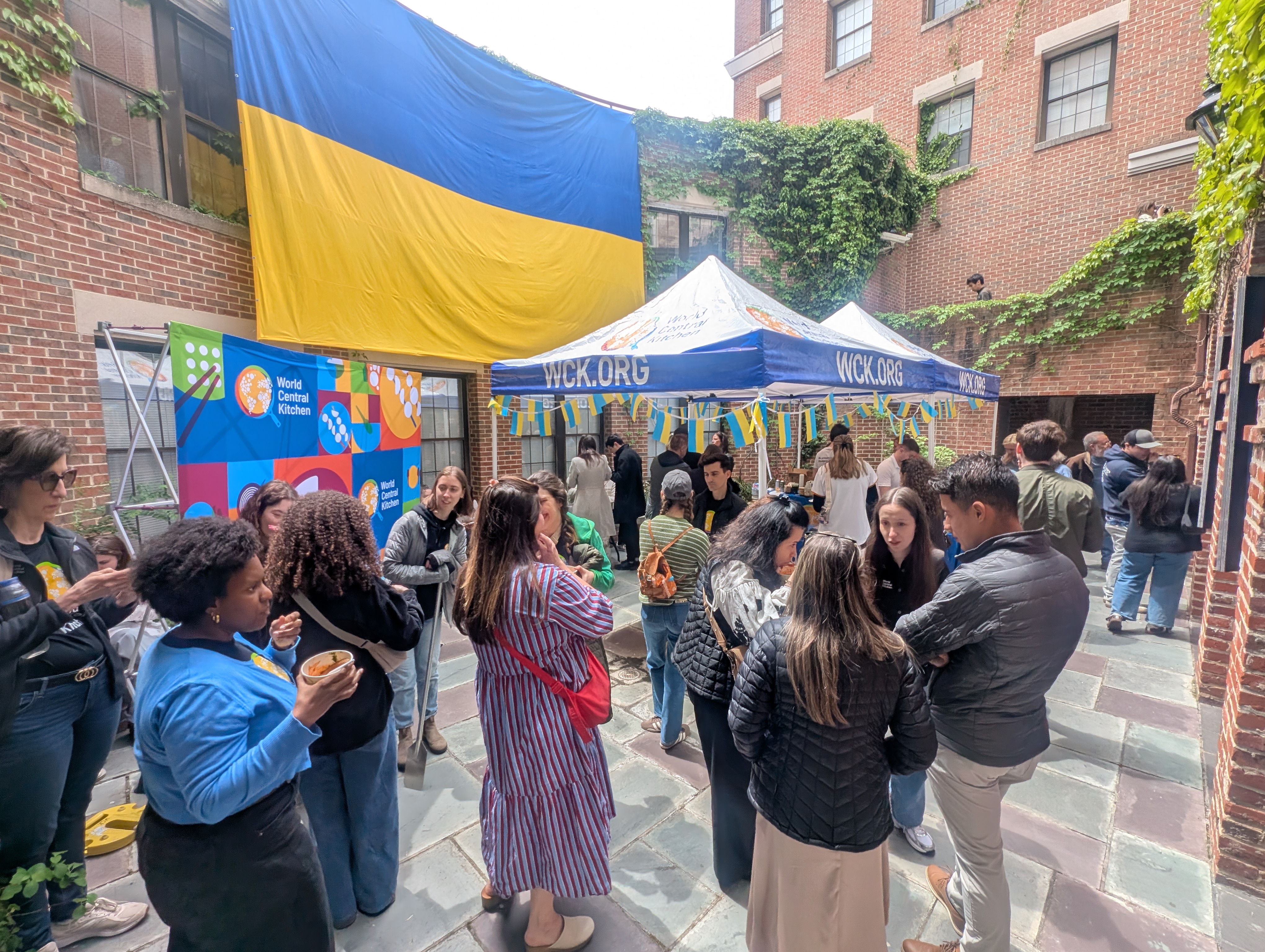
Hundreds of people - not only Ukrainians, but also American citizens - came to the embassy to see Ukrainian exhibits. The Embassy of Ukraine has participated in Passport DC for 19 years, but after 2022 the building was closed to mass visitors because of the war.
“Since 2022, for many reasons, we stopped inviting visitors into our building,” explained Denys Sienik, Deputy Chief of Mission of Ukraine to the United States. “Today is the first time we opened the embassy since 2022.” He added that visitors had constantly asked when they would be able to return to the embassy. “A large number of people came today, and we hear words of gratitude because we are fighting not only for Ukraine’s freedom, but for the freedom of the free world as well,” Sienik said.

The House Where the American Capital Was Born
The Embassy of Ukraine sits inside the Forrest–Marbury House, one of Washington’s most historically significant buildings and a place closely tied to the founding of the American capital. It was there, on March 29, 1791, that George Washington met with local landowners during a dinner that helped secure the land for the future city of Washington.

This year, as the United States approaches the 250th anniversary of its independence, Ukrainian diplomats created a special exhibition highlighting the building’s role in American history. Among the artifacts on display was a George Washington’s diary entry describing the gathering that helped shape the future capital.
The dinner is widely seen as a turning point in the creation of the nation’s capital. Within a year, construction of the White House had begun, and by 1793 the cornerstone of the U.S. Capitol was laid. A Library of Congress study conducted through the Historic American Buildings Survey describes the Forrest–Marbury House as “the only building in Washington whose documented history is directly connected to the founding of the federal capital.”
The house was built for Uriah Forrest — a Revolutionary War veteran, ally of George Washington and mayor of Georgetown, then a separate city and now Washington’s oldest neighborhood.
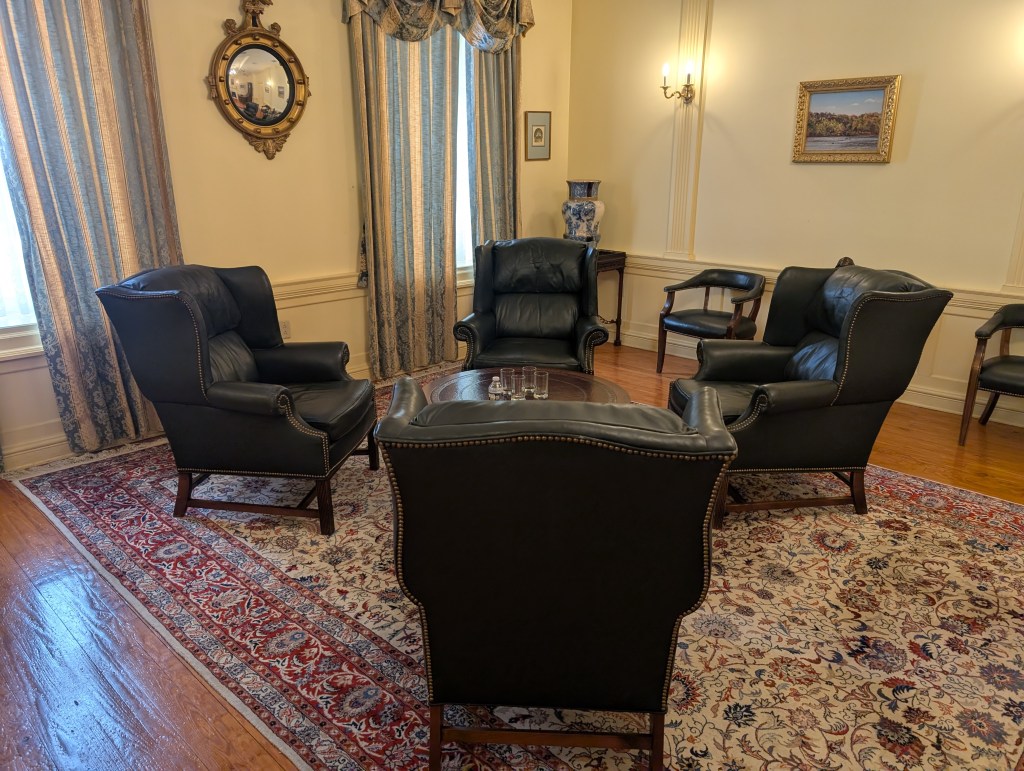
More than two centuries later, the building remains one of the capital’s rare surviving examples of early Federal-style architecture, with its original wooden staircases, antique window frames, decorative wall panels and brickwork still intact.
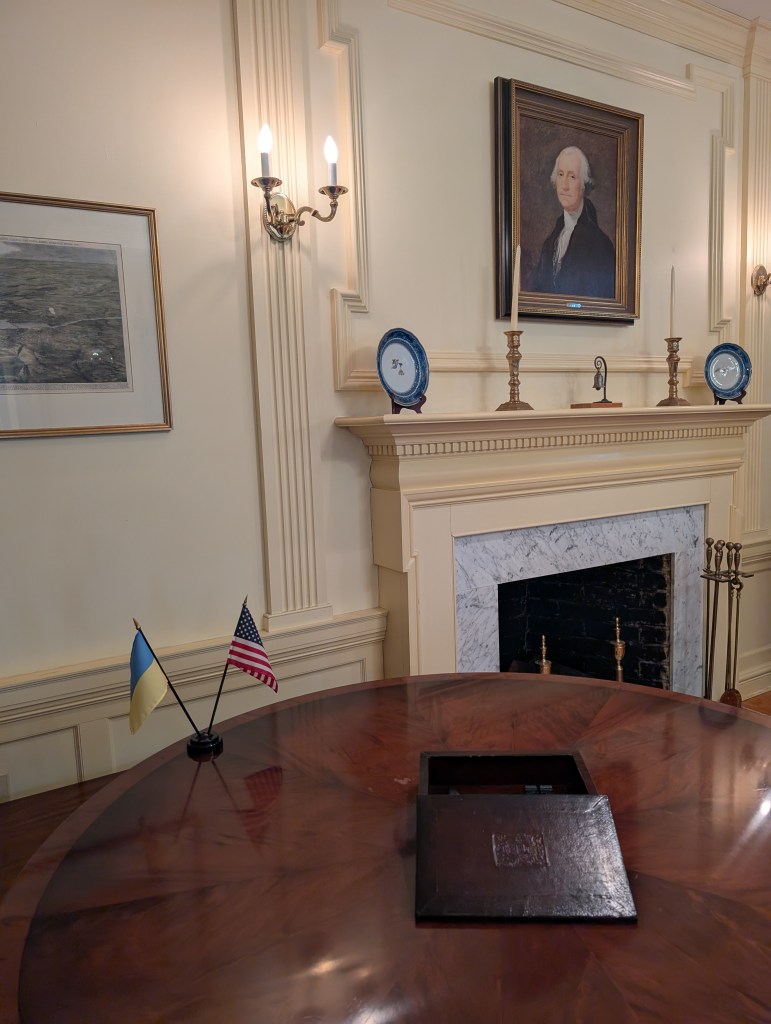
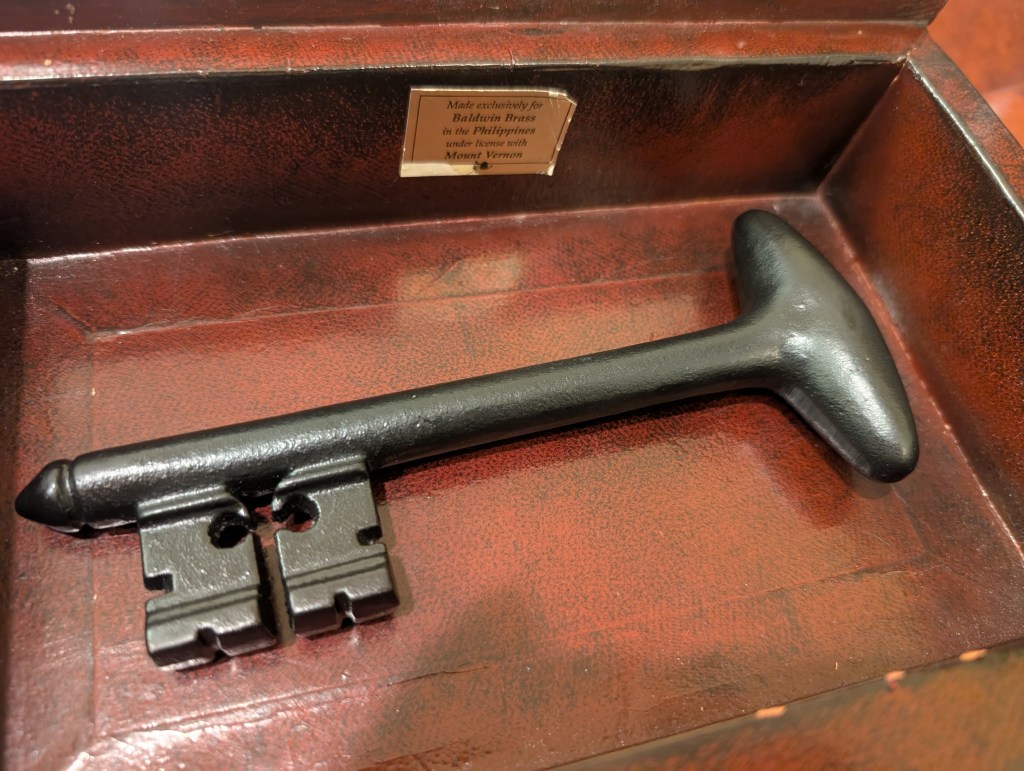
Among the items preserved inside the embassy is a replica of the key to the Bastille, the Paris fortress whose fall became one of the defining symbols of the French Revolution. The original key was presented by the Marquis de Lafayette to his friend George Washington and is now kept at Mount Vernon.
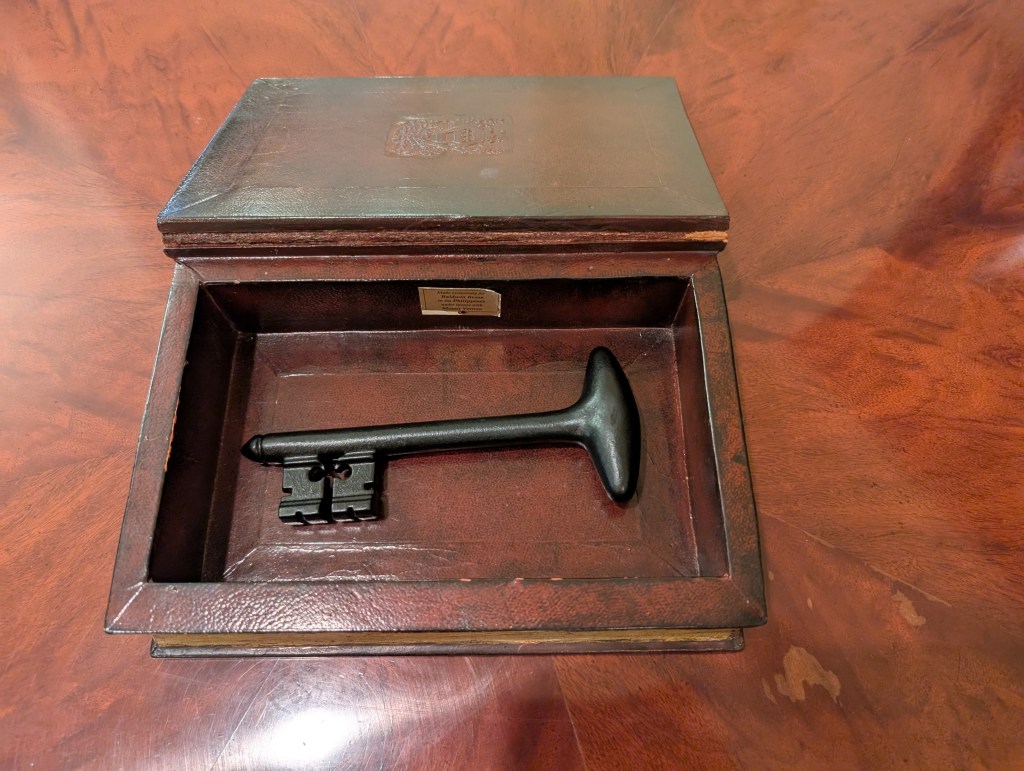
The original key was presented by the Marquis de Lafayette to his friend George Washington and is now kept at Mount Vernon.
The Forrest–Marbury House is tied not only to the founding of Washington, but also to the development of the American constitutional system. Its second owner, William Marbury, became the central figure in the landmark 1803 Supreme Court case Marbury v. Madison, which established the principle of judicial review and affirmed the Supreme Court’s authority to interpret the Constitution over laws passed by Congress.

“We are thrilled to be part of American history and happy to join the United States in celebration of 250 years of independence, as Ukraine celebrates 35 years of finally getting free from the Soviet Russian empire,” Sienik said.
“There Is One Embassy We Will Visit Under Any Circumstances — Ukraine”
As part of Passport DC, Ukrainian diplomats guided visitors through the embassy, including Jan Du Plain, one of the founders of the citywide initiative.

Speaking to guests, Du Plain recalled helping launch the festival nearly two decades ago as a way to open Washington’s diplomatic missions to the public and give residents a chance to experience other cultures through direct personal contact.
“19 years ago, I was part of the team that launched Passport DC,” Du Plain recalled. “The idea was to open embassies so people could come and experience different cultures. Today, 70 embassies open their doors. And Ukraine has been with us from the very beginning.”
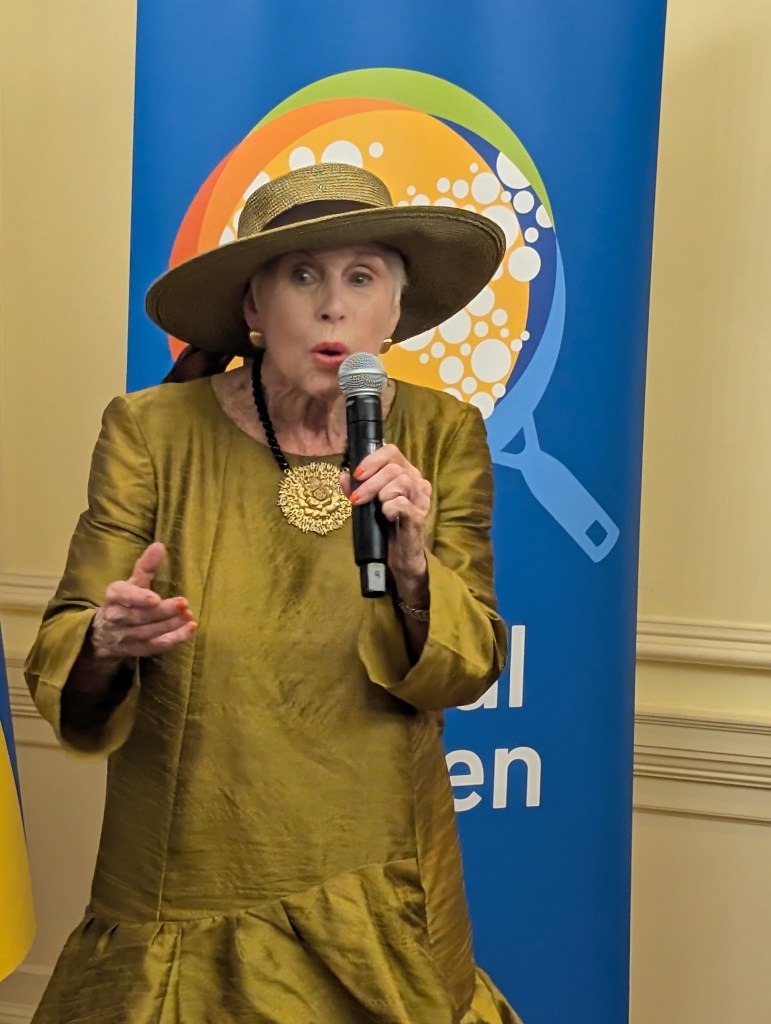
Du Plain said cultural diplomacy has taken on added significance during the war because it allows people to form a personal and emotional connection with Ukraine and not forget about the war.
“I said today that among the 70 embassies, there is one embassy we will visit under any circumstances. And that is Ukraine,” Du Plain said. “Being here today is proof of the power of cultural diplomacy. This connection on such a personal and emotional level is felt today more than ever before. God bless you.”
“Ukrainians Are Tough Cookies”: World Central Kitchen on War and Humanitarian Work
Du Plain’s remarks about emotional connection and cultural diplomacy echoed through another part of the embassy event, where representatives of World Central Kitchen spoke about their work in Ukraine since the first days of Russia’s full-scale invasion. Founded by celebrity chef José Andrés, the organization is widely known to Americans less for politics than for delivering food and emergency aid in the world’s crisis zones.
Javier García, CEO and co-chair of World Central Kitchen, said the organization began in 2022 with a mobile kitchen at the Polish border before rapidly expanding into a nationwide support network across Ukraine.
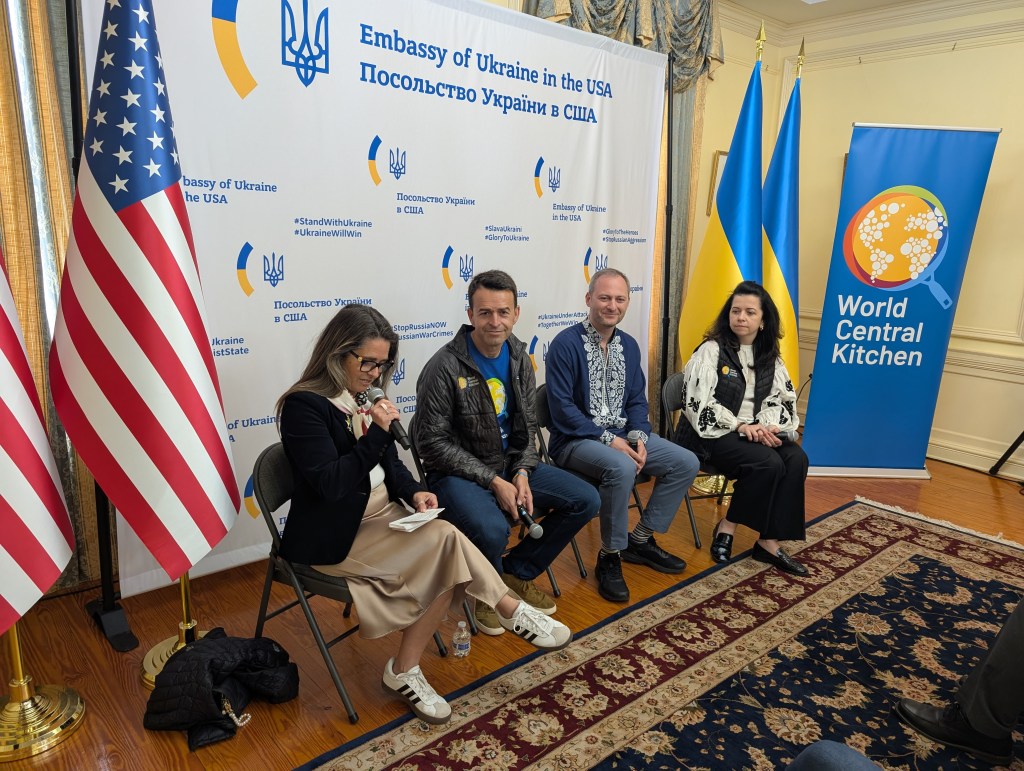
As the war evolved, he said, Russia increasingly shifted its attacks toward civilian infrastructure, trying to make everyday life unbearable for ordinary Ukrainians, particularly during the winter months.
“The war came to where people live, work, and go to school,” García said while speaking to American visitors. “The war became part of every Ukrainian’s life.” García said the organization’s humanitarian operations had to adapt as Russia intensified attacks on Ukraine’s energy infrastructure, triggering widespread blackouts and harsh winter conditions. World Central Kitchen teams began cooking outdoors, operating in freezing temperatures and delivering aid to small frontline communities increasingly cut off from basic services.
After missile strikes, WCK teams respond almost immediately. A nationwide network of emergency coordinators allows hot meals to reach affected communities within one or two hours of an attack.
The experience in Ukraine, he added, has reshaped the organization’s global operations and influenced how World Central Kitchen now responds to crises in other parts of the world. And the Ukrainian team helped make the organization itself stronger and more effective.
“If today we can operate at this scale in other crisis regions around the world, including Gaza, much of that is thanks to Ukraine,” García said. “Ukraine helped us understand how to respond quickly and flexibly while never forgetting each individual person.”
Trains Under Attack
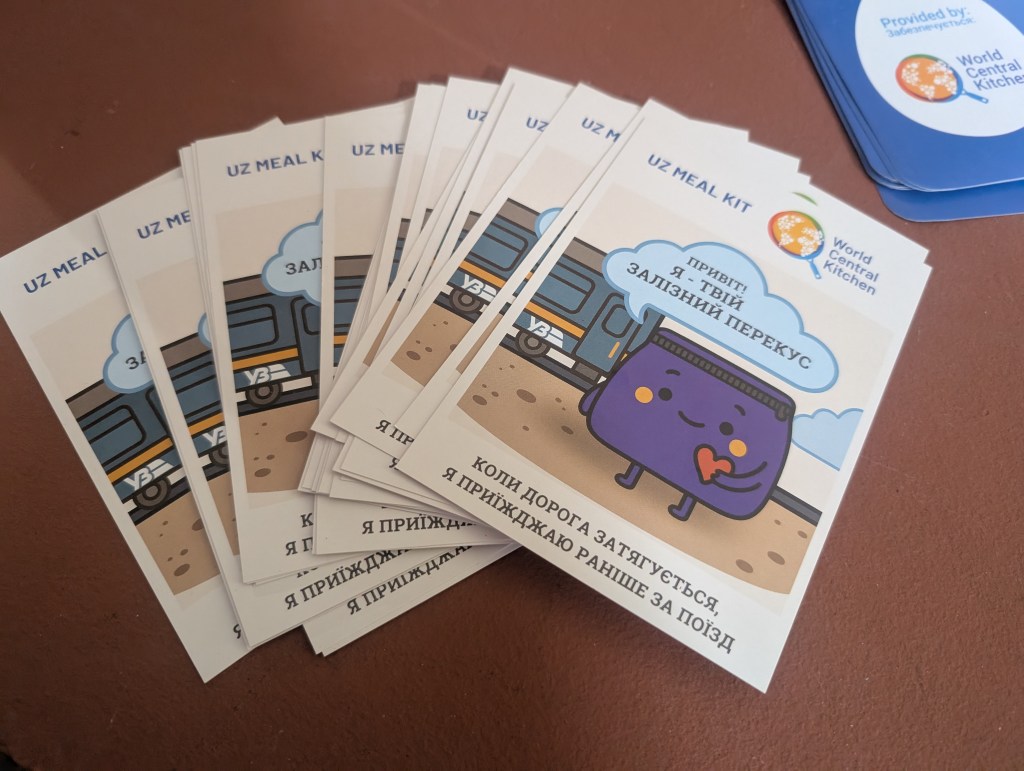
Another exhibit introduced visitors to the reality of Ukraine’s wartime railway system and the constant Russian attacks targeting passenger trains and civilian infrastructure. Organizers said many Americans struggle to imagine a rail network continuing to operate under missile strikes and shelling, with passengers often stranded for hours because of damaged tracks and power systems.

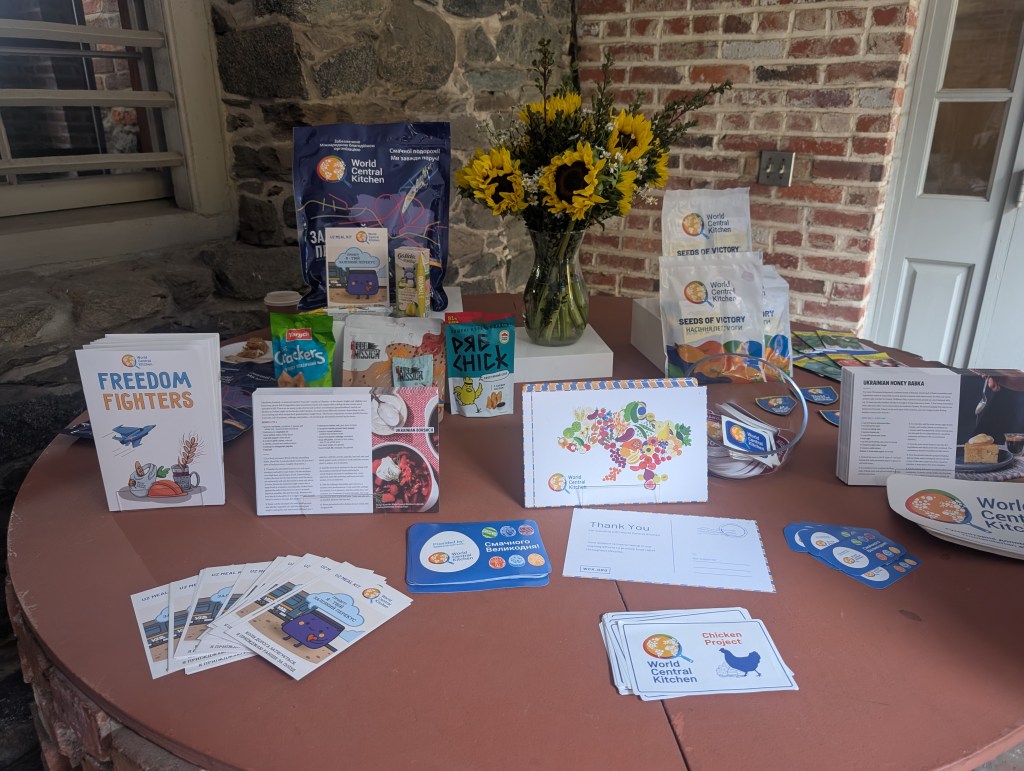
The special UZ Meal Kit food package is distributed to passengers forced to remain on trains because of damaged infrastructure.
“People can grab a bite while traveling by train or waiting to reach their final destination,” said Yuliya Stefanyuk, World Central Kitchen Response Director for Ukraine. “We understand that the railway is one of the most important logistical tools in Ukraine. And people traveling are sometimes delayed for five, six, or seven hours because of these attacks.”
Seeds of Victory
Stefanyuk said the organization’s mission has gradually expanded beyond emergency food distribution toward longer-term projects aimed at helping communities survive on their own. In frontline regions where Russian drone attacks frequently disrupt deliveries, World Central Kitchen now helps residents grow their own food.
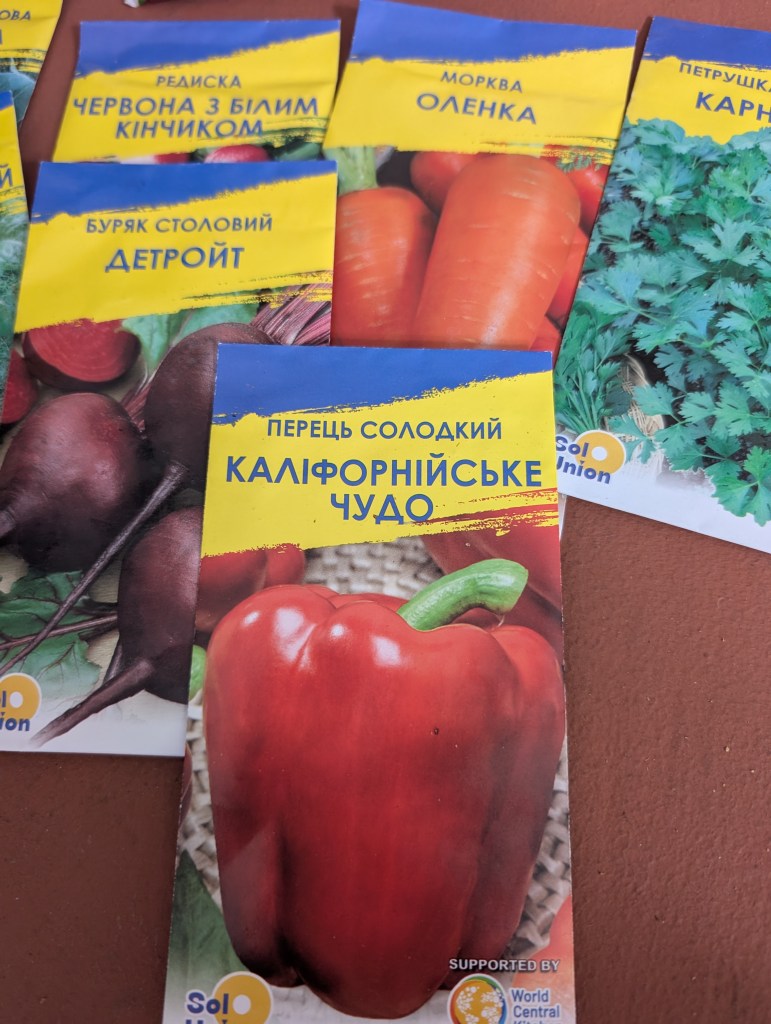
“For this project, we specially selected varieties that grow well in different regions of the country — from north to south,” Stefanyuk said. “These are varieties developed in Ukraine, and all the seeds are Ukrainian-made. These are the seeds of victory.”
World Central Kitchen follows the project from the first seedlings to the autumn harvest, when residents of frontline villages often share tomatoes, peppers and cucumbers they grew with volunteers. To help communities maintain access to fresh vegetables throughout the year, the organization has already distributed nearly 2,000 greenhouses.

“We give people the ability to provide food for themselves,” Stefanyuk said. “After a cold spring and in conditions of constant uncertainty, greenhouses can help people secure a stable and high-quality harvest.”
Another initiative, known as the Chicken Kit project, supplies families in frontline communities with 10 hens and enough feed to last roughly six months. World Central Kitchen says the program is designed to help residents slowly rebuild a sense of stability and self-sufficiency after years of war.
“These hens allow people to have fresh eggs for their own tables or for sale,” Stefanyuk said. “It is also a way of survival and self-reliance.”
World Central Kitchen has also built communal kitchens inside shelters for displaced Ukrainians, many of whom arrive after evacuation with no place to prepare meals of their own.
At the embassy event, visitors encountered Ukraine not only through speeches and exhibits, but also through borscht - a dish that for many Ukrainians has become a symbol of home, identity and resilience during the war.
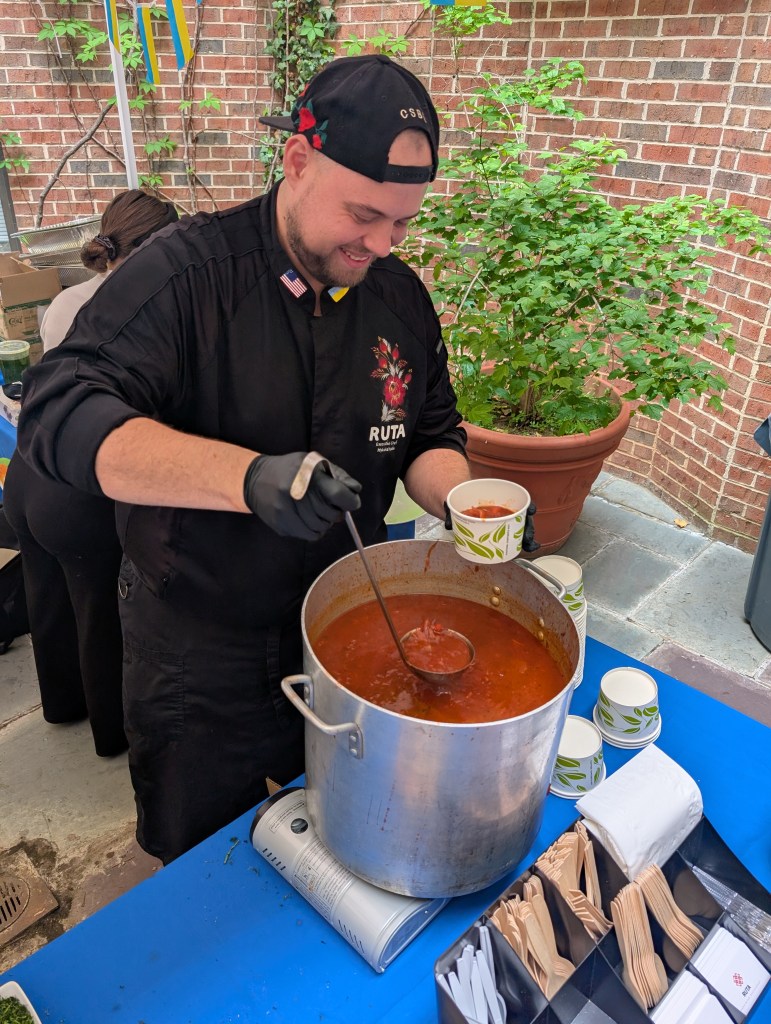
As he tasted borscht with pampushky, García said even small acts of support can carry enormous weight.

За його словами, WCK говорить про мільйони виданих обідів, але все одно все починається з однієї тарілки їжі для однієї людини.
“Every meal matters. Every person we feed matters,” García said. “It is small steps that ultimately create big changes.”

García added that before 2022 he knew almost nothing about Ukraine, but after many visits he became deeply impressed by Ukrainians’ resilience during the war.
“All I know about Ukraine - they are tough cookies,” García said.
From Defense Aid to Ukrainian Wine: How a U.S. Veteran Turned a Trip to Ukraine Into His Life’s Mission
Before 2022, American veteran and former defense industry executive Sam Lerner knew little about Ukraine. Then, shortly after Russia launched its full-scale invasion, he received a call from friends — former U.S. Special Forces soldiers assembling a team to help the Ukrainian government procure weapons and military equipment. What was supposed to be a one-week trip eventually became what Lerner now describes as the mission of his life.

“They told me: ‘Do you see what’s happening? This is the largest war in Europe since World War II. A key ally is being invaded and the world is not responding,’” Lerner recalled. “‘We’re putting together a team to go to Ukraine and help the government build a system for weapons and equipment procurement.’” For Lerner, the request felt deeply familiar. “That was exactly my specialty,” he said. “I packed up my body armor, chemical warfare equipment, medical equipment, and got on a plane to Warsaw and went into Ukraine.”
In Ukraine, Lerner discovered local wines and began bringing them back to America.
“But as I went back and forth, I got angrier and angrier that I couldn't find the amazing wine and spirits that I had fallen in love with in Ukraine. ,” Lerner joked. “So I did what any self-respecting American veteran would do. I started illegally smuggling vodka and wine back to the United States.”
Later, Lerner founded a company with Ukrainian and American veterans that he describes as a form of cultural diplomacy built around Ukrainian wine and spirits. Working with wineries from regions including Odesa and Lviv, the company has helped place Ukrainian wines in more than 700 US locations across nearly 20 states.
A portion of the profits supports humanitarian work in Ukraine. Lerner said 10 percent of the company’s revenue goes to Invictus Global Response, an organization founded by American and British veterans that helps clear mines from liberated Ukrainian territories.
The highlight of the presentation was a special bottle of Ukrainian vodka created from a spent 155mm artillery shell casing brought from the battlefield in Ukraine.
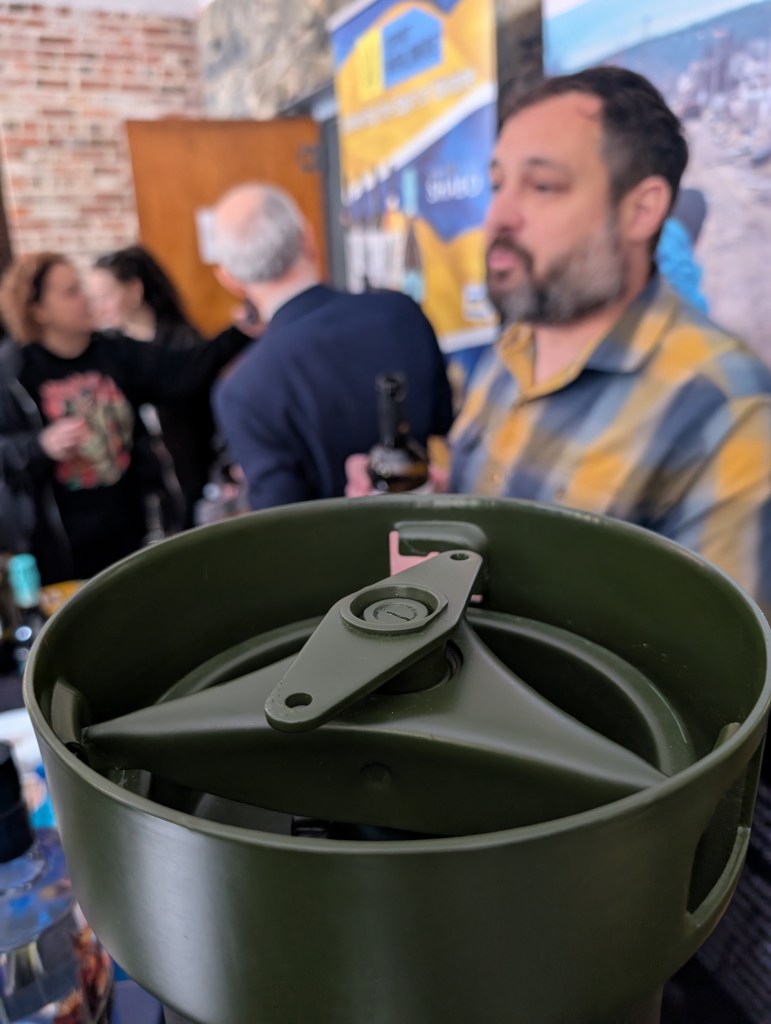
Two hundred fifty years ago, artillery helped George Washington’s army win the fight for American independence. Today, as Ukraine wages its own battle for freedom, echoes of that history could be felt throughout the reopening of the Ukrainian Embassy to American visitors in Washington.
Author: Andrew Getman
