


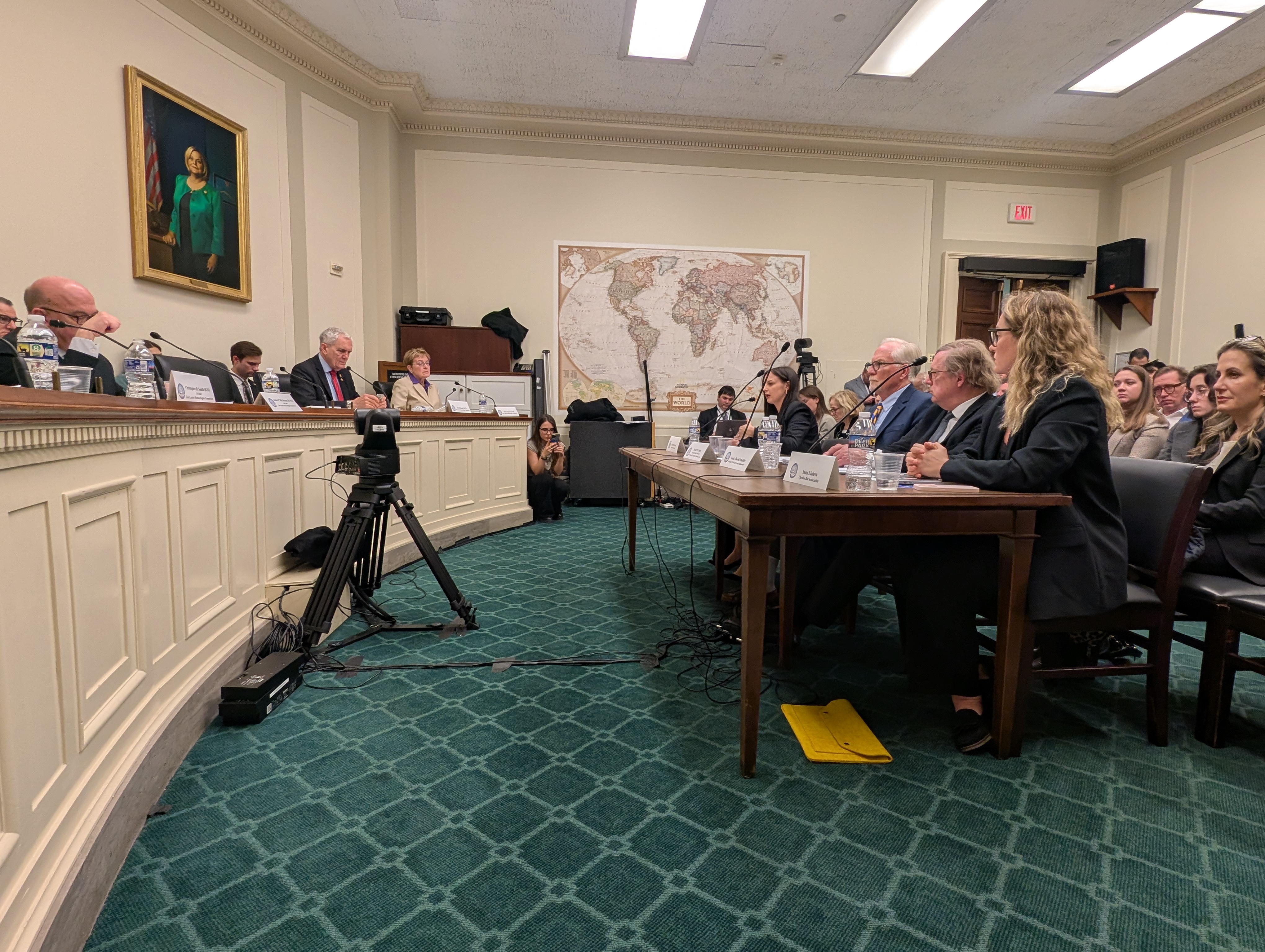
 On March 25, lawmakers, human rights advocates and policy experts gathered in the U.S. House of Representatives to discuss one of the most painful aspects of Russia’s war against Ukraine: the systematic abduction of Ukrainian children from temporarily occupied territories.
The day after the hearing, the U.S. State Department announced $25 million in funding for programs aimed at returning the children and supporting their rehabilitation.
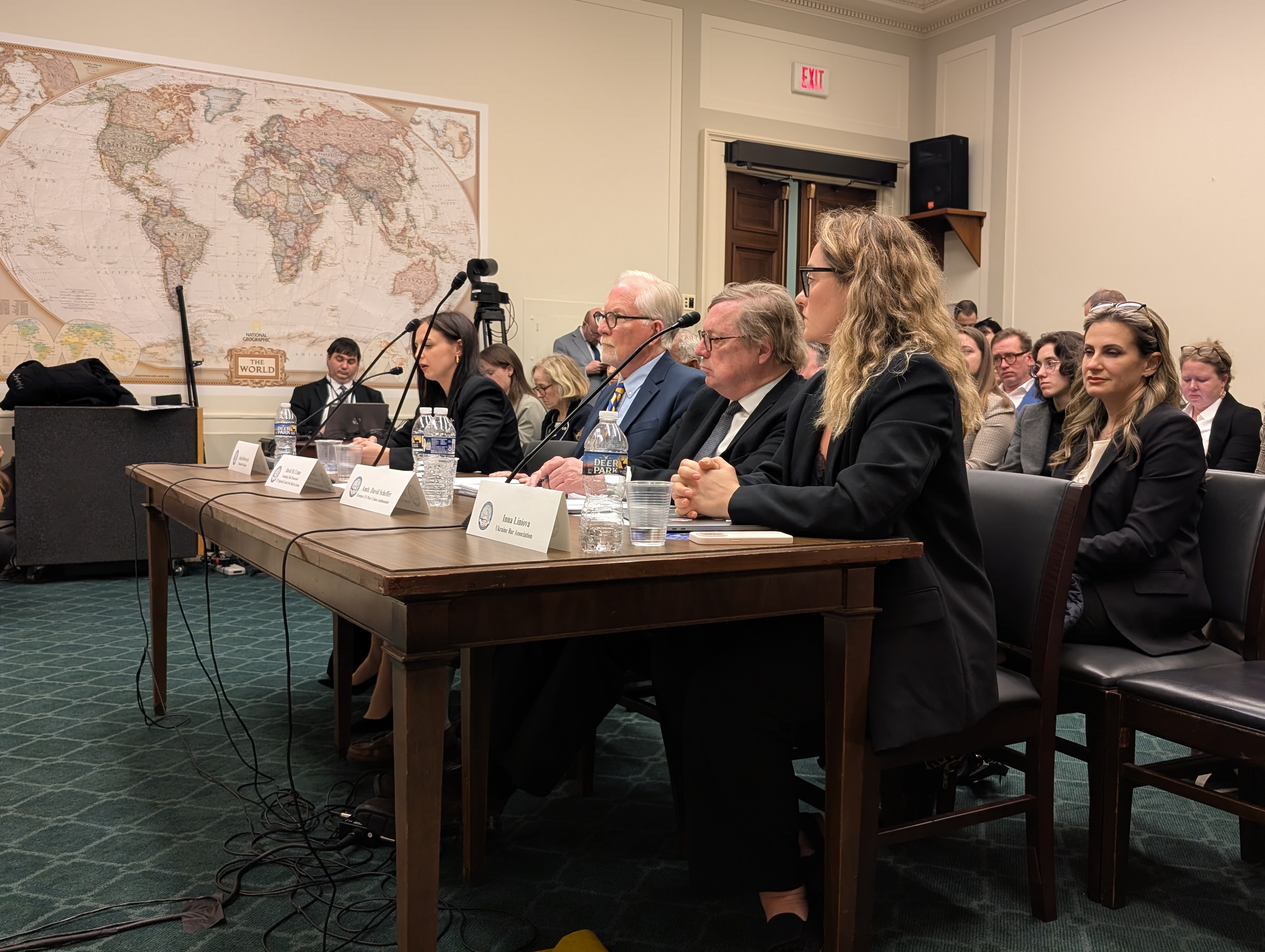
Among those who testified was Katya Pavlevych, a policy adviser at the American Coalition for Ukraine (ACU) and Razom. For several years, Pavlevych has worked to bring the issue of Ukrainian children abducted by Russia to the attention of U.S. lawmakers.
She has participated in congressional hearings and advocacy efforts during the Ukraine Action Summit, a forum organized by ACU twice a year and has promoted initiatives aimed at returning the children and holding those responsible accountable.
On March 25, lawmakers, human rights advocates and policy experts gathered in the U.S. House of Representatives to discuss one of the most painful aspects of Russia’s war against Ukraine: the systematic abduction of Ukrainian children from temporarily occupied territories.
The day after the hearing, the U.S. State Department announced $25 million in funding for programs aimed at returning the children and supporting their rehabilitation.
Among those who testified was Katya Pavlevych, a policy adviser at the American Coalition for Ukraine (ACU) and Razom. For several years, Pavlevych has worked to bring the issue of Ukrainian children abducted by Russia to the attention of U.S. lawmakers.
She has participated in congressional hearings and advocacy efforts during the Ukraine Action Summit, a forum organized by ACU twice a year and has promoted initiatives aimed at returning the children and holding those responsible accountable.
How advocacy turns into policy decisions
For the American Coalition for Ukraine, which organizes the Ukrainian Action Summit, this sequence of events - from advocacy to congressional hearings and a subsequent government decision illustrates how civil society can influence policymaking in Washington. Experts and civic organizations regularly provide lawmakers with new information, draw attention to pro-Ukraine legislation and maintain ongoing contact with the offices of senators and members of Congress. They also continue to remind policymakers about key issues to ensure they remain on the political agenda. Such sustained efforts: constant briefings, dialogue with lawmakers and public attention to the issue represent one of the key ways civil society can shape policy debates and decisions in Washington.
U.S. Congress increases focus on the abduction of Ukrainian children
On March 25, 2026, Congressman James McGovern of Massachusetts and Congressman Chris Smith of New Jersey, Co-Chairs of the Tom Lantos Human Rights Commission held a hearing titled “Ukraine: Abducted Children and Mechanisms for Accountability.”
Commission co-chair Rep. Chris Smith said the international community must intensify efforts to address the issue. “We just need to do more. Putin is a war criminal with very few equals, ever. This war of aggression - totally unprovoked - needs to end, and it needs to end as quickly as possible. Those kids have to get back to their families,” Smith said.
U.S. foreign policy toward Ukraine, including pressure on Russia over the return of abducted children is ultimately carried out by the executive branch, the White House. But when Congress speaks with a unified voice, it can influence the Trump administration’s approach. Rep. Greg Landsman said the commission is closely focused on the abduction of tens of thousands of children and on exposing those responsible. “The commission is obviously focused on the stealing of tens of thousands of children and on exposing those responsible”, Landsman said. “I hope that by raising this issue we can bring about the changes that are needed - namely, returning these children home. We heard a lot about ways in which we can do that, including things that weren’t previously on our radar, so we’re going to get involved and try to do as much as we can.”
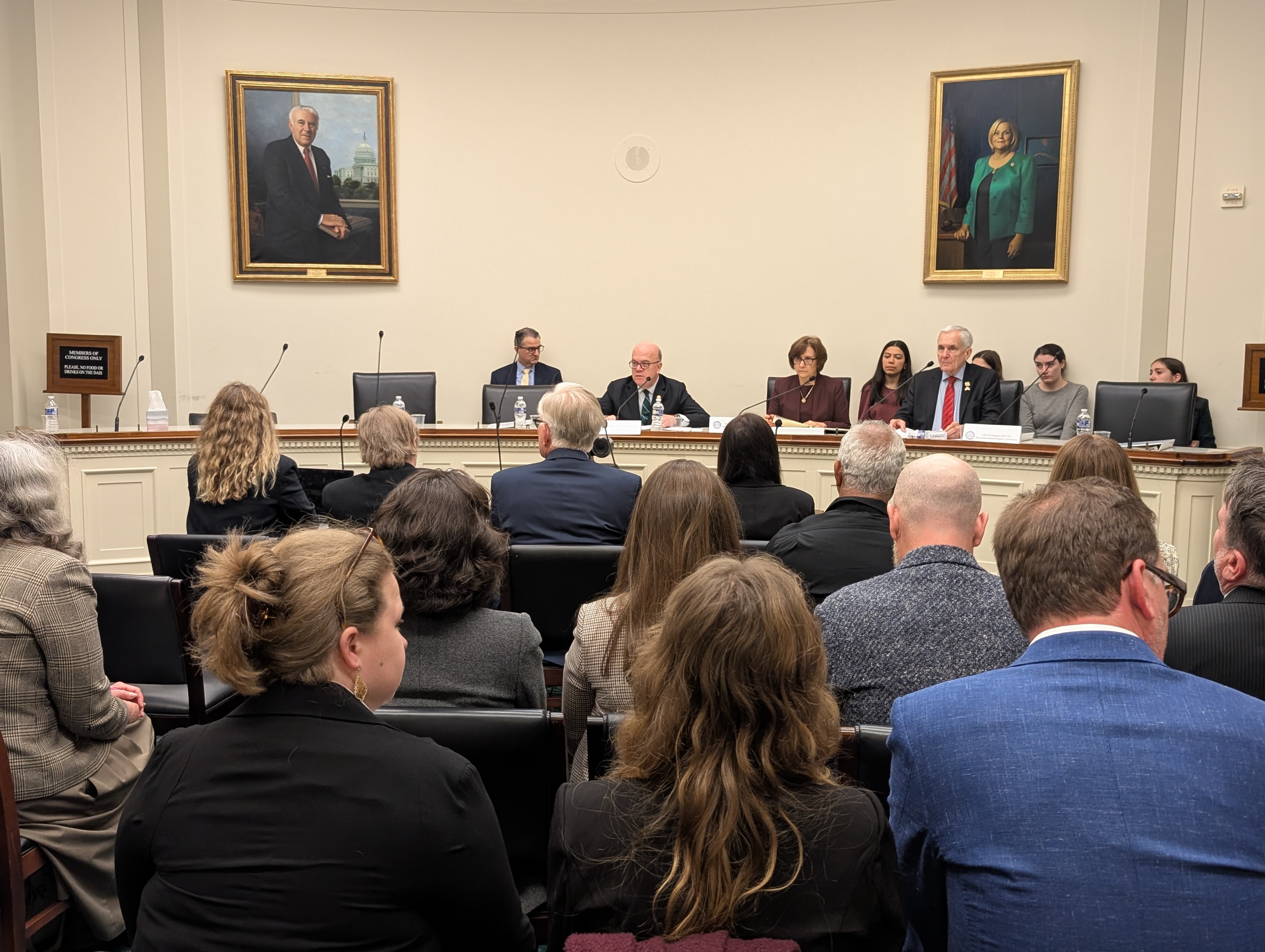
According to Katya Pavlevych, a policy adviser at the American Coalition for Ukraine and Razom for Ukraine, sustained engagement by Ukrainian and American civil society organizations with lawmakers has helped keep the issue at the center of congressional attention. “The hearing addressed a very important issue - one of the few that unites Republicans and Democrats in the United States,” she said. “It concerns the abduction of Ukrainian children and the search for mechanisms to ensure justice for them.”
Rep. James McGovern, who co-organized the hearing, stressed the need for broader congressional engagement and further action, urging several committees to take up the issue and ensure accountability: “We need other committees to hold hearings. We need to call administration officials here and demand answers. We need to figure out ways to make sure that human rights is part of any negotiations to end this war,” McGovern said. “I would like the Foreign Affairs Committee to hold hearings. I think the Energy and Commerce Committees could do hearings as well because it deals with energy. There may also be a role for the Armed Services Committee. This is a big enough issue that multiple committees need to examine it. Our Intelligence Committee should look at it as well. But all of us - whether we're in committees of jurisdiction or not - need to use our voices and our positions here to amplify what we heard today.”
U.S. to fund search, return and rehabilitation of Ukrainian children
First, assistance in identifying and tracking children who were forcibly transferred from Ukraine in order to facilitate their return home. Second, support for children who have already been returned, including psychological rehabilitation and social reintegration. Pavlevych said that in the initial draft of the U.S. budget the funding had been intended only for documenting crimes related to the deportation of Ukrainian children. However, after advocacy efforts with American lawmakers, the scope of the program was expanded. “We worked to ensure that the funding would not be allocated solely for documenting crimes, but also directly for returning the children and supporting their rehabilitation. We are very pleased to see this result. However, exactly how the funds will be distributed will depend on the State Department,” she said.
Pavlevych said the funding will be distributed through open grant programs, adding that it is particularly important that the process will allow not only American research organizations but also Ukrainian groups to apply. Experts say returning the children is only the first step. Many require long-term support after coming home. Children who experienced deportation or life under occupation have often lost their homes and sense of security. Some were forced to obtain Russian documents or study under Russian educational programs. As a result, reintegration programs may include psychological counseling, housing assistance, legal support, restoration of documents and educational assistance. Pavlevych added that the Ukrainian government also provides one-time financial assistance to families of returned children. However, the scale of the problem is so large that addressing it without international support would be extremely difficult.
 The Kremlin’s system for abducting children and the role of Russian oil companies
During the hearing, lawmakers also discussed new mechanisms to hold those responsible for the deportation of Ukrainian children accountable. Several cited a recent report by the Humanitarian Research Lab at Yale School of Public Health that points to the possible involvement of two Russian energy giants - Gazprom and Rosneft in financing a network of camps and programs linked to the deportation and “re-education” of Ukrainian children. The report refers to 2,158 children from Ukraine between 2022 and 2025. Researchers found that about 80 percent of organizations involved in transporting and indoctrinating Ukrainian children in Russia and occupied Crimea remain unsanctioned by the United States or Europe. Katya Pavlevych said the discussion should not focus only on the 19,915 abducted children whose cases have been documented, but also on the 1.6 million Ukrainian children living under temporary Russian occupation, many of whom face violence, ideological indoctrination, forced “re-education” and militarization. Testifying at the hearing, Pavlevych said: “At least 400,000 Ukrainian children have been enrolled into Russia’s paramilitary organizations. Putin is not preparing for peace - he’s preparing for war, and our policies have to reflect that. Russia’s abduction of children is a state-run operation financed by the federal budget. That budget is fueled by the oil industry. American taxpayers are now involved in the business of enabling the Russian war machine, and this cannot continue.”
Rep. James McGovern said Congress should press the White House not to ease sanctions on Russian oil companies, a step that followed a surge in global oil and gas prices after U.S. strikes on Iran. “We need to try to pressure the administration to change this policy. The report from the Yale School of Public Health implicates Gazprom and Rosneft in these terrible atrocities involving Ukrainian children. That’s horrifying. And by lifting sanctions, we are helping them make more money. That’s grotesque. We need to make sure our government is doing the right thing and that we are engaged in a way that puts human rights front and center, above personal profit or economic advantage.”
How Ukrainian advocacy works in Washington
The congressional hearing and the subsequent decision to increase funding became an example of how advocacy by Ukrainian organizations operates in the United States. One mechanism for such engagement is the Ukrainian Action Summit, a forum held twice a year in Washington where Ukrainian Americans and other supporters of Ukraine meet directly with their senators and members of Congress. Unlike expert conferences, the central role is played by constituents. Participants in the summit meet with congressional offices, explain the importance of specific issues and propose concrete initiatives they believe the United States should support. One such issue has been the abduction of Ukrainian children by Russia. The topic was raised during the summit last fall and is expected to be discussed again at the next summit scheduled for April this year. After these meetings, participants in advocacy campaigns continue to build working relationships with congressional offices throughout the year, regularly updating them on developments and reminding them about key issues.
Over time, these contacts can translate into concrete political action. Lawmakers raise the issues in their offices and committees and organize congressional hearings, where experts and human rights advocates present new data and policy recommendations. After such hearings, the issue can gain broader political attention, potentially prompting action from the executive branch - the White House and the State Department. In this case, the hearing, the result of sustained advocacy efforts, was followed the next day by a State Department announcement expanding funding for programs aimed at returning Ukrainian children.
Author of the text and photo: Andrii Getman
