


Corridors of the Capitol. Most are clad in business suits. Against this backdrop stands a fit man in military camouflage — Matthew Sampson, a former U.S. Marine, now a participant of the Ukraine Action Summit and a member of the delegation from Arizona.

Photo: Matthew Sampson, delegate from Arizona
“I spent 737 days in Ukraine since the start of the full-scale invasion by Russia,” Matthew says. “I was there four times. For 635 days I commanded a special operations unit within the Foreign Legion of the Armed Forces of Ukraine. Now I’m still in the fight — only now I fight with my voice instead of a rifle. And I’m trying to be a voice for Ukraine as a registered Republican voter.”
In the U.S., the attitude toward military personnel is especially respectful. Matthew uses his Marine experience — he served in Afghanistan and Iraq — to advocate for Ukraine. “I consciously wear camouflage. If someone wants to start a conversation — I can explain the acute need for supporting Ukraine.”
The idea of the Ukraine Action Summit is to gather, on Capitol Hill, American citizens who have the right to vote. The organizers emphasize that all delegates came at their own expense, because they consider advocating for Ukraine an extremely important civic duty.
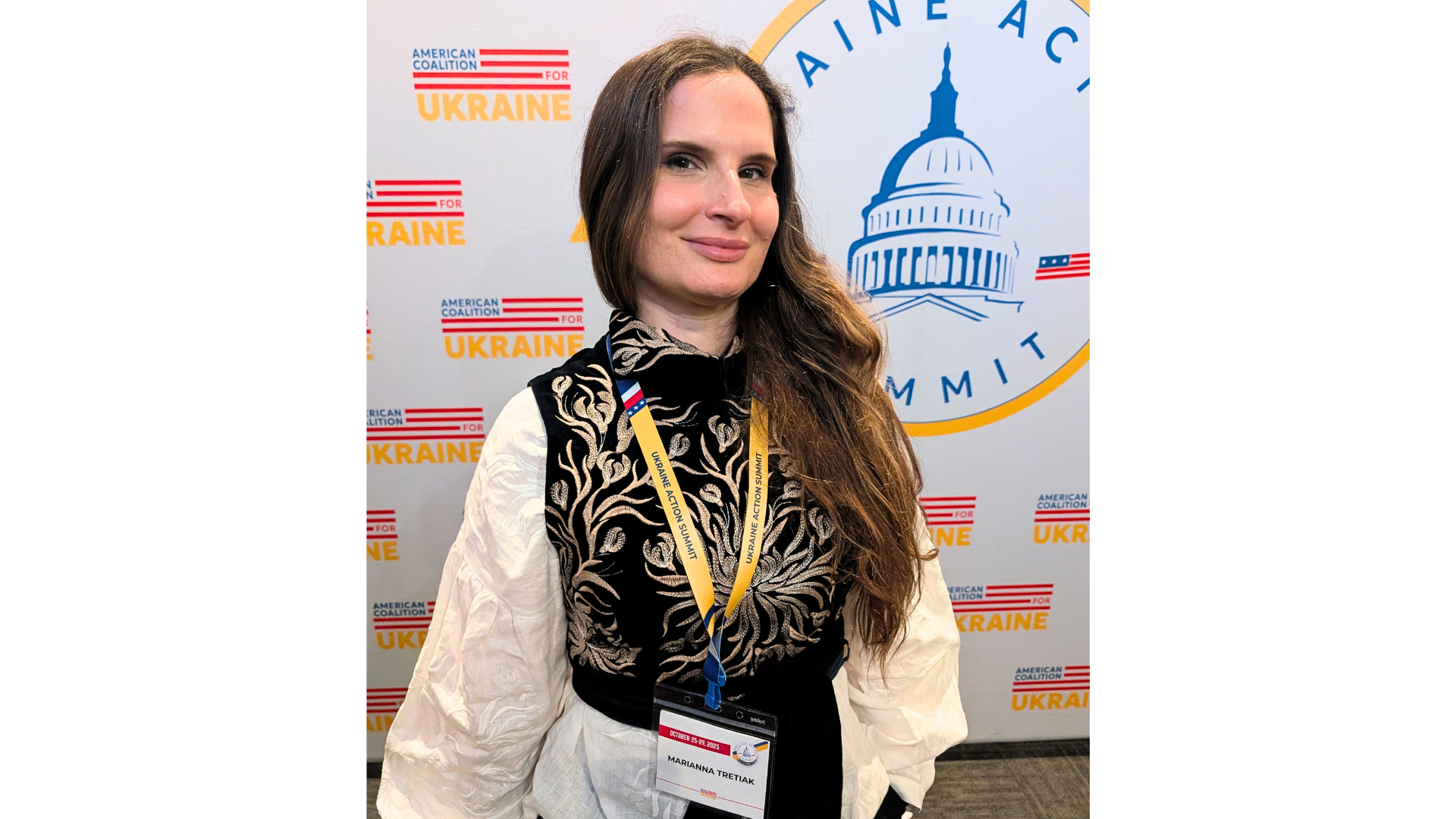
Photo: Marianna Tretiak, Chair of the Board of Directors of American Coalition for Ukraine (ACU)
“Our coalition was created to find everyone in America who supports Ukraine, to bring them to Washington, so they meet their legislators,” says Marianna Tretiak, Chair of the Board of Directors of ACU. “Here, in America, the voice of an American — a person who lives here — carries very large weight. It is important that people work specifically with representatives of the districts in which they live and vote. We tell delegates: your voice has the greatest power — and it must be used in the best way possible. In America, this is the foundation of the political system.”
And, as in Matthew’s case, the delegates are often Americans without any family ties to Ukraine. Sampson says that when he served in the American military, he knew almost nothing about Ukraine. And Russia’s unprovoked attack showed him that the Kremlin is the enemy of the free world and of America. With Senator Mark Kelly of Arizona, a former astronaut and longtime supporter of Ukraine, Matthew Sampson speaks “military language.”
“Senator Kelly and I discussed the possibility of securing more ground drones. We also discussed ‘Tomahawks’. We talked about a possible joint American-Ukrainian training operation, to share our culture of military preparation. And it was very positively received, the meeting was fantastic.”

Photo from Facebook of Matthew Sampson. Meeting of the Arizona delegation with Senator Mark Kelly
The Arizona delegation places special attention on the state’s defense industry. Ukrainians pressed for stronger controls on the export of defense-goods, because American components were found in the wreckage of Russian weapons. Among other evidence, there were hearings in Congress, explains Irene Amrine:
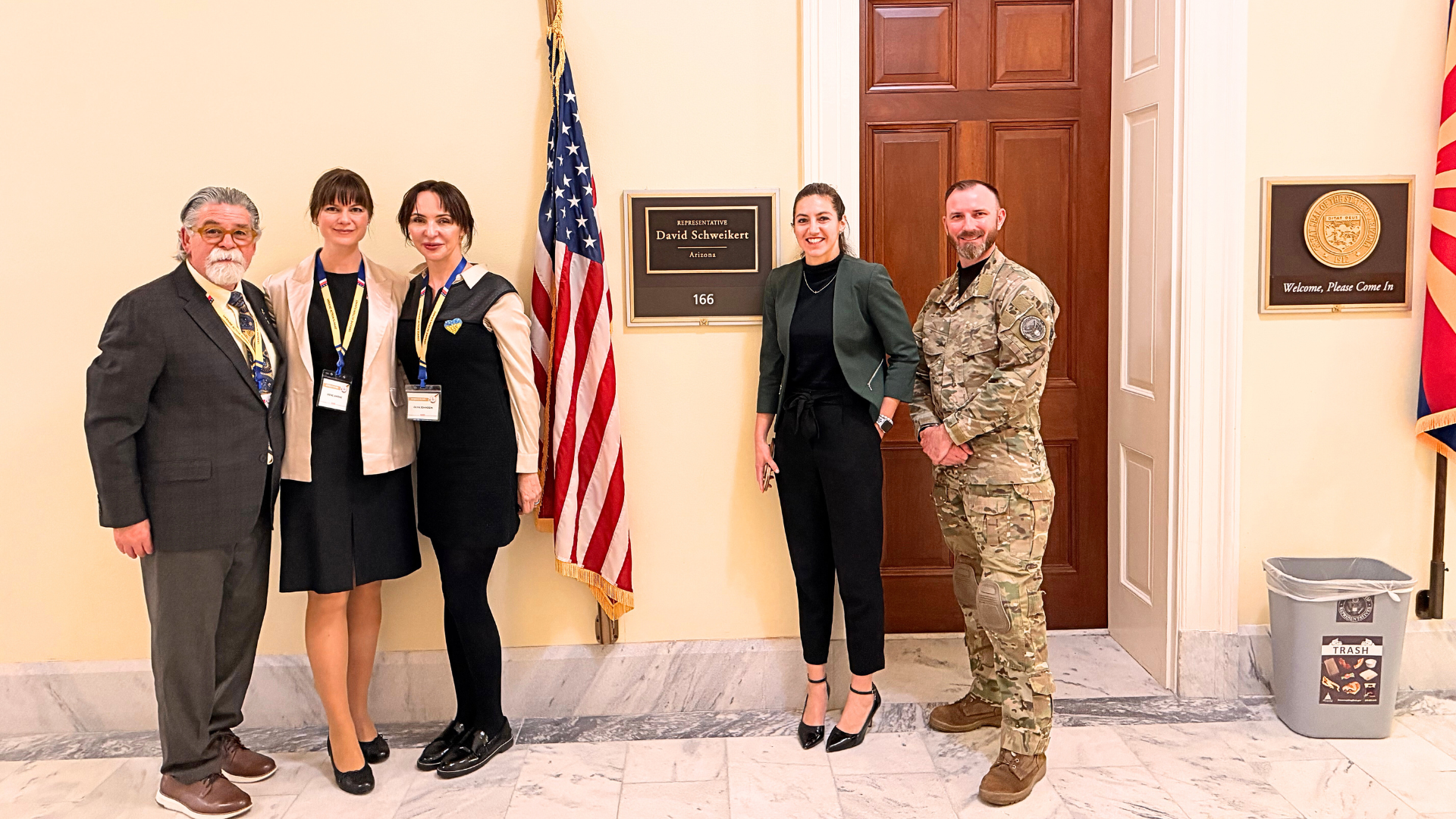
Photo: Irene Amrine
“Russia circumvents sanctions. In their missiles, which fly at Ukraine — at our day-care centers, at our schools, at hospitals — American and European components are being found. Arizona is one of the principal producers of defense products. We called on our state legislators to create a bill which sets certain regulation, conducts audits — for greater control of exports of Arizona-made products. All our interlocutors were very open to this topic. We hope that they will support such legislation in the future. David Schweikert — he is now a Congressman, but is already running for Governor of Arizona. If he wins, then as Governor he will be able to continue this work regarding sanctions evasion in Arizona.”
The Arizona delegation is led by Orest Jejna, a municipal court judge in Scottsdale. He uses his legal background for advocacy in Washington.
“I am a judge. I am 70 years old. I cannot pick up a weapon and fight in Ukraine. But I do have the opportunity to use my voice — I was born here, in America. But I have Ukrainian blood. And that has not changed. Ukraine is part of my DNA. And I am very pleased that I have the opportunity to do everything that is needed for Ukraine.”
Convince a legislator, and turn an opponent into a friend — that’s the advocacy tactic
Orest Jejna says that building good relations with legislators takes time. But this strategy works:
“I had a meeting with a staffer of a Republican Congressman. I talked with her about six months ago. She remembered me, and this time we also talked — ‘about life’. And this time it was no longer such a cold meeting as the first time, it was a warm conversation. We had a very good discussion about Ukraine and about what we need. So we must build relationships with different staffers. That is how it begins.”
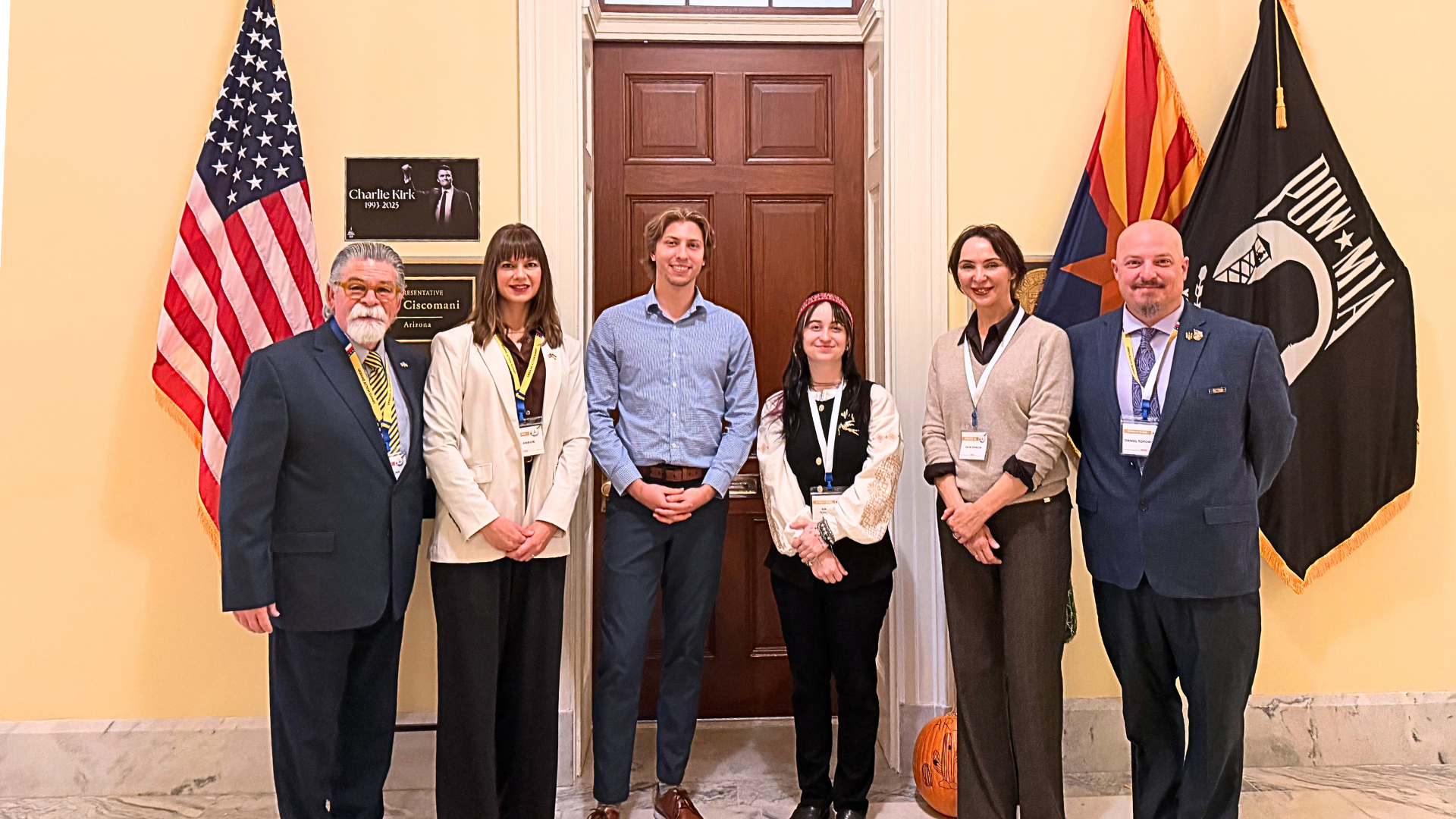
Photo: Irene Amrine
The hardest work is meeting with those legislators who know little about Ukraine or who are biased altogether. Maryna Baidyuk, President and Executive Director of United Help Ukraine and one of the organizers of the Ukraine Action Summit, says that even at the previous summit in April of this year many Republican offices did not respond at all to the delegates’ emails and meeting requests. This autumn, in her words, the situation has improved.
“Conversations with Texas Republicans will be difficult,” colleagues of the Texas delegation warned Natalia Berezovska, Vice President of the Ukrainian Cultural Club of Dallas. She represents Denton, the 13th district. She says that in her district there are almost no Ukrainians — Natalia knows only five fellow countrymen. For her, this is the first summit.
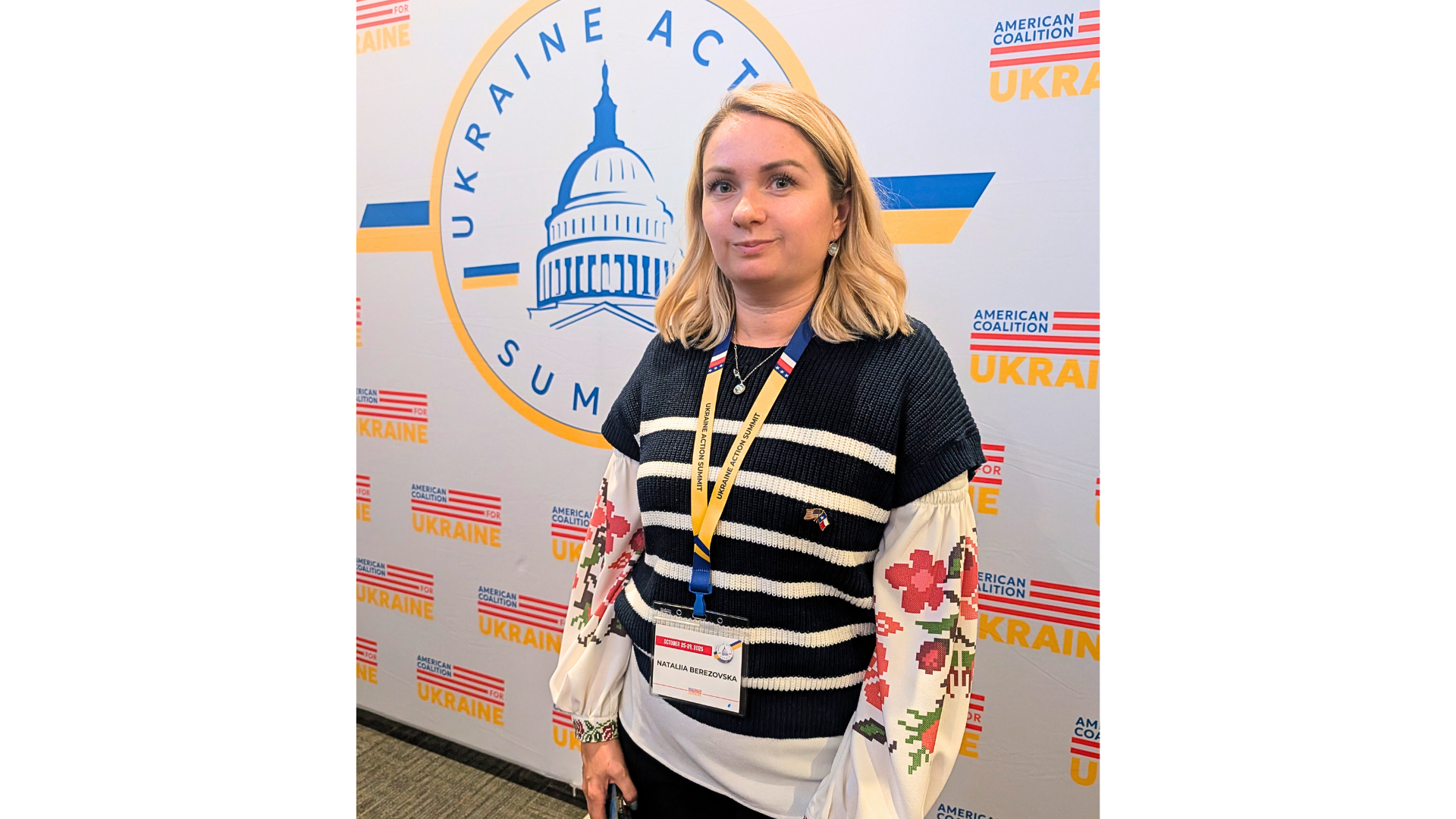
Photo: Natalia Berezovska, delegate from Texas
“The previous experience was such that the team of the Congressman from the 3rd district — Keith Self — was arguing with us, with the Ukrainians. At another meeting our delegates were talking in the corridor. But this time we were invited into the office for the first time. That is, you see progress,” says Natalia Berezovska.
Plant the seed now. Communication strategy with Republicans
Success with Republicans was achieved thanks to daily work. Delegate Kristie Arnell continually reminds legislators’ offices about Ukraine.
“She is always calling, talking to her congressmen — therefore they already know her, and they were even embarrassed this time not to schedule an office meeting,” says Natalia Berezovska. “Kristie built relationships so that at the meeting she was hugging the staffers — they knew each other so well, because she is always in contact. Now I realize that we, as American citizens, have rights and we can exert influence. We came to a meeting with a staffer, the delegation leader had a list of bills which the Congressman had voted for or against. We walked through the list. The staffer was impressed and said that the Ukrainian delegation impressed them with preparation and professionalism.”
And Alex Chen “opens the door” to legislators with his accent — he immediately makes it clear: I’m one of you, I’m from Texas. “Hello, y’all, how’s the weather in Houston? Yep, heat. And that’s it — we’re on the same wave, that’s the Texas code,” he reveals his secret.
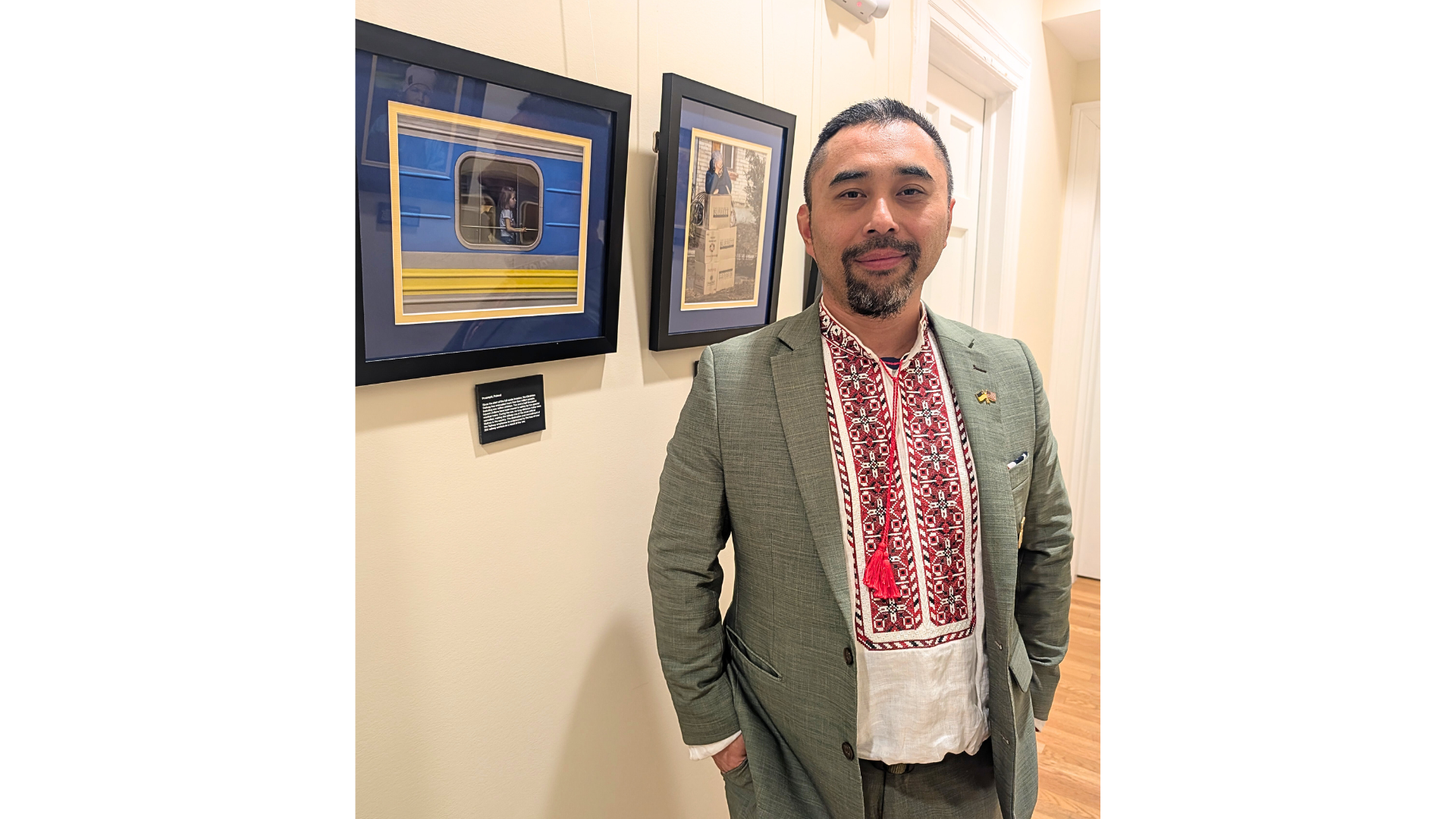
Photo: Alex Chen, delegate from Texas
Alex visited Odesa in 2022 as a volunteer who conducted training. He knows how to talk to Texans, who know little about Ukraine.
“I speak about resilience. Texans historically — people who fought fiercely, and now they remain the same. Texans are armed to the teeth. In Texas there is more guns than people. I say: Ukrainians are the same. They fight fiercely to protect their own freedom and democracy.”
The state of Wisconsin — the so-called swing state, where the margin in elections between Republicans and Democratic candidates is minimal.
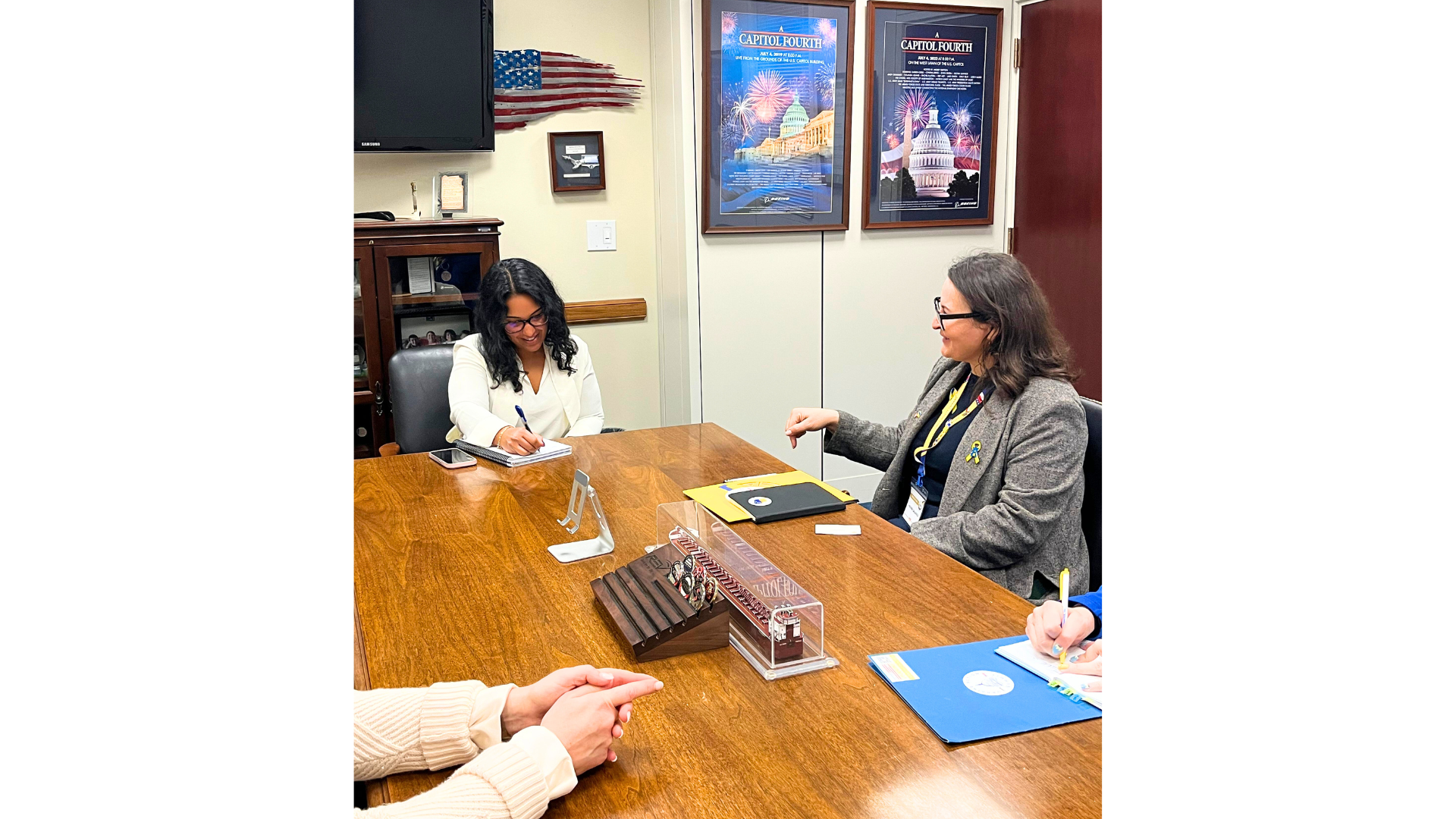
Photo: Halyna Salapata
Halyna Salapata, President of Wisconsin Ukrainians, says that, in her view, the position of Republicans in the state of Wisconsin regarding Ukraine largely depends on signals from the White House.
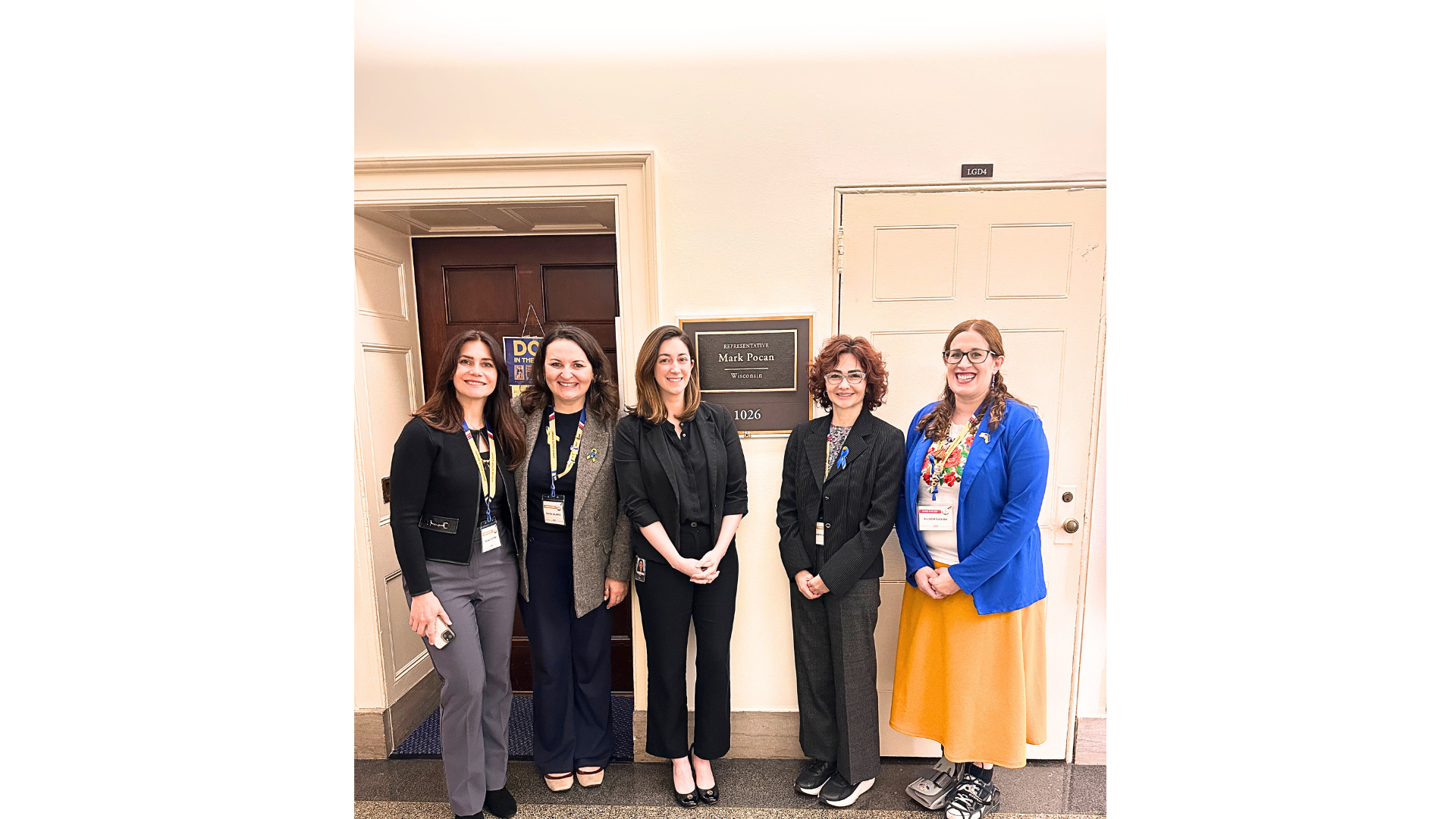
Photo: Halyna Salapata
“There is a very strong feeling that everything depends on the mood of President Trump and on his stance toward Ukraine. His messages immediately reflect in the offices we visit. I asked a staffer in an office how she assesses the situation now, and she answered: it has changed for the better, and that President Trump is doing a great job. Also I liked a question from Congressman Grotman. He asked: ‘And what do you think Ukraine needs to win?’ I said: we know what is needed. Give us the tools. Ukrainians have already more than once proven that we can win.”
Dag Klein of Razom for Ukraine acknowledges that in the Congress, where Republicans hold the majority, many bills do not progress if members of Congress do not feel they have the “green light” from the White House. This specifically concerns bills on sanctions against Russia.
“One of the challenges — to understand where is the political window of opportunity for a Member of Congress to advance something that he already believes in and that his voters support. American public strongly supports Ukraine, especially now. According to the latest polls (Harvard CAPS / Harris Poll) 73% of Republicans and 72% of Democrats want sanctions against Russia and support arms supplies to Ukraine. And these are record-levels. It shows that Congress plays a large role. A significant part of the pressure for sanctions arose precisely through Congress’s pressure from the public. And it is important to talk about the pressure that Congress feels from the public. Therefore it is very logical that voters come to Washington, contact their representatives and push them either to act on their own or to push the White House.”
Natalia Berezovska from Texas says: working in Washington is an important part, but one must do the “homework” too — constantly informing the legislators’ offices in one’s own state:
“This is a process, this is work. This is like planting a seed. We are planting seeds here. Because sometimes we go to Republicans — even to Democrats — and their staffers ask: what language do they speak in Ukraine? Some don’t even know where Ukraine is. And that is reality. Fortunately, the situation has already changed.”
Democrats are our supporters, but must do more
Sofia Kreminska of Rochester, New York, as part of her delegation, met with longtime supporter of Ukraine, Senator Chuck Schumer, a former Senate Democratic Leader.
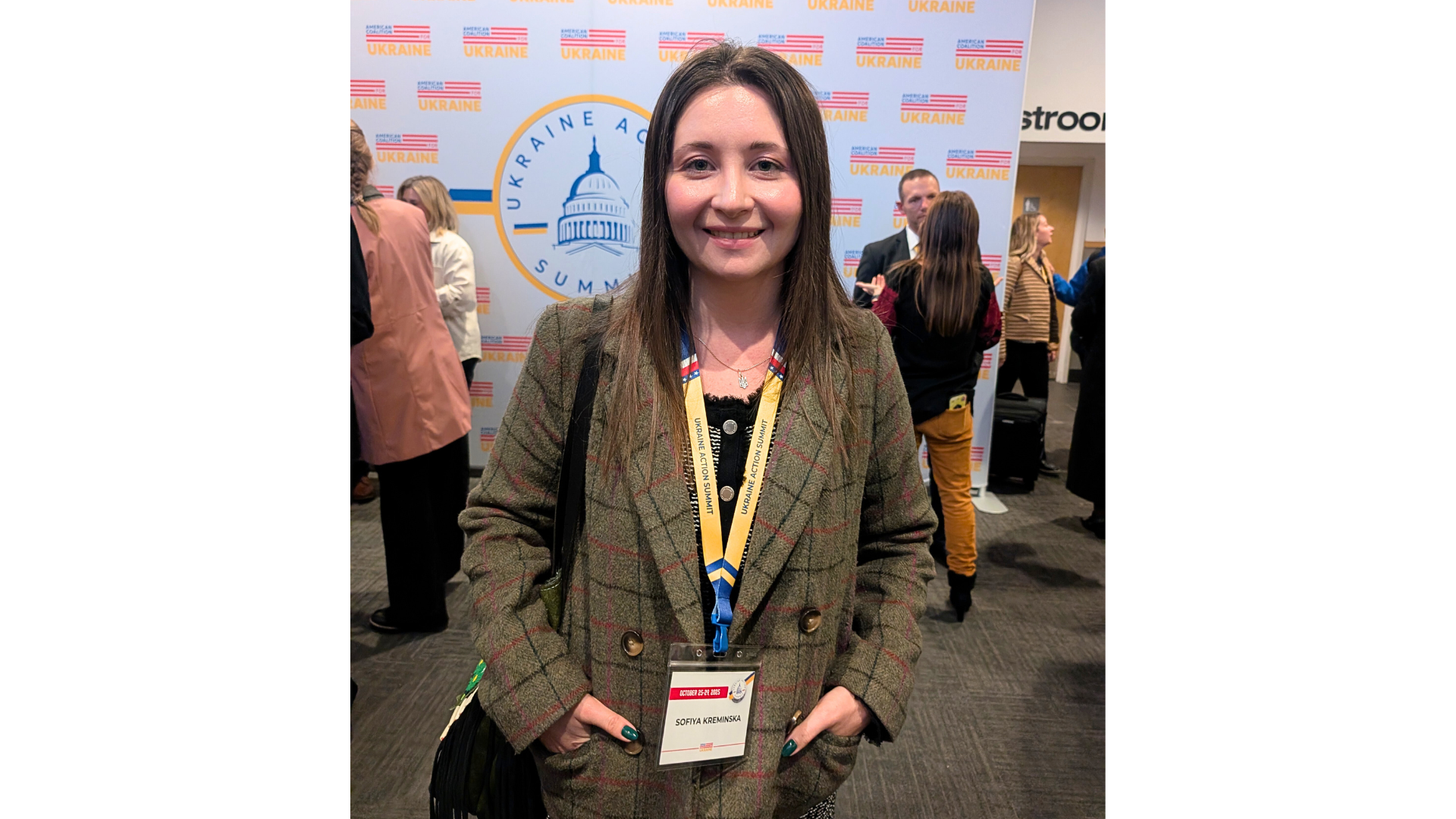
Photo: Sofia Kreminska, delegate from New York
“We asked for stronger sanctions, for weapons for Ukraine. Schumer said: ‘I will continue to support you, I will do everything possible.’ I believe it is good that Democrats support us, but they need a little push.”
Congress is not only political confrontation, but also real bipartisan cooperation regarding Ukraine, which has lasted many years. Sashko Krapivkin, one of the organizers of the summit and Chair of the Coalition Engagement Committee, explains: after the inspirational speeches of Ukrainians one of the Democrats not only agreed to sign the resolution about the Ukrainian children kidnapped by Russia, for which delegates were advocating, but also promised to persuade his Republican colleague from New York.
“It’s incredible — that someone on the spot could confirm: yes, I will sign the resolution now, — and he sent an SMS to a colleague so that a Democrat and a Republican together would sign the document.”
Editor’s update. The week following the summit, four Senators — Democrat Adam Schiff and Republicans John Boozman, John Hueston and Shelley Capito — became co-sponsors of a Senate resolution requiring the return of Ukrainian children kidnapped by Russia before peace negotiations begin. The document now has 17 co-sponsors from both parties.
Kidnapped Ukrainian children
Orest Jejna clearly raised the issue of kidnapped Ukrainian children in all meetings.
“Immediately we said — for Ukraine it is important to return those 20,000 children whom the Russians kidnapped in Ukraine. To return them home, to their families.”
Maryna Baidyuk urges not to forget also Ukrainian children who ended up on temporarily occupied territories.
“Over one and a half million children are now on temporarily occupied territories. They are being raised in Russian-language schools. These children will be taken into the Russian army to fight against Ukrainians. Their identity is being changed from Ukrainian to Russian. And this is a very painful fact.”
Matthew Sampson also spoke about this horrifying policy at his congressional meetings — about what he witnessed with his own eyes in Ukraine.
“I was on the front-line, where I saw dead Ukrainian teenagers in Russian military uniform. The Russians send them to the front. Everyone in Congress agrees that this cannot be allowed. And everyone agrees that children must be returned to Ukraine immediately, before peace negotiations begin.”
Occupation is hell for civilians
Temporary occupation of Ukrainian territories is not simply the appearance of a Russian flag in towns and villages, it is a regime of terror and lawlessness against civilians. To tell about it, the Arizona organization “Cactus and Tryzub” at the Ukrainian House held an exhibition “Embroidered With Pain”.
On five tapestries are embroidered and coded the stories of women and families who experienced sexual violence after the Russian occupation. Olya Johnson says that the idea of this exhibit came thanks to the One Health organization, which works in Ukraine and cares for psychological health and rehabilitation.
“When they began working with those who survived violence, the idea appeared to create a project — with hope and with explanation of Ukrainian traditions and ornaments, in which it is expressed. That’s how the exhibition was born.
Each of the five tapestries has a unique QR-code, which leads to a separate webpage, where it tells about the tapestry itself, and about the story of each woman — what she had to go through. The idea is to bring these stories to as many people as possible.”
The exhibit was visited by Megan Mobs, daughter of U.S. Special Representative for Russia and Ukraine Keith Kellogg. She is President of the RT Weatherman Foundation, which helps Ukraine. According to her, Americans need to know what the Russian war really means for Ukrainians.
Photo: Cactus and Tryzub
“This incredible exhibition covers topics that, in my view, too few Americans know about. It is about sexual violence committed against women, girls and men across Ukraine during Russia’s full-scale war against that country. These tapestries are part of a travelling exhibition, where one can see and begin to understand personal stories of violence against women and girls perpetrated by Russia against innocent people. Too few Americans know about the pain of sexual violence that happens in Ukraine.”
About Ukrainian children also speaks 13-year-old Nicole Hnativ. To her school arrived a girl from Kherson. Nicole conducted an interview with her about her story and her war, and then made a report titled “Impact of War on Children”, which she first showed to students, and later came with her father to Washington for the summit with that document.

Photo: Nicole and Volodymyr Hnativ
“I had a meeting with Congressman John Moolenaar. I told him about my project and left him the text. I gave him statistics about children in Ukraine. I think he was impressed by those numbers and understood what a big problem this is. The Congressman cares a lot about schools because he himself was a teacher.”
Practical result of the summit: progress on the REPO for Ukrainians Act
During the summit Senator Republican John Cornyn and Senator Democrat Ruben Gallego announced they would become co-sponsors of amendments to the REPO for Ukrainians Act. Dag Klein of Razom for Ukraine reminds that the call to support the transfer of frozen Russian state assets to Ukraine was one of the four main advocacy messages at the summit.
“I think we already see a certain momentum that comes out of this. And it’s very positive. And, of course, our team at Razom will continue to work on this in the coming weeks to leverage any positive shifts that appear.”
How the advocacy was conducted, Matthew Sampson, delegate from Arizona, explains:
“Every office in which we had meetings agreed with sanctions and with some provisions of the REPO law we discussed — specifically about using frozen Russian assets for rebuilding Ukraine and essentially to force Russia to pay for this war, so that American taxpayers don’t foot the bill. All offices agreed with this. They said: if we don’t have to spend money — that sounds great.”
Innovative Ukraine — a beneficial partner for the U.S.
Ukraine, facing the challenges of war, responds with innovation — in particular in humanitarian demining. And these insights are very valuable, the delegates from Ukraine Vitalina Shevchenko and Yan Earl-Ruzhytskyi say, who are also youth delegates of Ukraine to the UN.
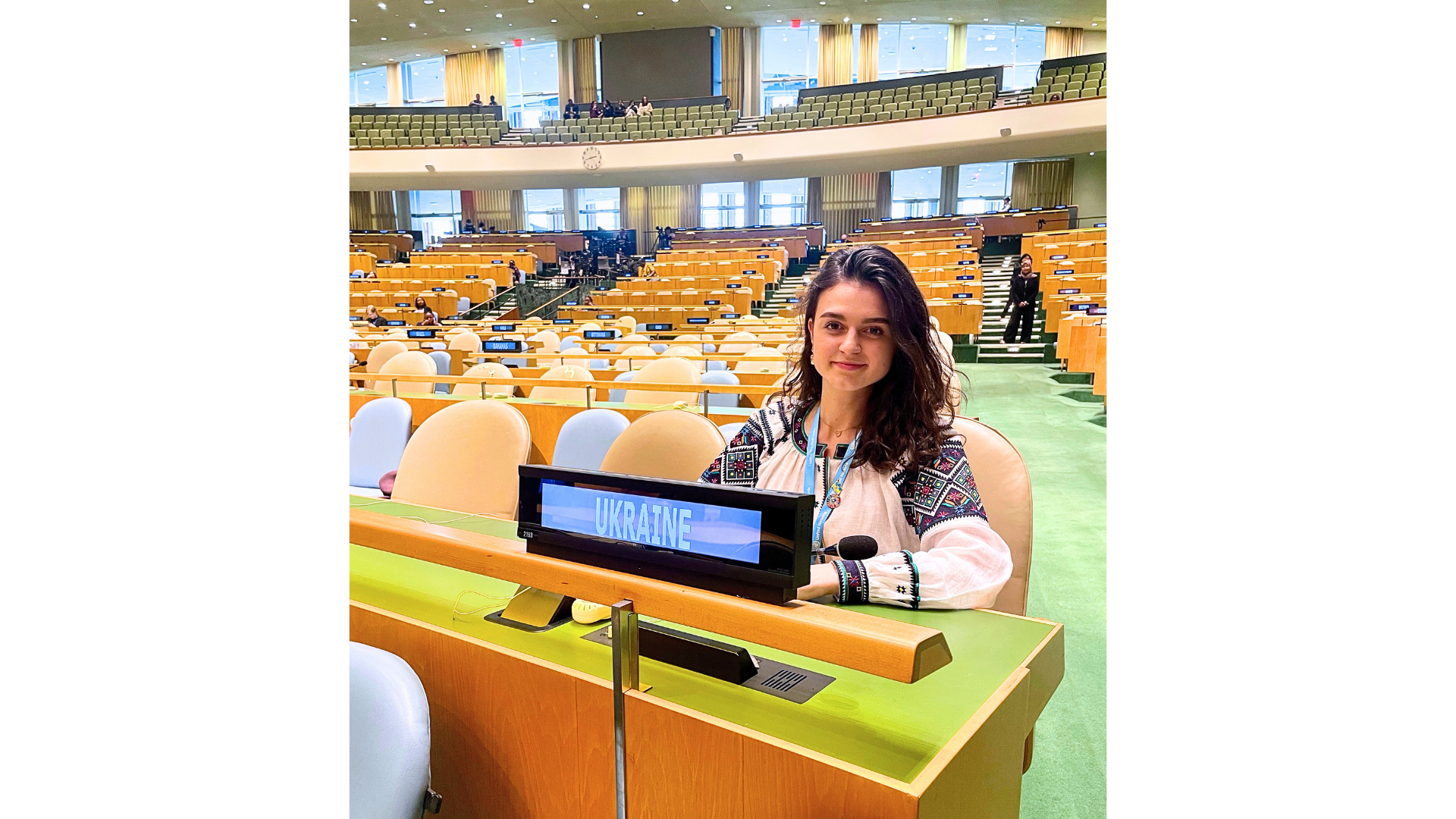
Photo: Vitalina Shevchenko
“Ukraine must, in 10 years, clear 80% of potentially mined territories,” says Vitalina Shevchenko, who works in Kyiv in the Office of Mine Action at the Ministry of Economy, Agriculture & Food and Crop Systems. “We told staffers and congressmen about demining. They heard that Ukraine can be an innovator. That is, the technologies that Ukrainian producers use in the demining sector are significantly cheaper than foreign ones. And I brought Ukrainian grain from de-mined fields of Kherson region to Congress.”
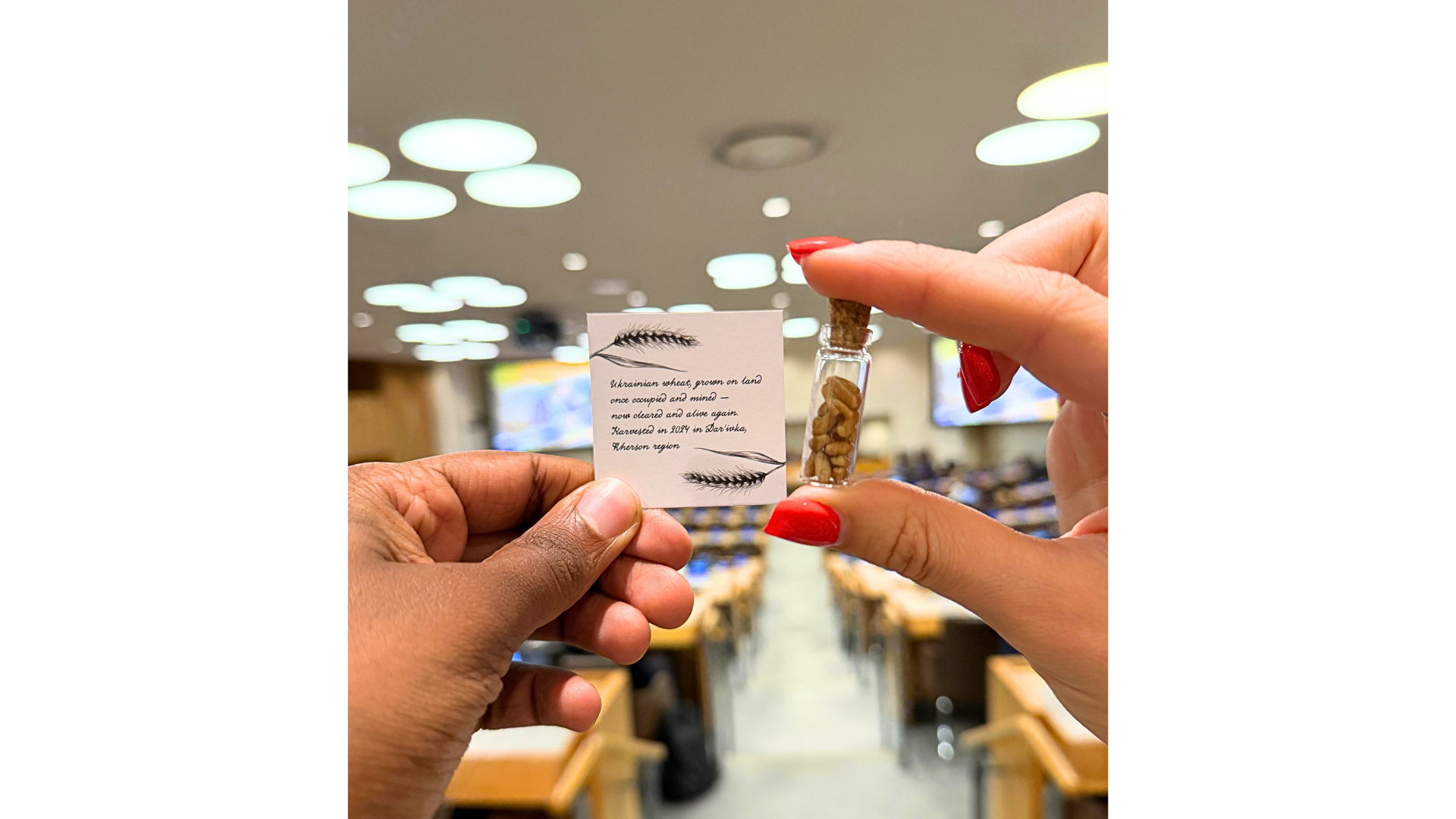
Photo: Vitalina Shevchenko
They were cleared by Ukrainians, then our farmers sowed the grain. This symbolic story was very well received in Congress.”
Ukraine is ready to share experience also in the security and defense sector, says Yan Earl-Ruzhytskyi.
“In exactly this context we tried to build very constructive dialogue both with congressmen and with their staffers — so that Ukrainian-American relations are viewed through the lens of mutual benefit and not as ‘donor–beneficiary’ relations.”
Summit outcomes
During the summit 452 meetings with legislators took place. Organizers say that they tried to make them as effective as possible, so with participants they pre-reviewed major talking points ahead of time so that the delegations spoke with one voice.
“Delegates understand the importance of the messages we offer them,” says Maryna Baidyuk. “That is the main goal of the coalition and the summit. That we focus on certain priorities and convey exactly those. Of course, we can talk about many things, but setting the priority — that is task number one for us. So that the delegates receive resources, talking points. They allow them to enter a legislator’s office and not wonder whether they are saying something correctly or not, because the delegates are already prepared.”
Dag Klein of Razom for Ukraine says that Ukrainian organizations which have been working in Washington for a long time wanted to share their experience of effective communication.
“This summit — it is about priorities worth advocating for, about things worth asking for. The role of Razom and other organizations is to say: look, we already work in Washington, we understand well at which stage the legislation is. If you will advocate for this bill — your advocacy can help bring it to passage. So we give recommendations — what will bring the greatest benefit for Ukraine and where we can have the most significant impact. And then the delegates come and bring with them their stories, their strength, to achieve this.”
And at the close of the summit the organizers set an ambitious goal: to have 100 delegates in each U.S. Congressional district, announces Sashko Krapivkin, Chair of the Coalition Engagement Committee.
“I am confident that the goal — to have 100 people in each district of the United States — will take years. But we are already building this. These will be activists who are ready to call their congressional offices and send emails. So we need each one of you for this to become possible. Please, go back home, tell your friends, so that they join, participate, visit our website and reach out. Everything started with the fact that we must talk with legislators’ offices. And they told us why sometimes they stop supporting Ukraine. And here is what they told: we get calls from 10 people every day — and we thank those people. But they also said: it would be better to get a message once from a hundred people. And we at the summit are grateful to these offices which tipped us strategically what we should do and what to create in the United States.”
About Author:
