


Geographical divisions are a prerogative of Ukrainian history. A border along the Dnipro: Left-Bank and Right-Bank Ukraine, a border along the Zbruch, the Curzon Line. Yet in literature, in book titles, borders are a rare phenomenon. Zaporozhets Beyond the Danube is one of the exceptions. The Danube, as a rule, has been pushed to the margins of Ukrainian literature and history. One of Europe’s major rivers flows into the Black Sea in Ukraine, but it is not reflected in the Ukrainian mentality. At the same time, in Hulak-Artemovsky’s opera, the Danube is not a geographical concept but a metaphor of separation and return home, to the true Ukraine. This is especially symbolic in a production in the United States, where between Ukrainians and their Homeland lies not just the Danube, but the entire Atlantic Ocean.
A Theater of Dreams
Loudoun Lyric Opera presents Zaporozhets Beyond the Danube in a rented building that, from the outside, does not resemble a classical opera house. It looks more like a Hutsul-style wooden lodge.
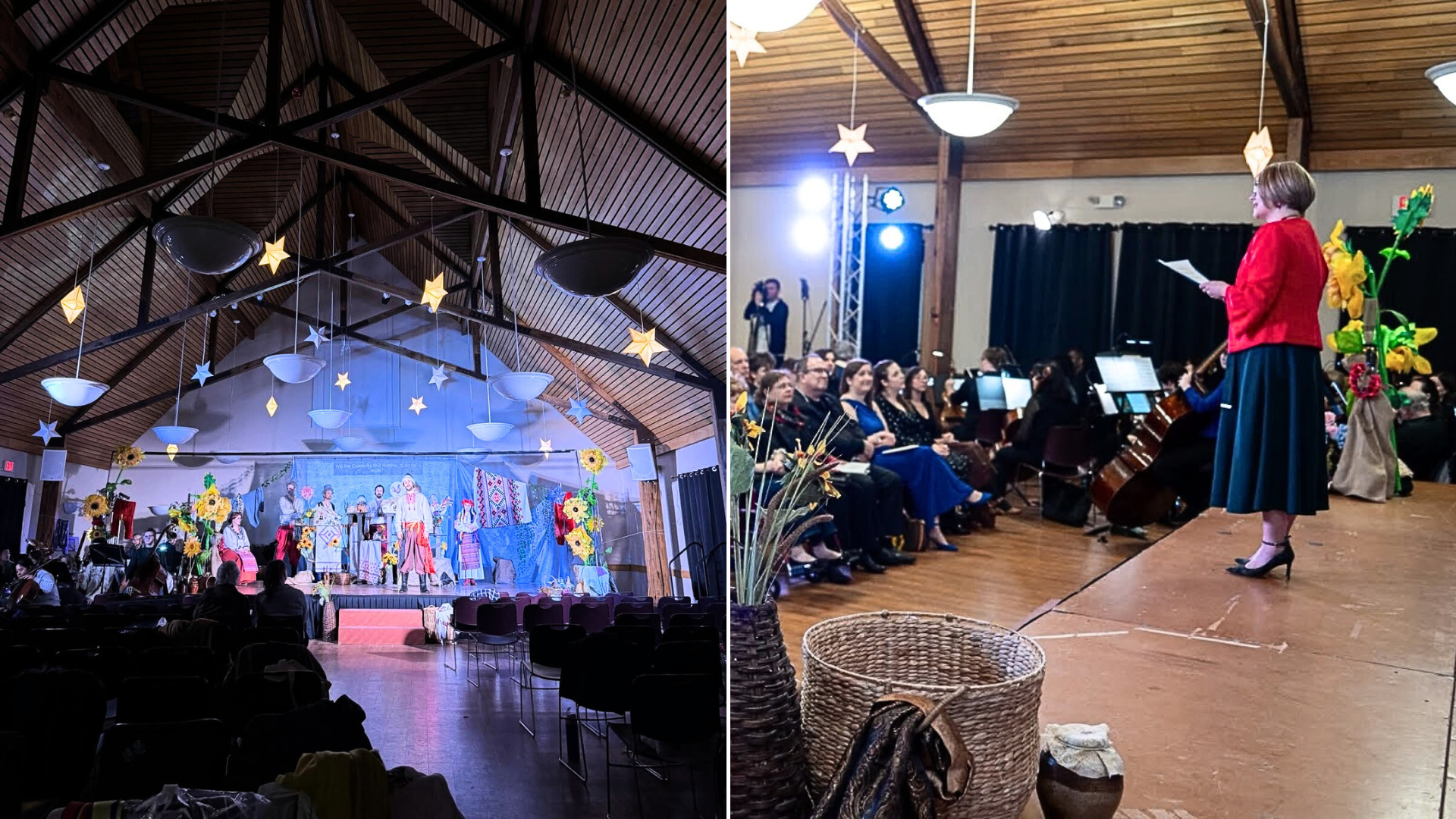
In fact, it is a large concert hall belonging to a church. Dreamscapes Performing Arts Center. The name reflects its essence. Dreams come to life inside the modest building. For example, the dreams of the local community to enjoy high-quality opera without having to travel to Washington, says Mark Irshai, the artistic director and general director of the opera. Or the dream of Ukrainians to hear an opera performed in Ukrainian in America. It all began by chance.
“Two years ago, we were staging a production that had nothing to do with the current one (Zaporozhets Beyond the Danube – editor), and we had a Ukrainian répétiteur, Sasha Berezovskyi. His family came to the performance, and they liked it very much. His father, Vladyslav, who was an activist with United Help Ukraine, approached one of our team members after the show and began talking about the Ukrainian opera (Zaporozhets Beyond the Danube – editor), saying how wonderful it would be to bring it to the United States. And I immediately became very enthusiastic about the idea.”
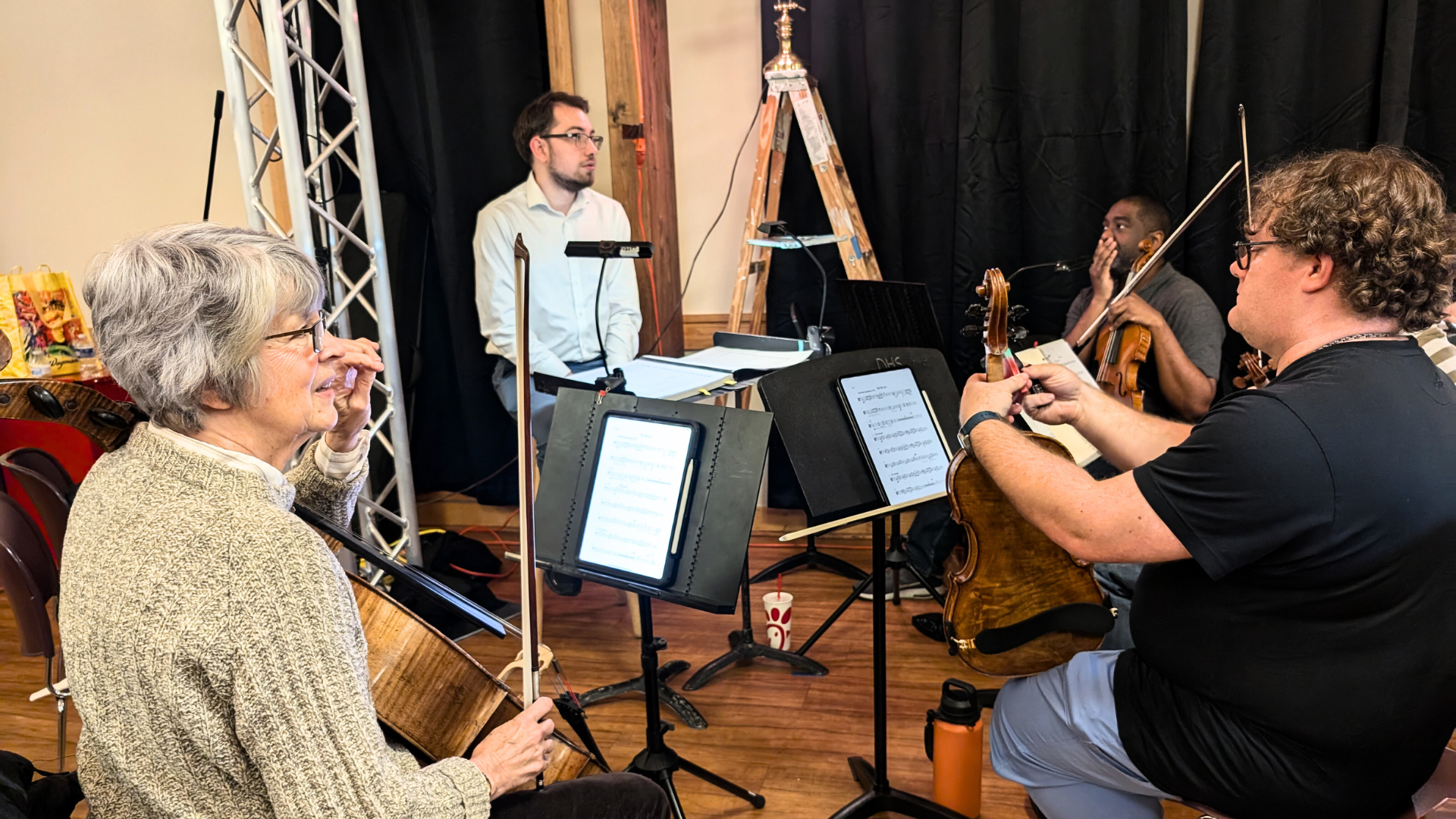
This turn of fate became an opportunity for Darina Maksymova, the event manager at United Help Ukraine, to realize her own dream. Before Russia’s full-scale invasion of Ukraine, she worked on American productions. At United Help Ukraine, she organized Ukrainian events: concerts and Independence Day parades in the U.S. Darina had long wanted to work with Ukrainian works. And the chance appeared.
“I had a dream to work with Ukrainian dramaturgy – in the United States. I staged American musicals and plays. It was all fun, cool, but I desperately wanted to work with Ukrainian material, yet the opportunity simply wasn’t there. And when we were offered to do a Ukrainian opera, it was extraordinary. It happened that, first of all, we were naturally interested in such events, and second, I personally have experience as a theatrical stage manager – I worked with musicals before the full-scale war. Of course, we grabbed onto this idea.”

The time from concept to realization – two years. The budget is very little as for the opera world. Most of the expenses went to the orchestra. Even so, the production involved professional performers, says Mark Irshai.
“We work mostly with local singers who do this primarily out of love for this art form,” says the opera’s general director, who is also the conductor. “That does not mean they are amateurs – many of them are exceptionally professional, and I believe they will be able to build truly successful opera careers.”
In America, the Zaporozhets Spoke Two Languages
Mark and Daryna worked on attracting an American audience to the Ukrainian opera. And the language issue immediately arose.

Daryna recalls: “One option was to do everything in Ukrainian – both the text and the singing. But we realized: in that case, Americans would not come. We needed to do everything possible to attract them. We didn’t want them to experience cultural shock, unable to understand anything happening on stage. And once they were already at the performance, they would see the beauty of our culture.”
But Daryna and Mark were not ready to abandon the Ukrainian language entirely. The director argued that opera lovers are used to listening to productions in Italian and German. Therefore, they decided that the dialogues would be in English so the audience could understand the plot and the characters’ motivations, while the singing would remain in Ukrainian. At the same time, the arias were displayed on the screen with English subtitles.

None of the singers had ever spoken Ukrainian. But for professional opera performers, this was not a problem.
Vincent Fang, who played the role of the Sultan, says that opera singers are true polyglots.
“Classical training requires learning four languages: Italian, German, French, and English. The last opera I performed was Rusalka, in the Czech language. So I already had some experience singing operas in Slavic languages.”
Singer Samantha Sosa, dressed in an embroidered blouse, resembles a true resident of Poltava. But she is from Venezuela.

She recalls that when she received the text, she was nervous at first, because she had never sung in Ukrainian before. “But I felt that if I had already been given this role, that meant I was ready. I listened to the music, then carefully listened to how each word sounded individually to make sure I could pronounce it, and then I translated it – so I would know exactly what I was saying,” Samantha explains.
How the Ukrainian Soul Sounds
In Ukraine, people often repeat a fact – one that has no documentary confirmation – that Italian is considered the most melodious language in the world, and Ukrainian the second. Singer John Drake, who performed the role of Ivan Karas, likes this interpretation. He says that opera in Ukrainian has a unique sound.

“I wanted to perform this role because I wanted to expand my abilities and go beyond the operas I usually sing – in Italian, German, and French. I had never sung in Ukrainian. The music in this production feels very organic to me, but the language was a different story: the most difficult part was the Cyrillic alphabet, but I managed it. Ukrainian has many unique features; it is very ‘singing’ – the vowels seem to work with you on their own. In Ukrainian opera, legato comes naturally. (This is a way of performing music in which sounds flow into one another as smoothly as possible, without noticeable pauses – editor.) Ukrainian contains so much voice and resonance in every sound.”
Conductor Mark Irshai also rejected the idea of singing exclusively in English, and wanted American audiences to hear the arias in Ukrainian.
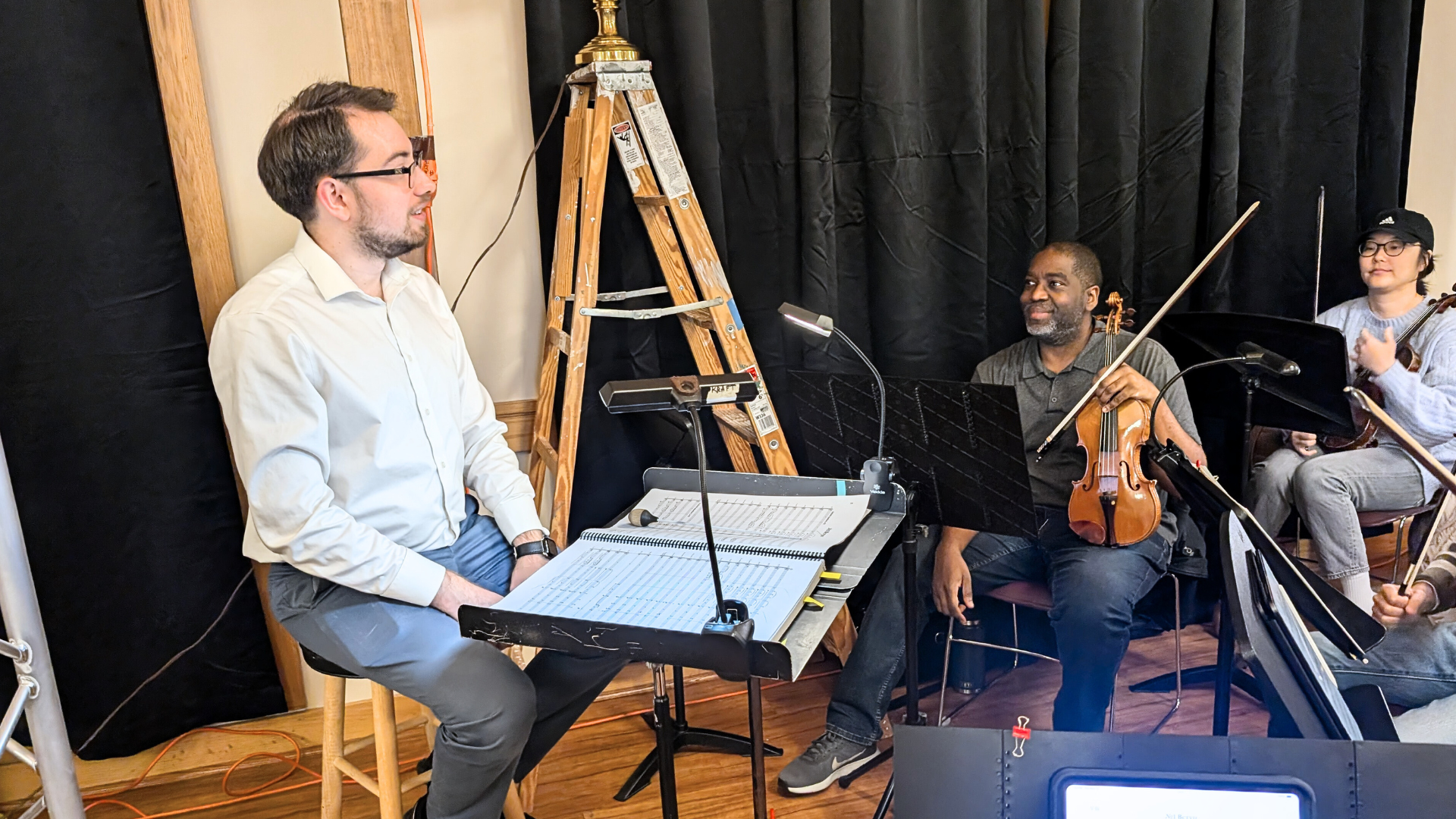
“At the beginning of the project, I was asked whether we would translate everything entirely into English. And I answered: absolutely not. Because then the colors of the Ukrainian language are lost, and the music becomes something entirely different. You can sing the same notes with an English voice, but the sound will not be the same. I think this production is about how the Ukrainian soul sounds. Almost all of this music, in one way or another, has its roots in dance. When people dance the kozachok or the hopak, I believe all this together gives American audiences the opportunity to hear what Ukrainian culture sounds like.”
And for Ukrainians in America, it is a chance to hear a beloved opera – says Daryna Maksymova.
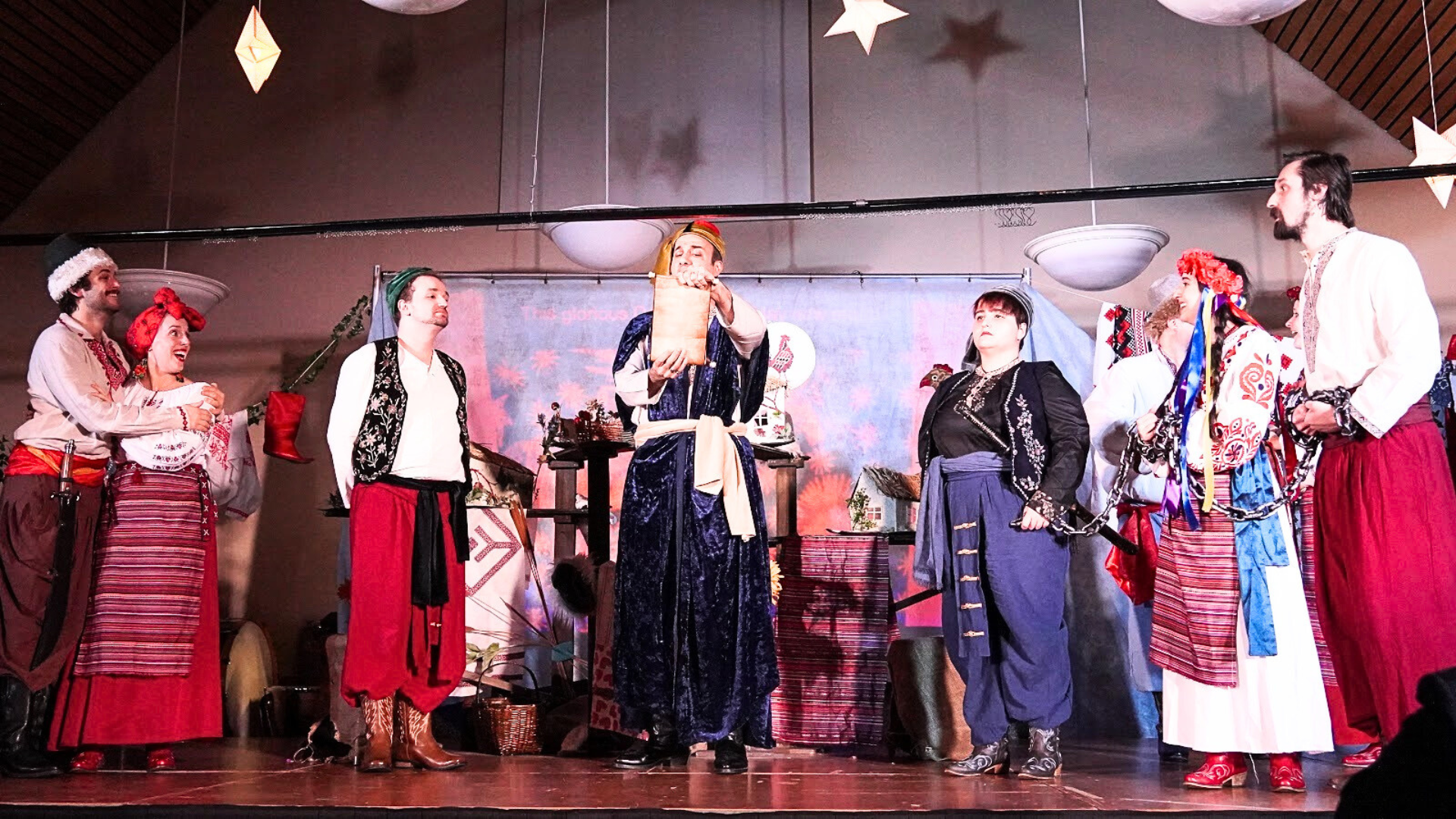
"“This is a very popular production; it has been performed in opera theaters for 160 years. Ukrainians know it very well, and for them this is an opportunity to hear familiar melodies, Ukrainian arias, sung by Americans.”
Transforming Zaporozhets for 21st-Century America
The opera takes place in the Ottoman Empire. And to avoid issues in modern America, the organizers consulted and adapted the text.
“We also had certain challenges with adapting some of the Turkish characters,” recalls Mark Irshai. “We had to make sure we were treating modern cultural and religious traditions with respect. The libretto contains many references to Islam. Some of them were not intended for a modern audience. Therefore, we consulted several representatives of Jewish and Muslim communities to ensure that we approached the text with the utmost respect. We hope the opera will be understood and received without the somewhat outdated and somewhat offensive contexts from the original text.”
For American audiences, Zaporozhets Beyond the Danube may seem like a type of Eastern fairy tale. But for Ukrainians, it is obvious that the story is not really about Ukrainians in Turkey, but Ukrainians in the Russian Empire – though this was not stated directly.

At the same time, references in the text to Ukrainians, emissaries from Muscovy, and the fact that the opera's characters return, essentially, to the Russian Empire were removed – explains Daryna Maksymova: “In the original, it is about Turkey, but the opera is not about Turkey at all. The author at that time could not say openly that it was about Russia, that Ukrainians wanted to be themselves, that they wanted to be let go peacefully. We kept these underlying meanings – we told the actors that yes, the text says Turkey, but it is not about Turkey. But in the original, Russia is mentioned several times; Andriy brings news from Muscovy. Explaining such moments to Americans would have been very difficult and time-consuming. It requires knowledge of context. Americans do not know this. So we do not mention Muscovy directly because we do not want it to be perceived as if we are ‘brothers,’ one people, and so on. My goal was to ensure that Americans did not leave the opera with the impression that Ukraine and Russia are somehow ‘of one blood.’ We want to be perceived as a separate country.”
Samantha Sosa felt this through her role as the adopted daughter of the main character.
“There is a deeper level in the opera – in reality, it is Ukraine against Russia. Often we communicate through context. For example, when we say: ‘Oh, we hate the Turks,’ it is not really about Turkey. For me, the overall message is always about the homeland, about longing for home, about the desire to be in your own country, together with your family and the people you love.”
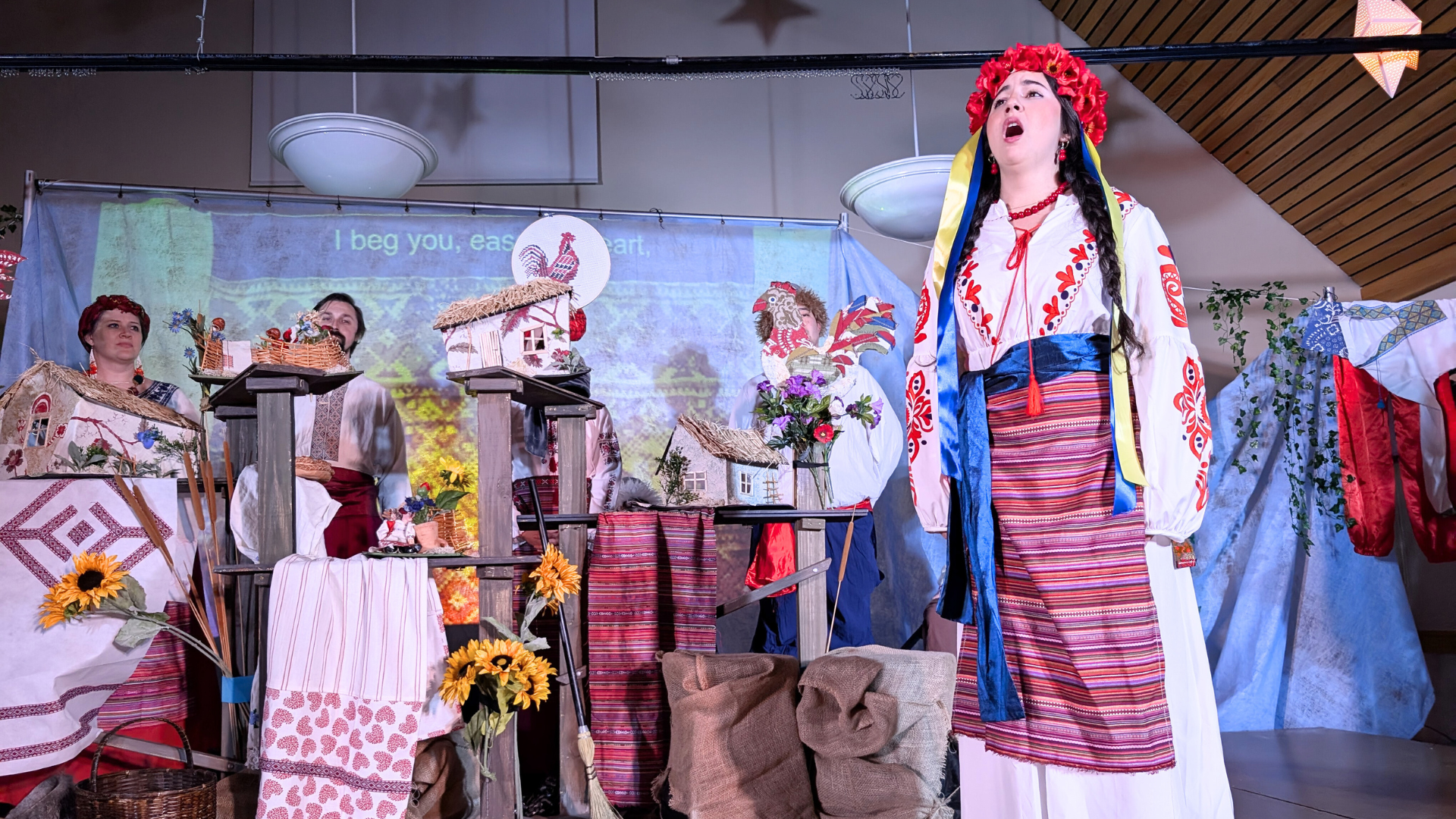
The next challenge was adapting the text. During the first stage of translating Zaporozhets Beyond the Danube, the mother of artistic director Mark Irshai – Iryna – prepared the main vocal parts in IPA, the International Phonetic Alphabet, so that performers who do not speak Ukrainian could sing the arias and know how to position their tongues, lips, and so on. It is a kind of universal pronunciation code that singers around the world study as part of their training. But at the time of the auditions, the text had not yet been fully polished, which led to some humorous situations.
“During the auditions, the translation was still raw, and I can tell a funny story. Ivan Karas comes home from drinking and says, according to the Ukrainian text: ‘Good that the wife isn’t home, or I’d get it over bagels.’ And in English it sounded like: ‘I forgot to buy donuts.’ I laughed so much – no one understood it except me, because I was the only Ukrainian there.”
After this, the director decided to update the jokes and cultural narratives. And the main characters – Ivan and Odarka – became more human and more complex. Mark Irshai reveals his approach:

“One of the tasks was to make the relationship between Ivan Karas and Odarka somewhat more balanced. In the original production, Ivan is drunk almost the entire time he is on stage.
In our production, we made him a bit more sober. And Odarka, in the original, is probably a bit angrier, but also to some extent one-dimensional. She is a bit like a stereotypical character. Here we made her a little more loving and capable of expressing her true feelings.”
Daryna Maksymova approves of the characters’ development and believes that these portrayals help Americans better understand Ukrainians.

“Many of the ideas came from the singer who played Odarka. She simply didn’t know the original context – how Odarka is traditionally portrayed in Ukraine, that she is always quarrelsome and that this is her vibe. The singer brought her own vision and gave her character warmth. She and Ivan are a married couple. And I feel that in the opera those quarrels are their way of expressing love for each other. It’s just their style. The actors thought about this a lot and rehearsed even without us, building their on-stage relationship. And the result is a beautiful image of Ukraine: dancing, singing, vibrant, with very expressive people.”
John Drake, who plays Ivan, says that the very first scene sets the tone for the entire performance.
“I like our duet from the first act because it gives me and my stage partner the opportunity to have fun. It looks like a married quarrel – I’m completely drunk – and it all looks cartoonish and grotesque. But we create moments and tell our story.”
Oksana Lytvak, who created the opera’s stage design, knows the classic image of Odarka well, and it is deeply personal to her – she spent her childhood in Odesa, where her father worked as a theater artist.
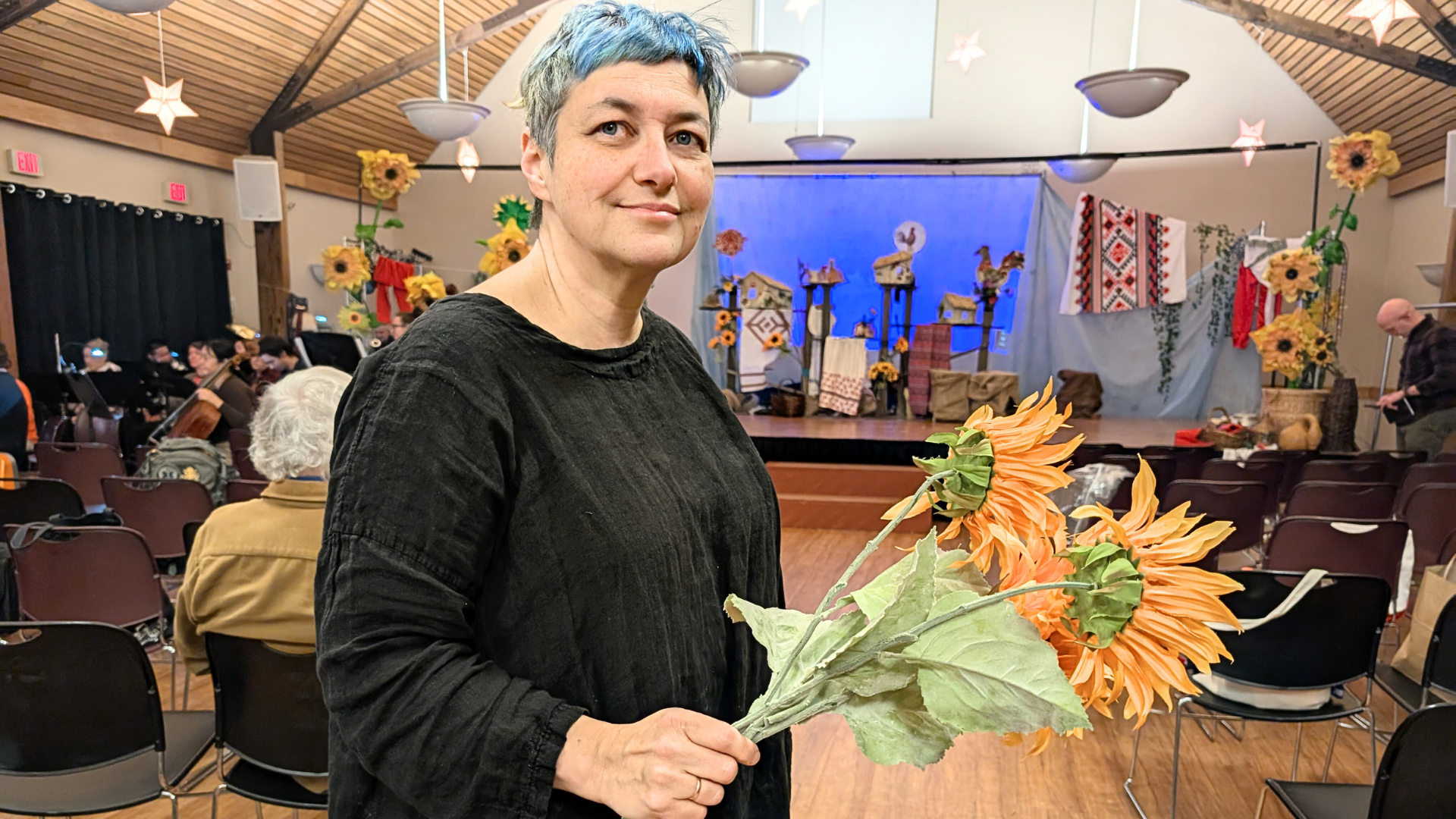
“Dad would tell me, ‘Odarka, stop it, you’re crying again.’ And I would reply through tears, ‘I’m not Odarka, I’m Oksana, my name is Oksana.’ And he would say, ‘Go to the stage.’”
Bombs Are Falling, and We Still Joke: Ukrainian Humor in the 19th and 21st Centuries
The author of the opera sought to convey, through art, the character of Ukrainians who, both in the 19th century and today, despite hardship and tragic events, never lose their sense of humor.
“These characters do not carry a heavy sense of depression,” analyzes Mark Irshai. “They laugh, they are full of life, even under these terrible circumstances. And for me, this is truly wonderful – that we create this balance in the performance.”
Oksana Lytvak agrees. She talks about today’s Odesa, which symbolically lies close to Hulak-Artemovsky’s Danube.
“Odesa is being bombed, yet all the restaurants are open. At Pryvoz Market they still say, ‘Madam, buy yourself a knife already, so I can stop worrying about you.’ We must joke, show this spirit of Ukraine, because it is historical – it always has been and still is.”
John Drake says that while rehearsing the opera, the actors felt that the story was not about events from two centuries ago, but about today. And the American audience understands this.
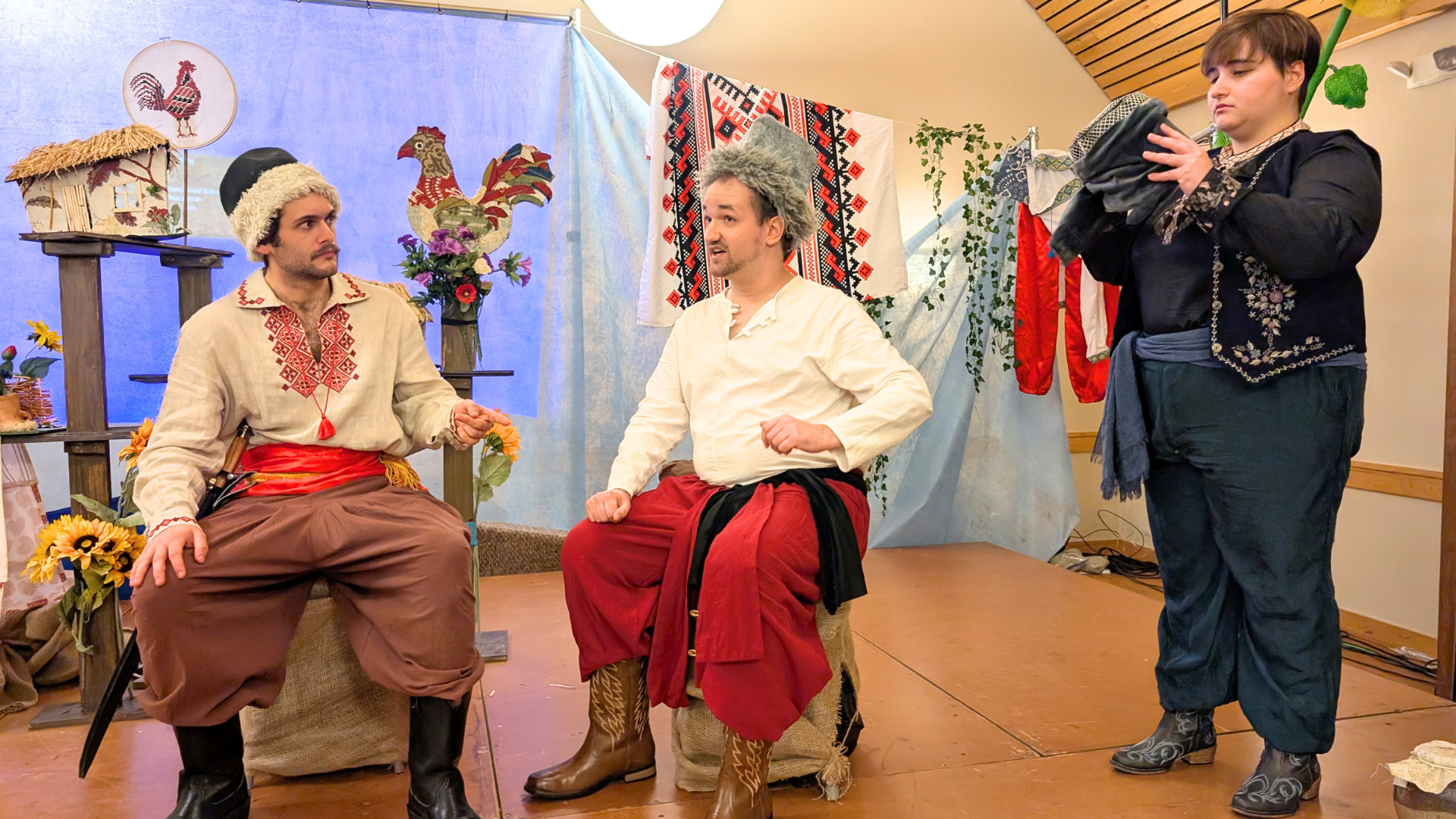
“I think this is useful for Americans, because we all watch the news, we know that Ukraine is at the center of attention. This opera is not that far from what is happening now. It shows the historical context – that Ukrainians lived under restrictions imposed by their neighbors. I think the historical reaction of Ukrainians to trauma has been a positive attitude toward life and art. I believe this will be a very interesting introduction for many Americans to the history of Ukraine, since we present it in a fairly light and easy form.”
American Zaporozhets
Sam Drake himself does not look like a classic opera singer; he resembles more a classic Hollywood rogue-type actor. At the audition, he won over the director with his sincerity.
“John Drake has such an incredible smile that you immediately feel the hero. And his voice sounds exactly like a real Ivan Karas,” says Mark Irshai.
And the choice of singer for the role of Oksana, Ivan Karas’s adopted daughter, was instantaneous. The director saw a 100% match for the part. “Samantha Sosa performed a Mozart aria at the audition, and I immediately understood that she was Oksana. She was light and innocent, and Oksana is the kind of character everyone should fall in love with the moment she appears. And her voice had exactly that charm.”

Samantha says that her on-stage relationship with her beloved Andriy is, in a remarkable way, similar to her real life.
“This relationship between Oksana and Andriy – they haven’t seen each other for a long time. She fears he may have died. I was in a long-distance relationship, when you miss someone and simply cannot see them as often as you wish. I am originally from Venezuela, so when Oksana feels deep longing for home and family, I try to think of my own experience – how I moved here with my family to a completely new country and tried to be happy in new circumstances.”
And another real challenge was the Ukrainian folk costumes, which Samantha admires for their beauty, but she did not learn to wear them on stage immediately.
“In the first few days of rehearsals in costume, it was not easy. Sometimes you raise your leg too high and, you know, something can fall off. There is a lot of movement on stage. So you must watch that all the costume elements stay in place.”
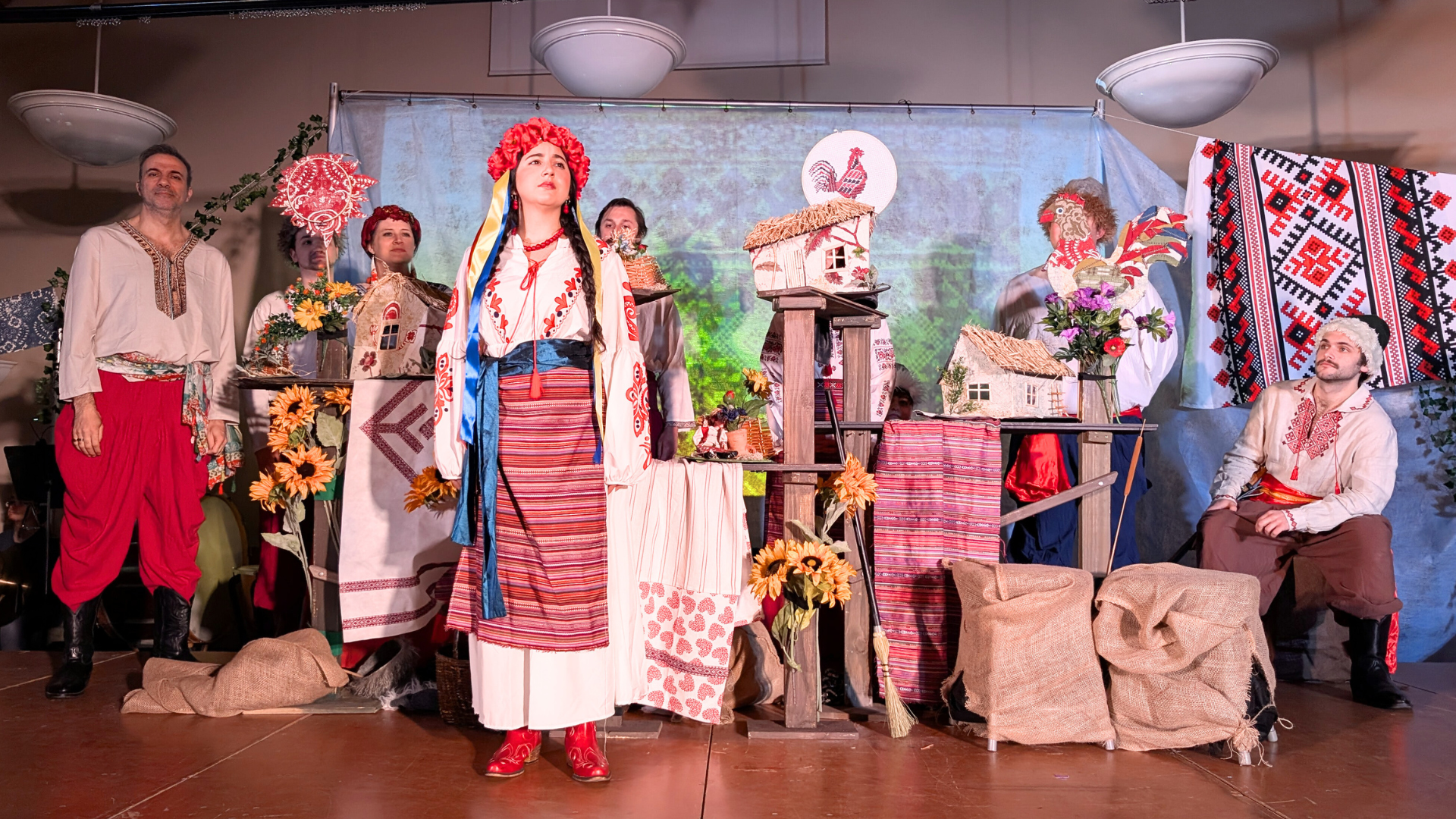
The costumes were overseen by Oksana Lytvak, who involved her art school’s students and their parents. She says that the collective work reminded her of a Ukrainian village.
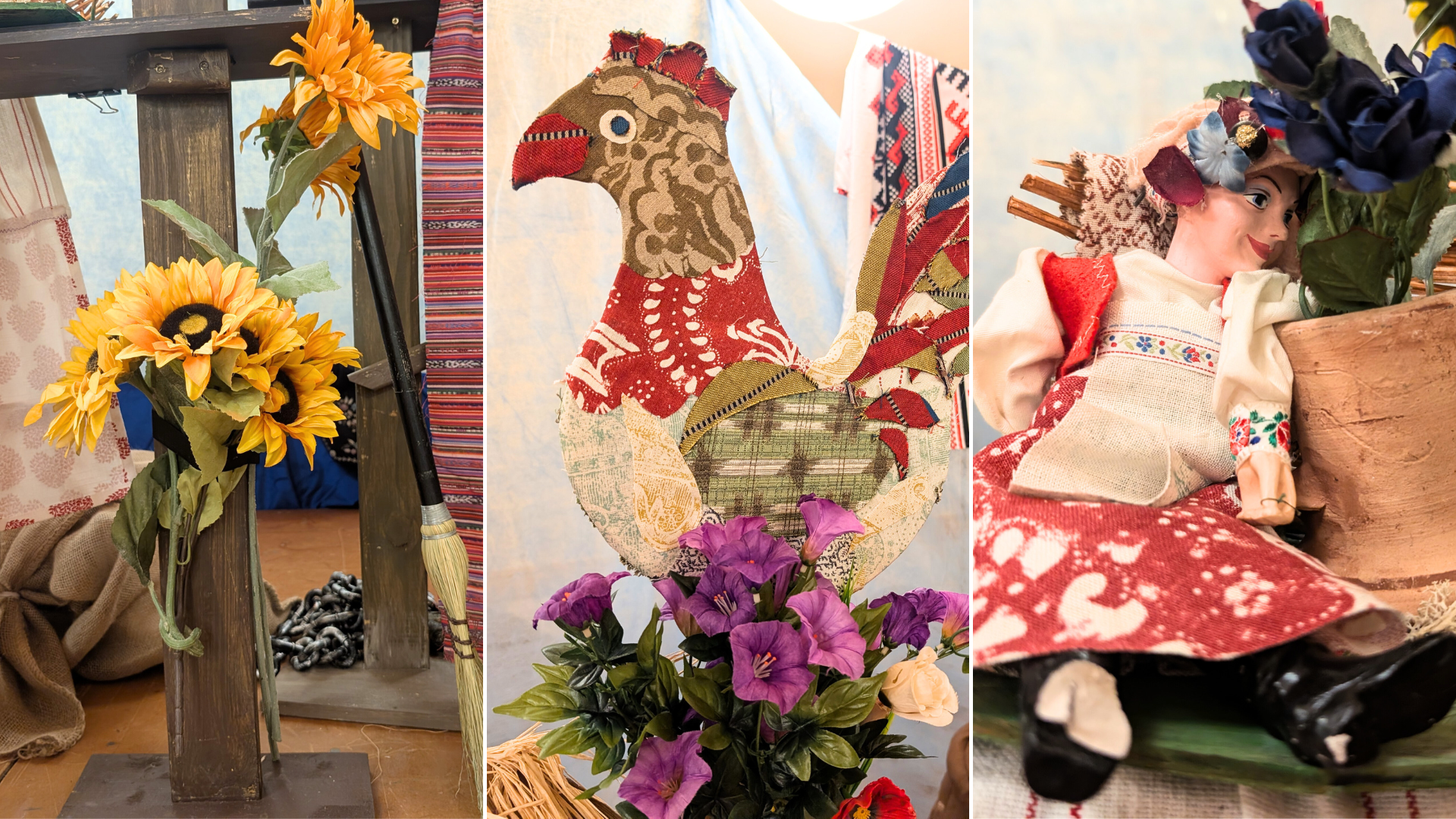
“I have many students, including those from Kyiv; we collected embroidered shirts. Everything felt as if we were in a big Ukrainian village. The children in the studio helped me. One girl embroidered a rooster.
Others painted, created pots, baskets, and even fences. It was important to me to create the image of a woven fence. In a Ukrainian village everything important happens near it – people meet, talk, kiss; it’s a symbol.
I also placed small houses on stage. The idea is that Ukraine is very, very far away, so the houses appear small, but at the same time they are always in our hearts.”
Ukrainian literary classics have been adapted by Americans before. In 1962, an American-Yugoslav film Taras Bulba was released for the U.S. market, starring the legendary Yul Brynner. But that attempt to bring the work of a Ukrainian author to the American screen resembled more a Western with cowboys and lost its Ukrainian essence. Loudoun Lyric Opera’s Zaporozhets Beyond the Danube has breathed new life into the opera, making Ivan Karas’s family citizens of the world – understandable both to Americans and to Ukrainians.
Thanks for photos: United Help Ukraine
About Author:
