In the history of the sports and Olympic movement in the United States, there are many athletes of Ukrainian descent: Stefan Halaiko (boxing), Yaro Dakhnivskyi (football, handball), Marko Evoniuk (athletics), Rick Oleksyk (handball), Ron Karnauh (swimming), John Lysak, Steve Lysak, Pavlo Bokhnevych (all rowing), Zenon Snylyk (football), Yurko Kotsai, Petro Fik, Leonid Kraizelburg (swimming), and many other distinguished figures. Of course, this is not a complete list. There are truly thousands of them.
Among this constellation of bright and powerful American athletes, Yaro Dakhnivskyi stands out for his uniqueness. In his sporting career, he managed in an extraordinary way to combine football, handball, and Olympic traditions (participation in the Olympic Games and in the Olympic torch relay).
Moreover, we are pleased to recall and learn more about the phenomenon of Yaro Dakhnivskyi on the occasion of his birthday on January 15. Personally, I had a wonderful opportunity to interviewYaro. This unique acquaintance, friendship, and communication with a legend of American sport has stayed with me for a lifetime.
Family Sports Traditions and Plast
To understand where Yaro’s passion and drive for sport come from, one must look into his family’s past. Vsevolod Sokolyik, head of the Olympic Commission of the World Congress of Free Ukrainians (later the Sports Commission of the World Congress of Ukrainians), wrote the following about the love of sport in the Dakhnivskyi family:
“Yaropolk Dmytro Dakhnivskyi was born in 1963 in Chicago into a family of renowned footballers—his grandfather Dmytro played for the ‘Ukraina’ club in Lviv in the 1920s, and his father Myron competed for the Ukrainian teams ‘Levy’ and ‘Kryla’ in Chicago. Young Yaro developed a great love for football and played whenever he had the chance.”
Thus, Yaro grew up in a family where football was the most beloved sport. It is therefore no surprise that he did not merely take an interest in it—it became the meaning of his life.
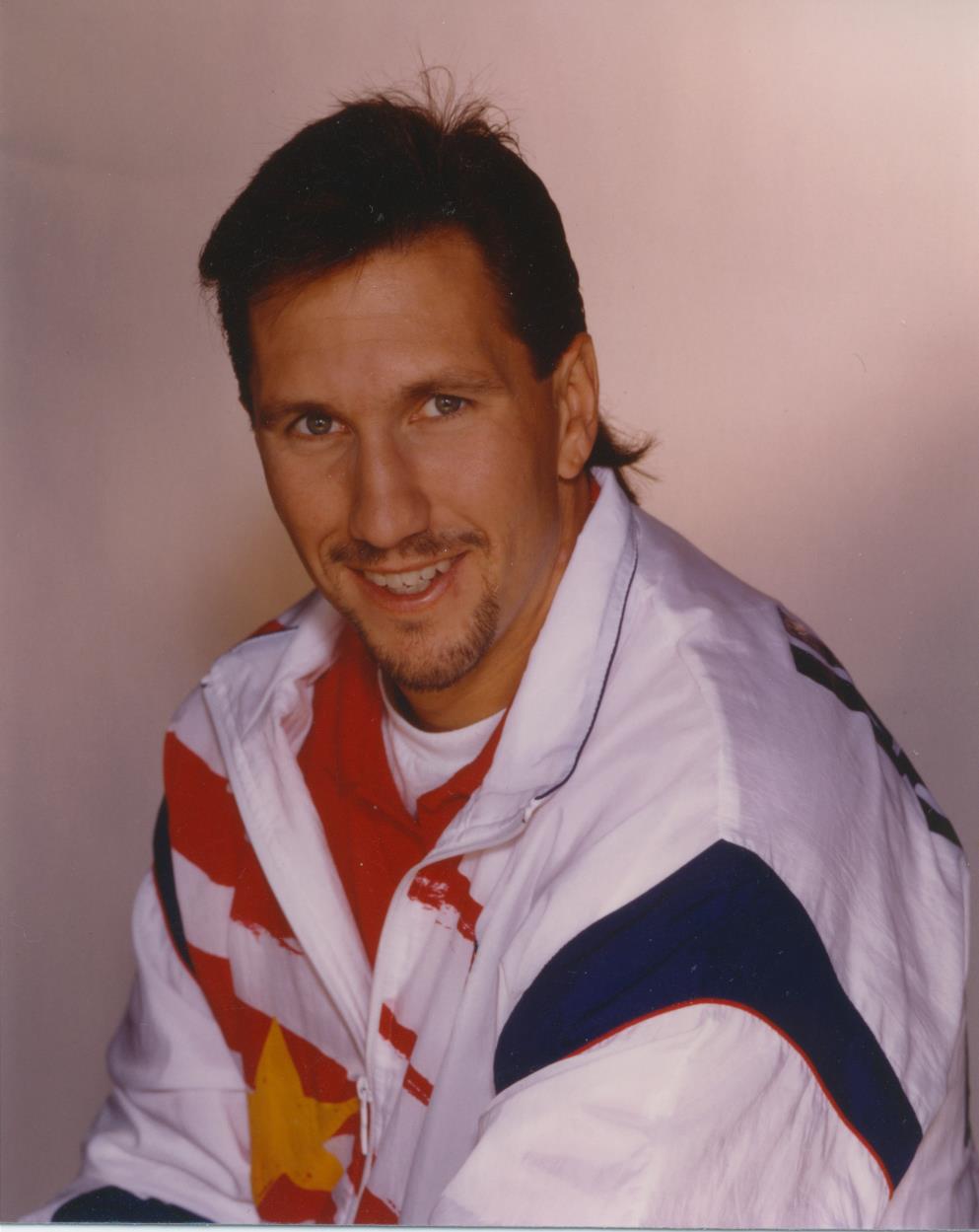
It is also worth noting that Yaro joined Plast, the Ukrainian scouting organization. Plast fosters nationally conscious, patriotic, resilient, strong, courageous, and educated Ukrainian youth, while also maintaining strong sports and Olympic traditions. It is therefore unsurprising that Yaro was active in Plast. Vsevolod Sokolyik recalled this aspect of his life as follows: “He loved football very much… but he also found time for Plast. He was a member of the ‘Orly’ patrol, the 25th boys’ kurin, and attended all youth camps of the Chicago branch.” Thus, in addition to purely athletic training, Yaro also underwent Plast scouting education, which includes physical training, sports competitions, and Olympic tournaments. An interesting detail is that Yaro simultaneously attended Ukrainian studies courses, which demonstrates how strongly the Dakhnivskyi family adhered to Ukrainian traditions even while living abroad. They could not return to Ukraine because it was occupied by the USSR, so they studied Ukrainian history, language, culture, and traditions in the United States.
Football Career
It should be noted that Yaro played both traditional outdoor football (11-a-side) and futsal, or indoor football. This is also a unique phenomenon, as not all footballers can combine these formats. Although both are football, the differences are significant: different rules, pitch size, number of players, and especially the role and possibilities of the goalkeeper. This is yet another distinctive feature of Yaro Dakhnivskyi’s sporting career. During his football career, he played for the following teams: Football: Chicago Croatian (1984–1985), Atlanta Ruckus (1996), Detroit Safari (1996–1997). Futsal: Chicago Shoccers (1985–1986), Memphis Storm (1988–1989), Atlanta Attack (1989–1991), Atlanta Magic (1991–1994), Carolina Vipers (1994), San Diego Sockers (1994).
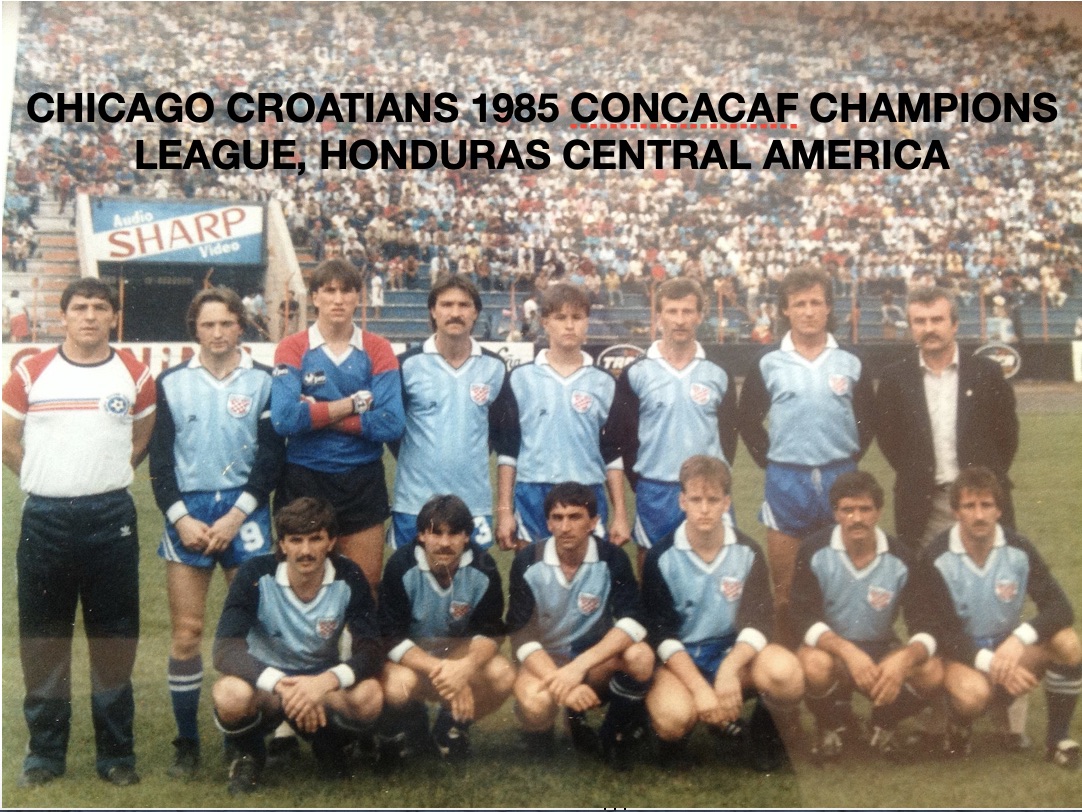
Vsevolod Sokolyik wrote the following about Yaro’s football career: “Yaro’s amateur career developed in Ukrainian sports clubs—‘Levy’ and ‘Kryla’—and concluded with the Chicago ‘Croatia’ team by winning the America Cup in 1984. That same year, Yaro participated in the Free Olympiad in Toronto as part of the Ukrainian national team, which won the gold medal. In 1984, Yaro signed his first professional contract with the Memphis Storm, which competed in the National Professional Indoor Soccer League. Through his play, Yaro Dakhnivskyi greatly contributed to the fact that in the 1992/93 and 1993/94 seasons his team, Atlanta Magic, did not lose a single match.” This is truly a remarkable achievement. In futsal, the pace of the game is extremely fast, and the role of the goalkeeper is exceptionally important. Every saved ball is effectively a goal prevented. Therefore, Yaro rightfully earned such praise from experts.
Other media outlets also highlighted his confident play and wrote about a record that may remain unbeaten to this day: “With Chicago ‘Croatia,’ Yaro Dakhnivskyi’s amateur career ended with winning the America Cup in 1984 and representing the USA in the CONCACAF tournament… During the 1986–87 season, he set a new goalkeeper record, conceding an average of only 3.33 goals per game—the lowest in the league. This record remains unchanged to this day.” What an achievement by a Ukrainian on American soil! These performances were key to Atlanta Magic’s unbeaten streak in the 1992–93 and 1993–94 seasons.
Handball Career

How can one combine the seemingly incompatible? At first glance, football and handball appear difficult to reconcile. However, considering Yaro’s success as a futsal goalkeeper, it becomes more understandable. The key lies in the goalkeeper’s role, which has similarities in futsal and handball. Yaro explained it this way:
“From my perspective, there are two main differences between the two sports. First, in football the ball usually travels from the ground upward, while in handball it comes from above downward. Second, football usually has few goals, whereas handball has many—often around 20. A handball goalkeeper must be psychologically prepared, because it is impossible to save every shot.” An excellent and professional analysis.
The story of Yaro’s transition from football to handball is also fascinating. Newspapers wrote in 1996: “When Yaro Dakhnivskyi appeared in another televised indoor soccer match two years ago, he had no idea it would change his life. Dennis Bergkholts, a member of the 1972 U.S. Olympic handball team, saw the famous performance of San Diego Sockers goalkeeper Yaro Dakhnivskyi on television and предложив him to try out as a goalkeeper for the U.S. national handball team… On May 7, 1996, Yaro’s dream came true when he was named to the U.S. Olympic handball team for the Atlanta Games.”
Thus, Yaro’s Olympic dream was realized through handball, thanks to his futsal performance.
Olympic Games and Olympism
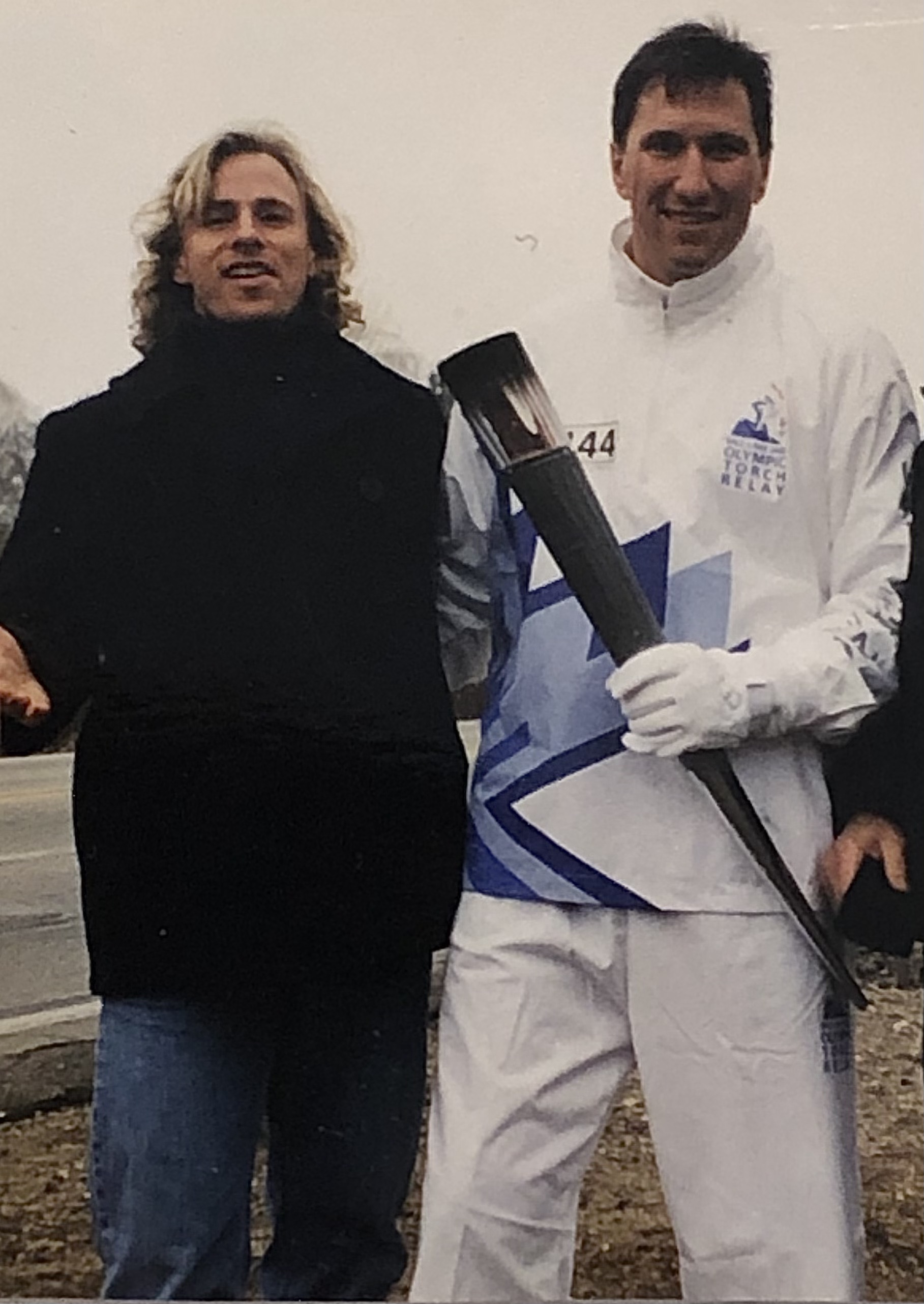
Yaro Dakhnivskyi became part of the Olympic movement as a participant in the XXVI Olympic Games in Atlanta (1996) and as a torchbearer in the Olympic flame relay of the XIX Winter Olympic Games in Salt Lake City (2002).
He recalls the Atlanta Games with great emotion: “When I was in the stadium on the first day, at the opening ceremony, I remembered that almost twenty years earlier I had told a friend that I would one day be at the Olympics—and it came true… When we entered the stadium, the entire crowd erupted in applause.” Yaro also shared a touching story about briefly wearing an Olympic medal, given to him by a newly crowned American swimming champion in the Olympic Village—an unforgettable moment.
In 2002, during the Winter Olympics in Salt Lake City, Yaro also took part in the Olympic torch relay, becoming part of another timeless Olympic tradition.
We truly have much to be proud of—and many remarkable individuals to celebrate.
Author: Oleksiy Lyakh-Porodko