


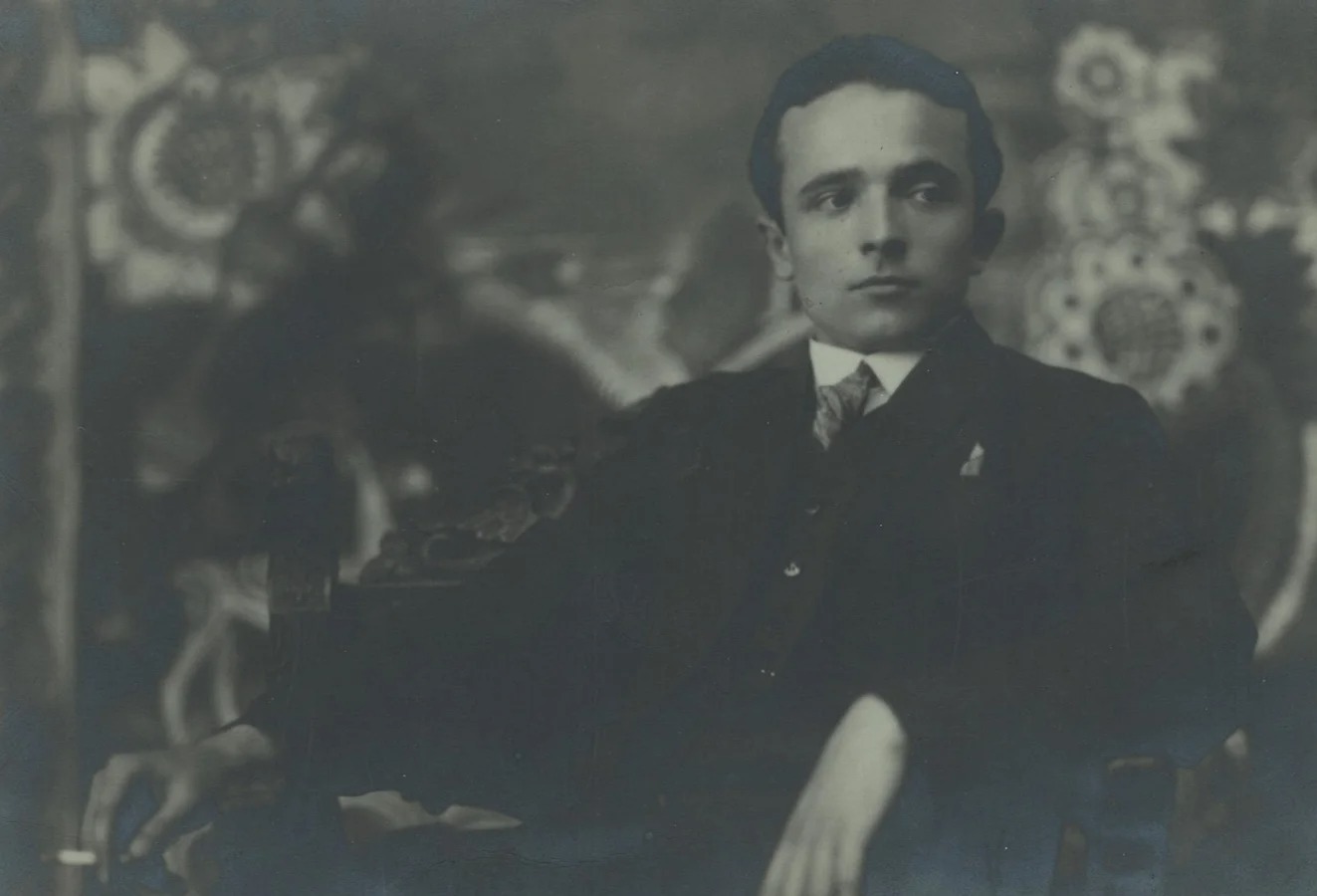
Viktor Tsymbal (pseudonym – Tsvirkun, cryptonyms “V.Ts.” and “Ts”) – Ukrainian graphic artist and neo-symbolist painter, landscape painter, author of works on religious and historical themes, master of caricature and advertising graphics, who spent a significant part of his life outside Ukraine – in Argentina and the USA.
This was reported by Museum of the Ukrainian Diaspora.
The future artist was born on May 1, 1902 in the village of Stupichne (now Cherkasy region) into a family of teachers. The family preserved Ukrainian traditions and spoke Ukrainian. For his views, the artist’s father was repressed by the Soviet authorities and spent four years in prison in Volyn.
Since 1907, the family has lived in Kyiv. Here Viktor graduated from the Second Kyiv Gymnasium named after Cyril and Methodius Brotherhood. In 1917, he enrolled in the Student Kuren, most of whose members died near Kruty in 1918. His parents did not let him participate in the battle, forcibly detaining him at home.

Viktor Tsymbal did not succeed in studying at the Ukrainian Academy of Arts. He became a soldier and participated in battles on the side of the Ukrainian army until November 1920. After the defeat of the liberation struggle, together with other soldiers, he ended up in internment camps in Poland - in Łańcut, Wadowice and Kalisz. In the camps, he was actively involved in artistic activities: he painted portraits, theater sets, caricatures, and created a series of drawings "Types of Internees", which were reproduced in the Warsaw newspaper "Ukrainian Tribune" in 1921-1922.
In the early 1920s, Tsymbal illegally left for Czechoslovakia. In Prague, he studied at the Art and Industrial School, attended the Ukrainian Studio of Plastic Arts, and took a course in theater stage design at the Czech National Theater.

At the end of 1928, the artist left for Argentina, where he lived for the next 33 years. At first, he worked as an advertising illustrator for magazines in Buenos Aires. Later, Argentine and international companies began to commission him for advertising work, including Futz Ferrando, General Motors, Ford, Kodak, National City Bank of New York, Coca-Cola, Swift Co., Martini, Opel, Nestle, and others.
In the 1930s, Tsymbal visited Tierra del Fuego, Patagonia, where he created a series of landscapes. In 1936, his works were presented at his first solo exhibition at the Müller Gallery in Buenos Aires. In Argentina, he was actively involved in public activities: he became the first benefactor and founder of the Ukrainian House in Buenos Aires, where he opened a Ukrainian school, illustrated Ukrainian publications, created portraits of Ukrainian public and political figures, organized the Committee for Helping Wanderers, and became a co-founder of the Congress of Ukrainians in Argentina.
Viktor Tsymbal. Illustration for the publication “Lukomoriya”: There, in front of the whole people, through the forests and fields, the sorcerer carries the hero. Paper, ink, pen. Late 1940s – early 1950s / Museum of the Ukrainian Diaspora
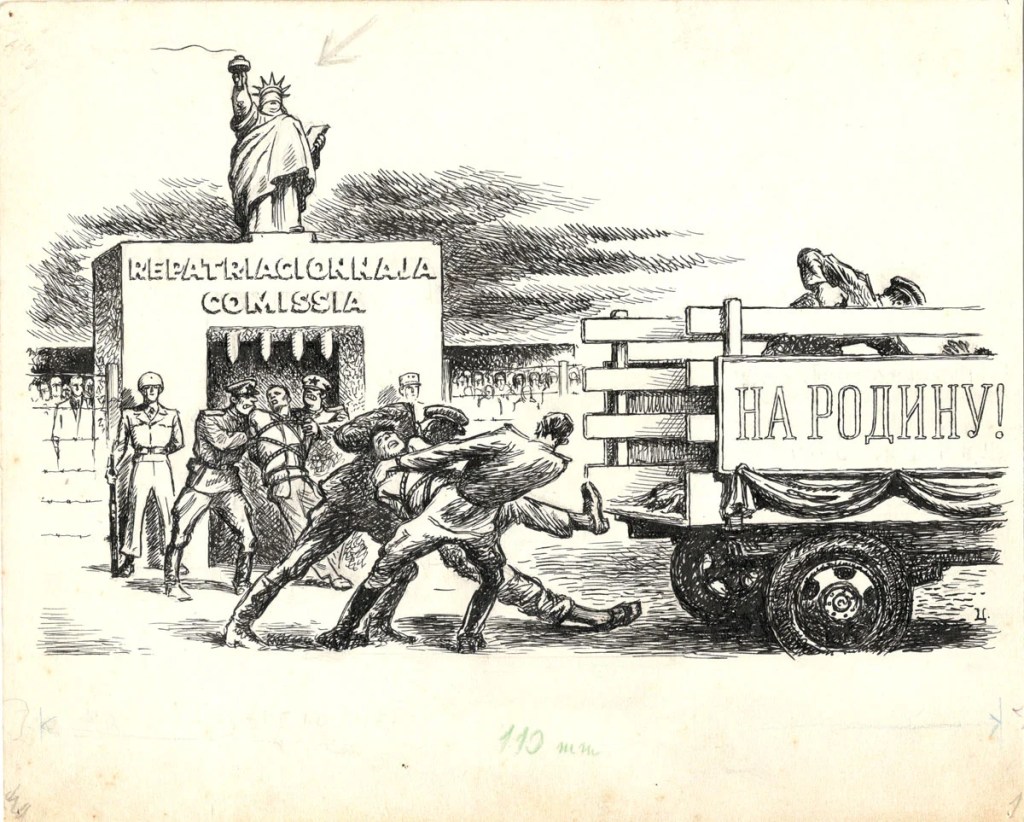
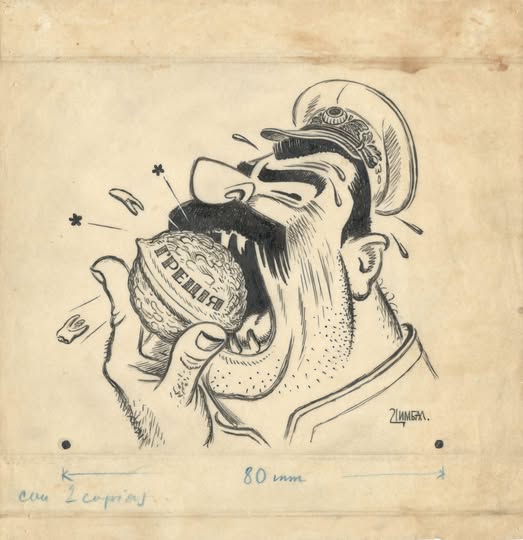
An important part of the artist’s work is made up of anti-Stalinist caricatures of the post-war period, directed against the myth of a “happy Soviet life”. He dedicated to this topic the literary and illustrated work “Lukomoriya” – a travesty of Alexander Pushkin’s poem “Ruslan and Lyudmila”. The most famous caricature of this cycle is “Repatriation”, which depicts the forced return of refugees from the DP camps to the Soviet Union.
At the end of 1959, before leaving for the United States, Tsymbal held a farewell exhibition at the Pevzer Gallery in Argentina, where he presented works on Ukrainian themes: "Brothers", "Three Souls" based on the works of Taras Shevchenko and a series of paintings on Ukrainian mythology and religious-mystical subjects.
On October 24, 1960, Viktor Tsymbal arrived in New York. He joined the Ukrainian Artists of America Association (UAA) and at the end of the same year held his first personal exhibition at the Ukrainian Literary and Art Club. Later he moved to Detroit, where he worked mainly in advertising graphics and organized several more personal exhibitions.
Viktor Tsymbal died on May 28, 1968 in New York. He is buried in the cemetery in South Bound Brook. Most of his creative heritage is kept in private collections in different countries of the world, some works are included in museum collections.
In 2024, the artist's great-grandson Anton Tsymbal transferred the artist's complete archive to the Museum of the Ukrainian Diaspora.
Photo: localhistory.org.ua, diaspora.com.ua
Author: Danylo Pievchev