


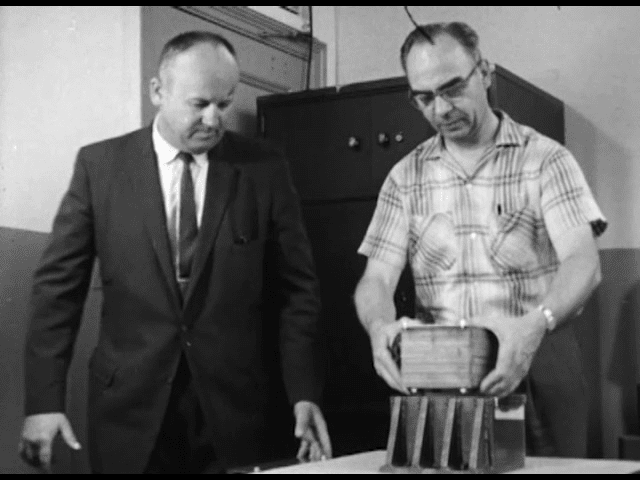
The story of Ukrainian inventor and entrepreneur Volodymyr Dzus is an example of the successful realization of the “American dream” of a Ukrainian emigrant. Born on January 5, 1895 in the village of Chernykhivtsi in the Ternopil region, he went from a village boy to the founder of an international industrial company and one of the most famous Ukrainian philanthropists in the United States.
This was reported by Milena Volyanska.
Volodymyr Dzus grew up in a large peasant family. After graduating from elementary school, he studied carpentry, but in 1913, at the age of 18, he decided to emigrate to North America. First, he arrived in Canada, and later, under the name William Dzus, he moved to the United States, where he settled with his sister in Newark, New Jersey.
The first years in America were not easy. Not knowing English, Juice worked in a restaurant, as a loader, and in the evenings he studied at a trade school. Later, he acquired the profession of a turner and began working at a safety razor factory in the city of Orange. At the same time, he studied auto mechanics, electromechanics, and drawing. It was then that the future inventor began to develop mechanisms that helped prevent industrial injuries.
In 1917, Vladimir Juice married his childhood friend Eva Skaletska. The couple had a son, Theodore, but soon his wife fell ill with tuberculosis. The family moved to West Islip, where the climate was more favorable for treatment. In 1918, Juice began the procedure for patenting his first invention - an improved lathe. He received the patent in 1922, but his employer immediately assigned the rights to the invention.
After the death of his first wife, Juice returned to Newark, where he opened his own auto repair shop. In 1927, he married a second time, to Anna Resnik. During this period, the inventor patented a wind turbine for a car radiator and a protective grille against stones, but due to the Great Depression, his company ceased operations.
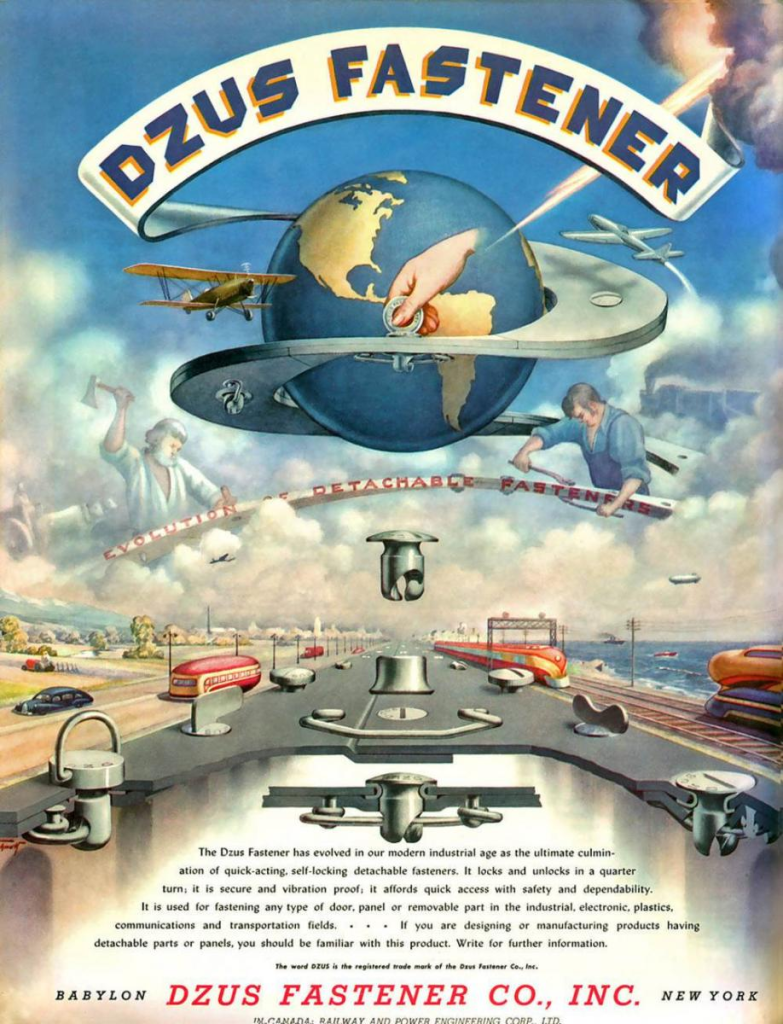
After that, Vladimir Juice got a job as a toolmaker at the Fairchild Aircraft Company in New York State. It was there that he created one of his most successful inventions - the Dzus fastener, resistant to vibration, temperature changes and pressure. After copyright lawsuits, the court recognized Juice as the inventor.
On April 26, 1932, he founded the Dzus Fastener Company Inc., and the following year he opened his own factory. The company developed rapidly, manufacturing fasteners for civil and military aviation. By the mid-1930s, the company's products were exported abroad, and later factories were opened in Canada, France, and the United Kingdom.
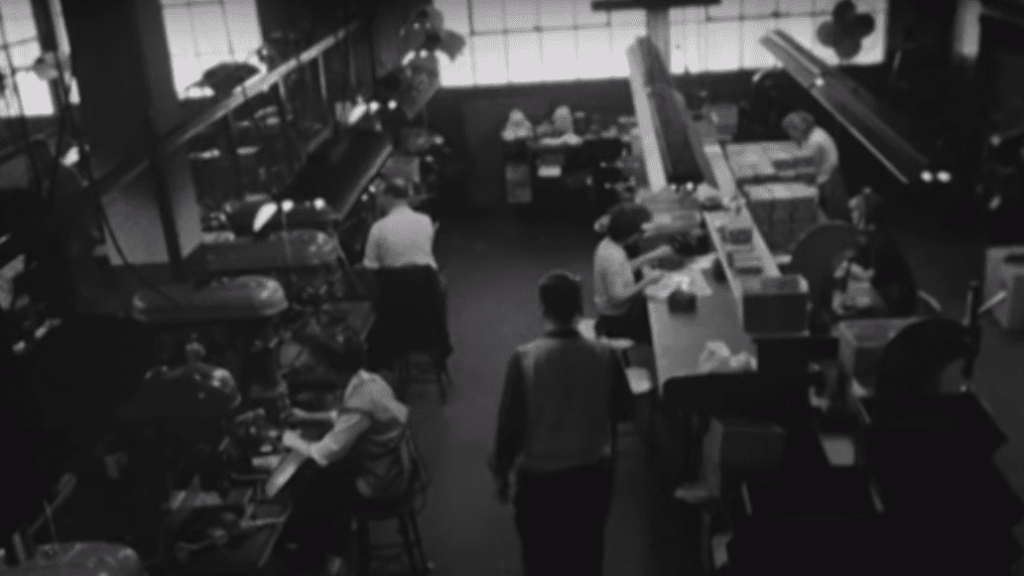
During World War II, the company actively cooperated with the Pentagon. After the United States entered the war, production was expanded, and another factory was opened in California. In 1943, Dzus's enterprises worked around the clock, providing work for more than a thousand workers in the United States and producing about 30 million fasteners per month.
Financial independence allowed the inventor to develop new areas of activity. His enterprises manufactured locks for trams, fasteners for medical equipment, cars, ships, railway cars, as well as devices for treating fractures.
In 1948, Danylo Skoropadsky, the son of the Hetman of Ukraine, Pavlo Skoropadsky, became the technical director of the European division of Dzus Fastener Europe. They met in 1937 in Chicago during the dedication of the Ukrainian airplane "Kyiv".
Despite their success in the USA, Dzhus's family in Ukraine suffered repressions by the Soviet authorities. His brother died in the ranks of the UPA, and his mother, daughter-in-law and niece were exiled to Siberian camps.
Volodymyr Dzhus actively supported Ukrainian life in exile. He financed the activities of the Taras Shevchenko Scientific Society, the Ukrainian Free Academy of Sciences, Ukrainian schools, publishing houses, museums, libraries, cultural events, and also provided assistance to international charitable organizations and fellow countrymen.
One of his most important projects was the founding on May 3, 1948 of the Ukrainian Institute of America (UIA), which became the cultural, scientific and socio-political center of the Ukrainian community in North America.
On October 28, 1953, at the first general meeting of representatives of 20 Ukrainian families, Volodymyr Dzus was elected president of the Ukrainian Institute of America. The following year, the organization received non-profit status.
In 1955, the Institute purchased a historic building on the corner of Fifth Avenue and 79th Street in New York City. After the loan was fully repaid in 1962, the building finally became the property of the Ukrainian Institute of America. Today, the maintenance of this historic landmark costs approximately $500,000 annually.
After Volodymyr Dzus’s death on June 19, 1964, his son Theodore Dzus continued his business, heading the Dzus Fastener Corporation and the Ukrainian Institute of America. The family business was subsequently passed on to the next generation of the family.
In 1991, the Ukrainian Institute of America honored Roman Popadiuk, the future first U.S. ambassador to independent Ukraine, with the Ukrainian of the Year award. He held diplomatic positions in the US State Department, worked in the administrations of Presidents Ronald Reagan and George Bush, and in 1992–1993 became the first American ambassador to Ukraine.
Photo: DZUS Fastener Story
Author: Danylo Pievchev