


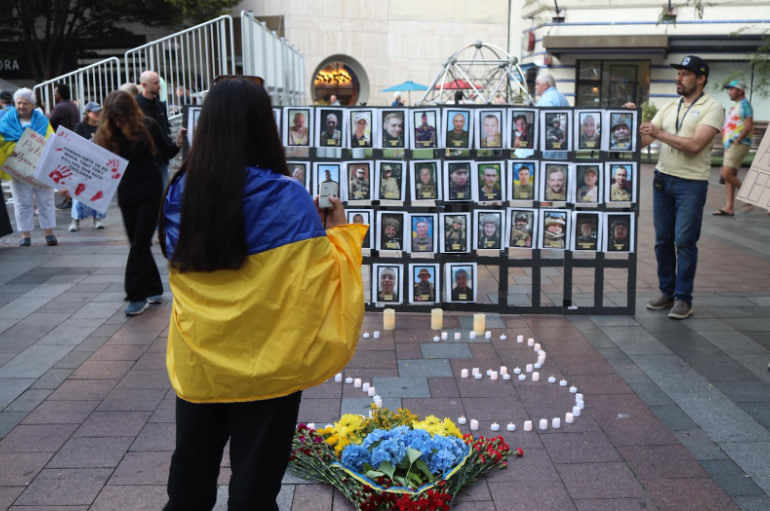
Russia’s full-scale invasion of Ukraine in February 2022 has acted as a unifying force for the diverse and often fragmented Ukrainian diaspora in the United States. Historically divided by generational differences, religious beliefs, and the circumstances of emigration, these groups have set aside many of their differences to support Ukraine. The unprecedented destruction and humanitarian crises have galvanized collective efforts, from fundraising initiatives to political advocacy, fostering a renewed sense of solidarity and shared purpose. This unity has not only strengthened their connection to Ukraine but also elevated their role in attempting to shape policy in the U.S towards Ukraine.
Ukrainian immigration to the United States has historically occurred in four major waves: 1890-1914, 1922-1936, 1945-1953, and 1989 to the present. Among these, the third wave of post-World War II immigrants were "more urbanized, better educated, and more passionate about defending Ukrainian identity and independence," according to Ukrainian American researcher Anastasia Kharitonova-Gomez. This period of migration was largely driven by oppressive Soviet policies, crackdowns on the independence movement, and aggressive Russification efforts aimed at erasing Ukrainian cultural identity.
Faced with these challenges, Ukrainian immigrants of this era placed a strong emphasis on preserving their heritage, actively establishing Ukrainian churches, cultural organizations, and institutions across the United States. Oleh Wolowyna, director of the Center for Demographic and Socio-Economic Research of Ukrainians, noted that Soviet emigration policies severely restricted migration until the introduction of the Jackson-Vanik Amendment in 1975. Signed by President Gerald Ford, this legislation allowed individuals persecuted for their religious beliefs, particularly Soviet Jews and Christians, to emigrate to the United States.
Further easing restrictions, the Lautenberg Amendment, which was first passed over 30 years ago, facilitated the resettlement of persecuted religious minorities from the Soviet Union, particularly benefiting Protestant Christians, including Baptists and Evangelicals. This amendment allowed those with “well-established histories of persecution” to seek refuge in the U.S., resulting in the resettlement of approximately 500,000 Soviet Evangelicals, many of whom were Ukrainians, as refugees or through family reunification programs.
Catherine Wanner, Professor of Anthropology, History, and Religious Studies at The Pennsylvania State University, wrote: “Highly favorable immigration policies have allowed nearly the entire membership of many Soviet congregations to relocate rapidly to the Pacific Northwest.” As a result, Ukrainian diaspora communities grew rapidly on the West Coast, particularly in states like Washington and Oregon.

These Protestant communities differed significantly from the older Ukrainian diaspora clusters in Pennsylvania and New York, which were predominantly Greek Catholic and Orthodox. Washington state has the third-largest Ukrainian population in the U.S., following California and New York. According to U.S. Census Bureau data, Ukrainians are also the fastest-growing European immigrant community in the state.
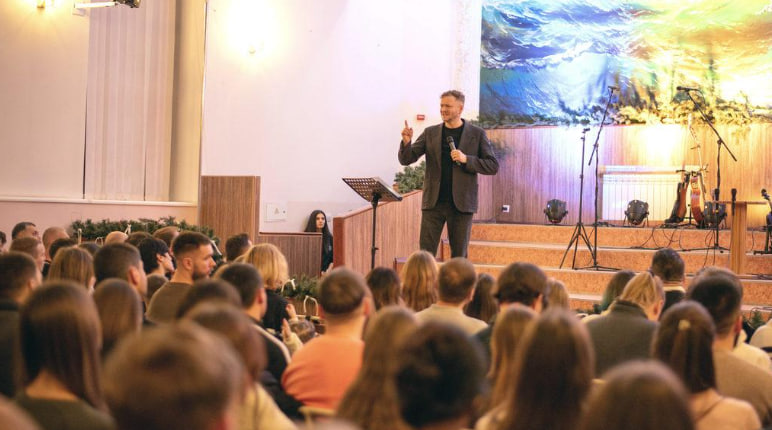
Applicants from religious minorities are presumed to have faced persecution, but they must still provide evidence of specific discrimination or mistreatment. While the standard for proving persecution is lower than for asylum claims, documentation of incidents is helpful but not required. Instead, applicants undergo interviews where they are asked about their experiences to prove their persecution.
The New York Times reported in 2017 that “Evangelical Christians make up more than 90 percent of the current Lautenberg pool, the vast majority of them from Ukraine.” As a result, many Ukrainians fleeing the war since Russia's full-scale invasion in 2022 have continued to be Protestants, joining family and friends who had already established communities in the United States. Ilya Globak, pastor of the Ukrainian Bible Church in Washington State, stated that a 1990 congressional act “has brought many blessings to our people.”
"Most WWII refugees were Ukrainian Catholics from Western Ukraine," Wolowyna noted, emphasizing their strong sense of national identity and commitment to preserving Ukrainian culture in their new homeland.
Kharitonova-Gomez believes that "One of the strongest factors shaping Ukrainian partisanship is religious affiliation. I would argue it is usually the main factor, though it's difficult to completely isolate faith from other factors."
Ukraine is predominantly Orthodox and Catholic, with only a small percentage identifying as Protestant. However, the composition of the Ukrainian diaspora tells a different story. Kharitonova-Gomez explained, "This is flipped in the diaspora because a large number of Ukrainians who immigrated in recent decades are Protestants, particularly of Baptist and Pentecostal denominations. There are smaller, yet enduring groups of Orthodox and Greek Catholic Ukrainians, as well as plenty of Ukrainians for whom religious affiliation is not very relevant or important."
Religious communities serve as crucial conduits for preserving Ukrainian culture abroad. According to Kharitonova-Gomez, "Churches and religious communities are key conduits for the Ukrainian diaspora to maintain its language, culture, and community ties, so naturally, they have a political effect even if they claim to be nonpolitical and nonpartisan (which they often do)." Ukraine has often been called the “Bible Belt of Eastern Europe.” Though Evangelicals account for only 2% to 4% of the population, their influence is vast and even more important given their connection to the Protestant diaspora already in the United States.
These religious affiliations also influence political leanings within the diaspora. Evangelical Protestants, a growing segment of the Ukrainian-American community, tend to favor the Republican Party. Kharitonova-Gomez observes, "Politically speaking, evangelical Protestants strongly lean Republican—this is true not just among Ukrainians, but across the U.S. Among Catholic and Orthodox Ukrainians, there is a reported conservative tilt, but also more variation." Meanwhile, Ukrainians with no religious affiliation or those from non-evangelical Protestant backgrounds tend to prefer Democrats. "Like most other Americans," she adds, "the Ukrainians I spoke to generally stuck to their preferred party’s candidate even if they didn’t really like the candidate."
This distinction in religious identity is also reflected in how different groups within the diaspora prioritize their sense of Ukrainian heritage. Evangelical Protestants, who often belong to congregations with mixed Slavic communities, tend to prioritize their religious identity over their cultural one. Kharitonova-Gomez explains, "While many evangelicals associate being Ukrainian with being a person of faith given the church networks that define their community, they prioritize their religious identity. Their congregations also tend to be a mix of Slavic groups rather than only Ukrainians."
In contrast, Catholic and Orthodox Ukrainians see their faith as closely intertwined with their cultural and ethnic identity. Kharitonova-Gomez notes, "Faith, culture, and ethnicity are more intertwined for Catholic and Orthodox Ukrainians. This is unsurprising given that these churches have a longer history in Ukraine and have culturally and linguistically specific traditions."
“Ukrainian identity is not strong among most Protestants; religion is the predominant factor in their identity. Some have a fair sense of cultural Ukrainian identity, while others are more inclined towards Russian culture,” said Wolowyna. He also noted that “Protestant leaders have been more active in the Ukrainian community in recent years, especially as a reaction to Putin’s attack on Ukraine in 2014 and the invasion in 2022.”
“New York Metropolitan Area has the largest concentration of Ukrainians, 184 thousand, and dominates the cultural and political activities of the community. Communities in the northeastern states have a long history of settlements and organized communities, while communities on the West Coast do not have this long historical legacy,” Wolowyna explained.
This historical legacy, coupled with the fact that the majority of Ukrainian diaspora communities from earlier waves settled on the East Coast, fostered a deep sense of patriotism and a strong commitment to institution-building in the United States. These earlier immigrants, driven by a desire to preserve their cultural identity and support Ukraine’s struggle for independence, played a crucial role in establishing Ukrainian churches, cultural centers, and advocacy organizations that continue to serve as pillars of the community today. The infrastructure established by earlier waves of Ukrainian immigrants in the U.S. is evident in institutions such as The Ukrainian Weekly, the first Ukrainian newspaper in the country, founded in 1933.
Andrij Dobriansky, Communications Director for the Ukrainian Congress Committee of America, explains, "The Ukrainian Protestant faith tradition has flourished in the United States since the earliest days of the diaspora. In the post-war golden age of diaspora solidarity and anti-communist activism, the largest visible denominations consisted of Ukrainian immigrants who converted with their fellow veterans after serving in the U.S. Armed Services."

However, not all Protestant denominations integrated seamlessly into the broader Ukrainian-American community. According to Dobriansky, "Less interactive with the united diaspora groups during this period were Ukrainian Baptist and Pentecostal denominations, primarily due to cultural differences regarding faith restrictions, such as their views on pagan folk traditions, the consumption of alcohol, and their strict adherence to remaining non-political." Despite these differences, the post-Soviet wave of Ukrainian immigration in the 1990s brought significant changes, fostering greater coordination between previously isolated churches and the wider diaspora.
Dobriansky notes, "During the period of Soviet dissolution, there were small steps to coordinate the non-aligned churches with the greater diaspora, but the bigger change was the massive growth in these churches, which were motivated to create support programs for newer immigrants." This influx of new arrivals led to increased engagement and collaboration across different segments of the Ukrainian-American community.
The Russian invasion of Ukraine in 2022 marked a turning point for Ukrainian Protestant communities in the U.S., forcing greater unity among various religious and cultural groups. Dobriansky explains, "Following the 2022 invasion, non-coordination with fellow Ukrainians was an impossibility—both for the non-aligned churches and the greater diaspora."
This newfound unity was further solidified after the 2022 U.S. midterm elections, as Ukrainian Protestant communities became increasingly involved in political advocacy efforts. Dobriansky highlights, "Since the change of congressional leadership following the 2022 midterm elections, the integration of efforts has pushed the leadership of previously non-aligned churches into the forefront of political discussions."
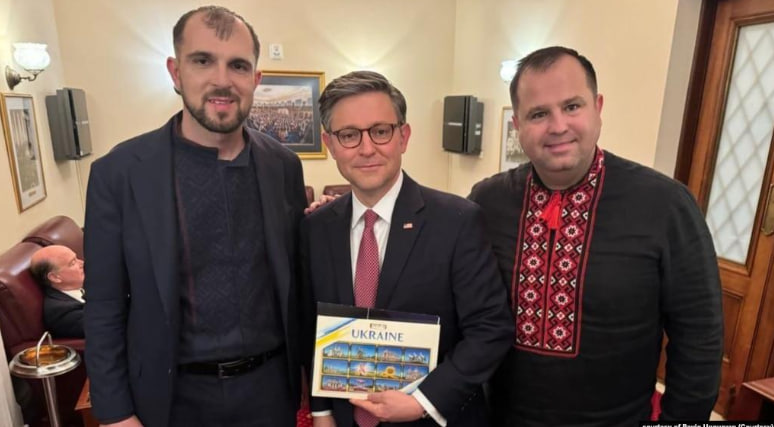
As a result, Ukrainian Protestant churches—once more focused on faith-based initiatives—have become more important players in mobilizing political and humanitarian support for Ukraine, bridging longstanding divides within the broader diaspora.
How long the focus and unity within the Ukrainian diaspora will last remains uncertain. Eddie Priymak, a Ukrainian American researcher specializing in religion and politics in Eastern Europe, noted, “I don’t think Ukrainian Protestants’ political activism will diminish after the war, but their focus will likely shift from Ukraine to U.S. domestic issues.”
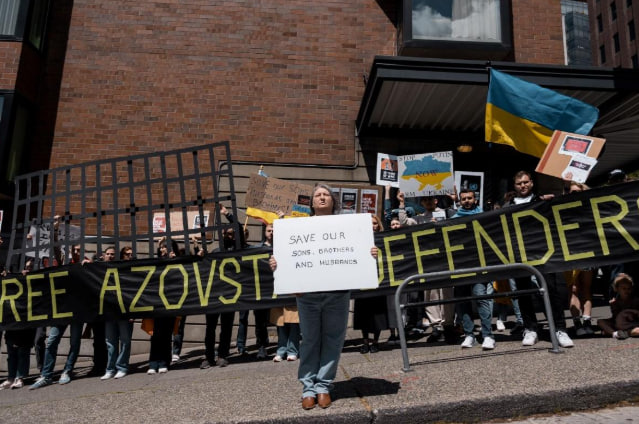
He added, “Since most Ukrainian Protestants are evangelical, their priorities tend to align with the broader U.S. evangelical movement. Over time, the diaspora will continue to assimilate and adapt, mirroring their American peers.”
While Priymak believes this likely means voting Republican, he pointed out, “It remains to be seen whether they will embrace Trump’s ‘America First’ foreign policy or revert to the human rights-focused foreign policy that U.S. evangelicals championed beginning in the 1970s.”

"Let’s not forget the 20,000 children stolen from Ukraine by the Russians—we need to bring them home," says Mikhail Pavenko, a Ukrainian American and volunteer military chaplain. "The diaspora and the church have a crucial role to play in this effort. And beyond that, the rehabilitation of our soldiers will continue for years. This is generational work."
David Kirichenko is a Ukrainian American freelance journalist and an Associate Research Fellow at the Henry Jackson Society. He can be found on X/Twitter @DVKirichenko.
Author: David Kirichenko