


“I am Katya!”—three defiant words that ignite the pulse of The Last Lullaby, James Hodson’s searing new novel about a Ukrainian girl abducted from Mariupol and stripped of everything that made her whole. Across an ocean, a young American named Thomas feels her distant heartbeat in a fragile chain of letters, and their improbable friendship becomes a lifeline stronger than borders, propaganda, or fear. Katya’s struggle to reclaim her name mirrors the battle of more than one million Ukrainian children still trapped under Russian occupation—a battle the world can end if it chooses.
James Hodson is no stranger to turning conviction into action. As CEO and co-founder of the AI for Good Foundation, he harnesses artificial intelligence to tackle humanity’s hardest problems, from post-conflict recovery to ethical education. Before that, he led Bloomberg’s AI research team in New York; today, he applies the same rigor to Svidok.org, a platform archiving Russia’s war crimes so justice can find every victim. The Last Lullaby is Hodson’s most intimate project yet: all proceeds fund missions that locate, liberate, and reintegrate kidnapped Ukrainian children, giving readers the power to help bring them one step closer to home with every purchase.
This is more than a story—it is a call to conscience. Can we bear the price of silence while children’s names vanish into forged documents and distant camps? Hodson’s answer beats between every line: courage is a collective act. Buy the book, share its truth, and help carry Katya—and thousands like her—back into the sunlight of Ukraine.
Lukian Selskyi (LS):James, you decided to write a book on one of the most painful topics in modern Ukrainian history. What was the idea behind it?
James Hodson (JH):I think that the pain you're referring to, and the very real yet almost unimaginable stories of so many Ukrainian children over the last ten-plus years, were the impetus for me to write. For me, writing this book was a way of processing the reality of these children's stories—not just being presented with them but actually meeting some of those who have been brought back, hearing from them, and seeing how their lives changed. The idea came from several initial conversations we had about joint projects with Save Ukraine, which is probably the largest NGO actively working to bring back children who have been stolen by Russia since 2014.
LS:So is this a combined biography of a few children?
JH:This is a fiction book, a novel about the particular story of one girl who was stolen by Russia from Mariupol (Ukraine) at the beginning of the full-scale invasion. The story follows her life over ten years: having her identity stripped from her, being told that her family hates her and that her country is full of “Nazis” who want to kill her, being put in reeducation camps, and being forced every morning to sing the Russian national anthem and look with disdain on anything associated with Ukraine. She is ultimately shipped off to a remote corner of Russia to adoptive parents who exploit her and prevent any semblance of her own identity from shining through. So it's a novel, but it is based on a mosaic of true stories—stories of children who have come back from Russia and stories reported through our platform, Svidok.org, where we collect the personal experiences of Ukrainians who have lived through the last three-and-a-half years.
LS:Did you talk to the children who were returned?
JH: I have met several families that have been reunited, and of course it's always difficult. I haven't interviewed the children directly—there are many potential challenges with re-traumatization—but we have active programs supporting initiatives to bring back more children and to make sure that all the right infrastructure is in place when they are back in Ukraine so they can live as normal a life as possible.
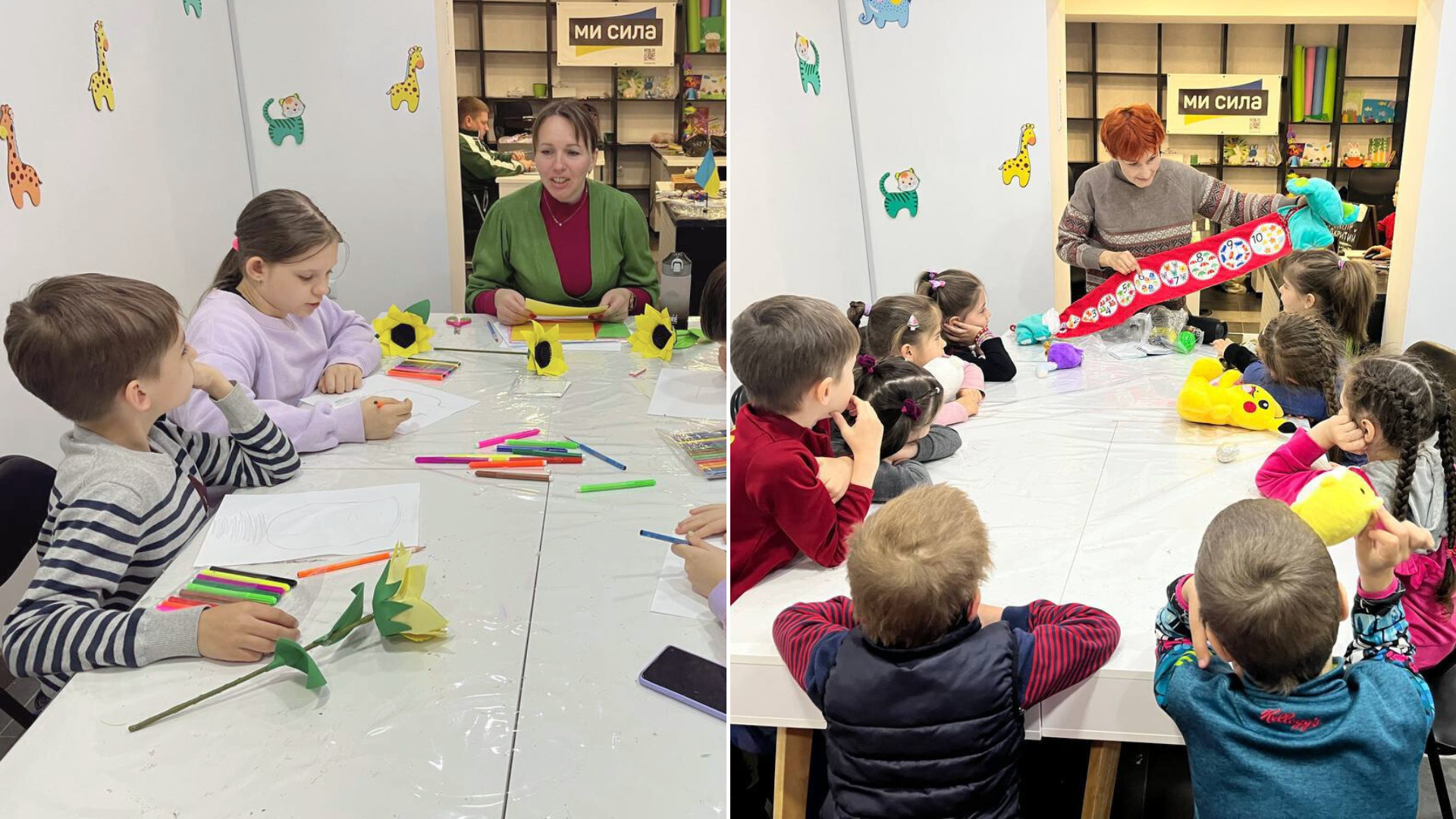
In the photo: Ukrainian children affected by the war during a session at one of the rehabilitation centers
LS:Please tell me more: Is there any general mechanism behind the stealing—or kidnapping—of those children from Ukraine? How does it work?
JH:It works in a few different ways. There were times during the immediate crises, in the aftermath of occupation, when families were split from their children because of logistical challenges: children being in school, with friends, with grandparents, or families divided by other unfortunate circumstances. Under occupation, Russian soldiers are given lists and told to take certain kids to a camp because “this area is going to be unsafe,” “this area will be subject to additional Ukrainian Nazi bombings,” and therefore a child needs to be taken to a safer place—for “two weeks,” usually—after which the child never comes back. The parents have no real legal basis to retrieve the child because they would have to accept Russian citizenship and agree to all kinds of other requirements to have standing to bring their children back. Sometimes grandparents or parents are no longer under occupation, whereas the child has been taken away. After the Kharkiv counteroffensive in late 2022, for example, children were being held essentially against their families’ will while their parents lived in liberated territory.
LS:Do you know of any specific directive from the Russian government to do this to Ukrainian children from occupied or nearby territories?
JH:It is understood that Russia has been systematically trying to keep Ukrainian children under Russian propaganda. It is Russian state policy to ensure that Ukrainian children are re-educated according to a curriculum of Russian imperialism. The ICC appears to have reached the same conclusion, and I would broadly agree: Russia is taking Ukrainian children away from their families without any legal basis in order to suppress Ukrainian identity within occupied territories.
LS:Do these kids think about escaping from Russian territory? Do they flee from their new families? Are there examples of protest from a child who eventually understands that something is wrong?
JH:Absolutely. Many of these children actively try to stand up against what's happening to them. In Russia there are myriad legal cases against minors for pro-Ukrainian activities, often involving children taken from occupied territories. In the story I wrote, the main character, Katya, is constantly dreaming about Mariupol and coming home, always fighting to keep alive that inner flame of Ukraine. So it's also a parallel story about Ukraine’s fate: Ukraine exists insofar as it exists in each Ukrainian. Katya is always looking for ways to maintain her Ukrainian connection, although she realizes that escape is almost impossible. It's an exploration of how one maintains identity under repression.
It also depends on the child's age. If a three- or four-year-old is removed, they soon have no recollection of what happened—though they may carry trauma. Teenagers of 13, 14, or 15 are extremely conscious of what's going on. We have stories submitted by such children about life under occupation. In fact, three weeks ago, one child author on Svidok.org contacted the team at Save Ukraine, and we are now working on ways to bring that child back.
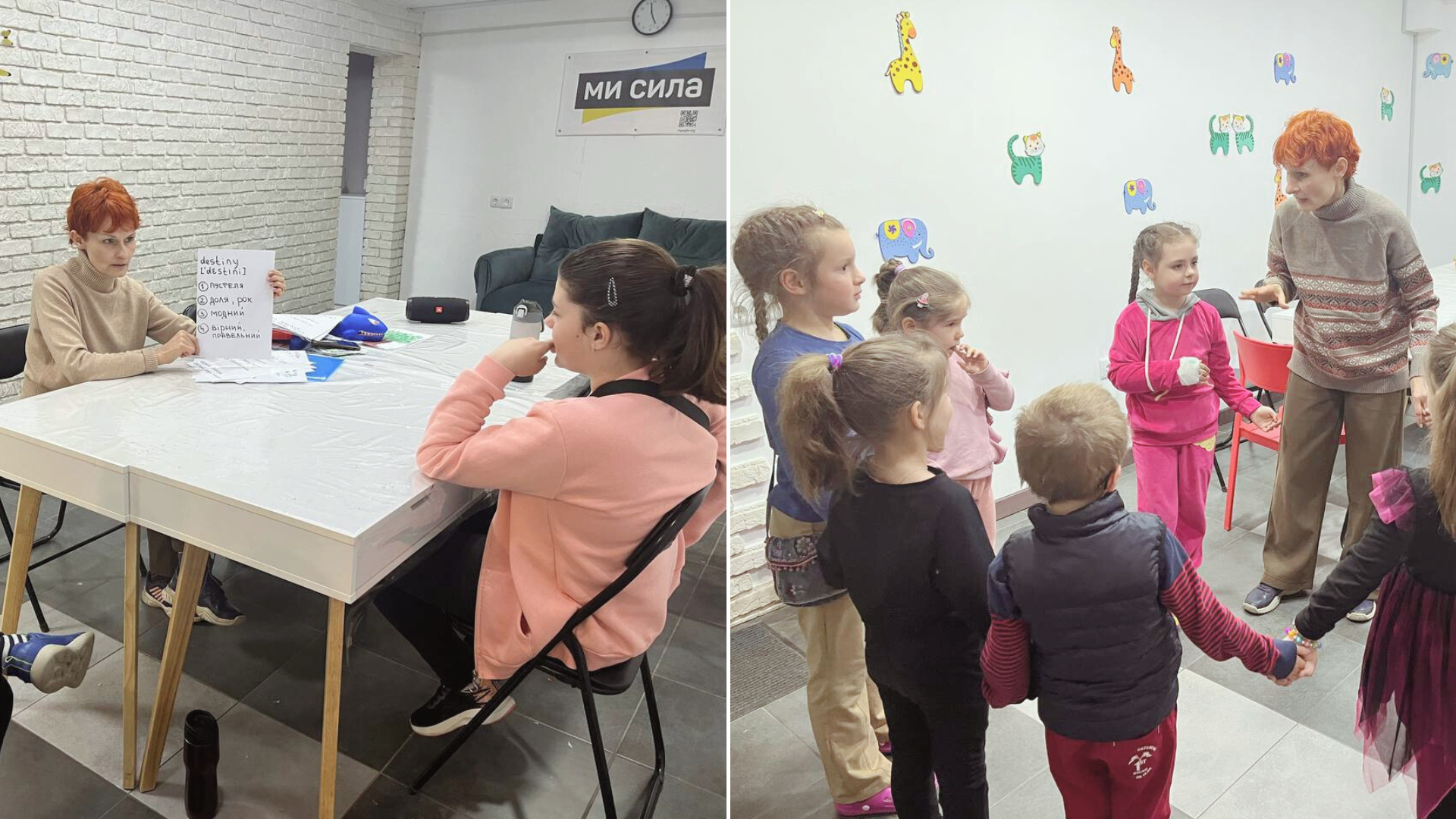
In the photo: Ukrainian children from frontline areas during a session at one of the rehabilitation centers
LS:But do you really think teenagers can continue to feel Ukrainian under all this pressure?
JH:We're talking about a systematic program to erase identity, so of course the vast majority of children will be suppressed and may even come to believe that Russia has some imperial right to own Ukraine and that Ukraine is trying to destroy them. That doesn't mean, however, that there aren't instances of children who resist and end up in youth penitentiaries, suffering the consequences for trying. The Russian state has eighty years of systematic repression under its belt, plus centuries of other forms of repression—not just against Ukrainians—and it has a lot of experience executing such programs.
LS:Is there any potential governmental mechanism or program to bring those children back from Russia?
JH:I’m personally convinced that any ceasefire and the eventual end to the war must include the return of these children. Tens of thousands—potentially hundreds of thousands—have been forcibly deported from Ukrainian territory into Russia. They must be identified and systematically returned.
LS:We never know how long it will take to end the war. By that time they could be Russian citizens, reluctant to return, or even fighting against Ukraine.
JH:That might be true, and it's the same question we face with Crimea and the Donetsk and Luhansk regions: To what extent will Russia succeed in shifting population dynamics and psychology to make these regions “Russian”? But it doesn't change the fact that these are Ukrainian children and that this is effectively a genocide of Ukrainian culture. If we don't demand and enforce their return, if we don't ensure they know what happened to them, then we allow that system to win.
LS:Are there any successful cases of returning children from Russia now, while the war is ongoing?
JH:In the last three years, close to 700 children have been returned from Russia by Save Ukraine and its partners. But we need to do a lot more.
LS:How is that possible?
JH:It happens in various ways. Once a child is identified—usually through digital means such as phone calls and apps—there is often a family member, typically a grandmother or mother, who travels to Russia to retrieve the child. This is organized through semi-legal channels and often involves paying bribes at the border to bring the child out of the country.
LS:So there's no mechanism like exchanging Ukrainian and Russian prisoners?
JH:No. Even a few months ago, local authorities would generally give a child back if parents showed up and asked. There have been instances where authorities withheld children, claiming the wrong documentation was provided. Recently, Russia has stepped up its identity-erasure programs, making it much harder to find and collect the children.
LS:Can you describe what tools Russians use to hide a Ukrainian child within Russian territory?
JH:First comes a reeducation camp—sold to the world as a summer camp to “keep the child away from bombings”—but in reality a militarized camp where identity documents are confiscated. Passports, birth certificates, ID cards—gone. The child is then issued new Russian documents with a fabricated identity: a different place and date of birth (usually within a year of the real one) and invented parental information.
LS:But there should also be a digital footprint, especially for teenagers.
JH:Yes. Most children over ten or eleven have smartphones and are active in chat groups and on social media. The Russians therefore work to remove or minimize that digital footprint and to prevent contact with family members and friends who might coordinate a rescue. This effort has intensified in recent months because of the growing number of Ukrainians trying to get their children back.
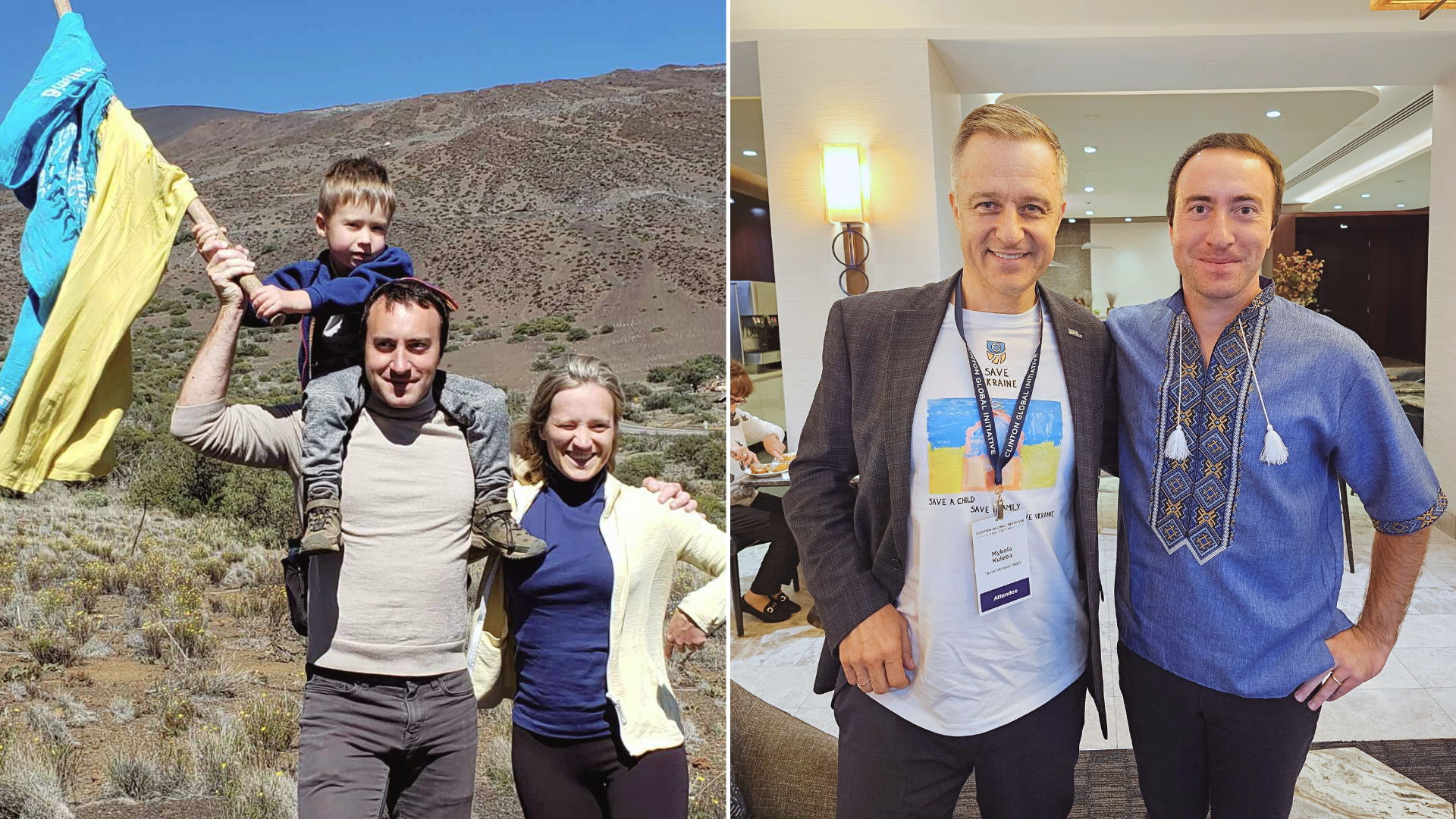
In the photo: James Hodson with his family (on the left) and with Mykola Kuleba — head of Save Ukraine (on the right)
LS:Is there any official number of Ukrainian children whose identities were forcibly changed and whose location is known?
JH:We don't necessarily know where they all are. About twenty thousand have known names and are confirmed to have been taken somewhere. More than one million Ukrainian children have been under occupation since 2014; many are with their families in villages controlled by Russia, so not all were forcibly separated and deported.
LS:Moreover, many families stayed behind to wait for the Russian army and are actually collaborators. Should these families and children be counted among the victims as well?
JH:I'm not denying that some people sympathize with the Russians, but that number is much lower than Western audiences might think, based on Russian propaganda. Certainly, the longer a child lives under occupation, the more they may adopt a Russian identity for self-protection. But we encounter many stories of children under occupation who say their families are pro-Russian while they themselves feel Ukrainian and don't want to live under Russian control.
LS:So your main character—Katya—recognizes herself as Ukrainian?
JH:Oh, Katya is very Ukrainian! She believes Mariupol is Ukrainian. She grew up during the first invasion of that city and constantly recalls her father's historical stories about Ukraine as a nation and a culture. She sees with fairly open eyes what Russia is doing psychologically to her and to other children like her. She doesn't, however, have the capacity to understand the full context, since she is just one child.
LS:Was it hard for you to see through a kidnapped child's eyes?
JH:Yes. What made it easier was that I have been traveling to Ukraine regularly for twenty years—especially over the last three—and I have looked into the eyes of children who have returned, understood what they've been through, and watched them rejoin their families. That is quite an incentive to tell this story to a broader audience who can make a difference now. Otherwise, it will be too late.
LS:But a regular American might think, “What can I do?” What options exist for people in the United States to take action?
JH:I wrote this book as a tool to help people empathize with individuals and heroes. Step one is awareness. Step two is sharing that story with political and community leaders—people who can raise the issue in today’s political context, where it’s hardly a talking point. Many Americans can empathize deeply, regardless of political leanings. And every dollar we raise from book sales brings back more Ukrainian children.
LS:So even buying the book is already a proactive step?
JH:Exactly!
LS:Can you specify where the money from book sales will go?
JH:We are actively building technology and teams to bring children back. Our initiatives help them reintegrate and recover from the war—these children were under occupation or were rescued before deportation. It normally takes six months to reintegrate these children; you can't just send them straight to school.
LS:How many children are currently supported by your project? Buyers may want to know which specific children they’re helping.
JH:Our partnership with Save Ukraine supports dozens of families each month who are living in the centers they've established. That means apartments, all services provided, and community support. The main center is in Hatne, south of Kyiv, and another is opening in Irpin. We also run education centers around the country — in Sumy, Mykolaiv, and the Kharkiv region — serving hundreds of children each month. These centers act as hubs for many programs, ensuring we meet their developmental needs over time.
LS:Why did you start writing this book? Why choose this tool to make people aware of the tragedy affecting thousands of children?
JH:I was originally writing a nonfiction book on the political economy of Ukraine during the war. I’ve contributed to economic policy and sanctions work for Ukraine over the last three-and-a-half years and felt I could explain to the American public why Ukraine is important to America’s future. At one point I had reached the seventh chapter of the nonfiction book, which was meant to focus on the systematic abduction of Ukrainian children, so I decided to try telling that part as a short story.
A few days later, I found myself up at three in the morning, and I had written 120 pages for what was supposed to be just one chapter. I thought, “James, what have you done? This is no longer the book you were writing.” I realized I had to rip that chapter out and make it a separate book—its own story. I finished the novel and still haven't finished the political economy book.
It felt like the story was coming through me without my having to invent or develop it much at all. This was not an experience I had ever had with any of my other initiatives, books, or projects. Ever.
Dedicated to all the children of Ukraine, whose futures depend upon our courage now.
May you inherit peace, not the smoldering embers of centuries old oppression.
May you be the first generation to grow tall in a land no longer shadowed by imperial hunger or forced silence; the first whose dreams are woven from fields of sunflowers, not scarred by trenches and tanks.
May your voices rise freely in the language of your ancestors, without fear of erasure, imprisonment, or exile.
May the sacrifices made today restore every corner of your homeland, so that your children will speak of war only as history, never as destiny.
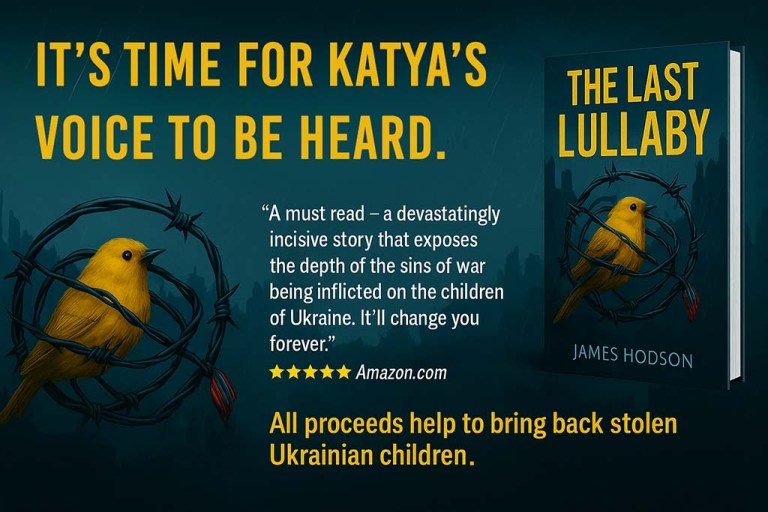
You can buy the book in paperback for $18, in hardcover for $36, or on Kindle for just under $5.
Про автора статті:
