


In the early hours of May 18, Russia launched 273 drones at Ukraine—the largest single attack in the history of the Russian-Ukrainian war. All signs suggest that this grim record will soon be broken: the Russians are working to boost their drone-terror capacity to more than a thousand per day. At that very moment, American media were debating Donald Trump’s forthcoming “phone peace”: one call to Putin, the argument goes, and the guns will fall silent. These stark contrasts between the fiery sky over Ukraine and the cool studios of Washington symbolize the yawning gap in understanding of what is really happening—and the all-too-familiar, naïve hope that complex problems can be solved “in a couple of tweets.”
The chief task for Ukrainian Americans is to keep reminding their country that this war is not foreign, because a Ukrainian heart has long been beating in the V-formation of American history. According to the U.S. Census Bureau, more than one million U.S. citizens openly claim Ukrainian ancestry. The true figure is almost twice as high—hundreds of thousands of descendants from the first and second immigration waves may have lost the language, but not the blood.
Back in the Civil War, General Ivan Turchyn—known in the States as John Basil Turchin—commanded a Union brigade, defending the federal state from fracture; though nicknamed “The Russian Thunderbolt,” he insisted he was Ukrainian. When women fought for the right to vote, Ukrainian women were founding parish communities where they learned self-government. As America was building its industrial might, the Kyiv-born professor’s son Igor Sikorsky designed the world’s first mass-produced helicopter and opened a factory in Connecticut that still employs thousands of Americans. Jan Koum, a refugee from Fastiv who arrived in Mountain View as a teenager, wrote the code that became WhatsApp, connecting two billion people every day. In 2004, near Ramadi, Lieutenant Alexander Vindman, born in Kyiv, shielded his patrol from an IED and earned a Purple Heart—later reminding Congress that an officer’s oath is sworn to the Constitution, not to politicians. Ann’s Bakery in Chicago’s Ukrainian Village sells rye bread baked to a 1940s recipe; a farmer in North Dakota grows wheat for burger buns; a mail carrier from Louisiana delivers bills and letters every day. Neighbors love them for their warmth and decency. They do not make geopolitical decisions, but their daily labor built what we call the United States of America. All these people, whose names we may never know, are Ukrainians.
Today, while the front needs drones and SAMs and Capitol Hill needs a clear course, it is worth recalling: Ukrainians did not ask America for shelter—they built it. That is why former U.S. ambassador to Ukraine Bridget Brink explained her recent resignation by her disagreement with the new policy of appeasing the aggressor: supporting Ukraine means protecting America’s reputation as a champion of freedom. Those now proposing “compromises” are, in effect, devaluing the very contribution celebrated by museums, universities, and the engraved words e Pluribus Unum.
How, then, can Ukrainian Americans convey the essence to neighbors and colleagues who sigh sympathetically yet prefer not to delve deeper? Pity exhausts its currency and one day stops working. Different triggers are needed.
Trigger One—shared history: tell them that Ukrainians fought in the Civil War, that the first helicopter rose thanks to an immigrant from Kyiv, that the chat in which they text Grandma was created by a kid from a Soviet dorm outside Kyiv. Find your own stories, open old photo albums, remember who your ancestors were and how they enriched the United States.
Trigger Two—shared values: freedom of choice, the right to dignity, the power of communities. Ukrainians, let’s be frank, sometimes understand freedom better than anyone—and now, amid blazing drone debris, they know how to defend it. Ukrainians have suddenly become an example for Americans at a moment when America itself needs waking from lethargy.
Trigger Three—action: spend your minute of conversation not on casualty numbers but on concrete steps: scan the QR code of a charity buying counter-drone systems; write a letter to your congressperson—or better yet, call (even if you are not a U.S. citizen, the office must log the request); attend a Ukrainian Social evening to hear a bandura live and meet Azov veterans. If you search, you will certainly find ways to act in your city or state.
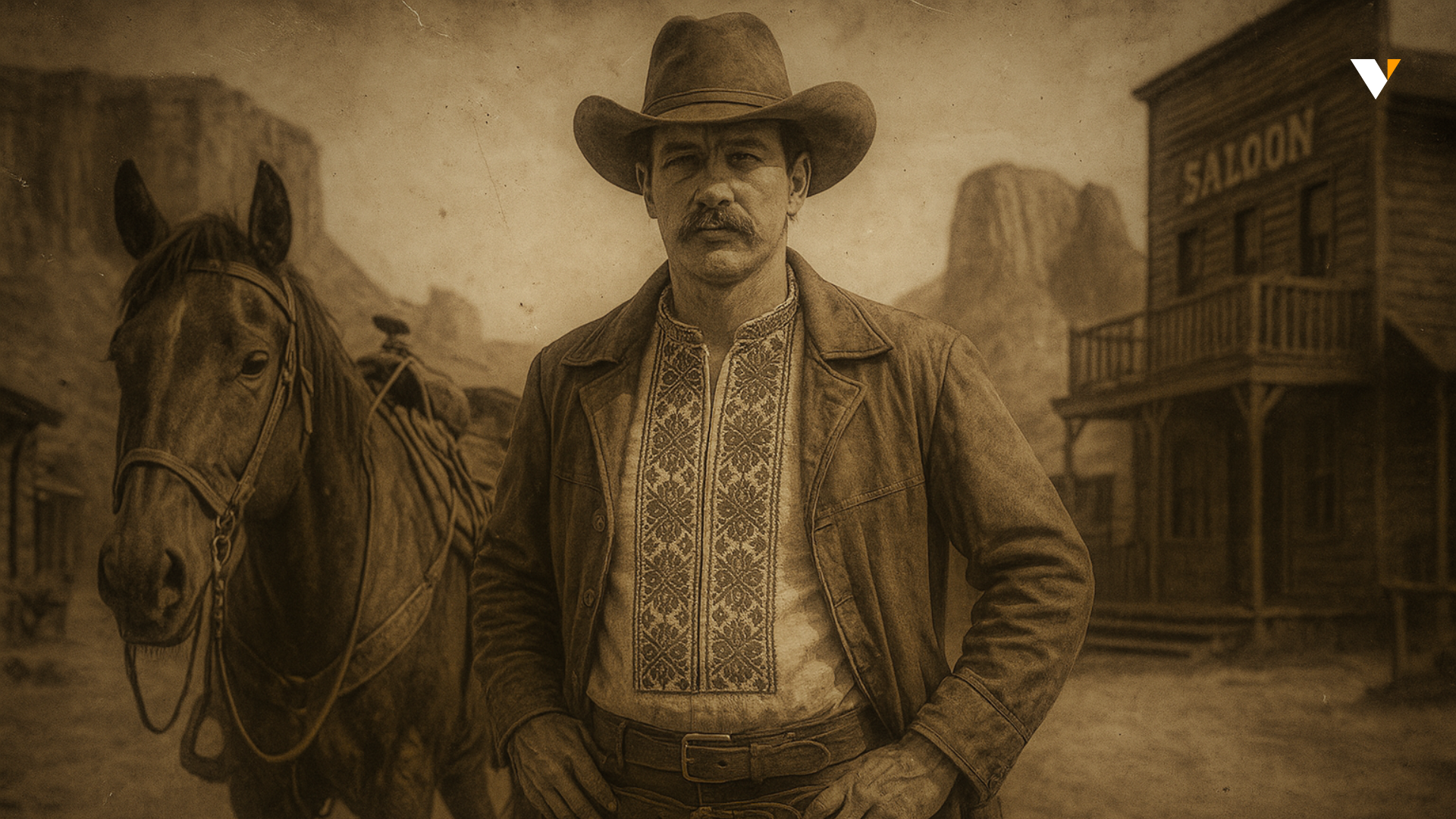
Ukrainian culture—miraculously preserved in embroidery patterns, melodious songs, and language—remains the strongest soft power for a polyethnic, cross-assimilated American society. During the recent Vyshyvanka Day, dozens of American cities glowed blue and yellow, while Borshchiv, Horodenka, and Podillia shirts stopped passers-by in New York and Los Angeles, introducing many to Ukraine not through footage of destruction but through music, laughter, food, and hand embroidery. A living, personalized context turns statistics into human faces. Then Americans grasp that “helping Ukraine” means helping the neighbor.
Ukrainians themselves in the United States need this realization. We often draw a line of otherness, feeling like guests of history, yet we stand at its very center. From the battlefield at Bakhmut to a drone lab in Texas runs a single line of resistance. When a Russian drone strikes a school in Chernihiv, the blast echoes in a congressional budget committee, and whether Ukraine receives another Patriot battery depends on who explains that link the loudest. Loud does not mean aggressive; it means speaking with dignity and awareness of our weight in American history.
So the next time someone at a backyard barbecue says, “Maybe it’s time Ukrainians made concessions,” reply calmly: this country is great precisely because it never compromises with tyranny. Our forebears sought a path of moral evolution together, unafraid to defend nations suffering violence and terror.
Helping Ukraine is not charity for a distant “other.” It is an investment in the very foundation of the United States: freedom, responsibility, ingenuity, progress. Today that foundation is being shelled by drones. And every dollar, signature, or post that helps stop them in fact fortifies the American home—built by millions of hands, among which Ukrainian hands are beyond counting.
