


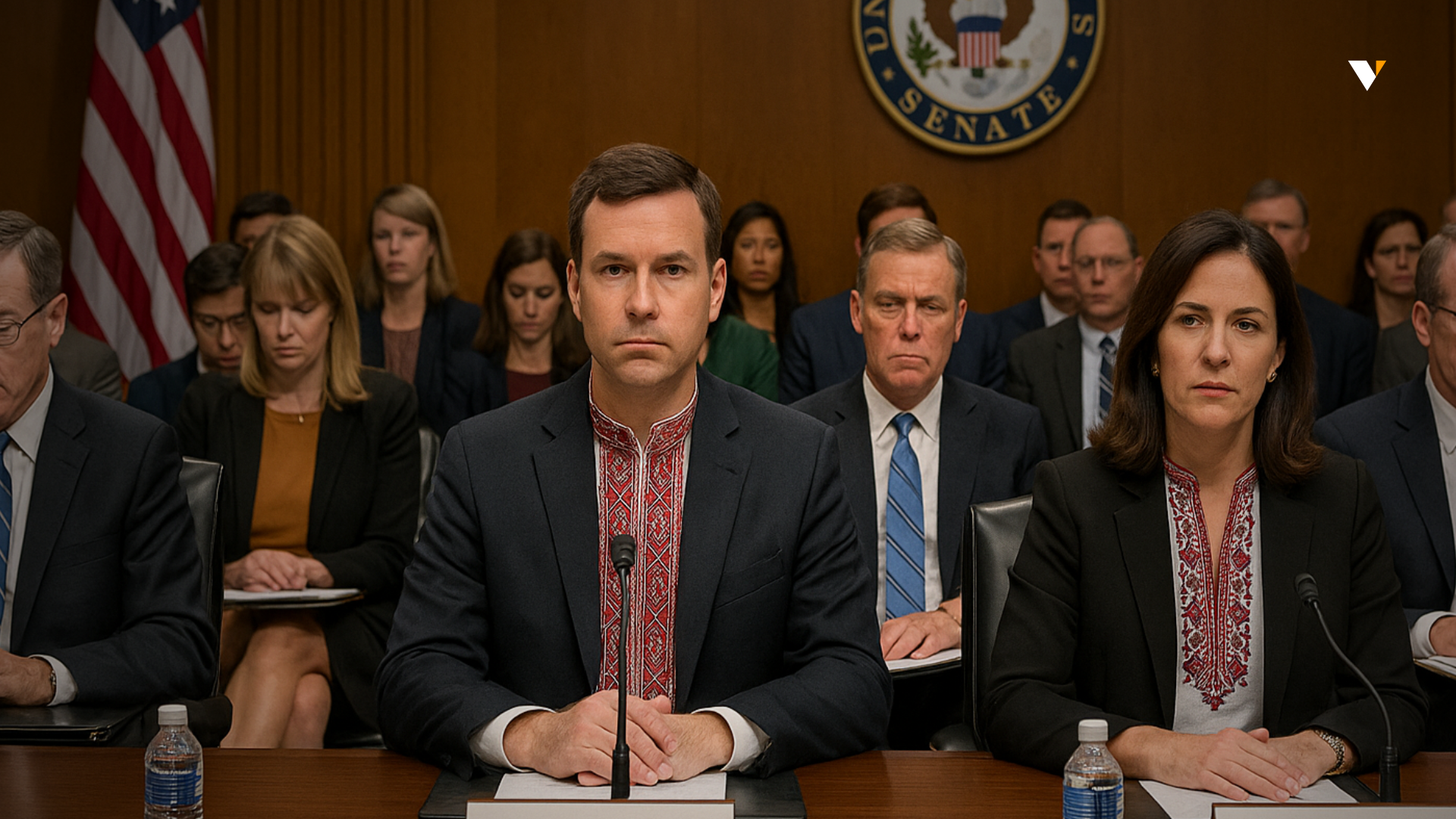
The Ukrainian community in the United States is, without doubt, one of the most mobilized and generous when it comes to rallies, volunteer work, or donations to the land of its forebears. It once played a critical role in wrenching Ukraine out of the Soviet claws, and today it has become pivotal in the fight against the Russian plague.
Yet all of that colossal energy still refuses to convert into our own senators, governors, or even mayors of big and small cities. The world has already seen blue-and-yellow flags flutter over Times Square, countless Americans have chipped in to record-breaking fund-raisers for Bayraktars, and at one point Ukrainians even showed the freedom-loving—but often disoriented—people of the United States an example of courage and steadfastness in defending truth and justice. And still, throughout all this time, only one American with a direct connection to Ukraine speaks in Congress, and, in a bitter irony, her scandalous statements hurt Kyiv more than they help. Victoria Spartz was not raised in the embroidered milieu of the Ukrainian diaspora, does not share its values, and is mentally closer to Russia than to Ukraine. How could we have let this happen?
The history of emigration explains part of the paradox. Five waves over a hundred and forty years have shaped our diaspora: Galicians from pre-war Pennsylvania, displaced persons from German camps, Soviet engineers of the 1990s, and IT specialists of the 2000s all talk about Ukraine in different languages—sometimes literally. A common political narrative never emerged: some fled hunger and colonialism, others chased start-ups and green cards, and the newest waves arrived after the Russian intervention, driven by fate and the instinct of survival.
Geography does not help either. Cubans have Miami, Armenians have Glendale, Poles have Chicago, while Ukrainians are scattered from Philadelphia to Sacramento. There is no “capital” of the diaspora where a star mayor could grow, and the large, decades-nurtured pan-American Ukrainian media do not set a common agenda for every community. Ukrainian churches and cultural centers in Cleveland or Denver remain important islands of memory, yet they are almost invisible in the United States’ vast information streams.
The numbers tell the same story: roughly one and a half million people claim Ukrainian ancestry, yet only a few dozen hold elected office of any kind across the large states, mostly on school boards, county courts, or local councils. By comparison, a Greek community of similar size has given the country three senators and a mayor of New York, while the Indian community has produced two governors and a vice president. Ukrainian surnames on official badges appear less often than “Made in Ukraine” labels on American store shelves.
One of the reasons is the Ukrainian community’s fragmented partisan loyalties. Older waves traditionally gravitate toward the Republican Party, younger ones toward the Democrats, and the most recent refugees are largely politically unaffiliated and absorbed in building prosperity. When an ethnic electorate does not concentrate into a compact “critical district,” political strategists do not court it. Parties prefer to invest in candidates who deliver both votes and money, and the Ukrainian community very rarely acts as a single resource.
A second barrier is a deeply rooted victim narrative. Collective memory of the Holodomor, Soviet repressions, and the current war fosters a psychology of advocacy from the outside rather than participation from within. Most diaspora campaigns take the form of petitions, rallies, and signature drives, not the nomination of their own candidates to city councils or state legislatures. Ukrainians would rather “ask” members of Congress to help Ukraine than become those members themselves and cast the votes.
Cultural preservation is a double-edged sword. Saturday schools, dance ensembles, and borscht festivals keep language and tradition alive, yet to a degree turn the community into a closed club where American politics feels distant and alien. When socialization happens only within one’s own circle, only a handful ever make it into party volunteer offices—precisely where future members of Congress earn their first stripes.
The outlook for institutional “talent elevators” is equally bleak. The diaspora maintains dozens of charities that finance rescue vehicles, tourniquets, drones, and other equipment for the front, yet offers virtually no scholarship programs in public policy or paid internships in Washington. A teenager of Korean descent can apply to the prestigious Korean American Coalition Youth Leadership, whereas a Ukrainian teenager can at best volunteer for a relief foundation.
Internal conflict is another hallmark of Ukrainian communities. Older organizations—less flexible and liberal—zealously guard the canon, while newer waves are sometimes told they are “not traditional enough” and view the senior activists with skepticism. Parallel initiatives duplicate effort, at times competing for the same grants or the attention of officials instead of collectively grooming standout candidates for the climb up the career ladder.
Other American ethnic groups have patiently built their political capital. Jewish Americans created AIPAC and year after year nurture analysts, donors, and lawmakers. Cuban Americans concentrated in a single metropolis, turning Miami into a launchpad for future senators. Indian Americans, leveraging their IT capital, invested in English-language media and leadership programs, and now the House of Representatives is studded with their surnames. In every case, the key has been consistency and the long game.
For Ukrainian America the recipe exists, and it is hardly exotic. Even a fraction of today’s fundraising could be redirected into political education: scholarships for master’s degrees in public policy, paid fellowships in state-legislative offices, and grants to develop or sustain English-language media with a Ukrainian focus. Next comes pooling dispersed donations into a bipartisan PAC with a clear agenda: America’s prosperity, Ukraine’s security, countering disinformation, supporting refugees, and forging a strategic, unbreakable partnership between both nations. Above all, the community must be persuaded that a school-board race in Houston or a city-council seat in Brooklyn matters no less than a winter caroling festival—or even drones for the front.
Ukrainian Americans have already shown they can build unicorn companies, serve in the Marine Corps, and run major hospitals. The time to build political careers just as ambitiously did not merely arrive—it expired decades ago. Unfurling the Ukrainian flag in America’s corridors of power is noble and inspiring; casting one’s own votes for laws that strengthen the United States while sustaining Ukraine in its hour of greatest trial is both strategically vital and fiendishly complex.
When more Ukrainian names light up the Senate’s tally board, the next aid package for Kyiv will not have to be begged for—it will be approved by those whose hearts still pulse with Ukrainian blood.
About Author:
