


Amid another series of drone attacks on Ukrainian cities and an offensive in the Kursk region, the U.S. attacked Iran. While Ukraine remains the focus of the international diplomatic community, it risks losing priority for Western support due to the escalation of military conflicts in the Middle East. Ukrainians are also losing a key source of information: the Trump administration is reducing support for Voice of America broadcasts to foreign audiences.
The Ukrainian army is holding back Russia in the Kursk region and dealing an economic blow
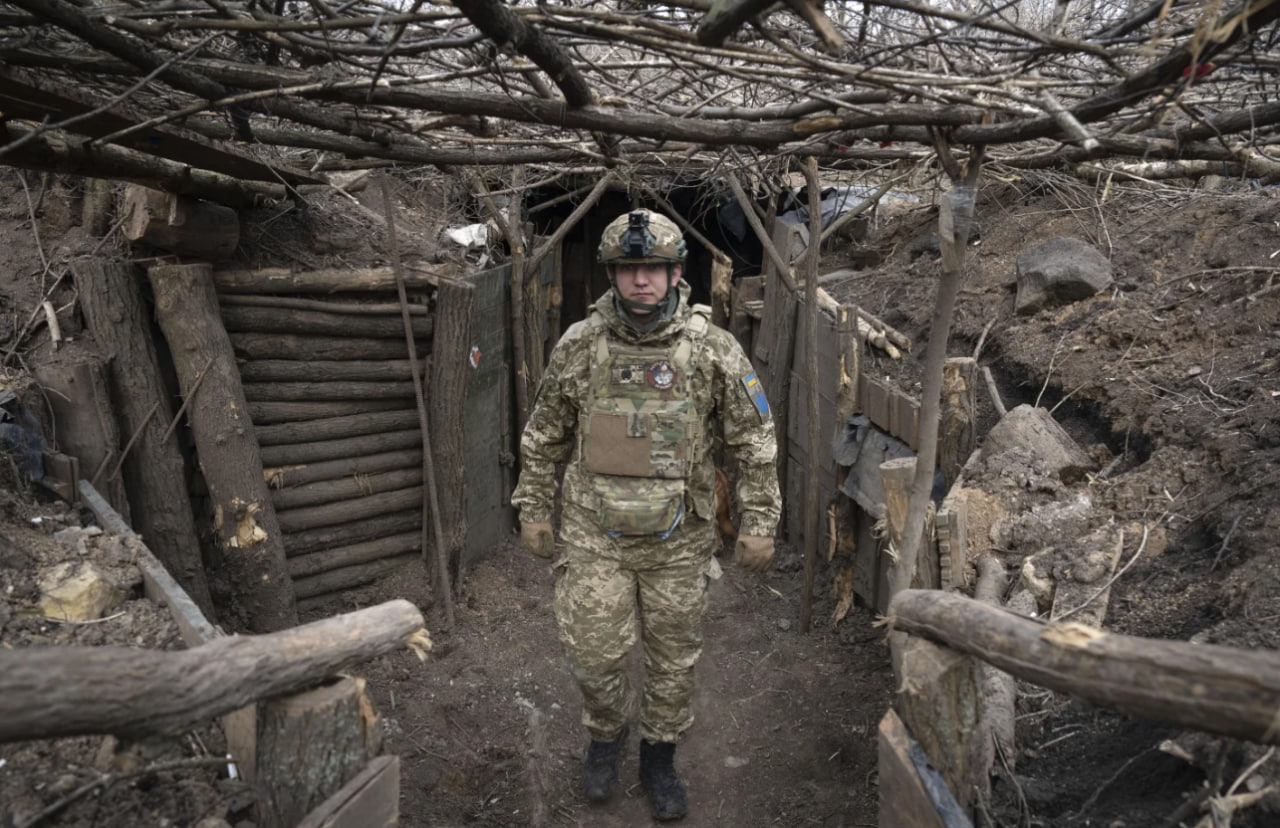
Ukraine controls about 90 square kilometers in the Kursk region of Russia and is fighting against about 10,000 Russian troops, said Commander-in-Chief of the Armed Forces of Ukraine Oleksandr Syrskyi. According to him, these actions are preventive in nature and aimed at preventing a large-scale enemy offensive. The General Staff added that thanks to such maneuvers, it is possible to restrain the transfer of enemy forces to the Donetsk region, where the most active fighting is taking place.
The Ukrainian military reported that they are working intensively to improve air defense and use drones and light aircraft to intercept enemy targets. Ukraine's strikes on Russian territory have caused significant economic damage, resulting in losses of more than $10.8 billion, particularly in oil refining, logistics, and strategic infrastructure. Although the situation on the front lines remains difficult, Kyiv is demonstrating its ability to defend itself and act asymmetrically.
The Trump administration has shut down the Voice of America, putting the historic Ukrainian service under threat
The Trump administration announced the layoff of over 600 Voice of America employees, including all Ukrainian service staff, who have been working since 1949.
As reported by The NYT, the official reason is "the elimination of inefficient federal bureaucracy." Employees have been placed on leave until September 1, but journalists are calling this the destruction of a long-standing editorial legacy. The VOA Ukrainian service played a critical role in counter-propaganda and cultural diplomacy, especially during wartime.
Former employees and independent media experts have called the administration's actions politically motivated and detrimental to U.S. national security. Although the court case is ongoing and the 2025 budget has not been finalized, many doubt the service will be restored.
US strike on Iran and Moscow's reaction: double standards in action
Andriy Kovalenko, head of Ukraine's National Security and Defense Council's Center for Countering Disinformation, mocked Russia's claims of "violations of international law" following US strikes on Iranian soil. He noted that Moscow itself was the first to disregard this right by crossing the border with Ukraine. Kovalenko also noted that Russia's real assistance to its Iranian ally is limited to words. In response to the strikes, Iran was left virtually alone.
This situation demonstrates the Kremlin's powerlessness in the face of confrontation with the U.S., as well as the destruction of illusions about Moscow's true partnerships with countries such as Iran. Kyiv sees this as an example of how an alliance with Russia offers no real benefit.
"The war in Ukraine will seem like a mere trifle": A British colonel discusses the consequences of an attack on Iran
Philip Ingram, a former British intelligence officer, believes Iran could respond to U.S. strikes by blockading the Strait of Hormuz. Up to 30% of the world's oil is transported through this strait. This would cause massive economic shock, with consequences that would exceed those of the war in Ukraine. Ingram also warns of attacks on US bases and increased terrorist activity by Iran.
In his analysis for Sky News he emphasized that even if Iran's response is only symbolic, it poses a real threat to global stability. Against the backdrop of the war in Ukraine, a new round of conflict in the Middle East could shift the focus of Western policy. This could be dangerous for Ukraine because there is a risk that the US and its allies will further divert their attention.
NATO without Ukraine: Trump's New Agenda
This year's NATO summit in the Netherlands is expected to take place without Ukraine's full participation. According to the Associated Press, Trump plans to focus US attention on security in the Indo-Pacific region as well as the conflict in the Middle East. This means a gradual withdrawal of the U.S. from its leadership role in defending Ukraine.
European allies are trying to fill this gap. In particular, Germany and France are advocating for Ukraine's integration into Europe. However, the absence of American leadership calls into question NATO's ability to respond quickly to challenges from Moscow.
Author: Danylo Pievchev