


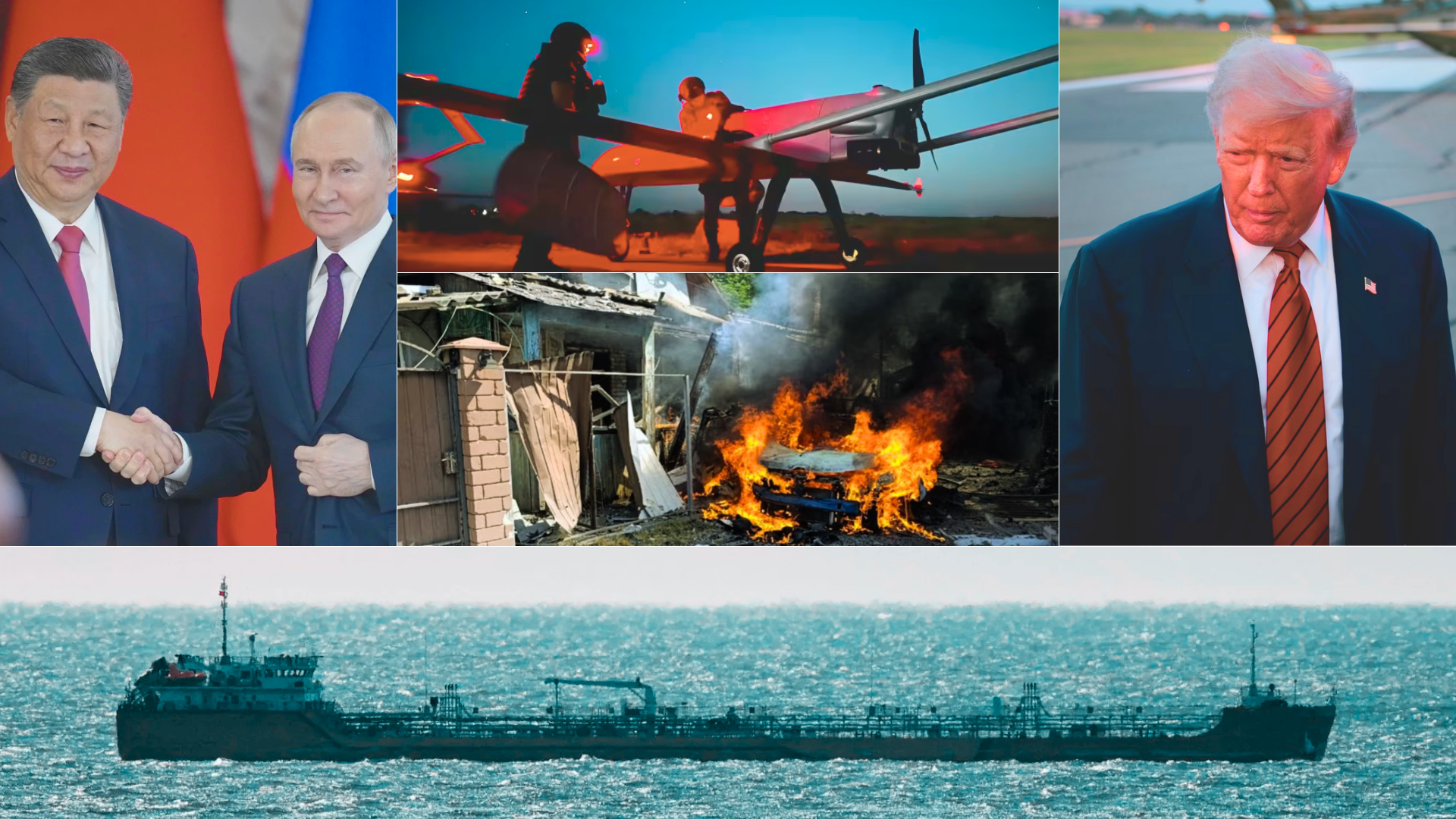
The much-anticipated August 8 is ending without a “deadline breakthrough”: there is no major deal. At the same time, Washington and the Kremlin have publicly advanced the story toward a possible Trump–Putin meeting as early as next week — without Ukraine’s participation. Against this backdrop, Beijing is defending its imports of Russian oil after American tariff threats, while Washington is testing a new architecture for supplying weapons to Kyiv — shifting part of the burden to allies and reassessing its own stockpiles. These moves are shaping a field in which Ukraine must persistently fight for a place at the negotiating table, and the diaspora in the United States must press politicians with arguments of security and justice.
Trump–Putin Meeting Without Ukraine: Locations to Choose From, Political Risks — Obvious
The Kremlin and sources close to it are “warming up” expectations that the Trump–Putin summit could take place in the coming days. The shortlist includes the UAE, Hungary, and other “neutral” venues. Crucially, Ukraine is not currently included in the format, which reduces its influence over its own security and the boundaries of any future agreement. For Moscow, the very image of the “big two” is already a win: symbolic parity with the U.S. and the opportunity to bargain without the inconvenient position of Kyiv.
For Washington, the temptation to “resolve the crisis quickly” is understandable, but excluding Ukraine is risky even procedurally: any “ceasefire” or “deep freeze” without Kyiv’s presence in negotiations risks legitimizing Russia’s de facto territorial gains and opening the door to a cycle of new blackmail. The political cost of such an image for the United States would be a blow to its reputation as a “guarantor of rules,” especially in the eyes of Europe and the Global South.
For the Ukrainian audience in the U.S., it is important to understand: the rhetoric about a “deal by August 8” has already served as a pressure tool, but there is no deal itself, and ahead lies a period in which elites will be testing the boundaries of a freeze. The most effective channel of influence here is through members of Congress and governors: to explain that any “peace without Ukraine” means instability and additional costs for the U.S. in the medium term.
“Back Channel” Through Lukashenko: How Minsk Prepared the Ground for the Summit
For several months, Alexander Lukashenko has been promoting a “quiet” communication channel between Trump’s team and the Kremlin. According to investigative reports, Minsk hosted unofficial visits, message exchanges, and “framework drafts” designed to leave Kyiv and Europeans out of the first round of bargaining. In return, Minsk received political dividends — from partially thawed contacts to gestures regarding prisoners.
The skepticism is clear: Lukashenko is not an autonomous player; he is embedded in the Kremlin’s logic and will promote a “peace” that preserves Russia’s gains. But the very fact of a functioning back channel explains why the information field so quickly shifted toward the idea of a meeting between the two leaders — and why Kyiv suddenly found itself on the sidelines.
Putin’s Calls to Xi, Modi, Ramaphosa, and Central Asian Leaders: The BRICS+ Front Before the Summit
Just hours before news broke of a possible meeting with Trump, the Kremlin demonstratively phoned key partners — from Xi Jinping and Narendra Modi to the leaders of Belarus, Kazakhstan, Uzbekistan, South Africa, and the UAE. The message: Russia is not isolated, it has venues, it has energy and financial cushions, and thus it can bargain more hardline.
For Kyiv, the important nuance is that such a tour strengthens the role of the UAE as a realistic summit venue and tests the limits of Indian and Chinese tolerance for U.S. secondary sanctions. At the same time, Hungary is being discussed as a political reserve site in the EU — which would demonstrate divisions within Europe itself.
In sum, the Kremlin is building a map of options: where to meet, whom to involve as observers, and whom to blackmail with energy. This raises the stakes in the bargaining with the White House and explains why the Russian side insists on the absence of Ukraine in the first frame.
China Will Keep Russian Oil Despite U.S. Tariff Threats
Beijing has in effect publicly rebuffed American warnings about secondary tariffs/sanctions. The argument: national interest and energy security. For the market, this is a signal that the channel for Russian oil to China will remain operational, even if logistics and financial chains have to be reconfigured.
For Ukraine, oil dollars are the lifeblood of the war. If China maintains imports, the U.S. sanctions effect will have to be reinforced with secondary strikes (insurance, shipping, banks) or compensated with new European toughness. Otherwise, a “freeze” will remain financially viable for Russia.
For the American audience, this is also a test: tariffs against China have a domestic price (inflation, supply chains). Therefore, policy should be targeted and synchronized with the EU and G7, so as not to punish the domestic consumer more than the Russian war machine.
The U.S. and NATO Reformat the “Weapons Pipeline” for Ukraine
Amid a review of U.S. stockpiles, the Department of Defense slowed some deliveries (air defense, precision munitions), after which it partially resumed them. In parallel, a new scheme emerged: allies finance purchases in the U.S., and NATO helps prioritize “baskets” of Kyiv’s needs (about $500 million per round). This eases political tension in Washington but demands greater financial discipline from Europe.
The administration is adjusting course from direct drawdowns from stockpiles to sales to allies for Ukraine. The pluses — replenishing own reserves; the minuses — longer cycles and a higher cost in terms of time. For the front, this means that vulnerability windows must be closed with layered air defense and interceptors on a “no pauses” basis.
Ukraine–U.S.: Protection of Critical Energy Infrastructure — On the Working Agenda – у робочому графіку
Despite political turbulence, sectoral coordination continues to protect Ukraine’s energy facilities from drones/missiles — from engineering shelters and substation upgrades to cyber resilience and distributed generation. This work is based on previously signed memoranda and regular interagency meetings.
Strategically, this reduces Russia’s “blackmail power” during the heating season and protects the logistical rear for the front. For Ukrainian communities in the U.S., this is an excellent advocacy point: support for network solutions (microgrids, reserves, generation) that deliver a rapid humanitarian and economic effect.
It is also worth tracking long-term reconstruction tools, where the U.S. and Ukraine have already laid the foundation — resource funds, energy resilience, critical minerals, and more. These will not happen tomorrow, but they are what turn aid into investment, which is important for sustainable support in Congress.
Author: Diana Khudko