


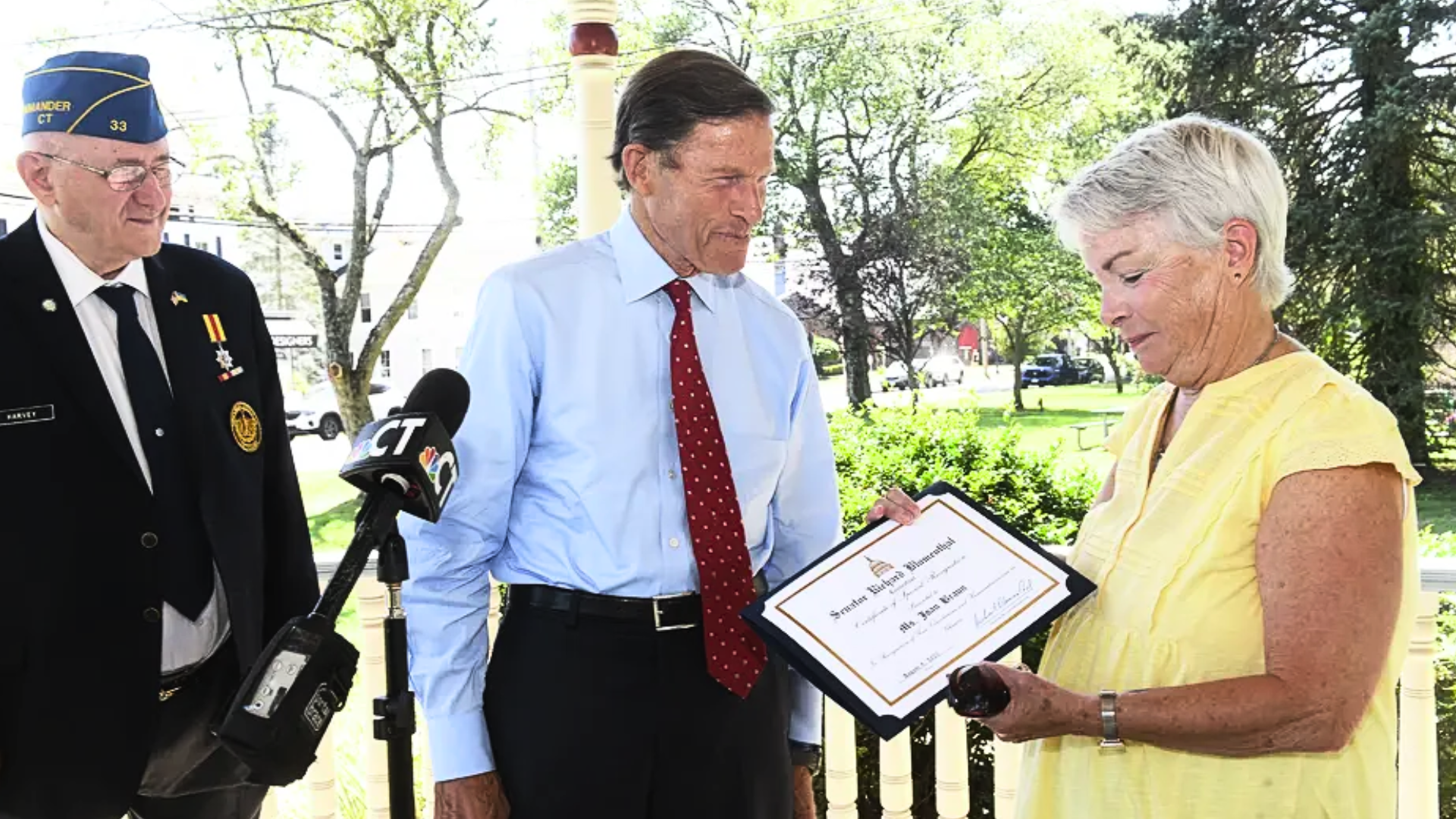
Joan Brown – a school nurse from Milford, Connecticut – spent part of her summer in Ukraine, working with a mobile team of the international organization Global Care Force. Her mission was to provide basic medical assistance to residents of villages in frontline areas. For this work, Brown was recognized: Senator Richard Blumenthal presented her with a special certificate of recognition, emphasizing that her efforts symbolize America’s friendship and solidarity with the Ukrainian people.
Brown has more than 50 years of experience in the medical field, and for the past twenty-four years has served as a school nurse at Live Oaks Elementary School in Milford. Before that, she worked in hospitals, including in pediatrics and neonatology, in geriatric wards, and in facilities for patients with special needs. She usually spent her summer vacations at a camp for children with disabilities, but this year she chose to devote her time to helping Ukraine. She said that from the very beginning of the full-scale invasion she was deeply shaken by what was happening and felt compelled to contribute personally.
Together with the Global Care Force team, Joan Brown visited villages in the Mykolaiv region. Each day the team managed to examine residents of several settlements, sometimes up to two villages in succession. During her time in Ukraine, hundreds of patients were seen, most of them elderly people who had no other access to medical care. Brown performed the role of a triage nurse: she collected patient histories, checked blood pressure, pulse, and glucose levels, measured vital signs, and prepared patients for doctors’ examinations. The conditions were far from comfortable: some procedures had to be carried out outdoors or in damaged houses, since many homes in these communities had been destroyed by Russian shelling.
Among the main health issues local residents faced were chronic conditions such as hypertension, type 2 diabetes, and arthritis. At the same time, doctors and nurses encountered mental health disorders, especially anxiety and depression, which were exacerbated by the war, the loss of loved ones, and the destruction of infrastructure. The team brought medications in transparent plastic containers and distributed them directly during the field visits—often outdoors, since in many villages there were no suitable buildings left for doctors to work in.
At the recognition ceremony organized in Milford, Senator Richard Blumenthal emphasized that Joan Brown’s example is important not only for the Ukrainians she directly helped, but also for the United States. In his words, her service shows that Americans are not standing aside from the fight for freedom, but are demonstrating genuine solidarity and readiness to save lives even under the most difficult circumstances.
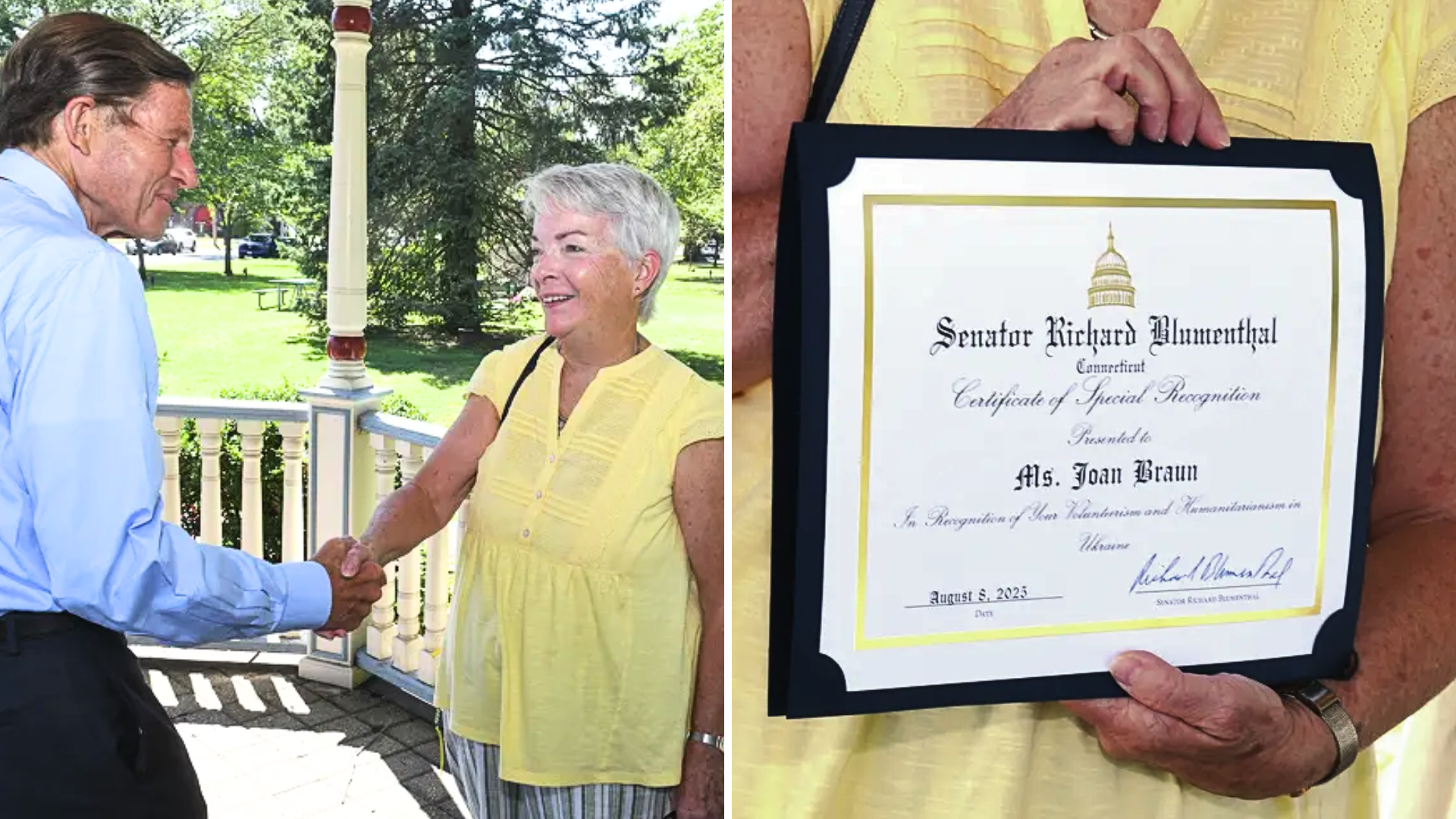
During the ceremony, Brown herself said: “Never forget that they’re there.” She stressed that Ukrainians require constant attention and that it is especially important to continue sending medical volunteers so that people receive at least a minimum continuity of care. “Continue sending volunteers so that they can have some stability, because so much in their lives has been destroyed,” she noted.
Her work was also supported by Ukrainian American veterans. The commander of the organization Ukrainian American Veterans, Carl Harvey, stated that they have already delivered more than $9.5 million in humanitarian aid to Ukraine—ranging from food and clothing to medical equipment. Part of this assistance reached the very areas where Joan Brown and her team were working.
The organization Global Care Force has been sending mobile medical brigades to Ukraine since 2022. Every month they travel to frontline and recently de-occupied communities in the south and east, where there is a severe shortage of doctors and basic medications. Over the course of their work, the organization has helped thousands of Ukrainians, and Joan Brown became one of those whose personal example shows how much difference an individual can make in supporting a country fighting for its survival.
Despite the danger and the constant air raid alerts that often accompanied her work, Brown said that what impressed her most was not the war, but the resilience and dignity of the people she met. She admitted that she felt fear only when her phone alerted her to shelling, but she always drew strength from Ukrainians who refuse to give up even under the hardest conditions. Joan Brown’s story has become an example of how personal commitment and professional duty can turn into an act of international solidarity.
Author: Diana Khudko