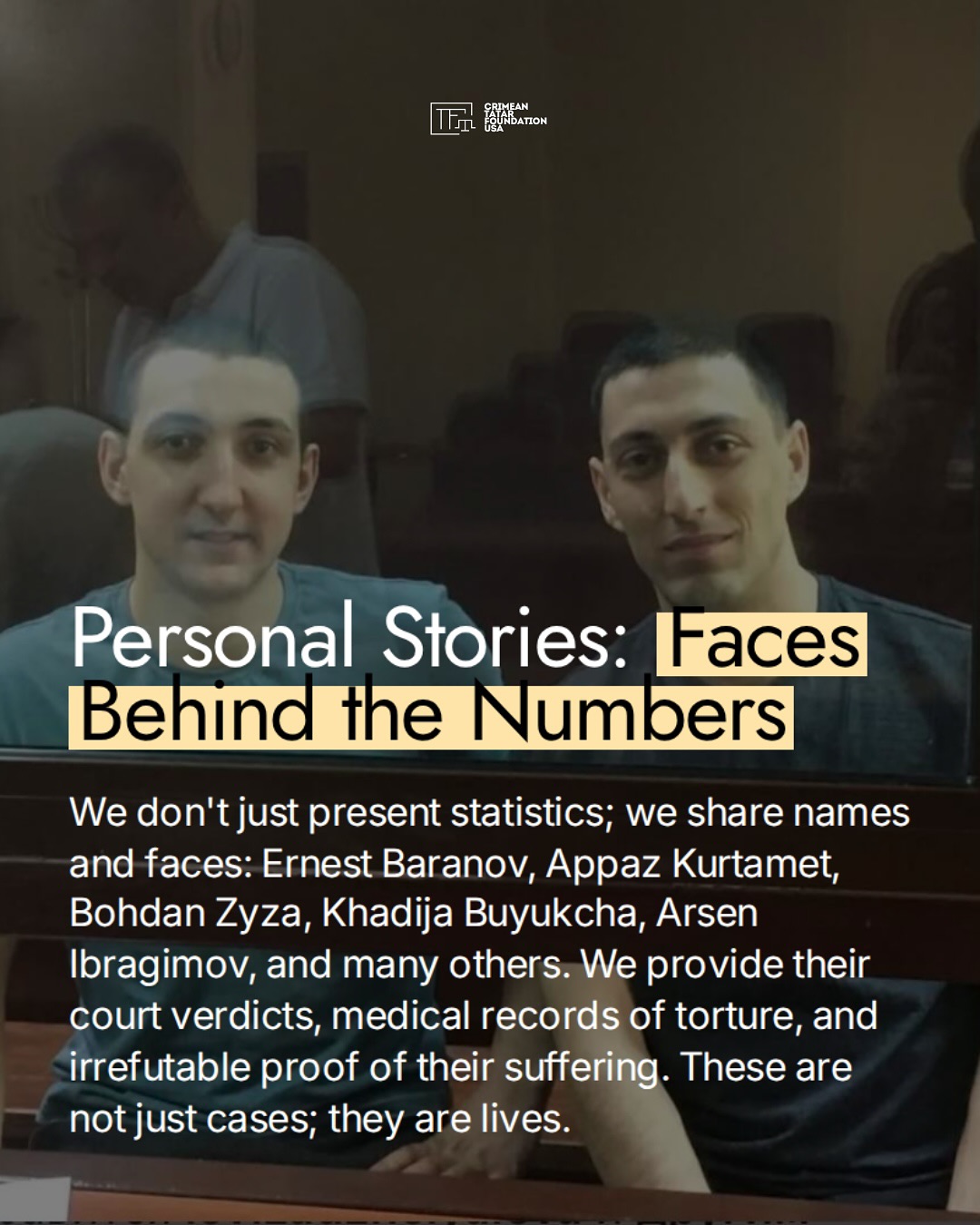
A delegation of the Crimean Tatar Foundation USA has addressed the U.S. Congress, urging lawmakers to recognize and respond to the systematic persecution and genocide of the Crimean Tatar people in Russian-occupied Crimea. The Foundation emphasized that official channels have failed to act effectively — leaving small nonprofit organizations to independently collect evidence, speak before legislators and diplomats, and demand recognition of genocide.
This was reported by the Crimean Tatar Foundation USA Inc.
“The delegation of the Crimean Tatar community is once again in the U.S. Congress. We are telling members of Congress the truth that everyone needs to hear. And here’s the question every single congressman — both Democrat and Republican — asks: ‘Why are we only hearing this from you?’ This question reveals a harsh reality — when the story of genocide is told by just one nonprofit organization.”
The Foundation’s appeal details the scale of repression: every second Crimean Tatar family has experienced interrogations or intimidation; Crimean Tatars are persecuted 4.8 to 12.2 times more often than other groups; and 59.2% of all political prisoners in Crimea are Crimean Tatars, though they make up only 10–26% of the peninsula’s population.
The organization also reported that no Crimean Tatar prisoners of war have been released in exchange processes, and that sentences of up to 29 years are being handed down merely for serving in the Armed Forces of Ukraine.
The statement highlights the rampant hate speech against Crimean Tatars in Russian media and Telegram channels — including calls for “the final solution of the Crimean Tatar question,” “a repeat of the 1944 Sürgün (deportation),” and even incitements to “ritual killings” that receive thousands of reactions online.
“This is a direct violation of the Third Geneva Convention and a manifestation of extreme hatred. We presented evidence of systemic discrimination against Crimean Tatar soldiers — they are deliberately excluded from exchange lists, and sentences reach 29 years simply for serving in Ukraine’s army. Since 2014, not a single Crimean Tatar soldier from the Noman Çelebicihan Battalion has been returned from captivity as part of a prisoner exchange,” the statement notes.
The Foundation provided Congress with court verdicts, medical records documenting torture, and lists of prisoners of war and political detainees, including Ernest Baranov, Appaz Kurtamet, Bohdan Zyza, Khadija Buyukcha, Arsen Ibrahimov, and others.