


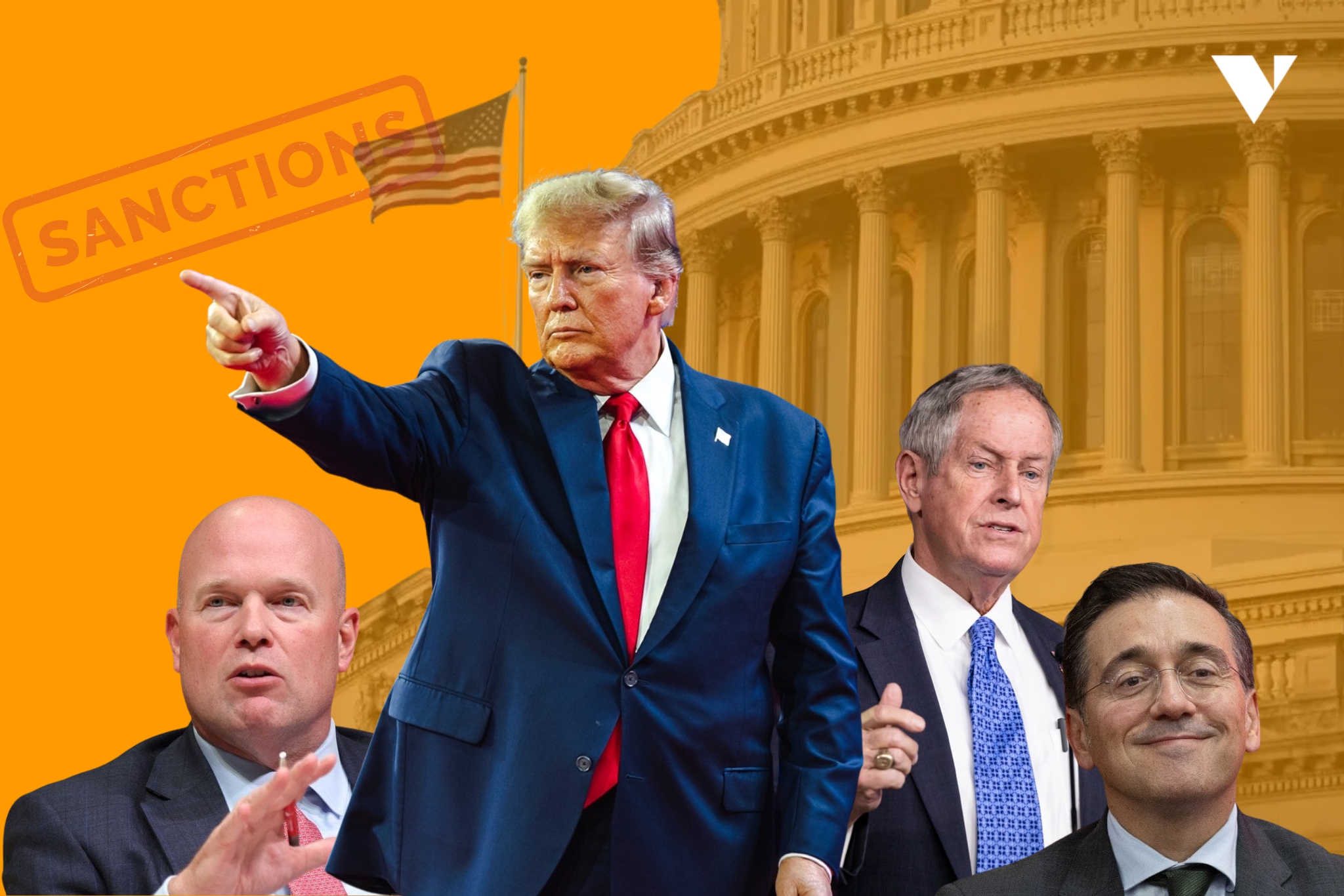
 Ukraine and Russia’s ongoing war remain at the political epicenter of the Atlantic Alliance. The U.S. Ambassador to NATO is urging the European Union to take bolder steps on the confiscation of Russian assets, as the financial burden of supporting Ukraine increasingly falls on Brussels. While Spain allocates billions for U.S.-made weapons for the Ukrainian Armed Forces, Washington is launching investigations into religious organizations suspected of spying for Russia. Meanwhile, the future of sanctions policy hinges on the conditions set by the new U.S. president, who seeks to retain the final say in blocking the aggressor’s economy.
U.S. Ambassador Calls for Aggressive EU Action Toward Russia
U.S. Ambassador to NATO Matthew Whitaker issued a strong statement urging European partners to rethink their strategy toward Moscow.
In an interview with Bloomberg he emphasized that Europe needs to adopt a “much more aggressive” stance and accelerate efforts to use frozen Russian assets for Ukraine’s needs. According to the diplomat, this will be critical for ensuring stable economic and military support for Kyiv in the coming years. Whitaker stressed that such an approach would not only provide the required resources but also demonstrate a braver, more assertive Europe.
“But I think it will also signal a new step — a more aggressive Europe. It’s time for them to act boldly,” Whitaker said.
Meanwhile, the EU continues difficult negotiations over the legal mechanism for using frozen Russian assets, facing resistance from several member states. Belgium — where most of the assets are held through Euroclear — has expressed serious concerns about potential lawsuits and retaliatory measures from Russia.
The situation is further complicated by Europe being forced to take the lead in supporting Ukraine following a policy shift in Washington and the halt of large-scale U.S. aid. The EU is currently considering several funding scenarios for the next two years, including grants worth more than €90 billion or joint borrowing for loans.
Sharp Decline in Russian Oil Shipments to China Due to Sanctions Pressure
Western sanctions targeting infrastructure and transport networks have begun significantly affecting energy exports to China, reducing supplies from sanctioned states.
According According to Rystad Energy AS, China’s seaborne imports of Russian crude could fall by 500,000–800,000 barrels per day this month — roughly two-thirds of typical volumes. Iranian oil shipments are also projected to decline by 200,000–400,000 barrels per day. The decline is driven primarily by large Chinese state refineries refusing to purchase ESPO-grade crude after the U.S. imposed sanctions on Rosneft and Lukoil.
Even China’s privately owned refiners — usually more risk-tolerant — have become cautious, especially after the EU and the UK blacklisted Shandong Yulong Petrochemical Co., a key buyer of Russian crude. Combined with reduced purchases by Indian refiners, the market is showing unprecedented anxiety. Analysts say coordinated Western efforts to deprive the Kremlin of wartime revenue may finally be producing tangible results.
Trump Sets Key Condition for Signing New Sanctions Legislation
US President Donald Trump has expressed willingness to support a new bill aimed at intensifying sanctions pressure on Russia — but with one essential condition.
According to a senior White House official, the president will sign the legislation only if it includes a clause granting him exclusive authority to make the final decision on imposing restrictions.
“It has always been important for the White House and the president that the sanctions package include an exception ensuring he has the final say on sanctions. If this point is included, I believe the president would consider signing the bill,” the official said.
The condition is central to maintaining executive-branch flexibility in foreign policy.
The bill, introduced by Republicans Lindsey Graham and Brian Fitzpatrick, proposes sweeping sanctions against any country conducting business with Russia — including purchasing its oil and gas. Voting has been delayed as Senate and House leaders work to reconcile the text with Trump’s demands.
The official confirmed the president’s support: “He would sign it. He signaled that last night.” The White House also emphasized that negotiations with Moscow on ending the war in Ukraine continue, though they have received less media attention recently.
U.S. Congress Investigates Possible Russian Intelligence Links to Orthodox Churches
The U.S. Congress has initiated an inquiry into religious organizations that may be connected to Russian intelligence services.
A group of House Republicans has appealed to Attorney General Pam Bondi, requesting an investigation into whether Russia is using Orthodox churches in America as tools of influence. The initiative was spearheaded by Congressman Joe Wilson, who expressed concern about the activities of the Russian Orthodox Church abroad.
The letter states: “It has become known that the Russian Orthodox Church Outside Russia (ROCOR) is actively seeking to expand its political influence in the United States, including by organizing an event scheduled for November 18 aimed at lobbying members of Congress and their staff.”
Lawmakers warn that lobbyists and clergy linked to the ROC are holding meetings on Capitol Hill and attempting to establish contacts with the Trump administration — developments that raise justified national-security concerns about foreign interference.
Republicans suggest that ROCOR and similar jurisdictions may be serving as covers for intelligence gathering. They urge law-enforcement agencies to investigate whether these organizations are being used as tools for Moscow’s influence operations on U.S. territory.
Spain Allocates €1 Billion for U.S.-Made Weapons and Energy Support for Ukraine
Spanish Foreign Minister José Manuel Albares has announced a major financial commitment to strengthening Ukraine’s defense. Spain will allocate €1 billion to purchase advanced military equipment directly from the United States for delivery to the Ukrainian Armed Forces.
“Spain maintains a long-term commitment to Ukraine’s sovereignty and defense and will support it for as long as the war lasts,” Albares stated.
He added that the amount matches last year’s contribution for Ukraine’s defense needs.
In addition to weapons, substantial resources will be directed toward energy resilience ahead of the difficult winter season, including generators and other essential equipment to mitigate the effects of Russian attacks on critical infrastructure.
Albares also highlighted the humanitarian dimension: Spain has accepted 250,000 Ukrainian refugees, including about 40,000 children.
Madrid continues to support Ukraine’s EU membership and backs the creation of a special tribunal to hold Russian officials accountable for the crime of aggression.
Author: Danylo Pievchev