


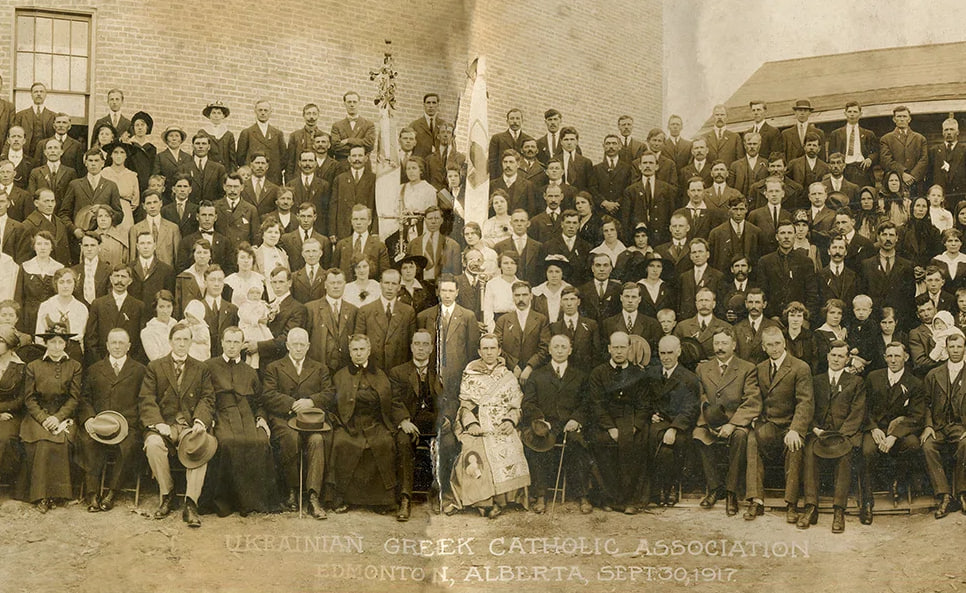
After the fall of Ukrainian statehood in 1917-1921, emigrants in the United States and Canada created a network of organizations that raised funds to support the struggle for independence, aid the wounded and families of the repressed in Ukraine. The organizations launched extensive fundraising campaigns that reached thousands of participants. These structures financed numerous liberation movements and supported Ukrainians after the war. Today, the fourth generation of the diaspora continues this tradition of solidarity – helping the Armed Forces of Ukraine, the wounded and displaced persons.
This was reported “UkrainianPeople.us”.
After the defeat of the national liberation struggle of 1917-1921, Ukrainians in exile began to actively self-organize – both in the political sphere and to raise funds to support their compatriots who remained at home in Ukraine. A significant layer of documents revealing the social life of Ukrainians in the USA and Canada is stored in the Central State Archive of Foreign Ukrainian Studies.
The activation of Ukrainian public organizations in North America occurred in the late 1920s and early 1930s, when former participants in the Ukrainian revolution, political figures, and military personnel began to emigrate to these countries. At this time, new organizations appeared that operated in a national spirit: the Organization for the State Revival of Ukraine (ODVU) in the USA and the Ukrainian National Union of Canada (UNO).
One of the key areas of their work was raising funds to support the liberation struggle, helping disabled soldiers of the revolution, and later - repressed and political prisoners of the Soviet regime. At the same time, Ukrainians abroad were going through difficult times: the Great Depression brought unemployment and impoverishment. But, despite the difficulties, they donated “hard-earned Ukrainian money” to support the Motherland.
The ODVU’s 1934 appeal emphasized: “The matter of providing financial assistance to the liberation action of the Ukrainian People is the first and most important task, even the duty, of the Ukrainian emigration in America…”. The organization maintained contact with the OUN and directed the collected donations to continue the liberation struggle. Due to the difficult economic situation, in 1934 the ODVU introduced a new fundraising system – the “OUN Combat Fund”, which operated in the USA and Canada.
One of the collection tools was the “collection cannon” – a small portable box that made it possible to collect small contributions. In 1934, 3 thousand such cannons were produced and expansion was planned. The collection was held three times a year, and all proceeds were verified, reported in the press, and directed to a special bank account, after which they were transferred “to the edge.”
Financial support for the liberation struggle remained one of the main directions of the ODLU in the following years. At the 1949 congress, the organization declared its intention to “morally and materially support the liberation struggle of the Ukrainian people… for an Independent and United Ukrainian State.”
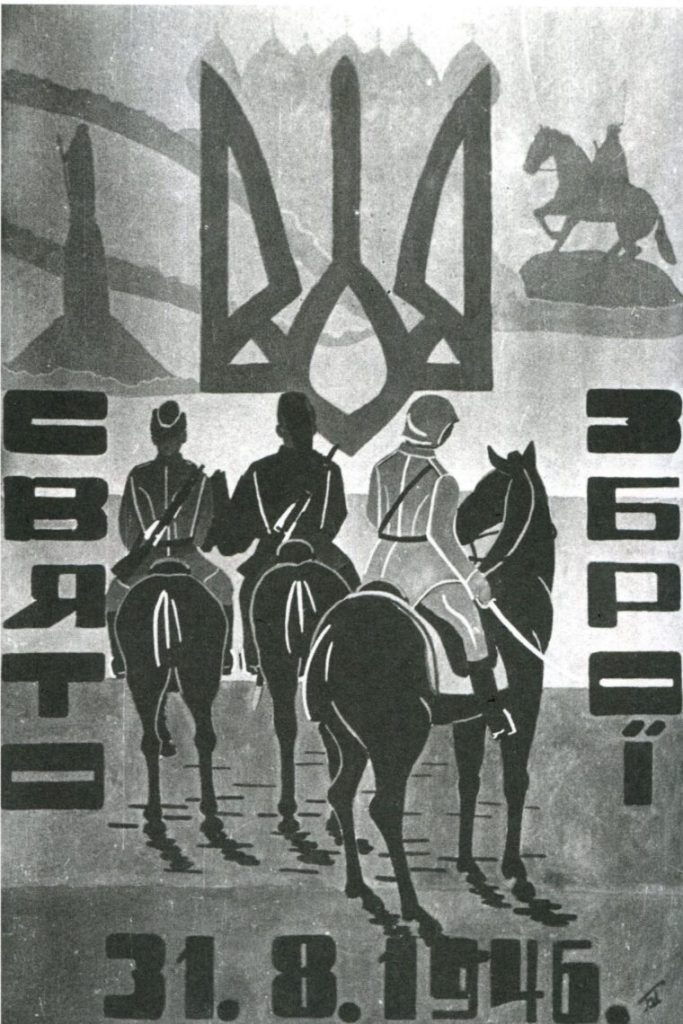
The Ukrainian National Association of Canada acted with a similar goal. It raised funds for the Liberation Fund, assistance to the disabled, the repressed, and also to support Carpathian Ukraine in 1938–1939. The “Help Carpathian Ukraine” campaign provided for the creation of fundraising committees, and the newspaper “Novy Shlyakh” published detailed reports: with the names of donors and the amounts of contributions – from tens of dollars to a few cents. The community’s total contributions could reach hundreds of dollars.
Some of the funds went directly to the government of Carpatho-Ukraine, as evidenced by archival documents. In March 1939, the UNO Canada called on Ukrainians to fulfill their “duty to Carpatho-Ukraine,” noting that the government of the newly created state had asked Ukrainians around the world to make a “national contribution” of 0.5% of their annual earnings. The appeal emphasized: “The entire Ukrainian people are behind her! We, all Ukrainians in Canada, are behind her!”
Reports indicate that in April 1939, the UNO Canada sent over $1,500, collected as part of a campaign to support Carpatho-Ukraine and the One-Cent Fund. Previously, in February of the same year, the organization had sent another $2,500.
Archival documents demonstrate not only the systematic and transparent nature of the meetings, but also a deep motivation – a desire to support Ukrainian statehood, despite geographical distance and economic difficulties. After World War II, Ukrainians abroad helped displaced persons in DP camps, and later – the families of political prisoners and dissidents.
As in the past, today the Ukrainian diaspora around the world continues to support the country, demonstrating a strong connection with the Motherland and commitment to common values.
Photo: Local History, Svitlana Listyuk.
Author: Danylo Pievchev