


The issue of frozen Russian assets and the offer of a reparations loan have become the center of controversy within the EU, while Slovakia declares the inadmissibility of financing military expenses. The diplomatic front is actively working - Berlin notes the rapid dynamics of negotiations, and the European Commission insists on mechanisms that will reduce the possibility of blocking a decision. At the same time, Moscow rejects a number of key points of the peace plan, which keeps the issue of territories in a state of uncertainty.
The White House considered the idea of an alliance between the United States, China and the Russian Federation
American media reported, that the Donald Trump administration was discussing the concept of creating a new format "Core 5", which could become an alternative to the G7. It was proposed to include the United States, China, the Russian Federation, India and Japan, that is, countries with a population of over 100 million and significant economic potential. The idea is contained in an unpublished version of the National Security Strategy, which preceded the official version of the document. The first topic of such a summit was planned to be the normalization of relations between Israel and Saudi Arabia.
Official representatives of Trump deny the existence of alternative versions of the strategy, but these data indicate that the White House is considering changing the global architecture of cooperation. Trump previously criticized the exclusion of Russia from the “G8”, calling it “a very big mistake”. The “Core 5” format should change the principles of political alliances, replacing them with demographic and economic criteria.
Fico refuses to support a reparations loan for Ukraine
Slovak Prime Minister Robert Fico said, that he would not support the European Commission’s proposed reparations loan for Ukraine, which is based on the use of frozen Russian assets. He claims that such a decision “will lead to the continuation of the war” and contradicts his declared “policy of peace”. In a letter to European Council President Antonio Costa, Fico warned that he would not vote for any initiatives related to financing Ukraine's military spending. He also expressed doubts about the risks of using frozen Russian assets and the possible impact of such a decision on US efforts.
In the letter, Fico stressed that Slovakia would not be among the countries that would contribute to covering Kyiv's defense costs, citing its difficult financial situation. At the same time, he stressed that Bratislava remains a "solidarity partner" of Ukraine, providing humanitarian assistance and hosting almost 200,000 Ukrainian refugees. Fico mentioned the supply of energy resources and joint government meetings that the Slovak side continues. Despite refusing to support the reparations mechanism, he assured that Slovakia remains a supporter of Ukraine's European integration course.
Germany says peace talks are moving at an unprecedented pace
The German government reported, that talks to find a way to end the war in Ukraine are taking place at an unprecedented pace. Deputy government spokesman Steffen Maier said the meetings were continuing almost without interruption and could continue over the weekend and into the beginning of next week. He quoted Chancellor Friedrich Merz as suggesting that an important meeting with US officials could take place in the coming days. The Berlin spokesman stressed that their goal was to achieve a ceasefire with reliable guarantees and taking into account European security interests.
Maier stressed that Germany was putting all its political weight into the process, working to change approaches and find effective mechanisms for a future agreement. He noted that any agreements should include guarantees that would prevent Russia from using the pause for a new attack. A separate topic remains the issue of frozen Russian assets, where Germany sees positive progress in reaching a consensus. The government representative refrained from commenting on a possible visit by Volodymyr Zelensky to Berlin, but confirmed that work on harmonizing positions continues hourly.
EU nears agreement on Russian assets and loan for Ukraine
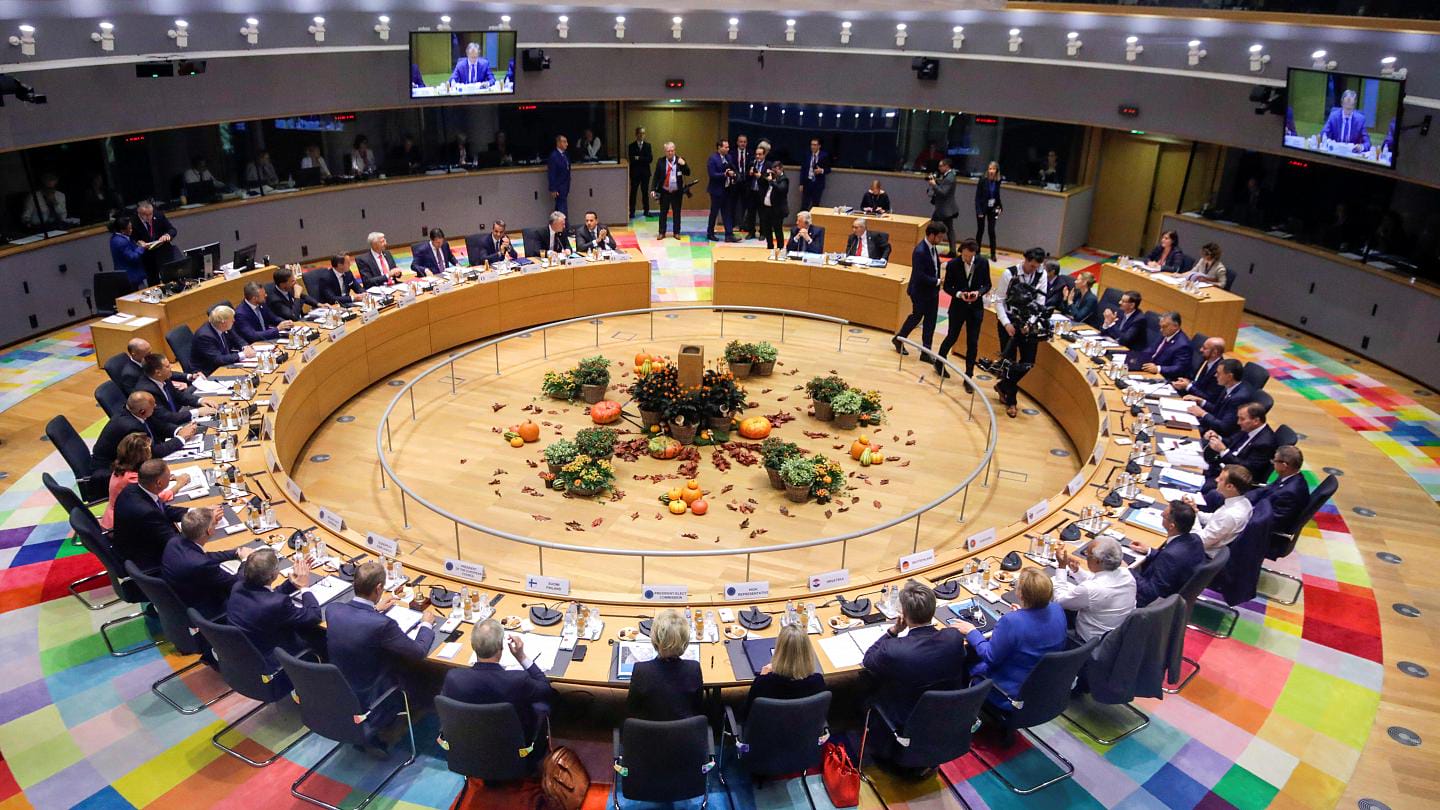
The European Union is agreeing on a new mechanism for using frozen Russian assets, which creates an opportunity to attract up to 90 billion euros in loans for Ukraine. According to Bloomberg, the European Commission has already proposed a compromise option that has received the support of EU ambassadors. Its key part is the transition from the principle of unanimity to qualified majority voting, which will deprive countries such as Hungary of the opportunity to block the extension of the asset freeze every six months. This will allow about 210 billion euros of Russian assets to be kept under EU control.
The new mechanism provides for the use of profits from the assets to finance Ukraine's defense, economic and budgetary needs for two years. A final decision is expected on December 18, when EU leaders meet in Brussels to give final approval to the deal. While Hungary is still resisting, most EU countries believe the mechanism is critical to European security.
Meanwhile, the Russian Central Bank has filed a lawsuit against Euroclear, trying to block the use of frozen assets that the European Commission proposes to direct to a reparations loan to Ukraine. According to Russian data, about 280 billion euros of Russian assets are blocked abroad, of which 191 billion are in the Belgian depository.
Senior officials of the United States, Ukraine, France, Germany and the United Kingdom will meet in Paris
Tomorrow, December 13, senior officials will gather to discuss President Donald Trump's peace plan, Axios sources report.
The meeting will be held at the level of national security advisers, although it remains unknown whether US Secretary of State Marco Rubio, who is also Trump's national security adviser, will participate in it. Representatives of Ukraine and European countries, as reported by American sources, also expressed a desire to hold a joint telephone conversation with Trump, but its date has not yet been agreed.
The meeting in Paris scheduled for Saturday follows a phone call last Wednesday between Trump and the leaders of France, Germany and the UK — President Emmanuel Macron, Chancellor Friedrich Merz and Prime Minister Keir Starmer.
Chancellor Merz said on Thursday that in his conversation with Trump, the leaders stressed the position that a decision on Ukraine’s territorial integrity should be determined solely by Ukraine itself. Merz said the conversation was constructive and the parties showed mutual respect. Trump, in turn, noted that the participants “discussed Ukraine in quite harsh terms.”
ISW: Russia Rejects Seven Key Points of US Peace Plan
ISW reported, that Russian Foreign Minister Sergei Lavrov has effectively rejected seven points of the original US peace plan out of 28 points. These include proposals to freeze the front line in Zaporizhia and Kherson regions, transfer control of the ZNPP to the IAEA, security guarantees for Ukraine, and confirmation of its sovereignty. Lavrov also opposed a limited demand for NATO to stop its expansion, insisting on returning the alliance to its 1997 borders. He also rejected the possibility of deploying European fighter jets in Poland and criticized EU norms on the protection of religious minorities.
ISW analysts note that Russia’s position demonstrates Moscow’s reluctance to accept even the initial version of the plan, and the Kremlin will press for further changes if Ukraine agrees to these conditions. Lavrov reiterated the demands of the 2021 ultimatums, which de facto involve dismantling Europe’s current defense structure. The statements by the Russian leadership are consistent with the rhetoric of Putin and the State Duma deputies, who also reject key elements of the peace process. ISW emphasizes that the Kremlin remains uninterested in a real peace agreement and continues to block any framework that would provide for concessions from the Russian Federation.
Author: Danylo Pievchev