


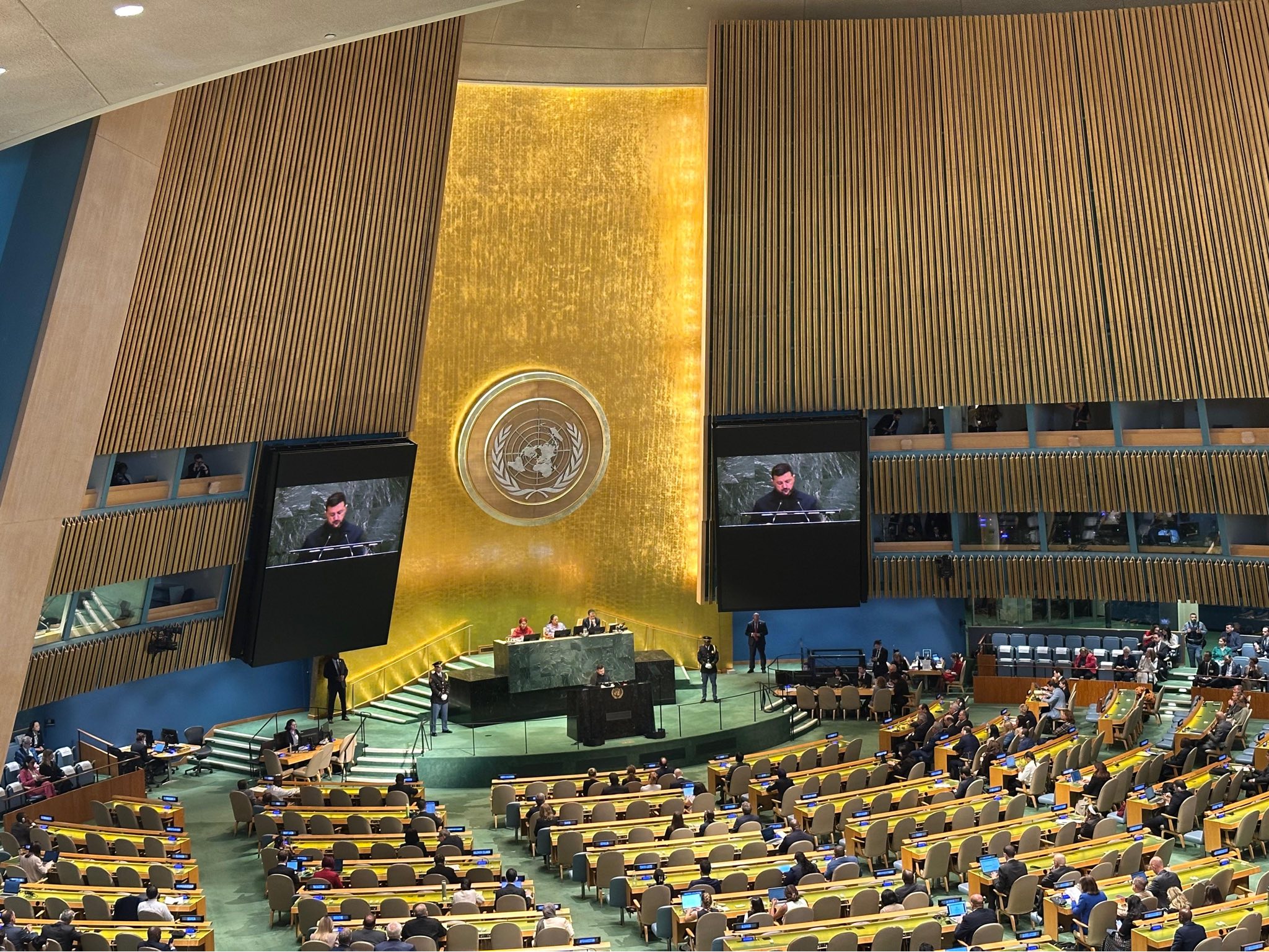
 December 2025 became the apex of Ukraine’s diplomatic activity at the United Nations. In just two weeks, the UN General Assembly adopted three key resolutions initiated by Ukraine: on the return of children abducted by Russia, the Chernobyl resolution, and the condemnation of systemic human rights violations in the temporarily occupied territories.
This was reported by the Permanent Mission of Ukraine to the United Nations.
According to the report, the first resolution — on the return of Ukrainian children abducted by Russia — was adopted on December 3. The document demands that the Russian Federation immediately return all deported children and mandates the UN Secretary-General to coordinate its implementation.
The second resolution, adopted on December 10, was the so-called Chernobyl resolution. For the first time in many years, it was passed not by consensus but by a vote, with clear wording regarding the responsibility of the aggressor state.
The third resolution, adopted on December 18, was titled “The Situation of Human Rights in the Temporarily Occupied Territories of Ukraine, including the Autonomous Republic of Crimea and the City of Sevastopol.” It was supported by 79 UN member states, despite significant political pressure, diplomatic resistance, and a general fatigue within parts of the international community caused by the prolonged war.
In particular, the resolution covers all occupied territories of Ukraine, including Crimea, and documents mass and systemic human rights violations — persecution of Crimean Tatars, pressure on journalists and activists, unlawful detentions, deportation of Ukrainian children, militarization of youth, and the destruction of cultural heritage — thereby laying the groundwork for international legal accountability of the Russian Federation.
Presenting the draft resolution on December 15, Ukraine’s Permanent Representative to the UN, Andrii Melnyk, emphasized that its adoption does not hinder ongoing peace negotiations mediated by the United States, as human rights issues must remain on the UN agenda until Ukraine’s territorial integrity is fully restored.
 In addition, Ukrainian diplomacy achieved six more strategic victories in elections to governing bodies of international organizations. Ukraine was elected to the UN Economic and Social Council and a number of key governing bodies of international organizations. Among them:
- Election to the governing body of the UN Food and Agriculture Organization (July 2025): Ukraine became a member of the Council, while Russia and Belarus were defeated.
- Election to the Council of ICAO, he UN aviation organization (September): Russia failed to receive support, while Ukraine maintained its diplomatic advantage.
- Election of Ukraine to the UNESCO Executive Board for 2025–2029 (November): Ukraine was elected with record support — 137 votes — despite Russia’s attempts to derail the election.
- Executive Board elections (November): Ukraine once again became a member of the Executive Board, while Russia suffered its third defeat.
- International Maritime Organization (December): Russia failed to secure a seat on the Council, confirming its isolation in the maritime sector.
Overall, 2025 became a “black year” for Russia in international organizations, as it was not elected to any of nearly 20 governing bodies. Ukraine, by contrast, strengthened its influence, securing approximately $1.5 billion in UN assistance to support the civilian population, energy resilience, healthcare, and education.
Photo: the Permanent Mission of Ukraine to the UN
Author: Inna Mikhno