


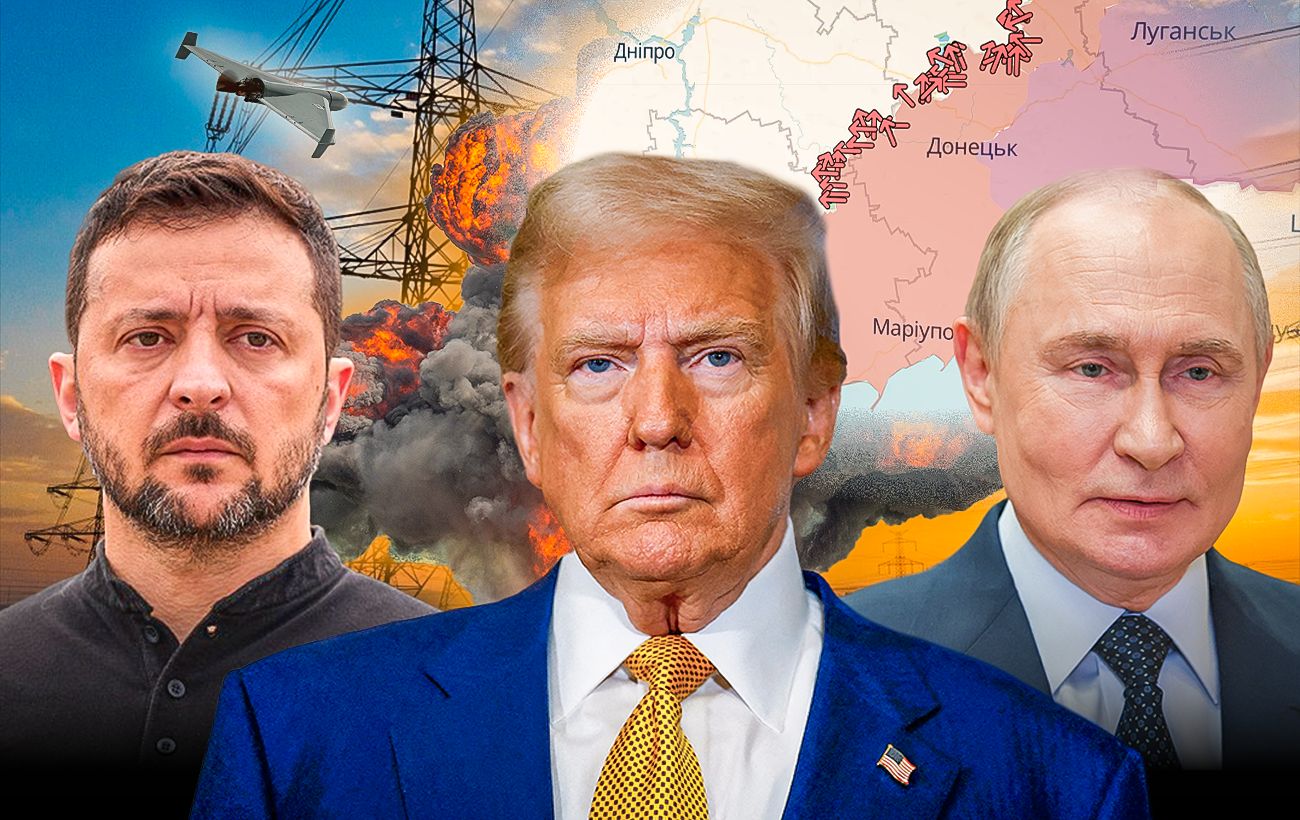
Peace initiatives around Ukraine are facing new challenges on several fronts at once. Control over the Zaporizhzhia nuclear power plant has become a strategic issue, without which it is impossible to imagine post-war recovery. At the same time, Russia is intensifying information campaigns, and public opinion in the United States is demonstrating fatigue and distrust in the imminent end of the war.
Zaporizhzhia nuclear power plant as a stumbling block in the peace plan for Ukraine
President Volodymyr Zelenskyy said, that Ukraine and the United States are already 90% closer to an agreement to end the war, but one of the key unresolved issues remains control over the Zaporizhzhia nuclear power plant. The facility, located in the Zaporizhzhia region, has been under Russian military occupation since the first days of the full-scale war. All six reactors have been shut down, and experts emphasize that resuming the plant’s operation during hostilities is extremely dangerous. Despite this, both Ukraine and Russia consider the nuclear power plant a critically important energy asset for the post-war period.
The United States is also interested in the fate of the plant, considering it as an element of the economic component of the peace agreement. According to Zelensky, the American side proposed the option of joint management of the nuclear power plant with the participation of the United States, Ukraine and Russia, but Kyiv opposed it.
“How can there be joint commercial activities with the Russians after everything that has happened?” the Ukrainian president said.
Instead, Kyiv is proposing a model of joint management with the United States, under which Ukraine would receive 50% of the electricity, and the rest would be distributed by the American side. Zelensky noted that discussions on the fate of the plant lasted about 15 hours, emphasizing: “These are all very complex issues.”
Russia claims to have transferred “evidence” of the attack on Putin’s residence to the United States
The Russian Defense Ministry said, that it had transferred “evidence” of an attempted Ukrainian drone strike on Putin’s residence in the Novgorod region to the United States. In the video, Admiral Igor Kostyukov shows the American military attaché details that, according to Moscow, are elements of the control of a Ukrainian UAV. The department said that this is the wreckage of a drone shot down on the night of December 29, 2025 “during a terrorist attack”.
“We assume that this measure will eliminate any questions and allow us to establish the truth,” Kostyukov said. At the same time, the Russian side used this episode for political statements, announcing a possible revision of its negotiating position. Against this background, doubts arose about the reliability of Russian statements, since no independent confirmation of the claimed attack was made public.
WSJ: US intelligence agencies did not confirm Moscow’s version of the “attack” on Putin’s residence
US intelligence agencies have found no evidence that Ukraine carried out an attack on Putin’s residence, reported The Wall Street Journal. According to the American official, the CIA’s findings indicate that there was no direct attack on the residence. The US concluded that Ukraine may have been trying to strike a military target in the same region, but not near the facility where Putin was.
The publication also mentions a post by President Donald Trump, in which he shared a New York Post editorial. It stated: “Putin’s loud statements about the ‘attack’ show that it is Russia that is hindering peace.” According to the WSJ, this post appeared after a briefing by CIA Director John Ratcliffe. The Ukrainian side called the story about the “attack” a fake aimed at disrupting peace efforts, which some European leaders, in particular Moldovan President Maia Sandu, agreed with.
Poll: Nearly Half of Americans Disapprove of Trump's War Policy
Nearly half of Americans disapprove of President Donald Trump's handling of the Russia-Ukraine war, according to a new poll by The Economist/YouGov. The results showed that 49% of respondents said they "somewhat disapprove" or "strongly disapprove" of Trump's handling of the war. Only 30% said they "somewhat approve" or "strongly approve" of his approach. Another 20% were undecided.
The poll was conducted December 26-29 among 1,550 respondents with a margin of error of 3.6 percentage points. Americans were also asked about the balance of power in the war. 27% said Russia had the upper hand, 6% said Ukraine had, and 44% said neither side had a clear advantage. Another 24% were undecided.
Russia Asks U.S. Not to Detain Venezuela-bound Tanker – NYT
The Russian government has made a diplomatic request to the United States to stop pursuing the oil tanker Bella 1, which was heading to Venezuela and displaying the Russian flag to avoid capture. The request was made to the U.S. State Department late on New Year’s Eve and was also addressed to the White House’s Homeland Security Council, according to The New York Times. The vessel was spotted in the Caribbean Sea, after which it headed back across the Atlantic toward northern Europe.
The US military had been tracking the Bella 1 for almost two weeks. The tanker, which had left Iran and was heading to Venezuela for oil, tried to stop it in the Caribbean Sea, but the crew refused to comply. US authorities said the ship did not have a valid national flag and could therefore be searched under international law. The crew then painted a Russian flag on board and reported that it was under Russian control, and the ship later appeared in the Russian registry under the new name Marinera with a port of registration in Sochi.
Photo: rbc.ua
Author: Danylo Pievchev