


In February and March I had the good fortune to travel for work (my current position is Senior Program Officer for the Charles Stewart Mott Foundation) from the United States to Colombia in February and Brazil in March. As Concertmaster of the Ukrainian Bandurist Chorus of North America (UBC), I was proud to represent my ensemble, to tell its story and the story of bandura development in North America to Ukrainians in South America. I had done so in the past couple of years while on work trips to Argentina and Mexico, so having the opportunity to do so in two new Latin American countries was very special.
In late February I had the chance to meet with a very famous Ukrainian-Colombian musician,
Ianko Peñafort, and Isamara Fernandez, a Venezuelan member of his group Los Iankovers.
Ianko is a fantastic, very talented and versatile musician. Among other things, the group is well
known for their very entertaining short videos on social media, where they troll Russians on
Chatroulette, playing patriotic Ukrainian music for them. Their renditions of Ukrainian folk and
popular music, often with a Latin flair to them, are truly wonderful.
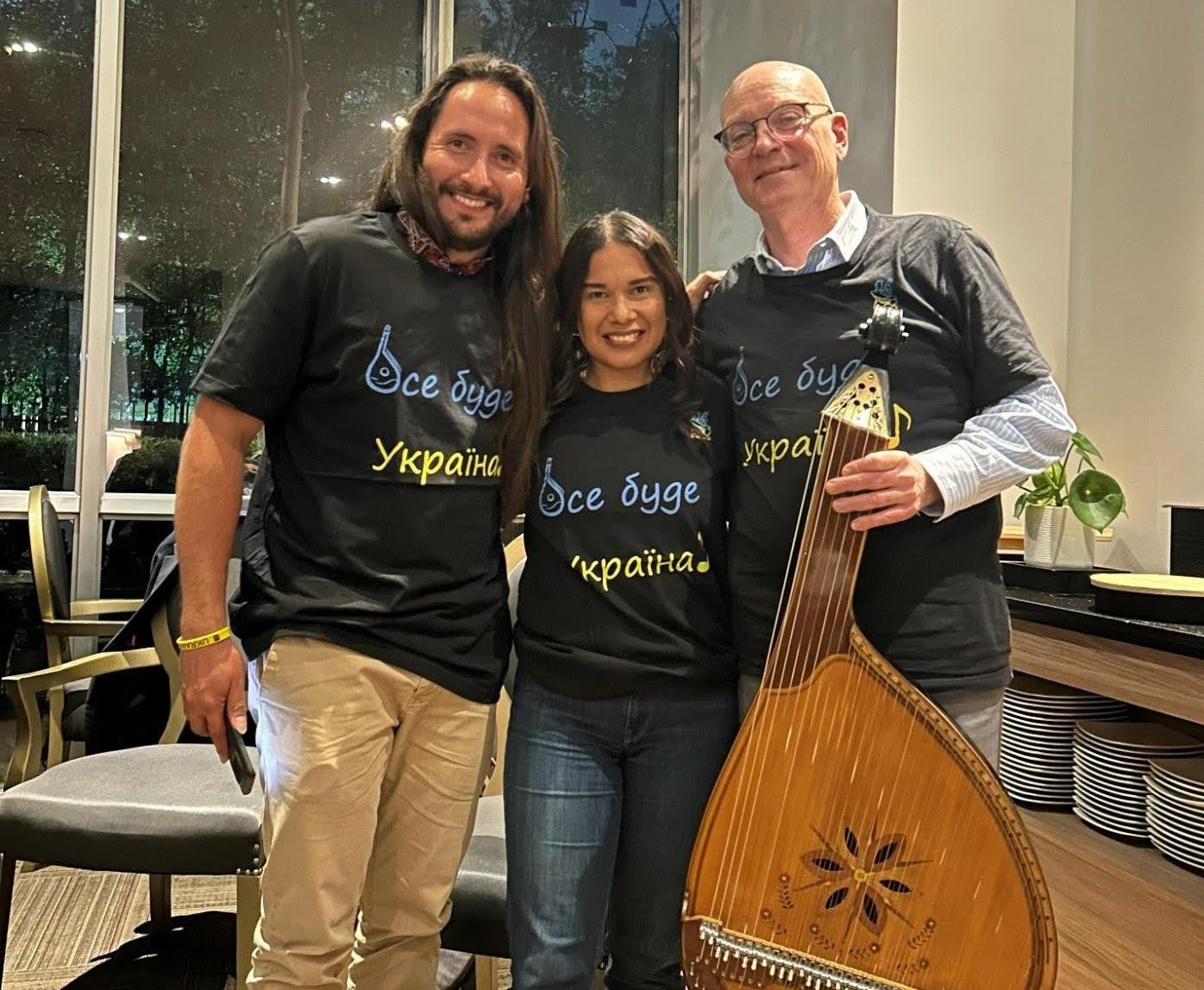
Unfortunately, time was limited due to busy schedules, but we had the chance to spend about an hour together at my hotel in Bogota and sing a couple of songs together. Ianko was extremely curious about the 108-year old history of the UBC, which I gladly relayed to him while “Isamarochka” was filming on her smartphone. Ianko told me that there are really very few Ukrainians in Colombia – but that Colombians are very receptive to Ukrainian music, which Los Iankovers are popularizing. Los Iankovers have toured in Ukraine, Canada, and several European countries already and are looking forward to spreading their musical wings even more.
In March, my wife Oksana joined me in visiting the Brazilian state of Paraná, in advance of another work trip which was actually to other states of Brazil. However, I really wanted to go to Curitiba and Prudentopolis, in part due to nostalgia. I had been there on a tour with a Society of Ukrainian Bandurists youth ensemble to Argentina and Brazil back in 1987. That tour had been organized by the late Mykola Czorny, former head of the New York School of Bandura and a huge bandura enthusiast.
An estimated half million people of Ukrainian descent live in Paraná. The two most prominent places with Ukrainian populations are the town of Prudentopolis, the so-called “Ukrainian capital of Brazil” (where an estimated 70% of the town’s population of 50,000 is of Ukrainian descent) and the state capital, Curitiba (population of 2 million) which has an estimated 33,000 ethnic Ukrainians. The vast majority of Ukrainians came to Paraná in the late 19 th and early 20 th centuries.
The World Congress of Ukrainians (WCU) connected me with Vitorio Sorotiuk, a professor of environmental law who heads the Ukrainian-Brazilian Central Representation and was formerly a deputy president of the WCU. Himself born in Prudentopolis but now living in Curitiba, Mr. Sorotiuk graciously introduced me to Rodrigo Herman, the Director of the Fialka Bandurist Capela as well as Dhaiana Silveira Dos Santos, who leads a small group of bandurists in Prudentopolis called Kobzari. I had the good fortune to meet Mr. Sorotiuk briefly in Curitiba.
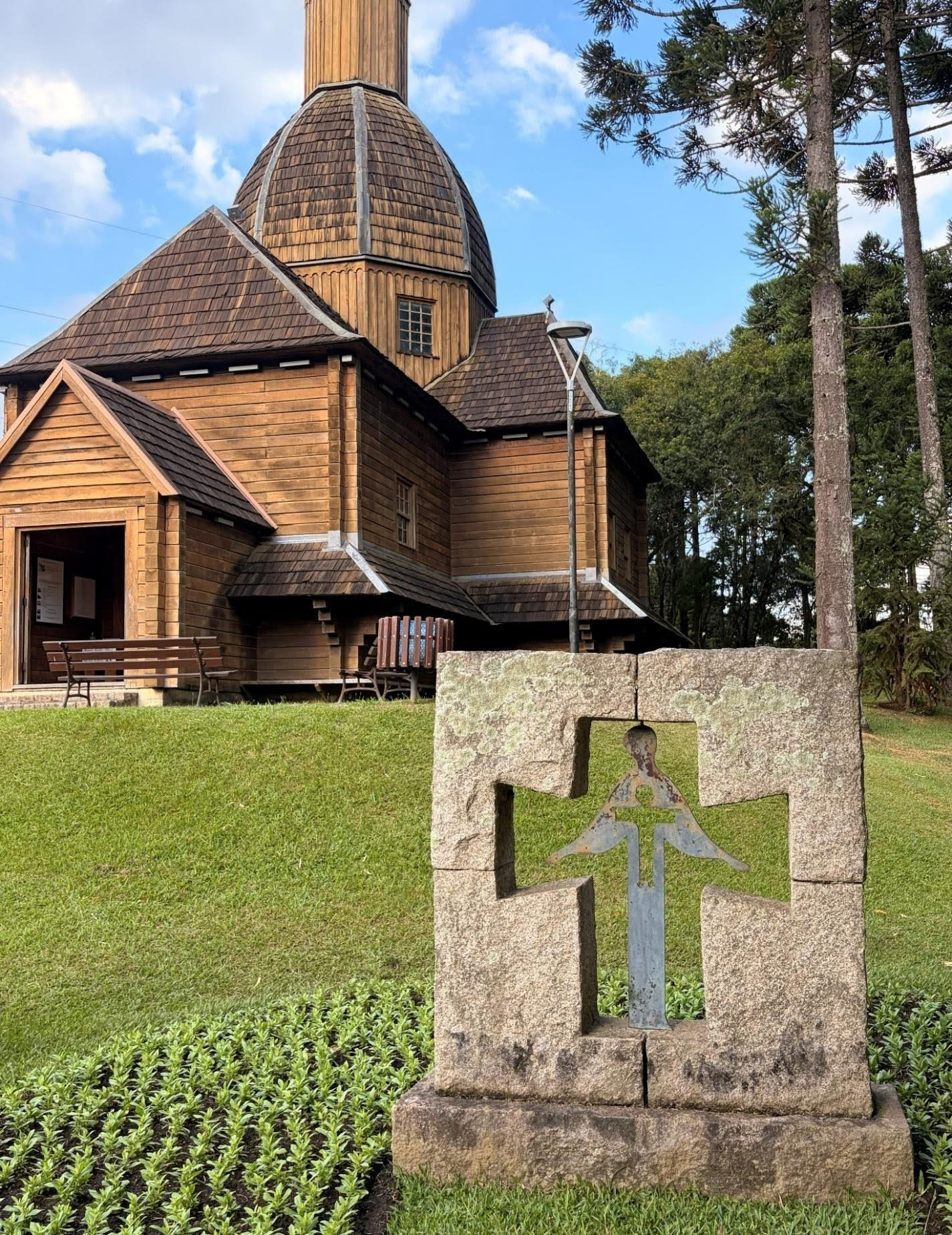
When driving into Curitiba on Thursday from a nearby resort in the Capivari Mountains, we visited the city’s beautiful and extensive botanical gardens – and were pleasantly surprised to see that pysankas were being sold in the gift shop. We learned that main European groups that settled in Curitiba were Germans, Ukrainians, and Poles. We paid homage to the Taras Shevchenko monument in the very clean and orderly Ukrainian Plaza located in a nice, quiet neighborhood of the city, and then proceeded to the very impressive Ukrainian Memorial located in the city’s beautiful and extensive Tanguá Municipal Park. The well-kept memorial complex has an arch, wooden chapel, belfry, pathways, a pysanka-like sculpture, and gift store.
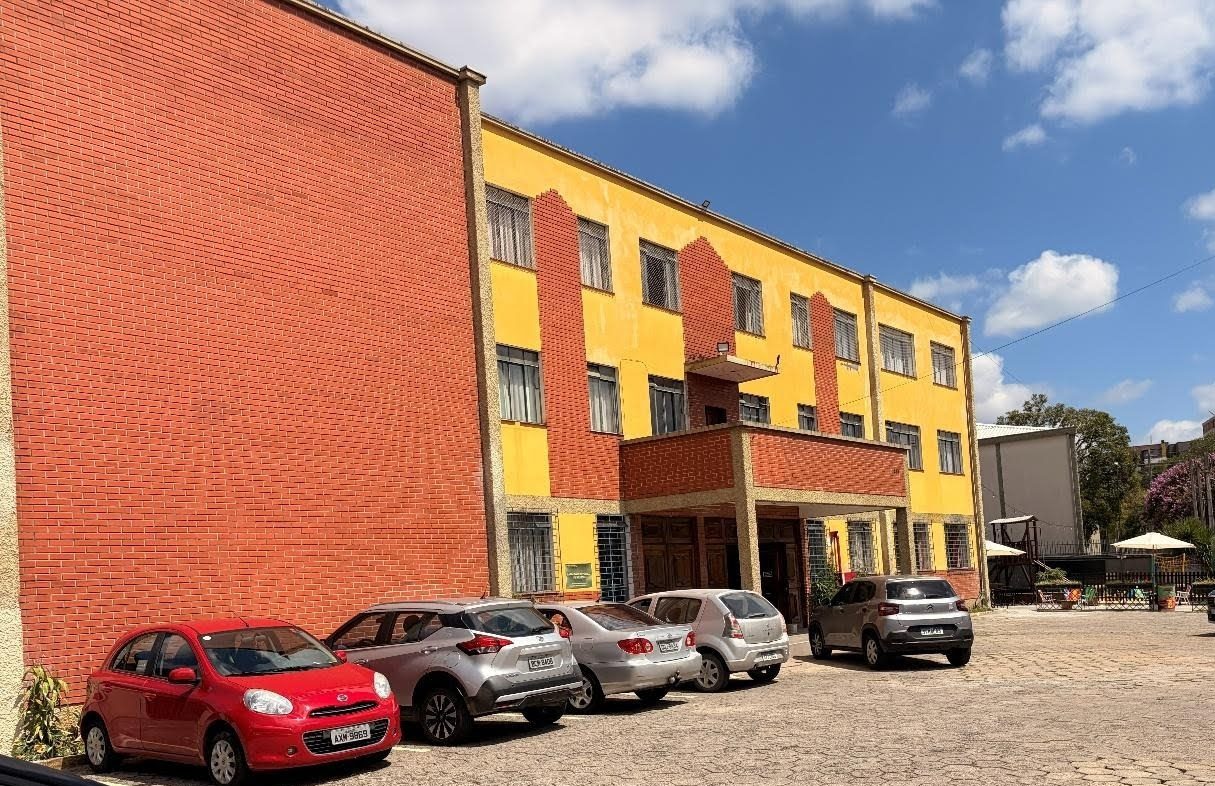
The bandura capela Fialka has classrooms and office space in Clube Poltava, a hub for Ukrainians in Curitiba. It is a very nice and spacious building that hosts a dance group, sports groups, religious education, a choir, an orchestra, a bandura group, and various community activities. Right beside it is a Ukrainian restaurant called UKRA Bar. The club and restaurant were bustling with people and activity when we visited both on a Thursday evening.
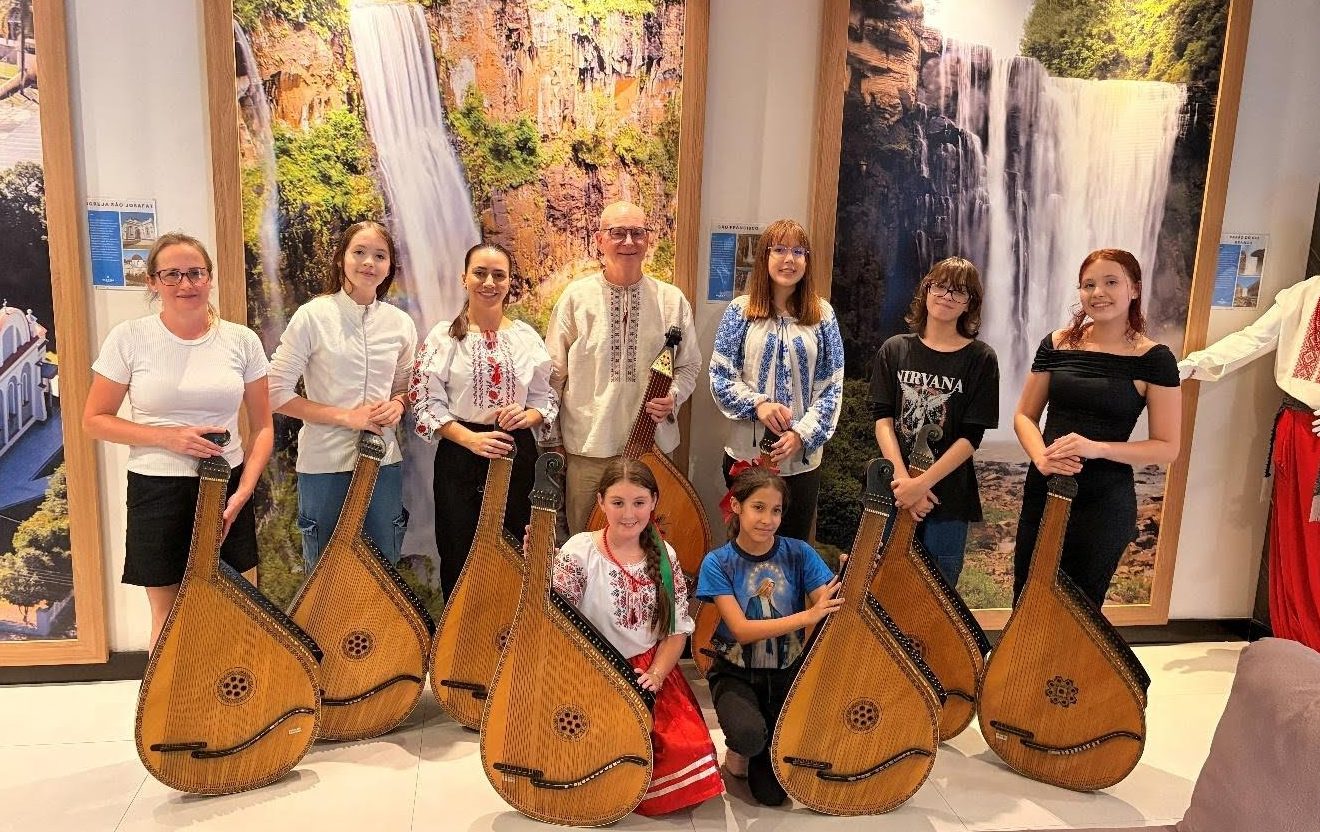
On the afternoon of Saturday, March 21, after some advance communicating with Rodrigo, I held two master classes for first younger, and then older bandurists. Overall, Fialka has over 30 bandurists. The banduras they have are mainly thanks to the efforts of the late Mykola Czorny, who in the 1970s and 1980s raised funds and organized shipments of dozens of banduras to Curitiba and Prudentopolis, with the help of Catechist Isabel Krevey. They also had some local (now deceased) Brazilian luthiers make a few more instruments, mainly Ivan Boiko and Pedro Kozak.
Rodrigo, by profession an IT systems analyst, is a fine bandurist and director. With the help of his wife Thaissa and brother Rafael, bandura lessons for the more than 30 students are very well organized. I spent time in two master classes introducing some new bandura pieces, giving tips on technique, and running through a vocal arrangement (for the older students). While the bandurists mostly don’t speak Ukrainian, many understood English, or often Rafael would translate into Portuguese for me. I thoroughly enjoyed listening to the older group give a beautiful rendition of Rodrigo’s arrangement of «Ой у гаю, при Дунаю», and I appreciated the opportunity to play along.
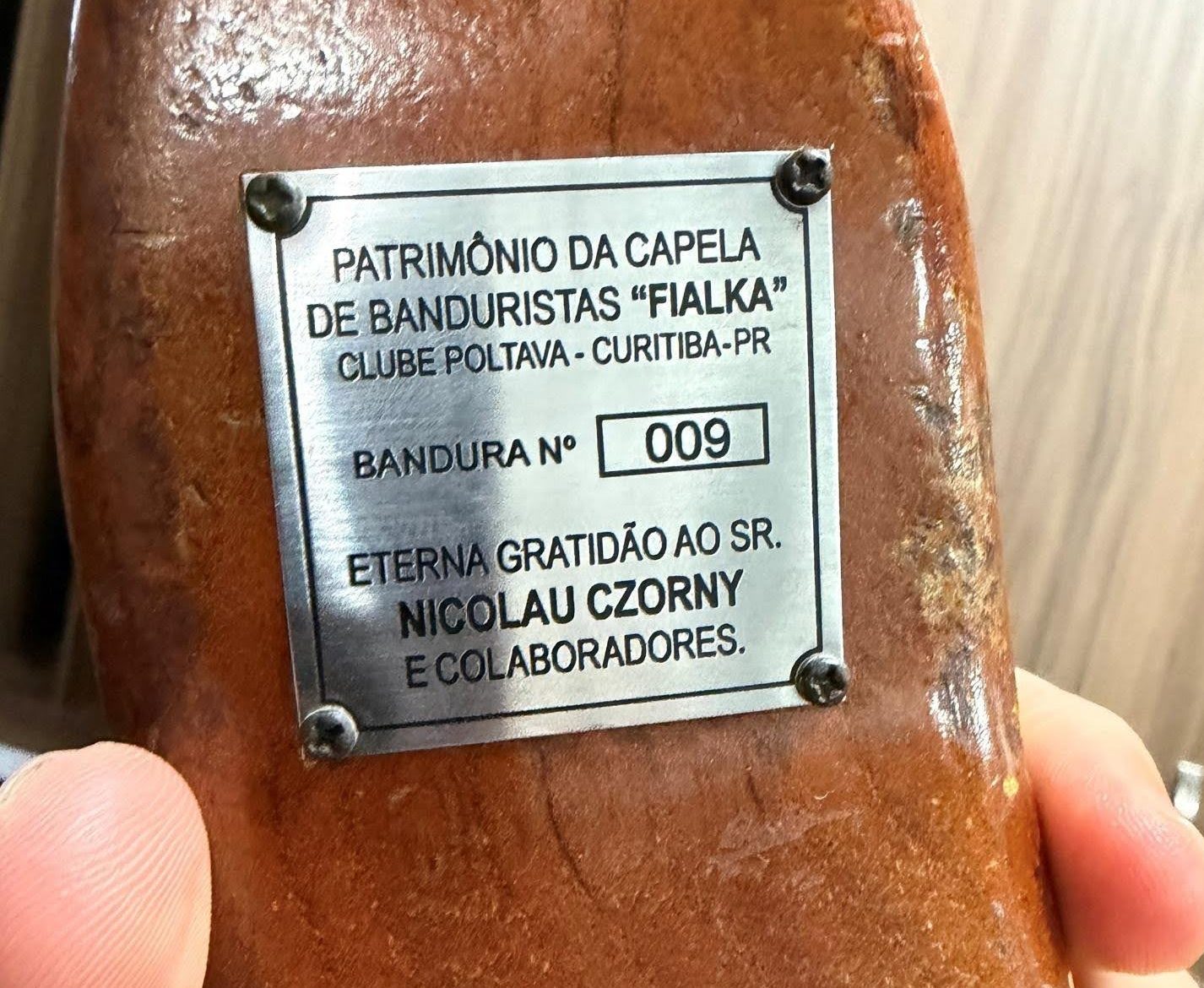
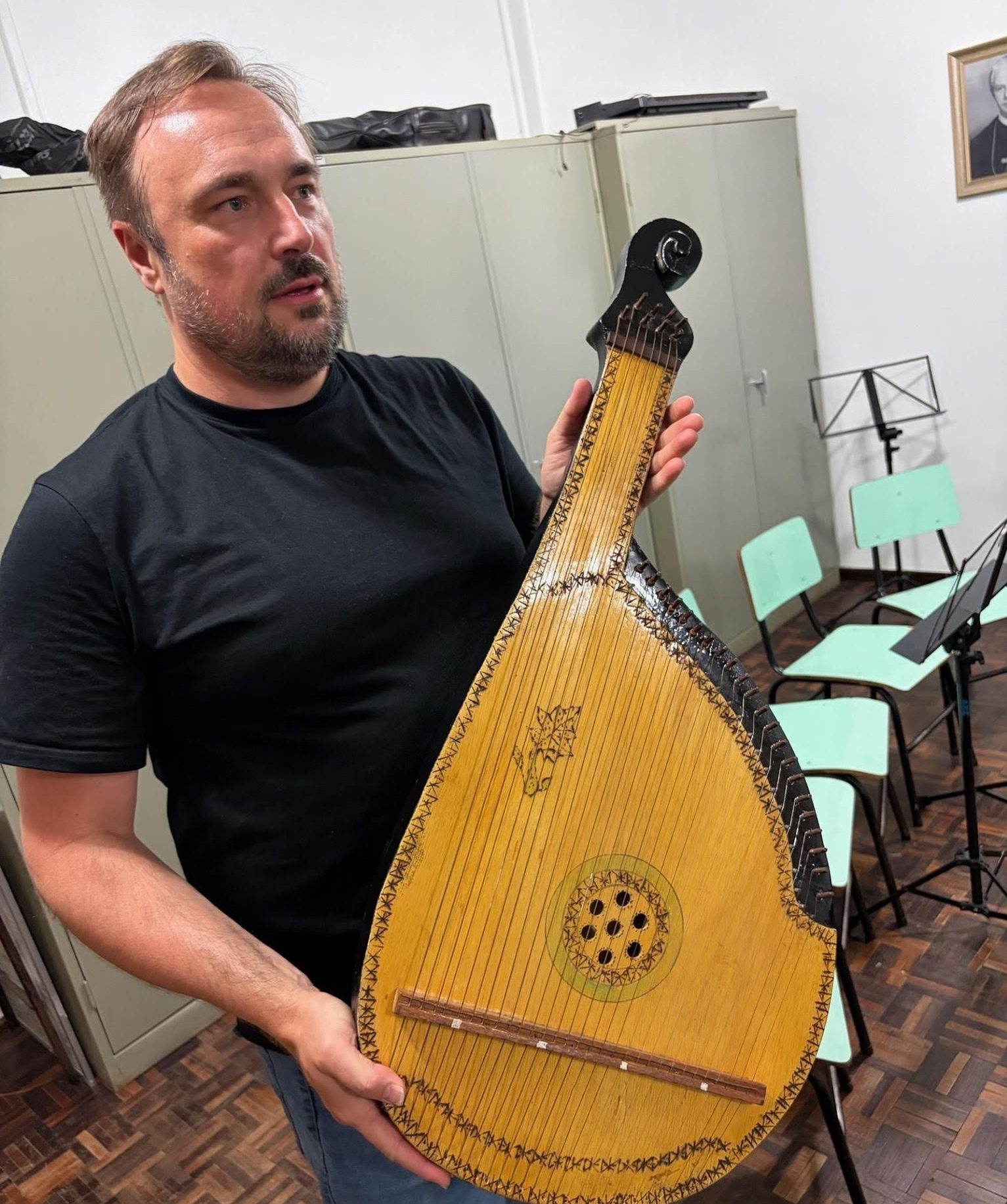
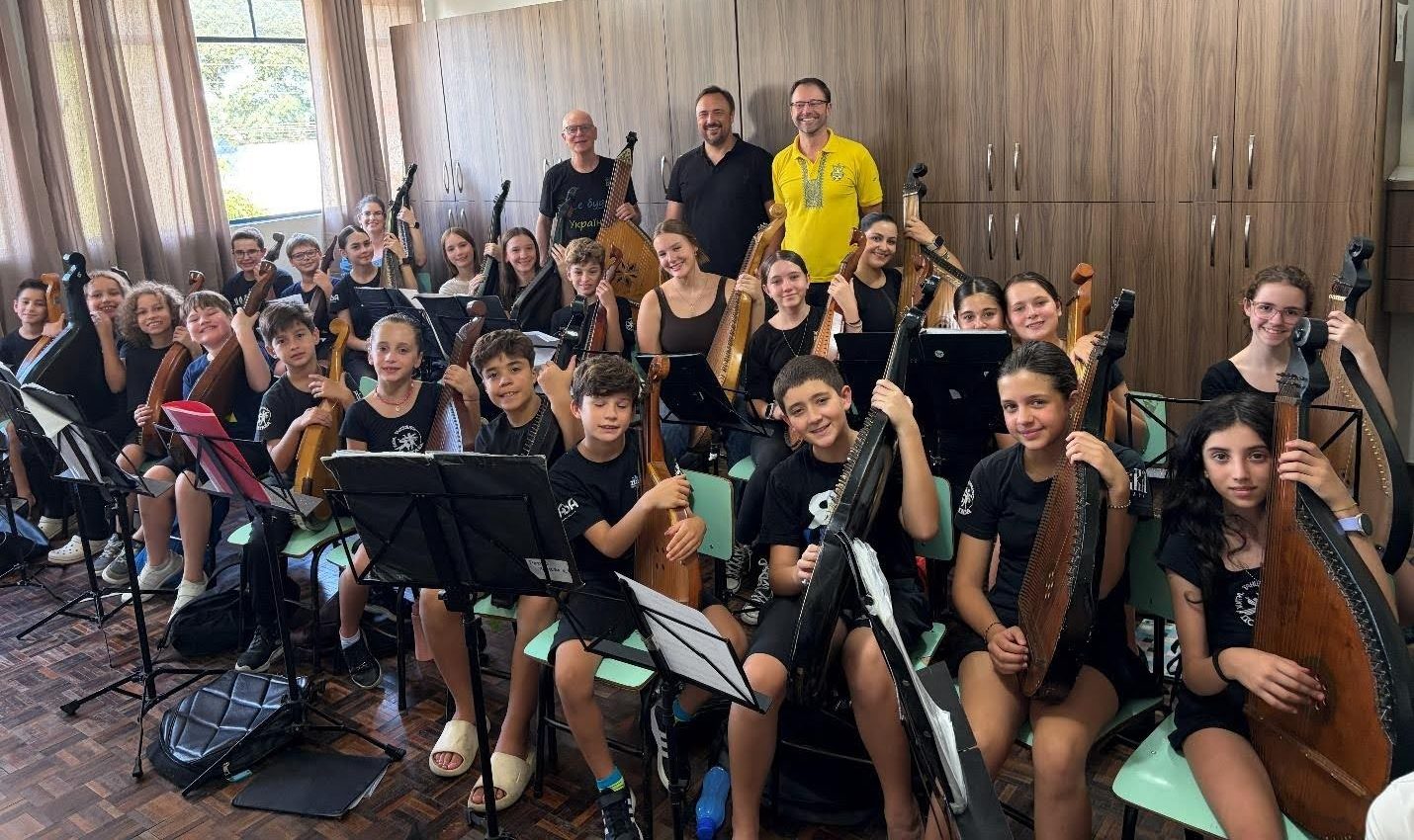
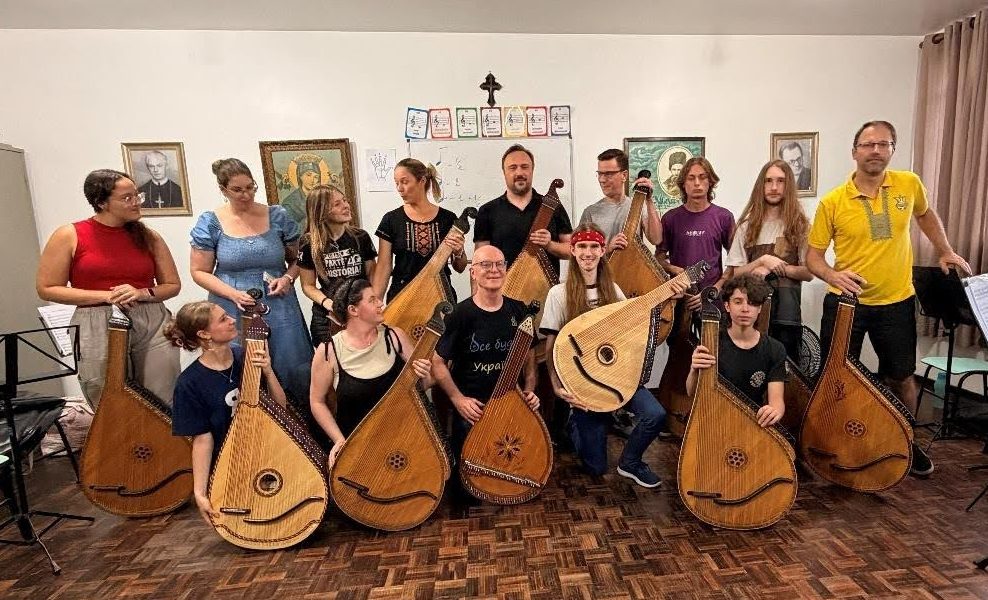
In the evening, I gave a bandura performance and presentation at UKRA Bar, which is an adjunct to the Clube Poltava. About 50 people crowded into a small room rather than “hang out” outdoors at the bar, and the owners did a very good job with microphones to ensure that I was heard. I gave a presentation on the bandura, kobzari, the UBC and bandura in North America, interspersed with various kinds of repertoire, mainly historic and folk. Because many in the audience didn’t understand Ukrainian, Clube Poltava President Jairo Oscar Nascimento (whose Ukrainian was impeccable) translated my song introductions and explanations into Portuguese. It was a very warm and friendly Saturday evening crowd.
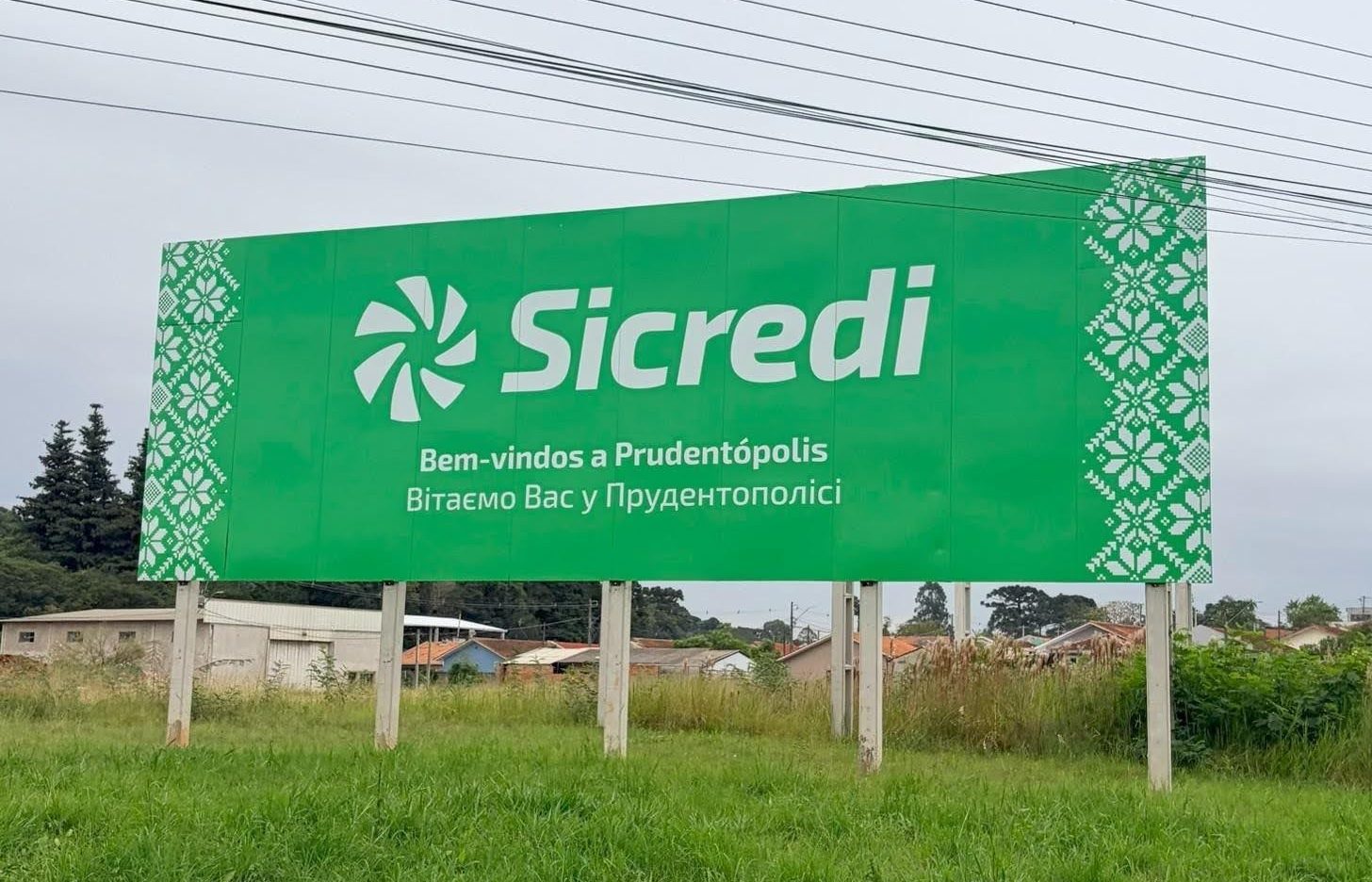
On Sunday morning March 22 my wife and I drove 3.5 hours to Prudentopolis. Upon entering the town, where we were greeted by a “Welcome to Prudentopolis” billboard in both Portuguese and Ukrainian. We learned that Ukrainian is deemed an official language there. The staff at our hotel, Mayna, had a Ukrainian flag tag sown on the sleeve of their uniforms, and there were giant psyanky and mannequins wearing Ukrainian costumes on display in the lobby. By earlier agreement over WhatsApp, we were soon joined by Dhaiana and a group of three young girls and their parents. I listened to them play «Подай дівчино ручку на прощання», tuned their instruments and had a short impromptu lesson where I taught them «Ой чорна я си чорна». We were then joined by Sandra Kachuk, who along with her three daughters also are learning to play, so there were four more banduras to tune.
Dhaiana is a warm and wonderful young woman of mixed Ukrainian and Brazilian descent. Originally from the countryside, she learned Ukrainian when attending the Our Lady the Patroness Parish School and the Heart of Jesus Catechist Institute next to the St. Josaphat Ukrainian Catholic Parish in Prudentopolis. Dhaiana went on to study nursing and currently works at a local hospital. Her enthusiasm for bandura infuses her students as well as listeners. She was inspired to learn bandura by Catechist Isabel Krevey, who had moved from Curitiba to Prudentopolis eight years ago.
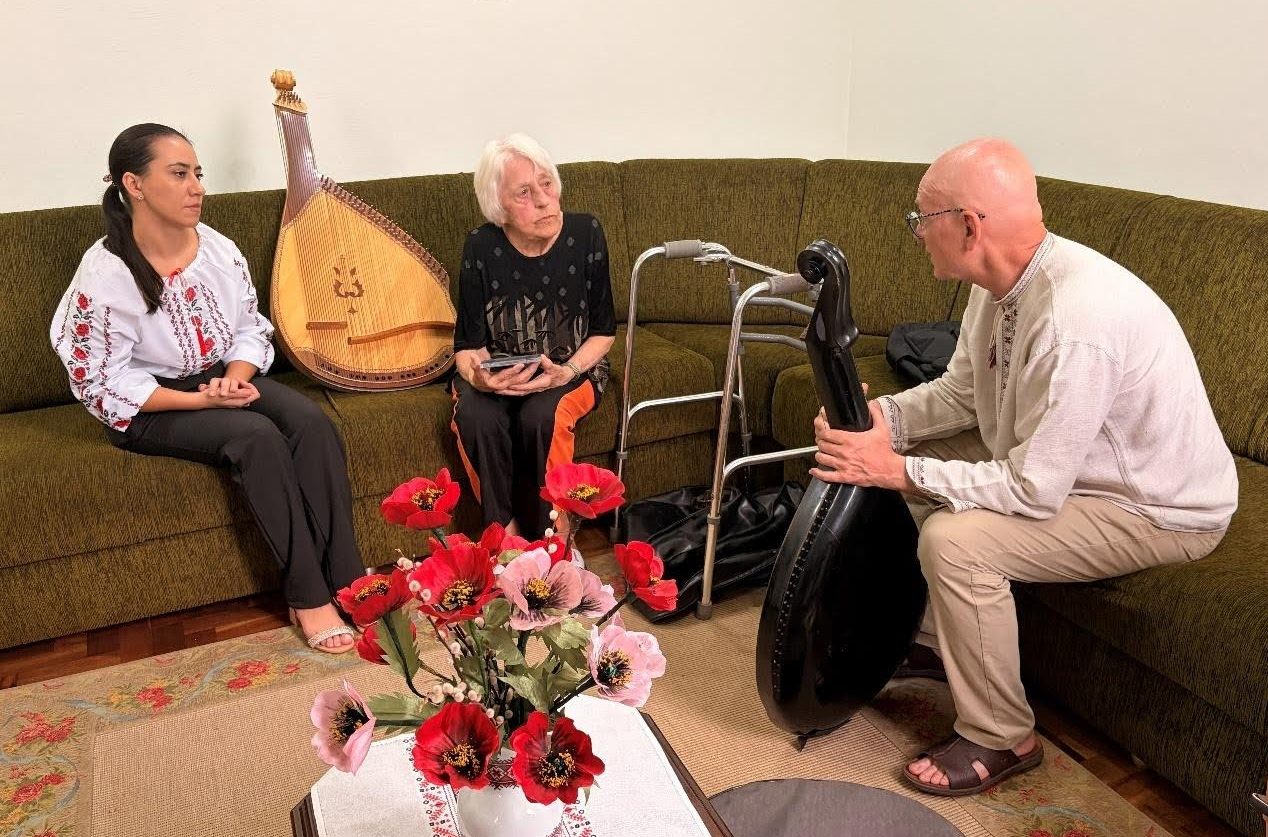
We (Dhaiana, my wife, Sandra and her two daughters, and Catechist Olena Gardash, who lives and works at the Institute) had the moving experience of visiting Isabel, who is 89 years old and though needing to use a walker to get around, has a strong voice and speaks wonderful old Galician Ukrainian. We enjoyed hearing her relay how she and Mykola Czorny worked to set up bandura schools in Curitiba and Prudentopolis. She has a very nice Lvivska bandura which is in good shape. Isabel said she had not played on it for a while, but will soon (and so I tuned it up for her). I played a religious chant «Чeрeз поле широкеє» and then we all sang «Чорна я си чорна» together, with bandura accompaniment.
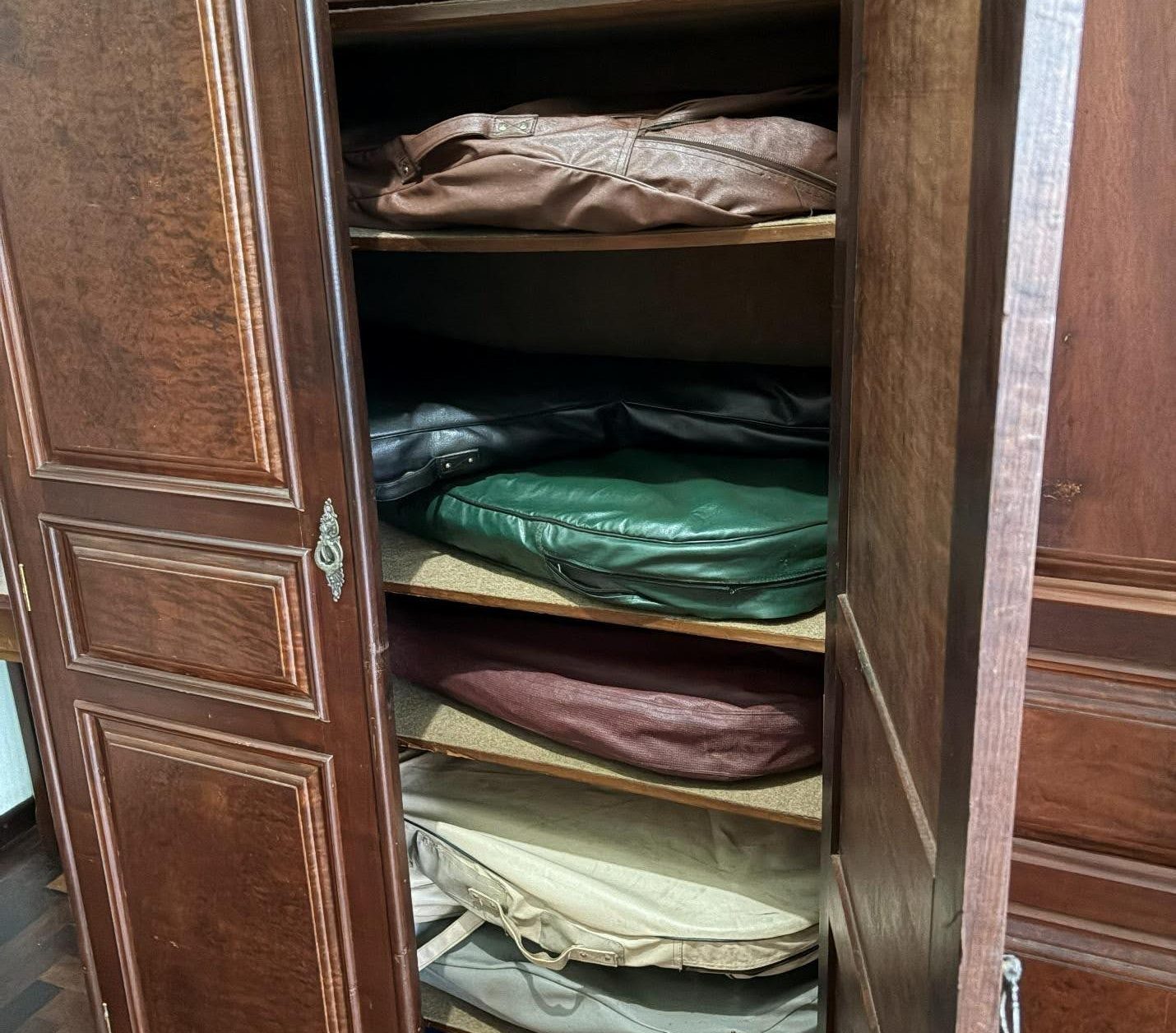
A surprise followed. We walked along a long hallway to a music rehearsal room where we were shown cabinets full of banduras laying on shelves – I counted around 30 of them. They all belong to the Institute. Sadly, most are not in use and some need serious repairs, and most of them likely need restringing. Despite Dhaiana’s and Isabel’s goodwill and enthusiasm for bandura, getting all the banduras into playing shape is likely beyond their capacity. What would really be helpful is if an experienced bandurist from Ukraine or elsewhere could come and spend several weeks, if not months, working with the banduras and with Dhaiana to give impulse to a more serious rebirth of bandura art in Prudentopolis. [They could also be helpful to Rodrigo in Curitiba.]
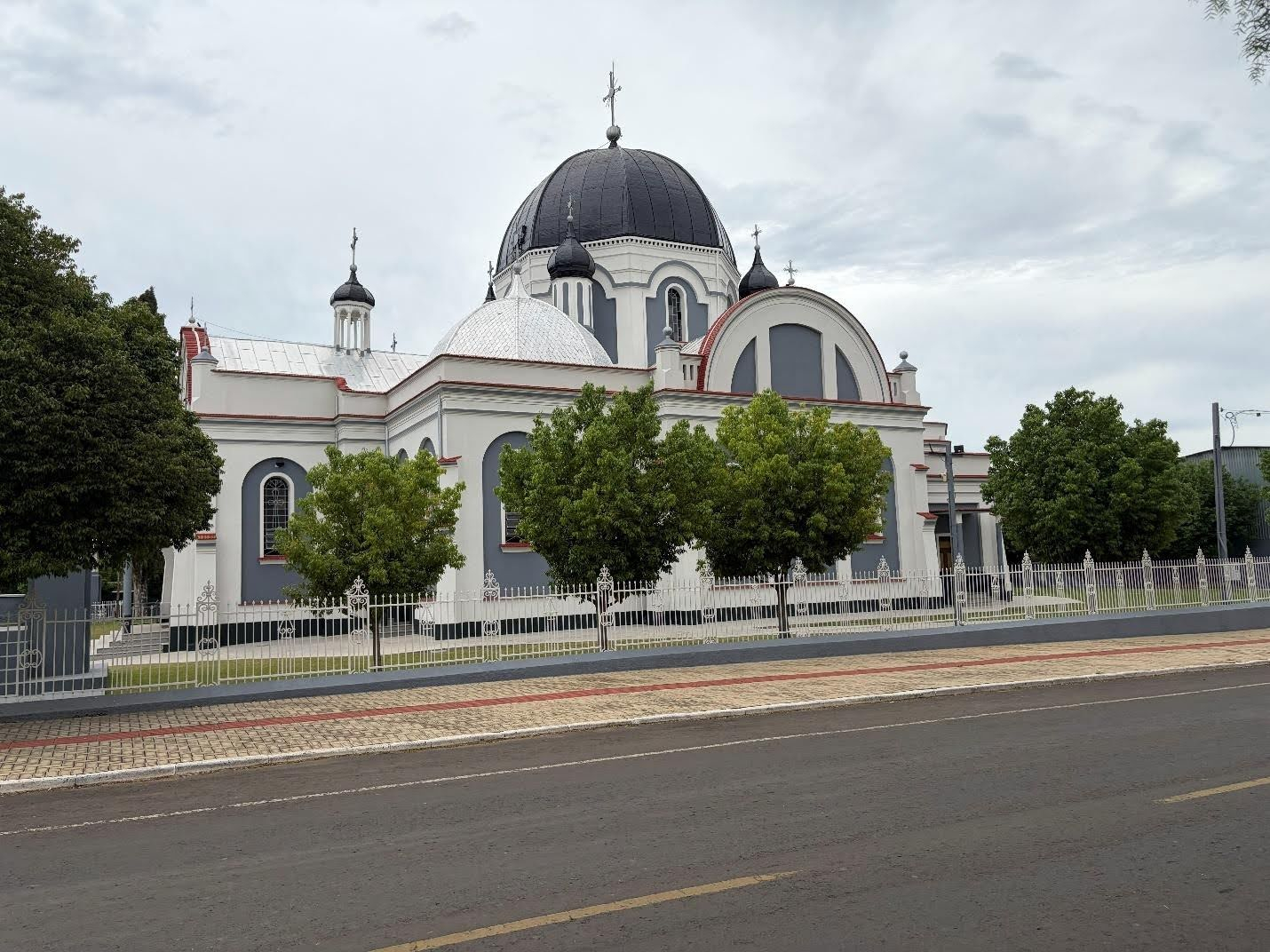
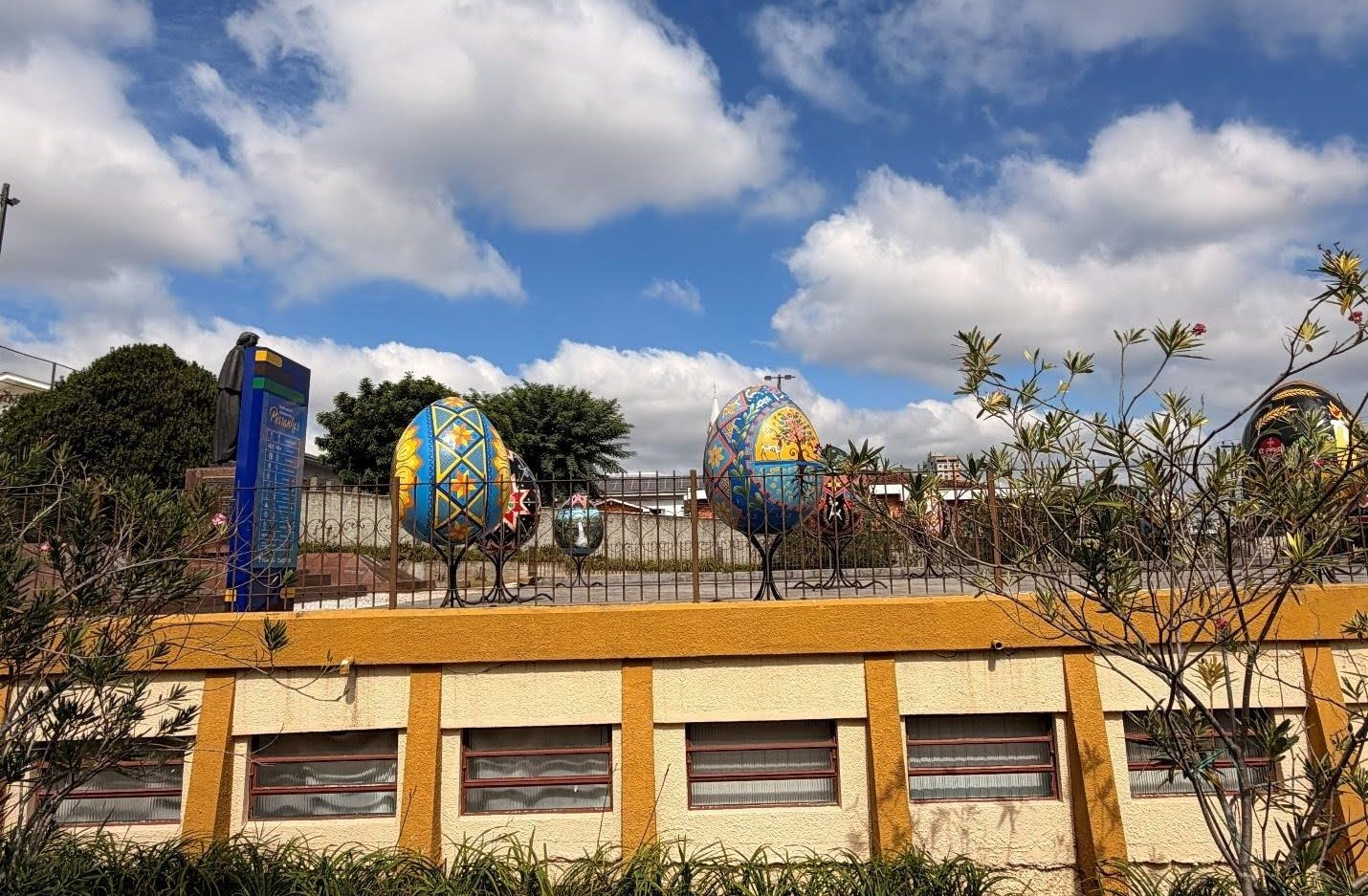
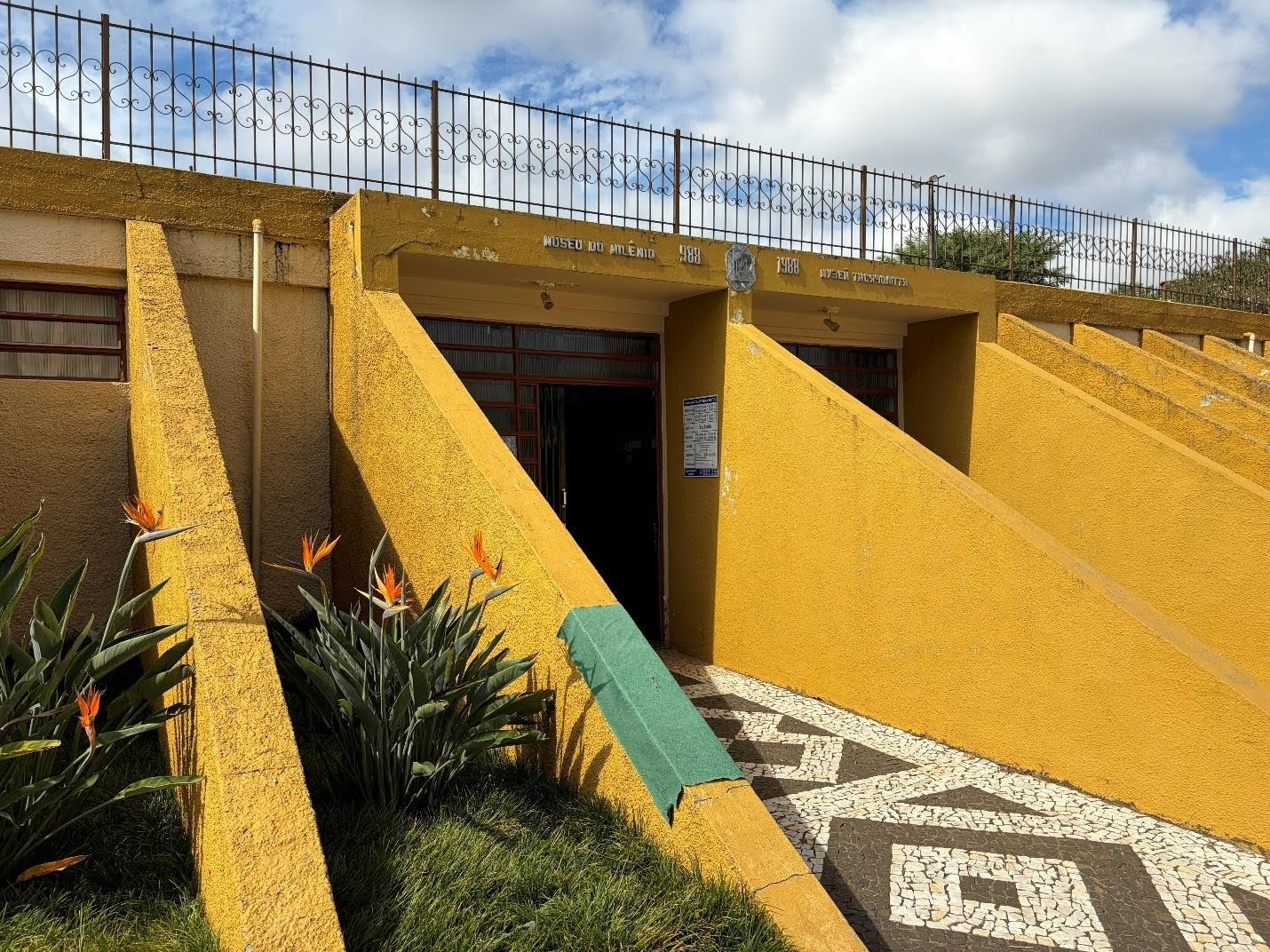
That evening we went to dinner with Sandra and her daughters. We were joined by Dhaiana and her husband, Rafael Kvasney Novosad, who works in his family’s pickling business and is a member of the Kozak Brotherhood of Prudentopolis. The following morning, before leaving on a long drive to make a flight from Curitiba to Porto Alegre, Oksana and I visited the Ukrainian Millenium Museum, located just under the St. Josaphat Parochial Center, across the street from the church, and under a plaza which has a Taras Shevchenko monument and giant pysanky statues. The museum itself is fascinating, full of artifacts that trace the Ukrainian immigration to Paraná and the history of the Ukrainian community in Prudentopolis. Ukrainian embroidery, pysanky, costumes, furniture, placards, etc. Sadly, neither of the two very friendly museum attendants spoke any Ukrainian. Because we did not know any Portuguese, we declined a guided tour.

My general observations of the Ukrainian diaspora community that I briefly visited in Curitiba and Prudentopolis are that they are well organized, very aware of their heritage and proud of it. A lot of Ukrainian cultural life revolves around closeness to religion, mainly Catholic and Orthodox. They have a strong sentiment toward “the homeland Ukraine” but seemingly very little actual contact with it (although the internet reports some recent post-2022 refugee arrivals to Paraná, we did not meet nor hear of any). They are of course aware of the war but are more focused on having their own local Ukrainian community thrive. Unfortunately, there are no Ukrainian Saturday schools, although we were told that in Prudentopolis there still was some Ukrainian-language instruction in daily public schools. Nonetheless, for the most part the Ukrainians with whom we interacted either spoke no or only very rudimentary Ukrainian. This is not surprising given that most of the people are 4th, 5th or even 6th generation, and it is amazing that they are still highly engaged with their Ukrainian heritage, despite low language skills.
Afterwards I had a WhatsApp conversation with Mr. Sorotiuk. I thanked him for paving the way for Oksana and me to establish another North American – South American Ukrainian diaspora connection. Mr. Sorotiuk acknowledged the need for some outside support to bolster the bandura ensembles both in Prudentopolis and Curitiba and even floated the idea that it might even be possible to get some state government support for this. The Ukrainian Bandurist Chorus of North America will try to see what it can do about that – and hopefully, someday have a concert tour in Brazil and other South American countries.
Author: Mykola Deychakiwsky
Concertmaster
Ukrainian Bandurist Chorus of North America