


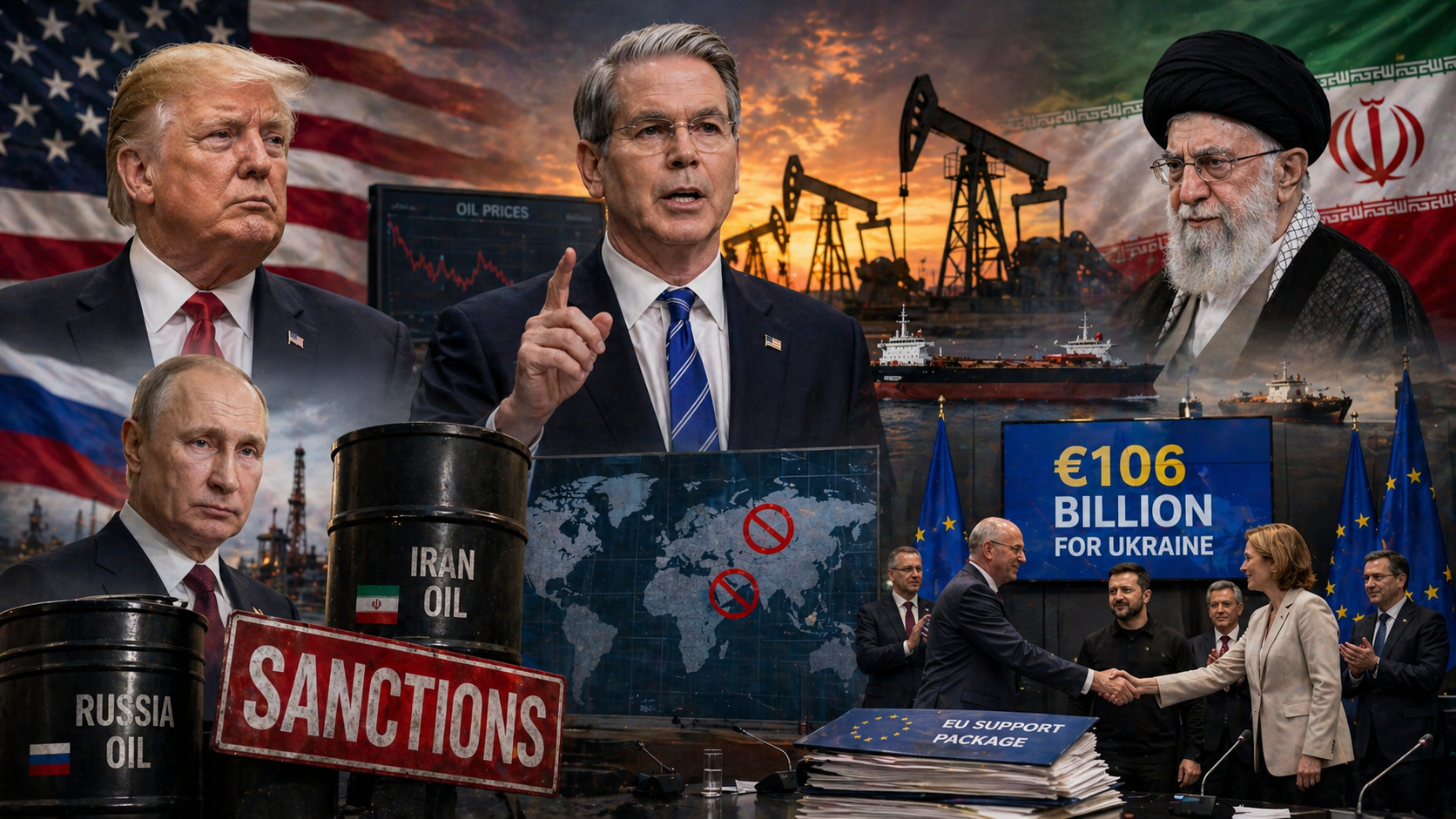
The US refuses to ease sanctions against Russia and Iran, which means a return to a tougher economic strategy. Negotiations with Tehran are accompanied by mutual conditions and setbacks, which complicates the prospects for a quick agreement. At the same time, the EU shows unity by agreeing on a significant financial package for Ukraine after internal disputes. All this indicates a difficult balance between pressure and finding compromises in international politics.
US will not extend exemptions for Russian and Iranian oil - Bessant
US Treasury Secretary Scott Bessant said, that Washington does not plan to renew exemptions from sanctions that allowed trade in Russian and Iranian oil. According to him, these relaxations were temporary and aimed at stabilizing energy markets during a period of sharp price increases.
“We have a blockade (on Iran – ed.), and the oil is not coming in… We believe that in the next two or three days they will have to start shutting down production,” said Bessent.
He explained that the exceptions were granted, in particular, to support the poorest countries that have suffered from the energy crisis. However, according to the assessment of the American side, the need to continue these measures is decreasing.
“I do not think that we will have another extension,” the minister added. This decision means a return to a tougher sanctions regime against the energy sector of Russia and Iran.
Trump said that Iran is preparing a new proposal for the US
US President Donald Trump also reported, that Iran is preparing a proposal for Washington on the eve of a new round of negotiations. According to him, the parties may soon return to dialogue in Islamabad.
“They will make an offer, and we will see,” Trump said during an interview.
The American president stressed that any agreement must include Iran's refusal to enrich uranium and guarantees of safe passage of oil tankers through the Strait of Hormuz. At the same time, he refrained from giving details about the terms of the negotiations and possible compromises. US special envoy Steve Witkoff and adviser Jared Kushner plan to travel to Pakistan to participate in the negotiations.
Iran refuses negotiations under US pressure
Iran said it is unwilling to negotiate with the US under conditions that it considers coercive. Iranian President Masoud Pezeshkian stressed that dialogue is impossible under political and economic pressure. According to him, Washington's actions undermine trust and complicate any diplomatic prospects.
Tehran demands the lifting of the blockade and the removal of obstacles to shipping as a prerequisite for the resumption of negotiations. Despite this, the Iranian delegation still participated in consultations in the region, in particular in Pakistan and Oman. At the same time, the American side at the last moment refused to participate in some of the meetings. This further complicated the negotiation process.
The United States confirmed its tough position on sanctions on Russian oil
US Treasury Secretary Scott Bessant re emphasized, that exemptions from sanctions on Russian oil would not be extended. He stressed that previous relaxations were temporary and had already lost their relevance.
“I think that the Russian oil that is on the water has been largely exhausted,” he said.
According to Bessant, the decision on exemptions was related to the need to support the most vulnerable countries. However, now the United States is returning to a tougher sanctions policy. This is happening against the backdrop of a tense situation on energy markets and geopolitical instability. Washington is signaling its readiness to increase pressure on Russia and Iran.
EU agrees $106 billion aid package for Ukraine
The European Union has approved a massive €90 billion financial aid package for Ukraine after Hungary lifted its veto. The decision was made possible after the resumption of oil supplies through a key pipeline to Hungary and Slovakia. The funds are to go to support Ukraine’s economy and strengthen its defense capabilities.
European Council President António Costa said: “Promised, delivered, implemented,” emphasizing the fulfillment of the EU’s commitments. Ukrainian President Volodymyr Zelensky thanked partners and stressed that the funding would help strengthen the army and increase production. The funds are expected to start flowing in the coming months. The package is also accompanied by new sanctions against Russia.
Photo: AI-generated
Author: Danylo Pievchev