


Paris is becoming a key platform for coordinating the positions of the US and European partners on ending the war launched by Russia against Ukraine. At the same time, Moscow is responding to diplomatic activity with a show of force - Ukraine is once again suffering from hypersonic missiles and massive strikes on the energy sector. Against this background, the question is becoming increasingly clear: will diplomacy be able to outrun the escalation?
Consultations in Paris: Umerov reported on intensive dialogue with the US
The Ukrainian and American delegations in Paris discussed in detail the key elements of the basic framework for ending the war. This was also reported by the Secretary of the National Security and Defense Council Rustem Umerov, noting that the negotiations are substantive and systemic in nature. Special attention was paid to the formats of further contacts at the level of leaders with the participation of Ukraine, European partners and the US. According to him, the consultations are taking place in a tight mode and have already become the third in two days.
On the American side, the negotiations were attended by US President's Special Representative Steve Witkoff, Ambassador Charles Kushner, Jared Kushner and representatives of the White House. The Ukrainian delegation, in addition to Umerov, was represented by the heads of key defense and diplomatic structures of the state. Based on the results of the meetings, the Ukrainian side is preparing a detailed report to President Volodymyr Zelensky. The NSDC emphasizes that these consultations are part of a broader process of coordinating the international position on ending the war.
Trump: “My morality is the only limit to presidential power”
US President Donald Trump stated that his powers as commander in chief are limited only by his own moral convictions, and not by international law or international agreements. In an interview with The New York Times he said bluntly:
“Yes, there is one thing. My own morality. My own mind. This is the only thing that can stop me.”
Trump stressed that he did not consider international law to be a determining factor in the use of military force, adding that he “does not need international law” and that he “does not seek to harm people.” At the same time, he stated that it is he who decides when and how international norms should be applied to the United States.
In the conversation, the president emphasized that the strength of the state, not treaties or conventions, should be decisive in world politics. He openly acknowledged the use of unpredictability and the threat of force as a tool for pressure on other countries, citing the examples of Iran, Venezuela and Greenland. Trump also stated that the ownership of territories, in particular Greenland, is “psychologically necessary for success,” noting:
“Ownership gives you something that you cannot get through a lease or a contract.”
In his opinion, NATO is effectively inoperative without the United States, and previous presidents have been too cautious in using American power.
The Netherlands confirmed its readiness for security guarantees for Ukraine
Dutch Prime Minister Dick Schoof said that Ukraine’s partners, together with the United States, have confirmed their readiness to make a significant contribution to security guarantees in the event of peace. He also reported this on the X social network after the meeting of the Coalition of the Willing in Paris.
According to him, the guarantees are considered not only as a consequence of the peace agreement, but also as a necessary condition for its achievement. Particular attention is paid to joint monitoring of the ceasefire and strengthening the Ukrainian army.
Schoof stressed that now it is Russia that must demonstrate its readiness for peace. He noted that the possible contribution of the Netherlands will depend on further political decisions and the development of negotiations.
“If a peace agreement is reached, the possible contribution of the Netherlands will, of course, depend on political decisions,” the statement said.
Thus, security guarantees are increasingly clearly being shaped as a shared responsibility of Ukraine’s allies.
Launch of the Oreshnik: Moscow demonstrates escalation amid diplomacy
The launch of the Oreshnik hypersonic missile was Putin's attempt to intimidate Ukraine and send a signal to the US and Europe at a critical moment in peace talks. According to experts, the strike was more demonstrative than aimed at maximum destruction.
Austrian political scientist Gerhard Mangott stated, that Moscow is irritated by being pushed out of the active phase of diplomacy between the US, Ukraine and Europe. According to him, this is "a signal to the United States and Europeans about the military capabilities of the Russian army".
The leaders of Great Britain, France and Germany called the attack "escalating and unacceptable", and the EU said that it was a clear warning to the West. Russian military bloggers also acknowledged that such launches are rare demonstrations of force, not a regular tool of war.
Massive Russian strikes on Ukraine
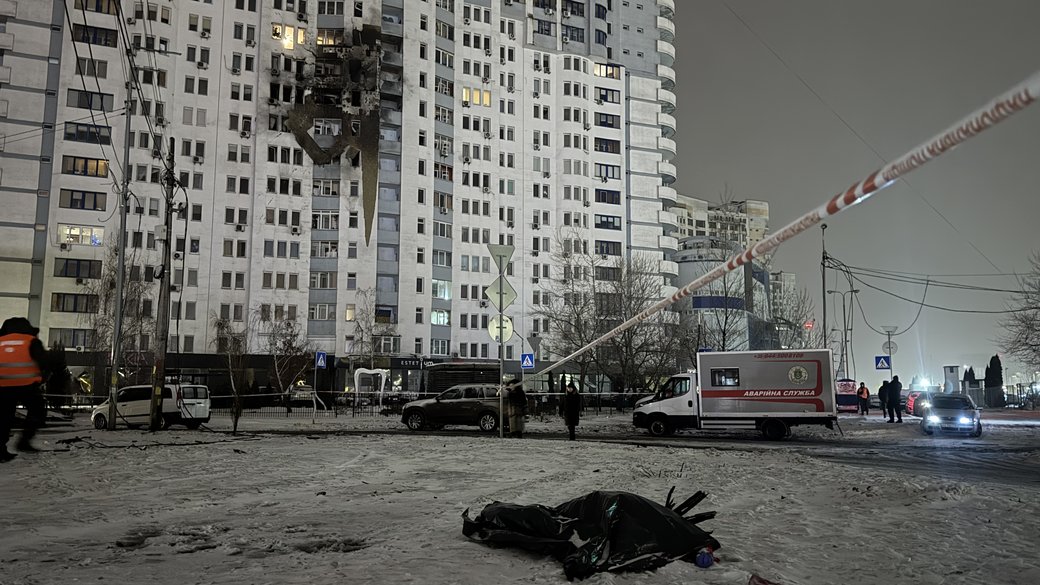
Over the week, Russia has stepped up its strikes on eastern Ukraine, focusing on the industrial cities of Dnipropetrovsk and Kherson regions. After attacks on the Dnieper River that caused widespread blackouts in the two regions, Russian forces launched a combined missile and drone strike on Kryvyi Rih. The attack on residential buildings killed one person and injured 24 others, including six children. Local authorities said it was one of the most powerful attacks on the city since the start of the full-scale war. Namely, 29 apartment buildings were damaged, more than 70,000 consumers were left without electricity, water supplies were running at reduced pressure, and large enterprises were forced to temporarily suspend production altogether.
In addition, Russia carried out a massive attack on Kyiv overnight on January 9, launching 278 targets: the capital was attacked with hundreds of mortars, Kalibr cruise missiles, and ballistic missiles from the Bryansk region. And more – the Russian Federation used hypersonic Oreshnik missiles, confirming the transition to a wider escalation of terror in the airspace of Ukraine. As a result of the attack, 25 people were injured and four died, including a medic, 32 people were rescued.
President of Ukraine Volodymyr Zelensky said, that these Russian strikes were aimed at “breaking” the country and are an attempt to use winter as a tool of war instead of diplomacy.
“This is Russia’s war against our people, against life in Ukraine,” emphasizing that Moscow is betting on strikes on the energy sector instead of working with the United States on agreements. The attacks temporarily suspended the work of large industrial enterprises, in particular ArcelorMittal and Zaporizhstal, Zelensky said.
Photo: suspilne.media
Author: Danylo Pievchev