


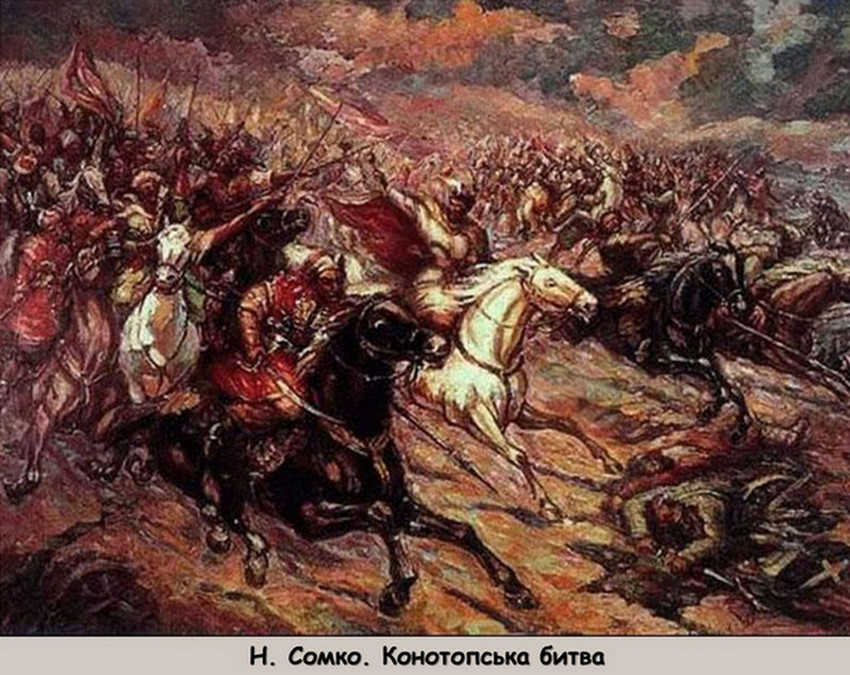
Ukrainian artist Nadiya Somko is an artist who worked in Ukraine, Europe, South and North America, and her work received recognition, including in the USA.
This was reported by uain.press.
Ukrainian artist, author of battle historical paintings Nadiya Somko (1916–1989) was born on January 15, 1916 in Konotop into a family of Ukrainian intellectuals. After initial education in her hometown, her first artistic success was the high appreciation of the painting “Fair”, which was acquired by the Chernihiv State Museum.
In 1934–1941, Nadiya Somko studied at the Kharkiv and later the Kyiv Art Institutes, studying painting and architecture. During this period, she witnessed tragic events in the history of Ukraine, including the famine and repressions. Before World War II, she married the artist and art critic Serhiy Makarenko. During the German occupation, the couple lived in Konotop (1941–1943), after which Nadiya Somko consciously chose to emigrate.
The artist spent almost five years in Italy, where she painted icons commissioned by Greek churches. In Yugoslavia, she decorated a Serbian church. At the same time, she paid her main attention to easel painting, creating landscapes, seascapes, and still lifes.
Later, together with her husband and son, Nadiya Somko moved to Argentina. Here, her paintings were successful, adorned the museums of Buenos Aires and private collections, and the artist herself became a member of the Argentine Association of Artists.
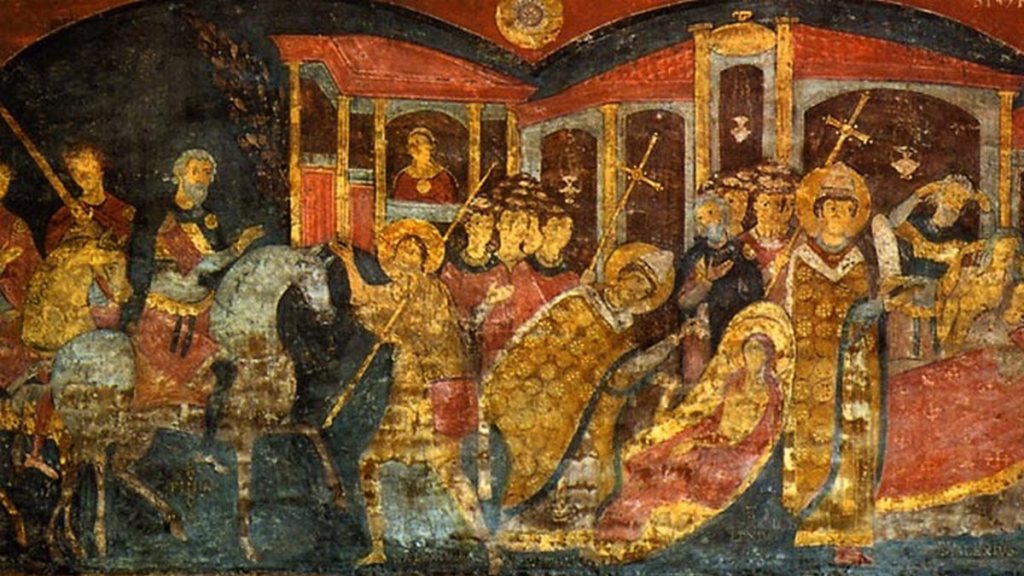
Since 1960, the family has lived in the USA. Nadiya Somko organized exhibitions in New York, Philadelphia, Boston, Cleveland and became a member of the Association of Ukrainian Artists. It was in the USA that the artist increasingly turned to monumentalism. Her architectural talent was manifested in the design of the Orthodox Autocephalous Church of the Holy Apostles Peter and Paul in the Verkhovyna settlement (1970), made in the style of Cossack Baroque. This was one of the first cases in the history of church architecture when a woman designed a church.
Nadiya Somko's work was also recognized at the highest level in the USA. She received a letter from the Reagan presidential family, which stated:
"You have done us a great favor by gifting us with your original works. We will preserve them for the future Presidential collection. Please accept our sincere gratitude for your consideration. With best wishes, Nancy and Ronald Reagan."

Among Nadiya Somko's most famous works on historical themes are battle scenes and portraits of historical figures: "Hetman Ivan Mazepa in St. Sophia in Kyiv" (1958), "A Storm is Coming" (1959), "The Baptism of Ukraine-Rus" (1960), "The Battle of Konotop" (1962), "The Entry of Hetman Bohdan Khmelnytsky into Kyiv" (1964), "Anna Yaroslavna" (1965), "Sviatoslav" (1968), "Defense of the Shrine" (1965), "Prince Oleg near Constantinople" (1965), "The Courtship of Anna Yaroslavna" (1965), "I'm Coming to You" (1966), "A Feast in Ancient Kyiv" (1966), "Taras Bulba with His Sons on the Sich" (1970).

Among the works created in the USA are the painting “Glory to the Victors”, dedicated to the victory of the American Revolution in 1776, as well as portraits of Hollywood actors of Ukrainian origin Jack Palance and Michael Mazurka. Critics consider “The Battle of Konotop” to be the artist’s most outstanding work.
The exact date of Nadiya Somko’s death remains unknown: according to some studies, she died in 1989, according to others, in 1997. There is also no information in the reference books about the place of her burial.
At the same time, the artist left behind a significant creative output in three areas – painting, sculpture and architecture. Her works are kept in museums and collections in various countries and are an important part of Ukrainian cultural heritage abroad.
Photo: https://news.blog.net.ua, uain.press

Author: Danylo Pievchev