


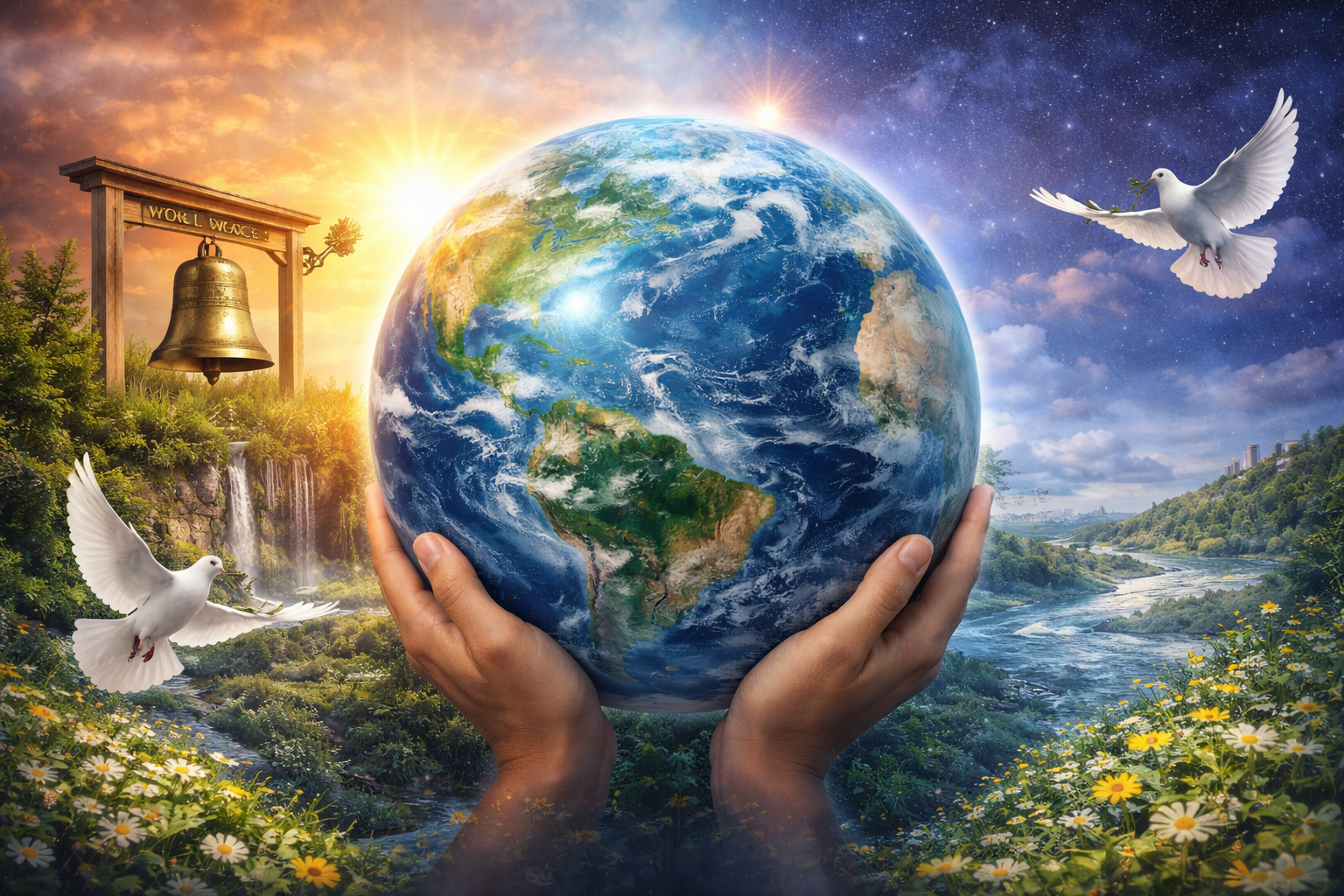
Tomorrow, March 20, on the day of the spring equinox—when the length of night equals the length of day—we will mark Earth Day.
What is the Earth for each of us? It is that small piece of land where we were born, which over time, as we grow older, expands to a region, a country, a continent, and eventually to the boundless horizons of land, seas, and oceans. By our standards, this enormous sphere flies and rotates through space; by the standards of the Universe, it is a tiny grain among billions—yet unique in its kind.
Scientists say that the probability of finding a similar planet is close to zero: it is not a закономірність but rather a kind of anomaly—an unimaginable “glitch” in the development of the Universe. Be that as it may, it is precisely this uniqueness that makes our existence possible. The Earth is the cradle of life, civilization, and culture—it is our home. And how we treat it determines its condition, its safety, and ultimately our own lives.
Today, many problems have accumulated in this home. Among the main ones are climate change, environmental pollution, resource depletion, ecosystem destruction, the demographic crisis, and the food problem. These challenges require the collective efforts of all humanity.
Unfortunately, short-sighted and limited politicians—especially autocrats and the governments they lead—fail to grasp the scale of these challenges or ignore the need for systemic solutions. That is why it is so important to remind ourselves of them again and again.
Environmental Problems
- Climate change and global warming. Greenhouse gas emissions are leading to melting glaciers, rising sea levels, and extreme weather events.
- Environmental pollution:
- in the atmosphere—smog, acid rain, ozone depletion, increased levels of sulfur, nitrogen, and carbon oxides;
- in the hydrosphere—pollution by plastics, oil products, and wastewater;
- in the lithosphere—soil contamination, waste accumulation, and erosion.
All of this leads to biodiversity loss and the extinction of animal and plant species due to the destruction of their natural habitats.
Deforestation destroys the “lungs of the planet” and accelerates climate change.
Many countries face shortages of drinking water, as well as the depletion of fossil fuels and mineral resources.
Socio-Economic Problems
- Demographic. Rapid population growth in developing countries and population aging in developed countries.
- Food. Poverty and hunger in many regions of the world despite overall sufficient food production.
- War and peace. Nuclear threats, local ethnic and political conflicts, terrorism.
- Energy. The need to transition from fossil fuels to renewable energy sources.
All these problems are closely interconnected. For example, air pollution leads to climate change, which causes water shortages that, in turn, can provoke social conflicts.
Over the course of its existence—especially in recent decades—humanity has accumulated the knowledge and experience necessary to address these problems. The key is to have the will to act and the understanding that what is not done today will be much harder to accomplish tomorrow. The lives of future generations and the fate of the planet depend on it.
The Peace Bell
On Earth Day, the Peace Bell traditionally rings in different countries, calling on people to feel unity and responsibility for the planet, and to make efforts to preserve the peace and beauty of our shared home. The Peace Bell is a symbol of calm, peaceful life, friendship, and solidarity among nations. At the same time, it is a call to action in the name of preserving peace and life on Earth, as well as humanity and culture.
The first Peace Bell was installed at the United Nations headquarters in New York in 1954. It was cast from coins donated by children from all continents and symbolizes global unity. Orders, medals, and other honors from people of different countries were also melted into it. The inscription on the Bell reads: “Long live absolute peace in the world.”
This motto is especially relevant today—in a time of wars in different parts of the world, including in Ukraine, Iran, and the lands of Jews and Arabs. Whatever the causes of these conflicts, they bring grief, death, and destruction, and harm our planet. They must be stopped.
Hope
At the beginning of this article, I noted that Earth Day coincides with the spring equinox. From this moment on, day begins to prevail over night. Allegorically, this means that light and warmth overcome darkness and cold—that good triumphs over evil. This is my personal hope. A hope that my homeland, Ukraine, will endure and overcome the quagmire—the swamp—of Russia. That the universal evil which today destroys progressive life will be stopped. That for tears and blood, for devastated lands and shattered human destinies, there will be accountability. And it is precisely this faith—in life, in renewal, in victory—that Earth Day instills in us.
Author: Myroslav Grekh