


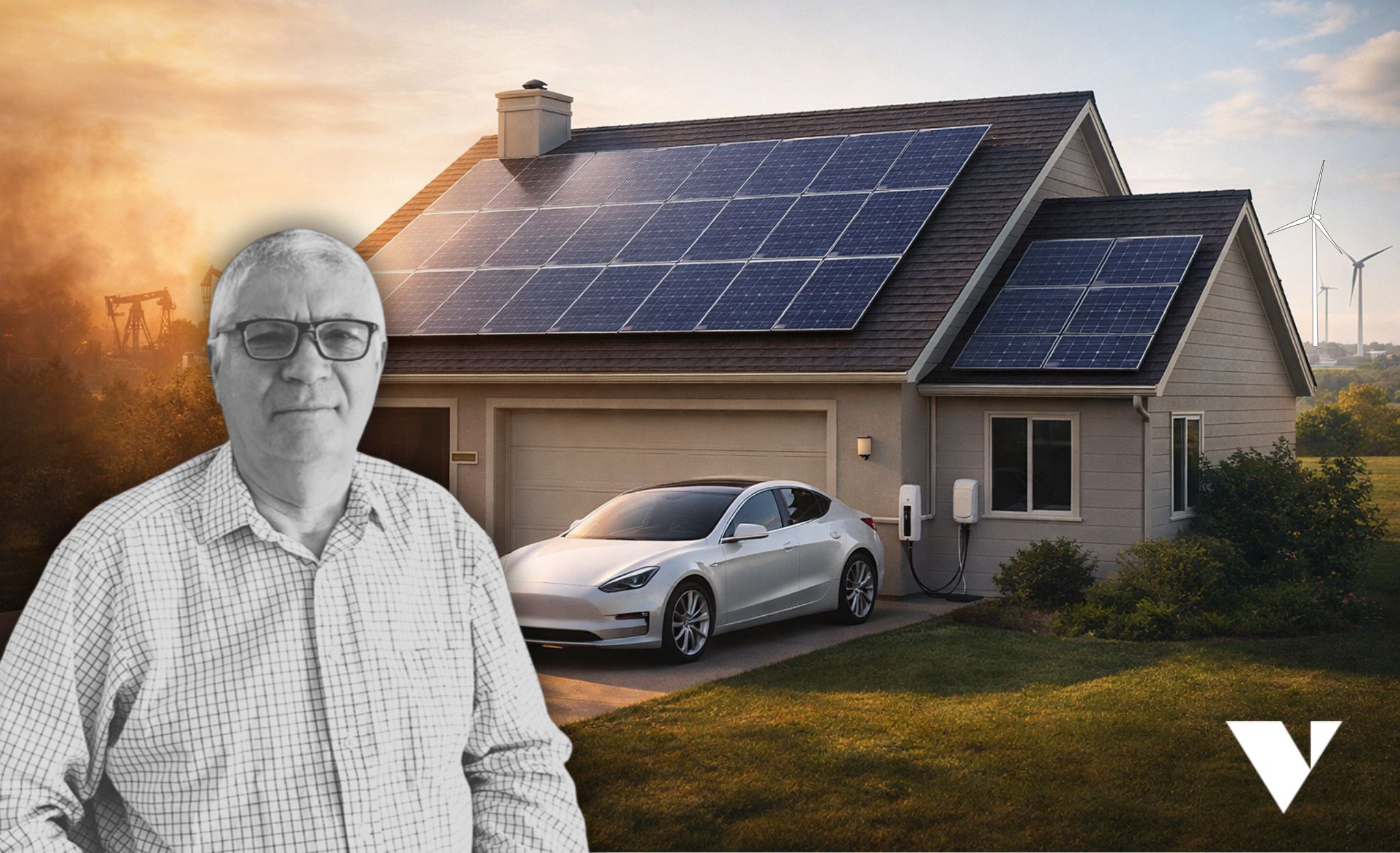
My close relatives who live in Florida own two Tesla electric cars, a charging station in their garage, solar panels on their roof, and an electric stove in their kitchen. The sun generates electricity through the solar panels, which power the cars, the stove, and other household needs, while any excess energy is either stored or fed back into the grid for other consumers.
They do not need gasoline, diesel, or gas—no fossil fuels at all. This is both environmentally friendly and financially beneficial. Moreover, driving an electric vehicle is simpler than driving a gasoline or diesel one, it requires less maintenance, and breaks down less often. I would call this model of energy use the model of the future.
Imagine if even 50% of all U.S. residents switched to such a system. How much would the demand for oil, gas, and their refined products decrease? And what if this happened worldwide? The environment would improve dramatically, and approaches in economics, science, culture, and politics would change. The world would transform, along with human consciousness and behavior. There would be no need to develop and exploit resource deposits—or to fight wars over them.
Science fiction? Perhaps it seems that way now. But in time, in the future… the hands of the clock keep moving, bringing us closer to it.
As of 2025, the largest proven oil reserves (in million barrels) are held by:
- Venezuela – 303,008 (17.2%)
- Saudi Arabia – 267,230 (15.1%)
- Iran – 208,600 (11.8%)
- Canada – 163,108 (9.2%)
- Iraq – 145,019 (8.2%)
- UAE – 113,000 (6.4%)
- Kuwait – 101,500 (5.8%)
Other countries hold less than 5% each, including the United States and Russia. Ukraine ranks 50th with 395 (0.02%).
It becomes clear why Donald Trump sought influence over Venezuela and Canada—considering the volumes of oil that could fall under his control and add to his “ledger of victories.”
According to scientists, at the consumption levels of 2024, proven oil reserves will last approximately 47 years. Given that consumption is increasing each year, this period may shrink to 45 or even 40 years. What comes next?
The answer is a transition to alternative, more environmentally friendly energy sources: solar, wind, and nuclear. Perhaps new types of clean energy will also emerge—ones we cannot yet imagine today.
At present, this is not in trend, largely due to the short-sightedness of the current U.S. administration and its leadership, similar to many autocratic regimes, where short-term gains outweigh long-term vision, and maintaining power is the primary goal. But this is temporary—the situation will inevitably change.
From the invention of fire to our “nuclear” age, humanity has always needed energy—for peaceful existence and for war, for cooking and heating homes, for transportation: cars, trains, airplanes, ships, and submarines.
For the most part, this energy has been obtained through burning wood, coal, natural gas, gasoline, diesel, and kerosene. The side effect has been environmental pollution and global ecological problems: melting glaciers, ozone depletion, shrinking tropical regions, and more.
Can all of this be replaced by electricity? To a large extent—yes, but not completely. For now, there are no fully developed electric aircraft or large surface vessels (although nuclear submarines exist). I emphasize—for now. Over time, such technologies will emerge in one form or another, in environmentally friendly ways.
It is worth giving credit to innovator and inventor Elon Musk—thanks to the efforts of his company, electricity has become a practical and viable source of propulsion for cars. He has developed and is implementing electric trucks, which will eventually become part of everyday life.
The energy used by humanity originates from the Sun. It is the foundation of life on Earth, shaping climate and weather. Approximately 174 petawatts of solar energy reach Earth’s atmosphere continuously (1 petawatt = 1 trillion kilowatts). Some of this energy is absorbed by the atmosphere (16%), some is reflected (6%), and the rest reaches the Earth’s surface—soil, water, and vegetation. When a sunbeam hits a green leaf, it triggers photosynthesis, converting it into chemical energy stored as biomass. Over time, this biomass can transform into fossil fuels—coal, oil, and gas.
During photosynthesis, carbon dioxide is absorbed by plants, while oxygen is released—essential for all living organisms and for combustion processes. Solar thermal energy is also used in heating systems and power plants. This underscores the central role of solar energy in the biosphere.
Today, the term “green economy” has become widespread—an approach in which the economy is viewed as a dependent component of the natural environment. One of its key elements is renewable energy—energy derived from sources that replenish naturally: solar, wind, water, biomass, geothermal energy, waves and tides, and hydrogen. This is complemented by safe nuclear energy and potentially new technologies of the future
Despite the continued dominance of traditional energy sources, renewables are rapidly gaining momentum. For example, in 2024, their share in global electricity generation reached about 30%. In some countries, such as Germany, it already exceeds 50%.
It can be confidently stated: green energy, renewable energy—these are the attributes of the future. Only those who think short-term or act out of self-interest fail to see this. But the world is changing.
I am confident that the time will come when humanity will do everything possible to leave environmental pollution in the past. And even if not me, my children, grandchildren, and their descendants will live in a clean, free, and safe world.
Author: Myroslav Grekh
