


In Washington, DC, Ukraine House became a platform for strategic discussions on the future of Ukraine in the conditions of full-scale war and post-war recovery within the framework of the large-scale international forum Annual Ukraine Innovation Days 3.0. The forum brought together more than 300 representatives of governments, international financial organizations, diplomatic corps, business, investors, technology companies and the academic community.
This was reported by Ukraine House in cooperation with the Embassy of Ukraine in the USA and Skyfall.
The main topics of the event were the post-war reconstruction of Ukraine, attracting private capital, "green" transformation, financial sustainability and Ukrainian security technologies.
The organizers emphasized: the main goal of Innovation Days 3.0 is to demonstrate that even during a full-scale war, Ukraine continues to create new technologies, economic models and solutions that can be useful to the whole world.
“We are not just dreaming about the future of recovery; we are building it right now thanks to green energy, urban development and the latest security solutions,” the forum organizers noted.
High level of international participation
The opening of the event was attended by the Ambassador of Ukraine to the United States Olga Stefanishyna; First Deputy Prime Minister - Minister of Economy Yulia Svyrydenko; representatives of the US Department of State; management of the EBRD, the European Investment Bank and IFC; representatives of the U.S. International Development Finance Corporation; delegates from the IMF, the World Bank, UNEP, IRENA and the European Commission.
One of the central events was the announcement by DIGITALEUROPE CEO Cecilia Bonefeld-Dahl of the launch of a new international initiative - the Transatlantic Dual-Use Technology Award. The initiative is designed to support companies from Ukraine, the US and the EU that create dual-use technologies for defense, cybersecurity and reconstruction of Ukraine.
“This program builds a bridge across the Atlantic so that the next generation of technologies can serve the cause of freedom,” the forum participants emphasized.
Rebuilding Ukraine: New Cities and a New Economy
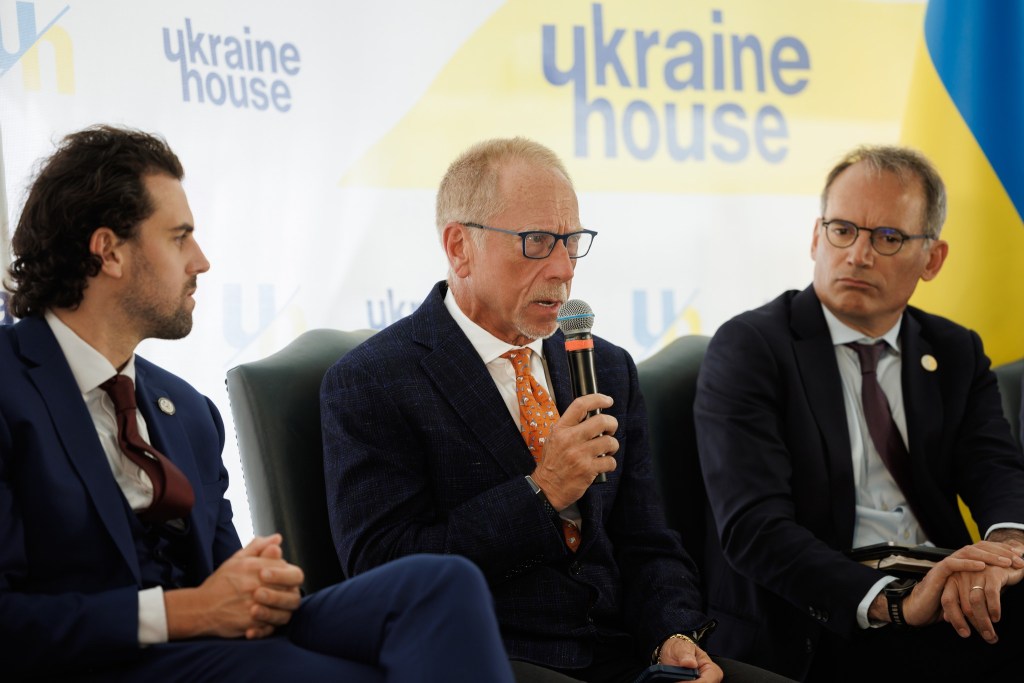
One of the key blocks of discussion was the topic of urban planning and community recovery. According to the World Bank Group, Ukraine’s reconstruction needs already exceed $588 billion.
Advisor to the President of Ukraine on Reconstruction and Investments Oksana Markarova presented the concept of New City – a high-tech, ecological and inclusive city for 100 thousand residents. The project involves the use of “green” energy; new generation digital services; integration of European standards; creation of a comfortable environment for business and migrants.
“The key goal is to design such cities as “living labs” for European integration,” Markarova noted.
Italy's Special Representative Davide La Cecilia emphasized that the reconstruction of Ukraine must combine modern solutions with the preservation of the historical identity of cities.
In turn, the representative of the Norwegian Foreign Ministry, Christian Suese, emphasized that large-scale investments require legal guarantees and risk insurance mechanisms, in particular through MIGA and the EBRD.
"We cannot wait for the end of the war to start healing our cities," was the main message of the panel.
Private capital as an engine of reconstruction
A separate discussion was devoted to the mobilization of private investment. The participants of the panel "Mobilizing Private Capital to Finance Reconstruction and Recovery" stated that it is the private sector that should become the main engine of Ukraine's economic recovery.
Deputy Minister of Economy Yegor Perelygin emphasized that the state is creating a basic "safety net", but the speed and scale of reconstruction will depend on private business.
IFC Vice President Alfonso Garcia Mora said that private capital could cover up to 40% of the cost of Ukraine’s reconstruction.
“Invest now to be part of the transformation,” he urged.
Connor Coleman of the U.S. International Development Finance Corporation called the U.S.-Ukraine Reconstruction Investment Fund a “beacon of stability” for investors.
Former Indiana Governor Eric Holcomb stressed that speed of decision-making, predictability, and stability are critical for business.
Aspect Energy CEO Alex Cranberg said that Ukraine has the potential to become a new energy hub for Europe thanks to its vast oil and gas reserves.

Ukraine’s “green economic miracle”
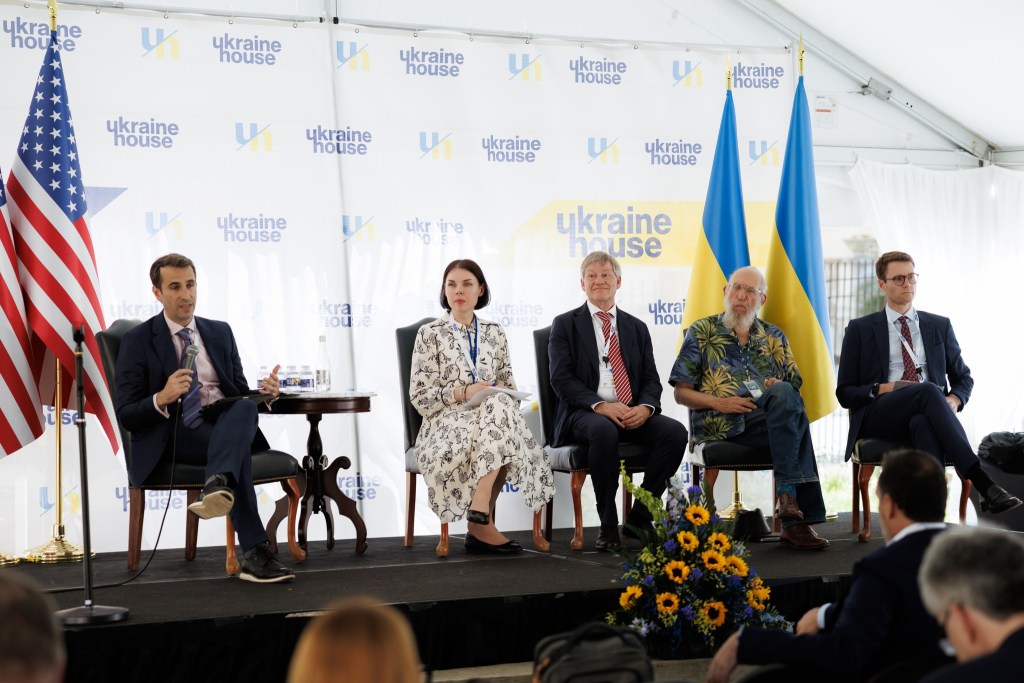
The forum paid significant attention to Ukraine’s environmental transformation. Representatives of the World Bank, UNEP, the German government, and IRENA discussed the prospects for the development of decentralized energy and “green” modernization.
Participants in the Green Recovery discussion said that post-war reconstruction should be a chance to create a new model of economy – decentralized, ecological and high-tech.
Deputy Minister of Environment of Ukraine Daryna Marchak emphasized that solar and wind energy are the fastest way to overcome the energy deficit.
German government representative Jürgen Kainhorst stressed the need to build modern green infrastructure in accordance with EU standards.
World Bank Senior Economist Florian Blum said that Ukraine has a chance to modernize its economy faster than many other European countries.
George Washington University Professor Scott Sklar predicted that the future belongs to local “self-healing” energy grids, and Ukraine can become a leader in this transition.
IRENA Director General Francesco La Camera noted that Ukraine has the potential to produce up to 188 GW of solar energy and become a major exporter of “green” electricity to Europe.
“Build Back Better means not restoring old dirty industries, but creating a new high-tech future,” the participants of the discussion emphasized.
Financial stability and EU support
One of the forum panels was also dedicated to Ukraine’s financial stability and international support.
EU Enlargement Commissioner Marta Cos stressed that EU assistance to Ukraine is not only financial support, but also an investment in common European values. She noted that the upcoming €90 billion in aid should create the conditions for a new Ukrainian “economic miracle”.
Finance Minister Serhiy Marchenko reported that the defense industry has become one of the main drivers of Ukraine’s economic growth, with the expected output reaching $55 billion.
Head of the IMF mission to Ukraine Gavin Gray stressed that Ukraine was able to avoid scenarios of hyperinflation and banking collapse, despite a full-scale war.
Technology, culture and international solidarity
In parallel with the panel discussions, the forum hosted thematic exhibitions. Among them were the Skyfall Drone Expo, dedicated to Ukrainian defense technologies, and the UNEP exhibition “Ukraine: War on the Environment”, which demonstrates the environmental consequences of the war. The cultural project "Capital K" by The Ukrainians Media was also presented, symbolically connecting Kyiv and Washington.
The organizers emphasized: Innovation Days 3.0 became not only a platform for discussing the future of Ukraine, but also a demonstration that the country is already forming a new model of security, innovation, and economic development for the entire democratic world.
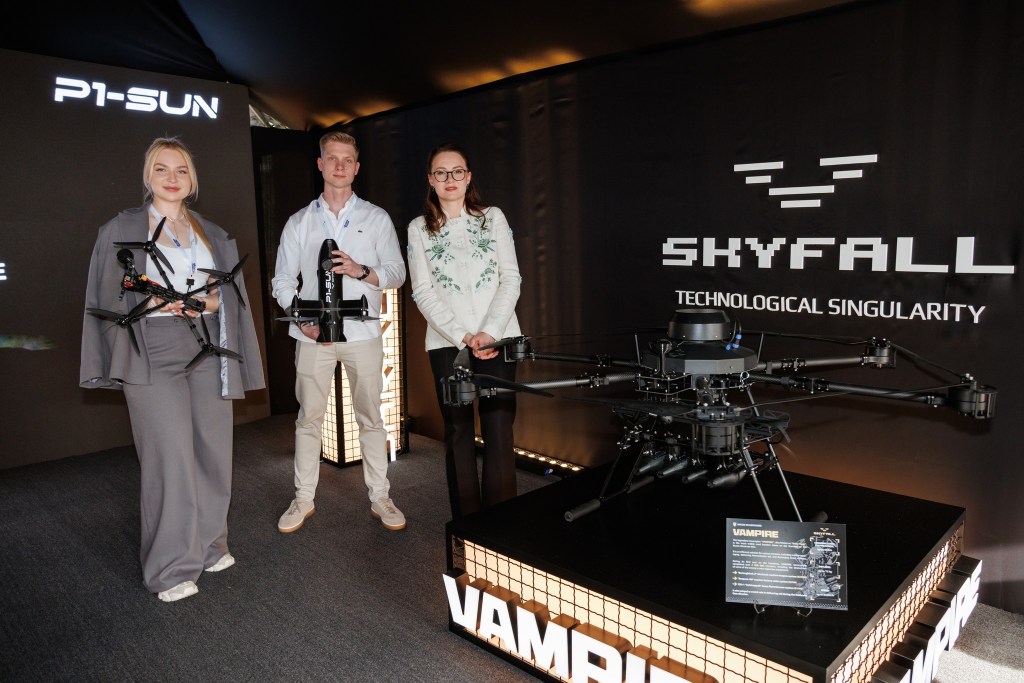
Photo: Ukraine House
Author: Inna Mikhno