


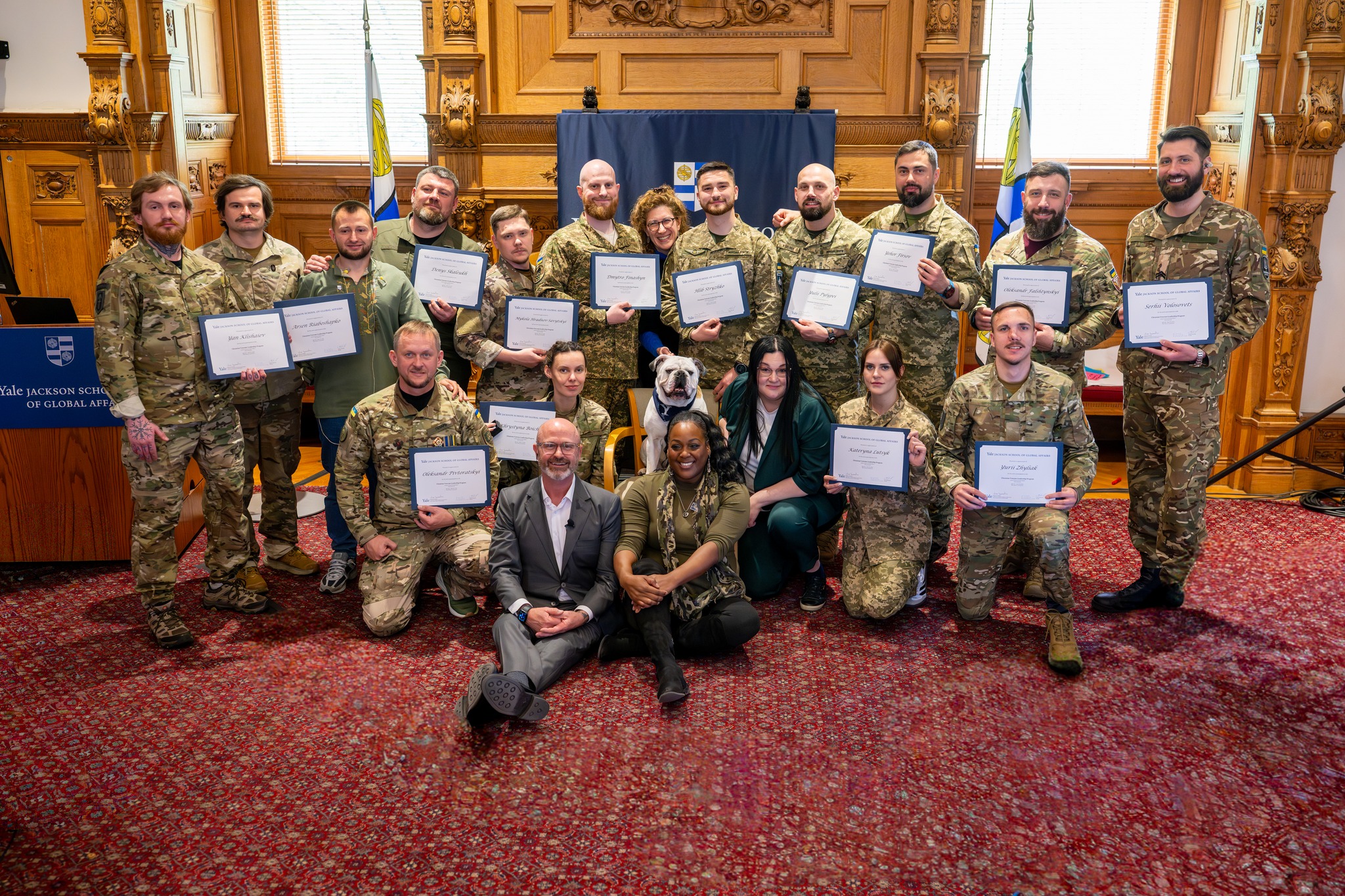
The Ukrainian Veterans Leadership Program (UVLP) pilot program has concluded at Yale University in New Haven, Connecticut. Over the course of five days, Ukrainian veterans and service members learned strategic thinking, international security, leadership, and crisis management from leading Yale faculty and experts.
This was reported by the Yale Ukrainian Program, Yale Jackson School of Global Affairs, the Victor Pinchuk Foundation and program participants.
The program reportedly included 15 Ukrainian veterans and service members. The group included a Marine who defended Mariupol and survived two and a half years of Russian captivity; a former film director who became a drone operator; a medic who saved more than 200 lives; and a 24-year-old double amputee who is still in service and at the same time heads a veterans' public organization. The training was held as part of a pilot set and lasted several days, covering key topics of international security, strategic thinking, crisis management and decision-making under uncertainty.
The participants worked on the topics of international security, global challenges, Ukraine's role in the world and the transformation of the modern security architecture.
"The world is becoming faster, tougher and less predictable. The Ukrainian experience of war, resilience and leadership today is important not only for us, but also for the international community," said program participant Khrystyna Boychuk.
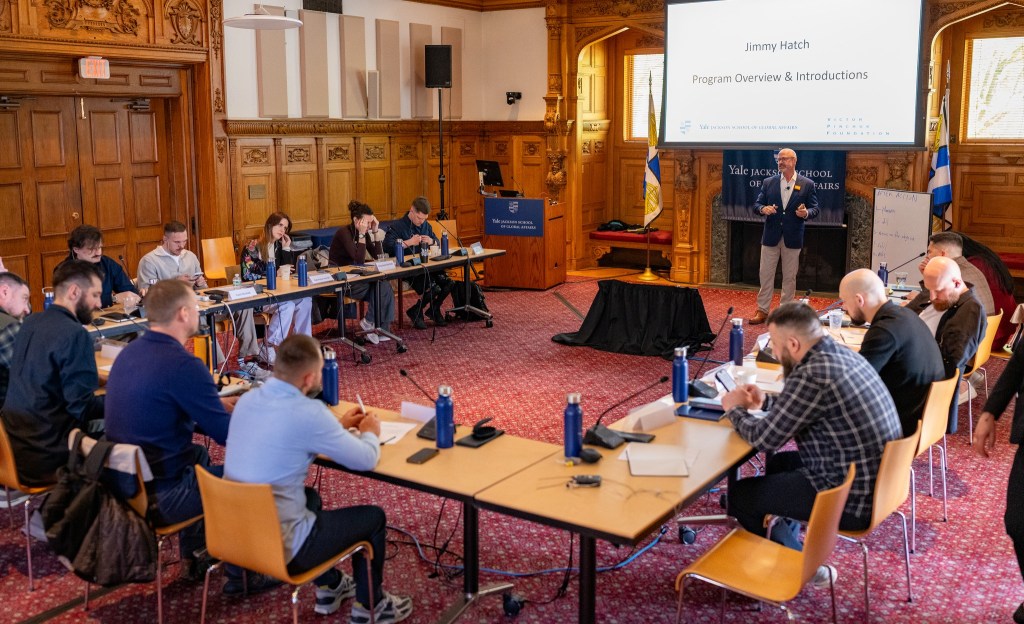
It is also emphasized that an important part of the program was communication with American students, during which Ukrainian veterans shared their own war experience, as well as discussed issues of identity, language and Ukraine's place in the world. The Yale Ukrainian Program stressed, that for Yale students, communicating with Ukrainian veterans was a unique experience.
“It was a real privilege to speak, listen, and spend time in Ukrainian with those who survived the war and continue to define its meaning,” the organizers noted.
Yale paid special attention to the topic of the Ukrainian language and veterans’ self-identification. They emphasized that many program participants grew up speaking Russian, but today they are consciously switching to Ukrainian.
“Not out of convenience, but as a statement of identity, loyalty, and self-determination. Language here is not neutral. It is part of the struggle,” the Yale Ukrainian Program emphasized, urging its own students to join Ukrainian language and culture courses as a way to better understand modern global processes.
One of the program participants was Dmytro Finashyn – Hero of Ukraine, former sniper and intelligence officer, NGU veteran, and advisor to the Minister of Internal Affairs on veteran policy. For him, UVLP became an opportunity to rethink the role of a leader in society.
“For me, this program is primarily about thinking: about expanding the horizons of perception and a deeper understanding of who a leader is and what responsibility he bears to his environment,” Finashyn noted.
He emphasized that he seeks to influence not only his immediate environment, but also society and the state as a whole.
“I want my work to have a real impact on society and our country. And over time, perhaps on the world,” the veteran added.
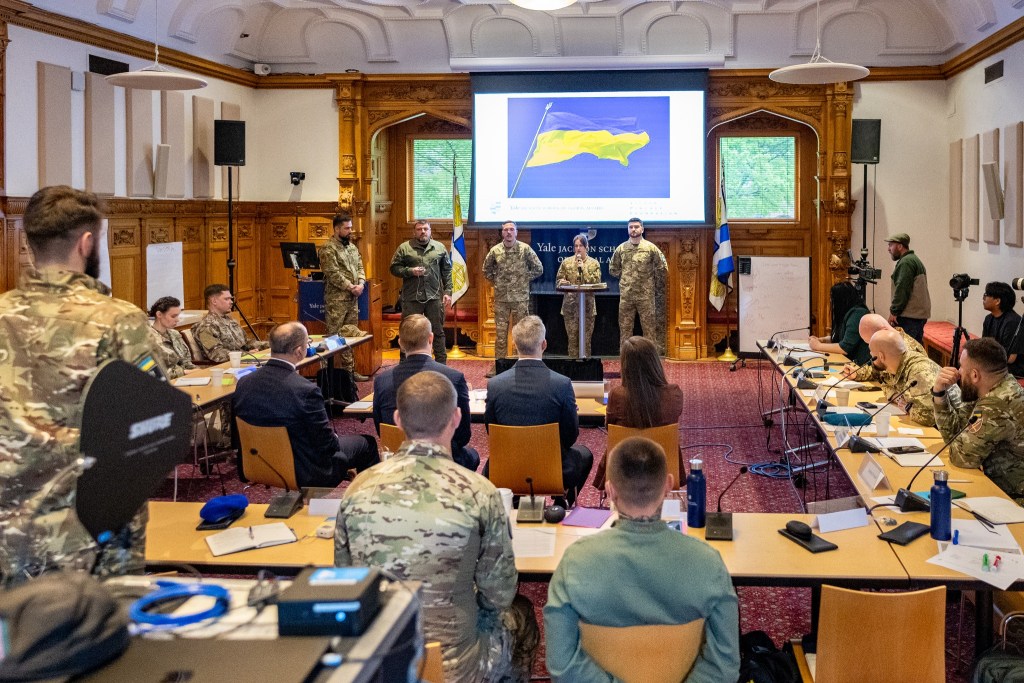
According to the program became not only an educational experience, but also an opportunity to rethink one’s own role in the post-war development of Ukraine, responsibility to society, and the potential for influence at the international level.
Thus, the veteran of the Ukrainian Armed Forces, Denis Skaleukh, noted: “I now consider my life as a chance for an additional life. Accordingly, I do everything to make the most of this chance.”
Serhiy Volosovets from NSU emphasized: “I am not getting a profession here now, but developing myself.”
Yan Klishayev from the 3rd Assault Brigade emphasized: “To improve the lives of veterans and your country, you need to be honest with yourself.”
And veteran Yuriy Zhylyak said that he is given strength by his comrades and the people around him.

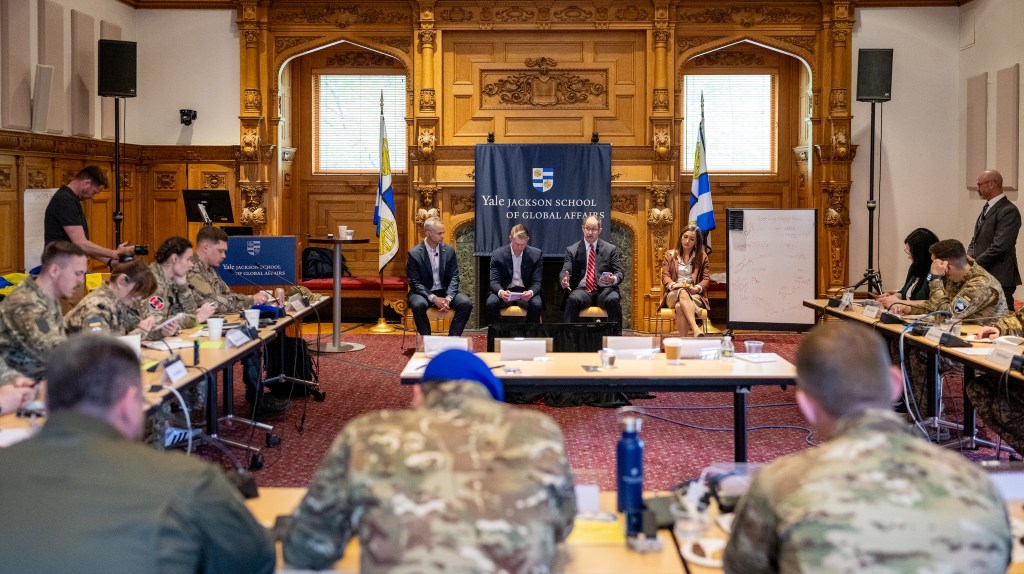
It is worth noting that every day of study at Yale School began with a minute of silence. In particular, the educational process combined lectures by leading world teachers with practical classes, interactive discussions, and modeling real scenarios. One of these formats was a mock hearing on the topic “Why the US Should Help Ukraine,” during which participants practiced their argumentation, public speaking, and strategic communication skills.

Also noted, that the veterans were worked with by renowned scholars and experts, including historian Timothy Snyder, historian Mike Brenes, international policy researchers and teachers at the Yale Jackson School of Global Affairs: Yale Jackson School Senior Fellow Robert Malley; Emma Skye and Yuval Ben-David from the Yale International Leadership Center; Yale School of Management lecturer Zoe Chance; and Yale Divinity School representative Brandon Nappi. The participants discussed the current historical moment, the transformation of the global security architecture, and possible development scenarios for Ukraine until 2050.
Special attention was paid during the training to ethical leadership, the formation of values, working with traumatic experiences, and the role of veterans in society. The participants noted that the program does not provide ready-made answers, but helps to form a broader vision, learn to ask the right questions, and make difficult decisions.
“At Yale University, you will not get answers to all your questions, but it will help you ask them correctly.” This is one of the many thoughts noted in my notebook and engraved in my head… Thorough knowledge, interesting discussions, sharp questions, honest answers, productive work – I think that these are the characteristics that aptly describe my studies. Yale University is truly an impetus for further development. Thanks to solid discipline, this stimulus will turn into thorough knowledge. And for me, this is a fantastic impetus for further transformation,” noted one of the participants, war veteran Hlib Stryzhko.
It is noted that the Ukrainian Veterans Leadership Program is implemented with the support of the Victor Pinchuk Foundation in cooperation with the Yale Jackson School of Global Affairs and is the first international program of this level, created specifically for Ukrainian veterans. The next intake of participants is planned for the end of 2026.
Photo: Yale Jackson School of Global Affairs
Author: Inna Mikhno