


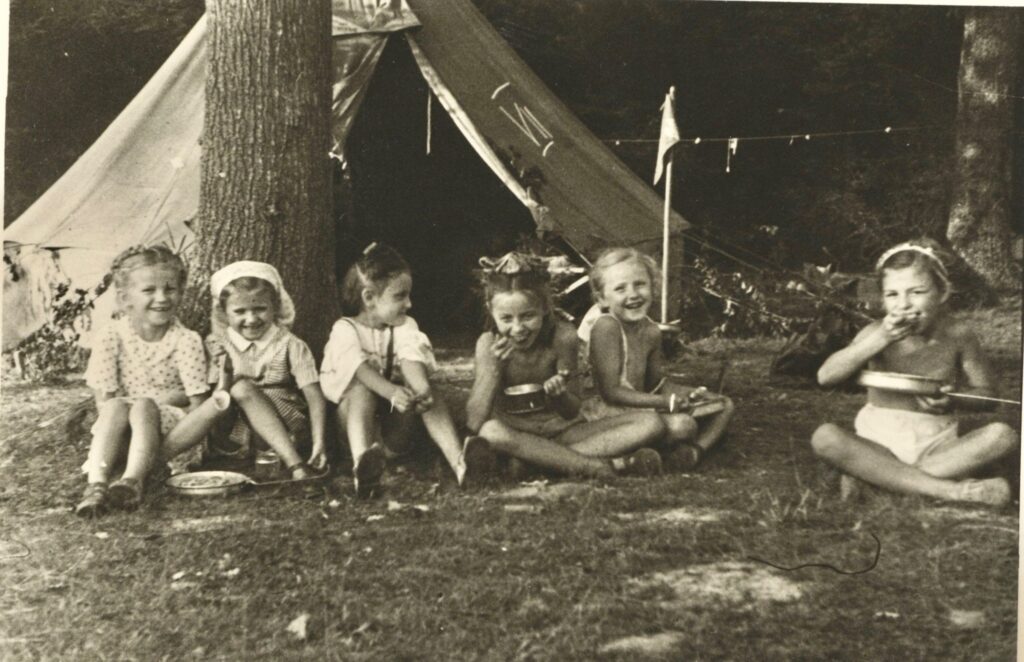
In the late 1940s, a new wave of immigrants filled the Ukrainian community of Chicago. They were mostly young families with small children. The unusual climate with high humidity, as the emigrants recalled, forced them to “take a blanket and go to sleep in Humboldt Park.” It was during this period that the idea of creating a country holiday home for children arose.
This was reported by candidate of historical sciences, Halyna Parasyuk.
The initiative to purchase land for a summer camp belonged to the cooperative society “Self-Help”, created in May 1950 to solve the problems of children and youth of Ukrainians newly arrived in Chicago. The first board of the society included representatives of the old and new emigration: S. Zaplatynsky (chairman), O. Nagornyak, I. Semʼyanchuk, M. Kryshtal, S. Kuropas, V. Kashtanyuk, M. Garasym, O. Datsko and G. Masnyk.

The chairman of the society, Stepan Zaplatynsky, owned a furniture store on Milwaukee Avenue in the west side of Chicago. Ilya Semʼyanchuk, who was among the newly arrived emigrants, had previously been the director of the “Central Union” in Lviv.
The memories of the purchase of the first holiday home near Chicago were left by the public figure Stepan Kuropas. According to him, Ilya Semʼyanchuk turned to Mykhailo Baran and Stepan Kuropas with a request to help find a suitable plot of land. They knew the Chicago area well, since they owned their own farms. The search lasted about a month.
Stepan Kuropas recalled:
“We found a house for six thousand dollars, which was equipped for recreation – it had a pavilion and a kitchen with all the equipment, convenient access to the lake and a lawn planted with luxurious oaks. However, doubts arose at the meeting regarding the purchase: “Six thousand is a large sum, where will we get it?”, “Four acres is not enough. Plast wants to go on trips, and the “Lions” want to have more land”. The chairman Ilya Semʼyanchuk also hesitated: “If it were in Tovmachi, I would not be afraid of the purchase and debt, but here it is different.”
Stepan Kuropas managed to convince the project participants. He contributed the first 300 dollars to the purchase fund and agreed with the seller to pay in installments: 3,000 dollars immediately and the rest in a year.
Yaroslav Voynarovsky was instructed to collect another 3,000 dollars. Kuropas wrote about this:
“Yaroslav Voynarovsky brought me money, mostly in one-dollar bills, a little bit of $5 and $10.
“Why didn’t they exchange it for bigger ones?” I asked.
“There was no time!” replied the enthusiast.
Thus, the planned orphanage became a center in Round Lake, where athletes stay every Sunday and on holidays and where organizations have their festivals.”
According to the Samodopomoha society, the purchase of the orphanage in Round Lake and additional land with a total area of ten acres cost $15,000.
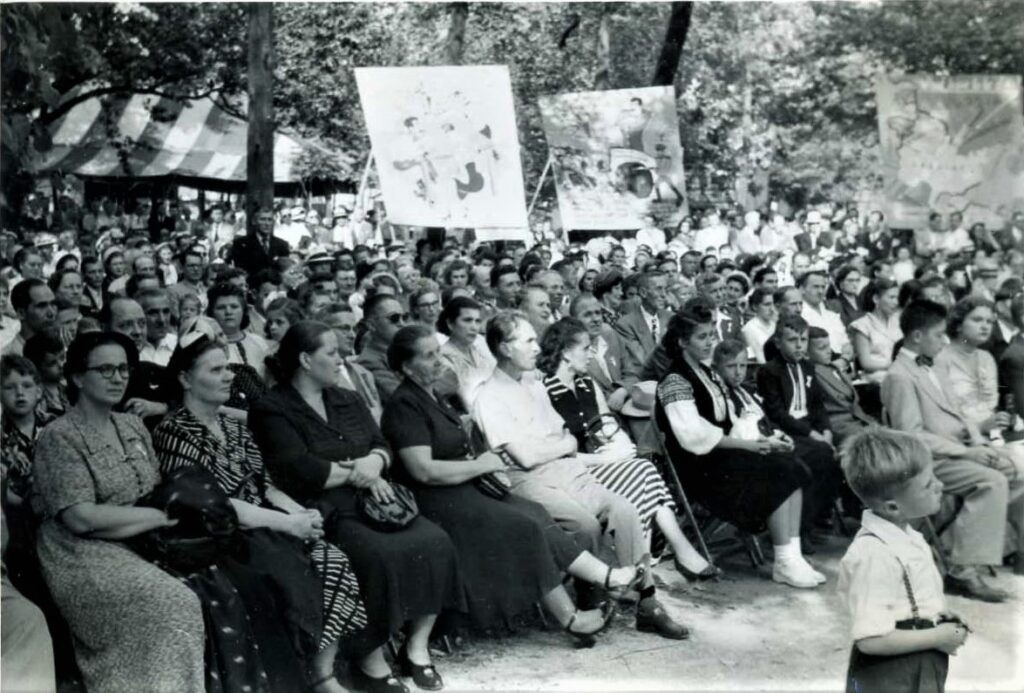
As early as 1950, children began to be brought to the orphanage for recreation. During the first summer, about 70 children rested here. Later, Round Lake became a venue for concerts, festivals, and other public events. The lake with safe swimming conditions made the orphanage a popular vacation spot for Ukrainians in Chicago.
The “Self-Help” society played an important role in the development of the shelter. Its motto was “For goodness and beauty!” The organization aimed to provide recreation and leisure for Ukrainians of all ages.
The camp for children operated during the summer. Usually, two or three shifts lasting three weeks were organized. Children aged six to fifteen were invited to participate. In some years, only two shifts were held so that the scouts could use the last month of summer.
The organizers involved educators and sports instructors, held festive events, performances, and bonfires. One of the tasks of the camp was to preserve Ukrainian national identity among the children of Ukrainian emigrants.
The magazine “Ekran” wrote about this:
“If we take into account that during the school year children are in an American environment, where they are assimilated, then Ukrainian camps, albeit for a short time, attract them to their native national atmosphere, where teachers speak to them in their native language, where they sing Ukrainian songs, where they are given patriotic education.”
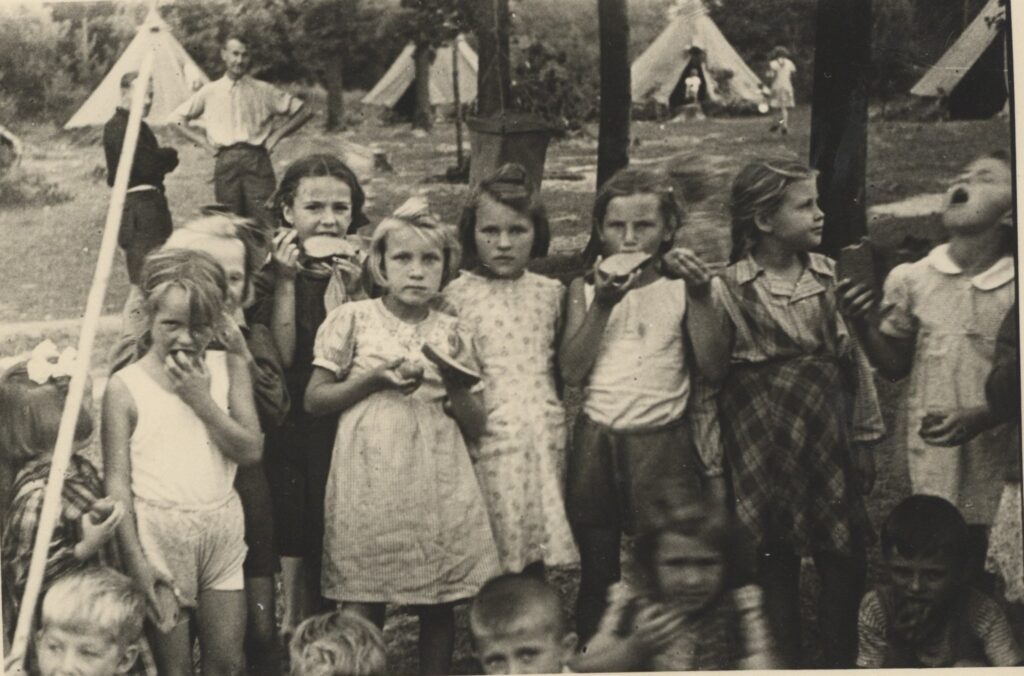
The organizers also emphasized that even children who almost did not speak Ukrainian could return to the linguistic environment during their stay in the camp.
The report on the activities of the shelter for the first shift in June 1964 indicates that 56 children were accepted for vacation at that time, who were divided into four groups. Professor Adam Antonovych was responsible for the training of the teachers. The main areas of educational work were the cultivation of the native language and maintaining order on the territory of the camp.
The camp's patron, a former Sich rifleman Antin Artymovych, organized competitions and sports events for the children. Every Saturday, during the parents' visits, bonfires and concerts were held. Young members of the ODUM sang songs to the accompaniment of the guitar, and veterans of the division performed marching songs.
Particular attention was paid to the nutrition of the vacationers. The work of the shelter was supervised by the then head of the “Self-Help” society P. Vyginny, and later by Mr. Rakush. Up to two thousand guests and vacationers could stay on the territory of the shelter every week. Volunteers helped organize the work, and doctors from the Ukrainian community provided medical support.
The end of the camp shifts was accompanied by festive events. In June 1964, the 50th anniversary of the Ukrainian Sich Riflemen was celebrated in Round Lake. Children sang “Oh, the Red Viburnum in the Meadow”, listened to a speech by the poet Roman Zavadovych about the Sich riflemen and their military path. Members of the SCH blew the trumpet in honor of the fallen riflemen, and Antin Artymovych thanked the participants of the event for honoring Ukrainian heroes. The celebration ended with a concert by the bonfire and the song “The Night is Coming…”.
The home welcomed not only children but also adults. For recreation, the “Kosiv” house and a new house built in 1963 were offered. A kitchen was open for families with children. The store could be reached by boat across Round Lake.

Swimming, athletics, volleyball, basketball, ping-pong and chess classes were organized for young people. They also held trips, fishing, tournaments and sports competitions.
To finance Round Lake’s activities, a store was opened in 1954 in the Ukrainian district of Chicago at 2208 W Chicago Avenue. Later, it was moved to a larger building at 2204–2206 W Chicago. Purchasing goods from this store allowed us to support the main sponsor of the summer camp and provide children with the opportunity to relax in nature. Scholarships were available for families who could not pay for their stay at the camp.
The store operated until the early 1990s, after which it was sold to private ownership.
In the 1950s and 1960s, Round Lake became one of the most popular vacation spots for Chicago’s Ukrainian community. This was facilitated by both its convenient location — 45 miles from the city — and its vibrant social life. On weekends, two to three thousand people would gather here, and the number of cars could reach five hundred.
Later, Ukrainian organizations began to create their own camping sites. Currently, Plast holds its events in Round Lake.
In the late 1950s, four young emigrants started a hotel business in Wisconsin Dells, about two hundred miles from Chicago. Later, in neighboring Baraboo, the Ukrainian Youth Union founded the Beskyd lodge.
Photo: Materials and photos from the archives of the Ukrainian National Museum in Chicago.
Author: Danylo Pievchev