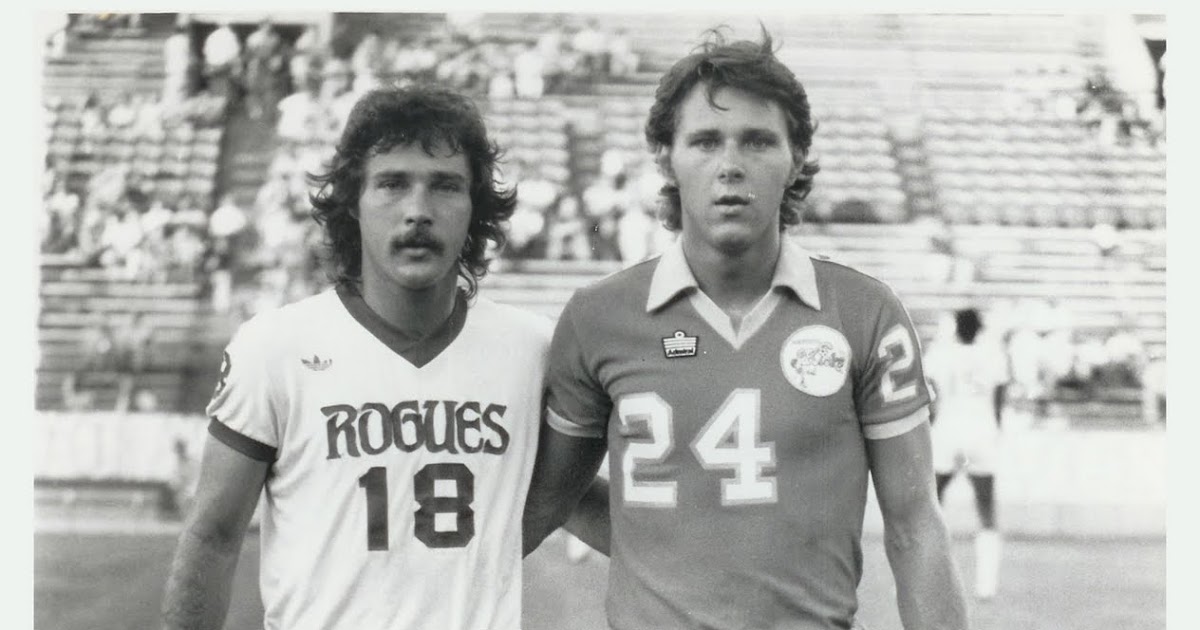
The Rosul brothers — Roman and Alex — are probably among the best-known soccer players of Ukrainian descent in the United States. Their careers and their family’s sporting traditions deserve the attention of the wider public, particularly Ukrainians around the world and, of course, Ukraine itself. After all, this is our genuine Ukrainian sports history, not the version imposed on us by occupiers for decades.
Expert Opinion on the Rosul Brothers
Ukrainian sports journalist Ihor Stelmakh, writing in the United States about the 1978 season, described the Rosul brothers as follows: “Alex and Roman Rosul — the only Ukrainian brothers in professional sports — led the group of Ukrainian soccer players competing in the NASL this year. There can be no doubt that the Minnesota Kicks and Memphis Rogues breathed a sigh of relief having these two Cleveland natives on their rosters. Both clubs showed impressive results and confident play throughout this year’s playoffs.”
Playing for different professional soccer clubs in the United States, the brothers demonstrated exceptionally confident performances that contributed greatly to their teams’ success. The author then analyzed Alex’s role: “Alex Rosul was Minnesota’s top draft choice last season, selected fifth overall among the players chosen by the league. The defender, who had previously played for Cleveland State University, made a significant contribution to his team’s successful defensive performance. Despite having no previous professional experience, 21-year-old Alex managed to earn a place in the Kicks lineup.”
Even at such a young age, Alex showed confidence on the field. Moreover, despite having no professional experience, he earned a place in the starting lineup ahead of older and more experienced players.
Regarding his older brother Roman, we find the following expert assessment: “Older brother Roman, 24, is also a graduate of Cleveland State University. He played as a forward in the Rogues’ attacking line. In one of the most eventful matches of the season, he even managed to score a rare hat trick, putting three goals past the strong San Jose Earthquakes. In the NASL, which was dominated largely by European players, Roman trained hard before establishing himself in the starting lineup and maintained a consistently high level of play throughout the year, both in attack and defense.”
Roman’s achievements were truly remarkable. Scoring three goals in a single match in the top soccer league in the United States deserves respect and demonstrates his high level of skill. It is also worth noting that Roman, like Alex, successfully withstood competition from foreign players from Europe. Another important indication of Roman’s abilities was his effectiveness both in attack and in defense.
It should be noted that during the 1978 NASL season, several other players of Ukrainian descent competed alongside the Rosul brothers: Mykola Ovcharuk, Roman Stanko, and Tony Chursky. Athletes of Ukrainian heritage truly made a major contribution to the development of soccer in the United States.
The Father’s Role in Shaping His Sons’ Athletic Careers
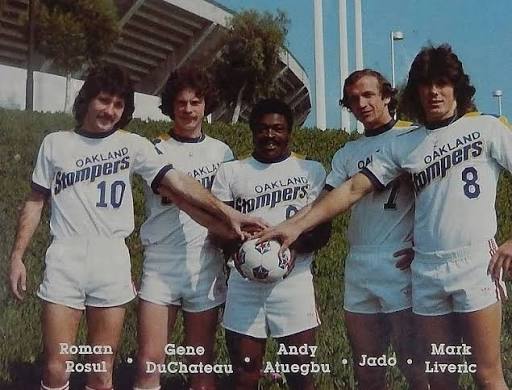
The Rosul family has remarkable sporting traditions as well as a proud Ukrainian heritage. Roman and Alex’s soccer achievements are the best-known examples of the family’s success in sports. At the same time, it is important to note that their father, Osyp, had an extraordinary influence on his sons’ sporting outlook. His role was described as follows: “Roman and Oleksandr’s professional careers in soccer were greatly influenced by their father, Osyp Rosul, a founder and later active player and longtime member of the Ukrainian American Sports Association Lviv in Cleveland. Both brothers, like their father, are members of Branch 346 of the Ukrainian National Association, which operates in association with UASA Lviv.”
The Story of the Rosul Brothers’ Development as Soccer Players
Roman and Oleksandr were developed by the Ukrainian American Sports Association Lviv in Cleveland, United States. In this article, I will recount several exceptionally interesting stories from the sporting lives of the Rosul brothers. They were passionate not only about soccer but about other sports as well. This clearly distinguished them from many other players. Their well-rounded physical development became the foundation of their successful soccer careers.
Story One. 1967: The Tournament Organizers Work Their “Magic”
In February, the finals of a winter indoor soccer tournament took place in Cleveland. UASA Lviv was represented by three teams. Roman Rosul played for Team A. In its second match — the Ukrainians had won the first 7–4 — Team A lost 2–4. Roman scored a goal in that game. As a result, two teams finished with two wins and one loss each. But in their head-to-head games, the Ukrainians had the advantage in goals scored, 9–8. This should have meant either a Ukrainian victory or another match to determine the winner.
However, the organizers decided to “play by their own rules,” perhaps because the Ukrainian teams were constantly winning and apparently irritating others with their success: “But the announced ‘minus two’ system turned out in practice to be a ‘whatever-the-German-organizers-like’ system. They decided that the tournament would end on February 11, and therefore the winners of that day’s games would be declared the tournament champions.” Things like that happen in soccer too!
Story Two. 1968: The Brothers Shine
Roman Rosul helped UASA Lviv with his goals to “win the Ohio championship and, for the first time in its five-year history, advance beyond the state in the tournament for the 3SA Junior Cup.”
The new tournament also seemed destined to fall to Roman: “The opponent, a year older and physically stronger, dominated the field — yet R. Rosul put Lviv ahead 1–0 before halftime with a classic header. Five minutes before the end of the second half, the opponent equalized. In the 2 x 10-minute overtime, R. Rosul struck a thunderous shot worthy of a much bigger occasion to give the Ukrainians the lead for a second time.”
In another tournament, Roman again stood out: “As part of its 1968 league campaign, the same Lviv youth team devoured the Rocky River school team 6–0 in its opening game, with R. Rosul, who lived in that Cleveland suburb, scoring three goals.”
Oleksandr Rosul and his team also performed brilliantly: “The spectators are especially delighted by the youngest Lviv players, the C youth team. They defeated the young Sumy players of Skala 7–0, with O. Rosul scoring six goals.”
Story Three. 1969: Sixteen-Year-Old Roman — the “King of Scorers”
The match between UASA Lviv and Green White ended 7–2: “Five goals in this final match were scored by 16-year-old junior Roman Rosul, who — although only occasionally playing for the senior team — sensationally finished second among the scorers in this division.” Overall, Roman scored 21 of the team’s 37 goals that year. Interestingly, in 1970 Roman was again his team’s top scorer. He scored 26 goals.
Story Four. 1971: Not Only Soccer, but Skiing as Well
In February, the national skiing championships of the Ukrainian Sports Federation of the USA and Canada were held in Detroit. Oleksandr Rosul represented the Carpathian Ski Club of Cleveland in the boys’ 14–18 age category. His performance was exceptionally successful: one first-place finish and two second-place finishes.
Story Five. 1972: Not Only Soccer, but Track and Field Too
Oleksandr Rosul demonstrated remarkable athletic versatility. This time, he competed successfully in the pole vault. The Ukrainian press in the United States, including the newspaper Svoboda, described his performance as follows: “No less of a ‘meteoric career’ was demonstrated by 15-year-old Oleksander Rosul, who twice cleared a height of 12 feet 6 inches. He can also boast a high-jump result of 6 feet!” His achievements in track and field probably contributed to Oleksandr’s later success as a soccer player.
Story Six. 1973: Younger Brother Oleksandr — the Conductor on the Soccer Field
Oleksandr received the following professional assessment: “The younger brother of Roman Rosul — Oleksander — is growing increasingly confident in the role of the team’s playmaker and conductor. The secret of his success lies in his organic, rhythmic ‘floating’ toward the center of the action on the field and an instinctive approach to the game taken almost to its limits. At the same time, this young midfielder has both the instinct and the necessary drive to suddenly move forward at rare but decisive moments and, in the style of the famous Germans Beckenbauer of Bayern Munich or Netzer of Borussia Mönchengladbach, crown his performance with a powerful goal.”
Story Seven. 1976: U.S. Champions and the Beginning of a Professional Career
A contemporary report described the victory as follows: “The Ukrainians defeated Belgrade United 4–1 and captured the Ohio championship in the tournament for the U.S. Amateur Cup. Roman Rosul opened the scoring in the 24th minute. He was followed by a goal from his younger brother Oleksandr, and then by Mike Hubach and Mike Geibel.”
Roman’s first steps toward a professional soccer career were described this way: “Our club will soon lose the services of All-American collegiate representative Roman Rosul, who is heading to Florida in pursuit of the ‘golden fleece’ of professional soccer.”
Story Eight. 1978: Roman and Oleksandr — Professional Soccer Players on the Same Field, but for Different Teams

Finally, here are several descriptions of these Ukrainian soccer standouts in the United States: “Roman Rosul played as a forward for the Memphis Rogues. Despite strong competition from professional players from England, 24-year-old Roman represented the name of the Ukrainian athlete with dignity. He contributed to several victories, most notably in a match against the San Jose Earthquakes, when Roman scored three goals — a hat trick — and secured the victory for Memphis. No less important was his final and decisive goal in Memphis’s match against the strong Minnesota Kicks.”
“Oleksander, 21, played as a defender. Like Roman in Memphis, Oleksander also faced strong competition in Minnesota from professional players, most of them from England. Both clubs had imported English coaches, who tended to bring in English players and favor them. Therefore, local American players of Ukrainian and other backgrounds had to work extremely hard on themselves to secure a permanent place on the team.”
Oleksandr and Roman worked hard in training to improve their skills and become better than the other players. Throughout their professional sporting careers, they had to overcome many different challenges: foreign players on their teams, particularly those from Europe; foreign coaches; the steadily growing popularity of European soccer in the United States; intense competition; the development of professional soccer; and many other factors. Despite all these obstacles, the Rosul brothers always kept moving toward their goal. They never gave up and moved only toward victory. This is a testament to their true Ukrainian heritage.
Author: Oleksii Lyakh-Porodko