


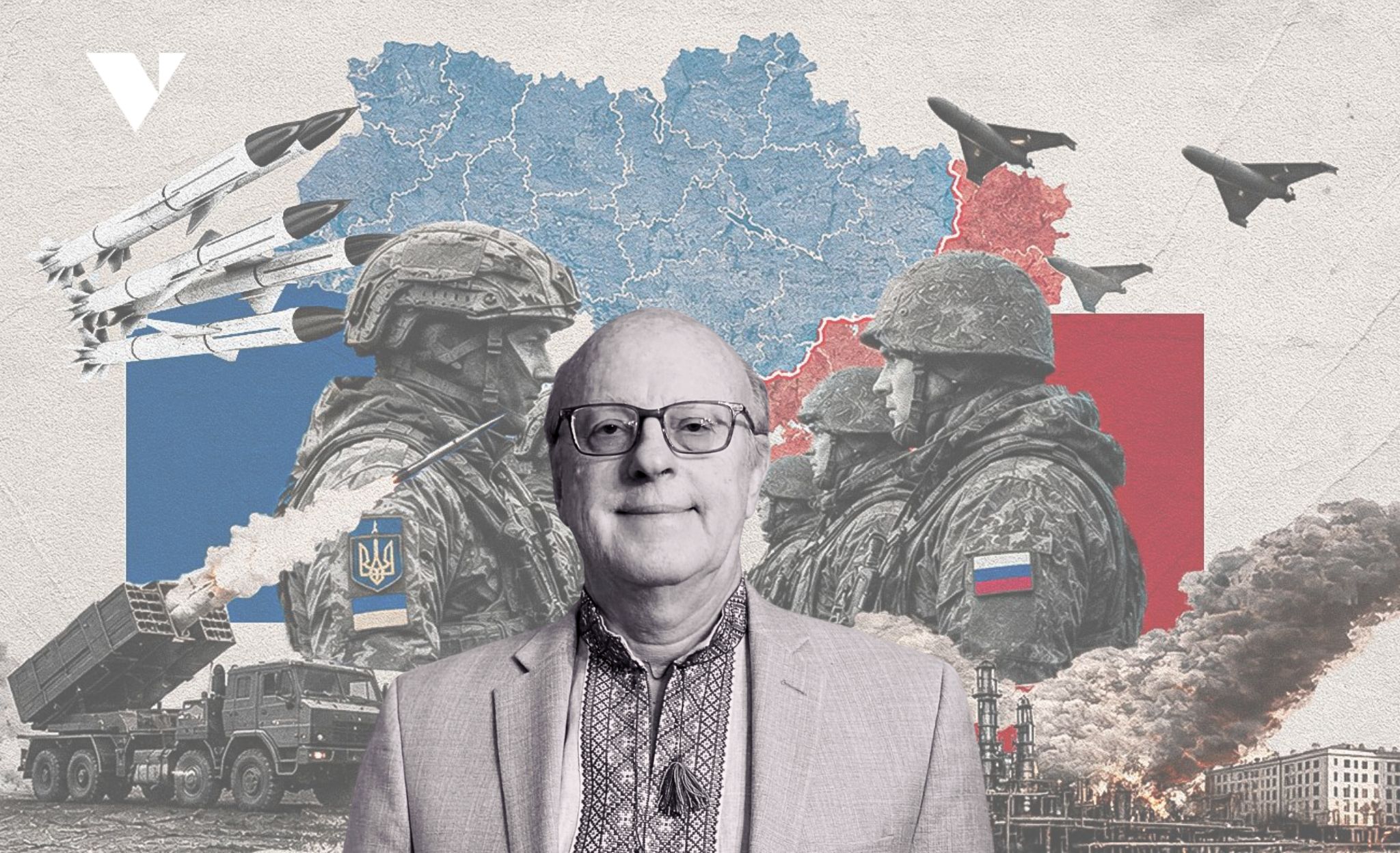
I have long believed that Ukraine will ultimately defeat Russia; the real question is when. Is Ukraine turning the tide? It’s still too soon to tell. During his recent visit to Moscow, CIA director John Ratcliffe reportedly urged the Kremlin not to further escalate and pursue negotiations aimed at ending the fighting. His effort is notable, especially given that U.S. policy toward Ukraine under U.S. President Donald Trump has left a lot to be desired. It remains to be seen whether anything comes of Mr. Ratcliffe’s mission, as war criminal Vladimir Putin appears to be in no hurry whatsoever to abandon his ultimately futile quest to eradicate Ukrainian sovereignty.
The war is becoming more destructive, and the end is not yet in sight. Ukraine’s path to victory will continue to be long and hard. War will likely drag on. I would love nothing more than to be wrong about this. Indeed, one shouldn’t altogether rule out a confluence of circumstances – a perfect storm, if you will – that would bring about Russia’s rapid defeat. After all, history shows that major events sometimes conclude sooner than anticipated (e.g. the unraveling of the Soviet Union). One could hope for a quick end, and, of course, do what one can to help ensure victory, but perhaps it’s prudent not to count on it happening anytime soon. Given Putin’s intransigence and obduracy, and if past is prologue, then it’s probably best not to count on even a sustainable ceasefire.
Ukraine, despite the colossal losses inflicted by Moscow, has a lot going for it. First and foremost, there are its people. Exhaustion after five and a half years of war has left an enormous human toll, yet the people of Ukraine continue to display remarkable courage, fortitude, perseverance and strength. The Ukrainian military is second to none, as is a civil society that supports and sustains the war effort.
The Ukrainian people are an inspiration to all people who seek freedom, human rights and democracy. I don’t see the “Be brave like Ukraine” images and videos as often as I used to, but, Lord knows, these words still apply!
Ukraine has emerged as a global leader in defense technology, with a spirit of innovation and ingenuity that has become the envy of the world, including, in some respects, dare I say, technologically advanced countries such as the United States. In the field of drones, robotics and other capabilities Ukrainians are a global superpower – developing cutting-edge solutions and deploying them in record time on the battlefield. This has been instrumental in stopping and even reversing Russian advances on the front lines, with astoundingly high numbers of casualties inflicted on the enemy – approximately 1.5 million Russian soldiers killed and wounded. Nothing speaks more to the failure of Russia on the front than that, in the last 18 months, Russia has only gained a paltry one percent more of Ukrainian territory.
Then there are the long-range strikes against Russian refineries, fuel terminals and defense infrastructure, and on warehouses and logistical facilities. These attacks degrade economic assets that help fuel the Kremlin’s war effort. They also bring the war home to the Russian people, who now suffer serious fuel shortages and are forced to live without their Amazon on-line retail equivalents. It must be said that, in attacking Russia, Ukraine follows international humanitarian law (the “rules of war”) and doesn’t deliberately target civilians, in stark contrast to the deadly attacks by the Muscovite war-criminals.
Ukraine has stepped up its medium and short-range attacks as well, disrupting Russian logistics and supply lines. These include key highway networks (such as roads into occupied Crimea), command posts, radar systems, short- and medium-range defense systems, and local ammo depots.
While Ukraine is inflicting serious damage on Russia, the reverse is also true. Sadly, we see it every day.
Russia has been pummeling Ukrainian cities with persistent abandon, terrorizing Ukrainian men, women and children. Russian attacks on hospitals, schools, gas stations, factories, food distribution warehouses, modern storage facilities, ports (notably Odesa, which is profoundly affecting agricultural exports) and railway infrastructure are escalating.
While the relentless, devastating attacks on Kyiv understandably get the most international attention, it is incumbent on us not to forget that other cities across Ukraine also have suffered greatly, including Kharkiv, Zaporizhzhia, Kryvyi Rih, Sumy and Kherson. A recent example of the Russian war-criminals’ moral depravity is the August 21 double tap strike – an attack targeting emergency responders dealing with the initial attack – on Kryvyi Rih, killing 16 people and injuring more than 130. Of course, double tap strikes in Ukraine are nothing new.
Then there is Kherson, the object for several years now of savage “human safari” attacks, where first person-view (FPV) drones deliberately target individuals and vehicles. Make no mistake, the Russian military operating those drones from across the Dnipro River know exactly what they are doing. In July alone, 29 people were killed in such attacks. On August 19, a Russian drone struck a vehicle killing a woman, and that same day another struck a minibus, killing three women and one man. In the last three years, hundreds of Khersonites have been killed and thousands wounded.
Notwithstanding the FPV-drone attacks on Kherson, some of the most destructive damage in Ukraine is now being caused by Russian ballistic missiles and, increasingly, jet-powered drones, against which Ukrainian air defenses remain appallingly inadequate. The deployment of short-range North Korean missiles has helped overwhelm Ukrainian air defenses, while a growing number of North Korean troops have been brought in to offset massive Russian casualties. Meanwhile, the shortage of Patriot interceptors – exacerbated by supply constraints made even worse by their heavy use in the Iran war – is especially acute. Ukrainian President Volodymyr Zelenskyy has requested just 5 percent of the Patriot interceptors and other weapons in the U.S. stockpile, which would at least protect critical infrastructure through the upcoming winter.
Despite measures to fortify and decentralize the energy grid, Ukrainians remain deeply concerned about the cold months ahead. While European allies have stepped up to make up for the loss of U.S. aid – as demonstrated by Britain and France recently providing key technology for SCALP/Storm Shadow cruise missiles – other nations must contribute interceptors from their own stocks. Ultimately, allowing Ukraine to leverage Starlink’s connectivity to target ballistic launch sites within Russia could save many lives in the coming months.
So, what comes next? There is growing frustration among Russia’s elites and general population, especially as Ukraine brings the war directly to Russian territory. While catastrophic Ukrainian strikes continue to batter the Russian economy, an imminent economic collapse is unlikely.
Meanwhile, despite the devastating Russian attacks, the will of the Ukrainian people remains unbroken. For Ukrainians, this is an existential fight for freedom, dignity, sovereignty and a democratic future. They will not abandon their noble cause – no matter how long it takes.
In the end, good will triumph over evil.
Author: Orest Deychakiwsky