


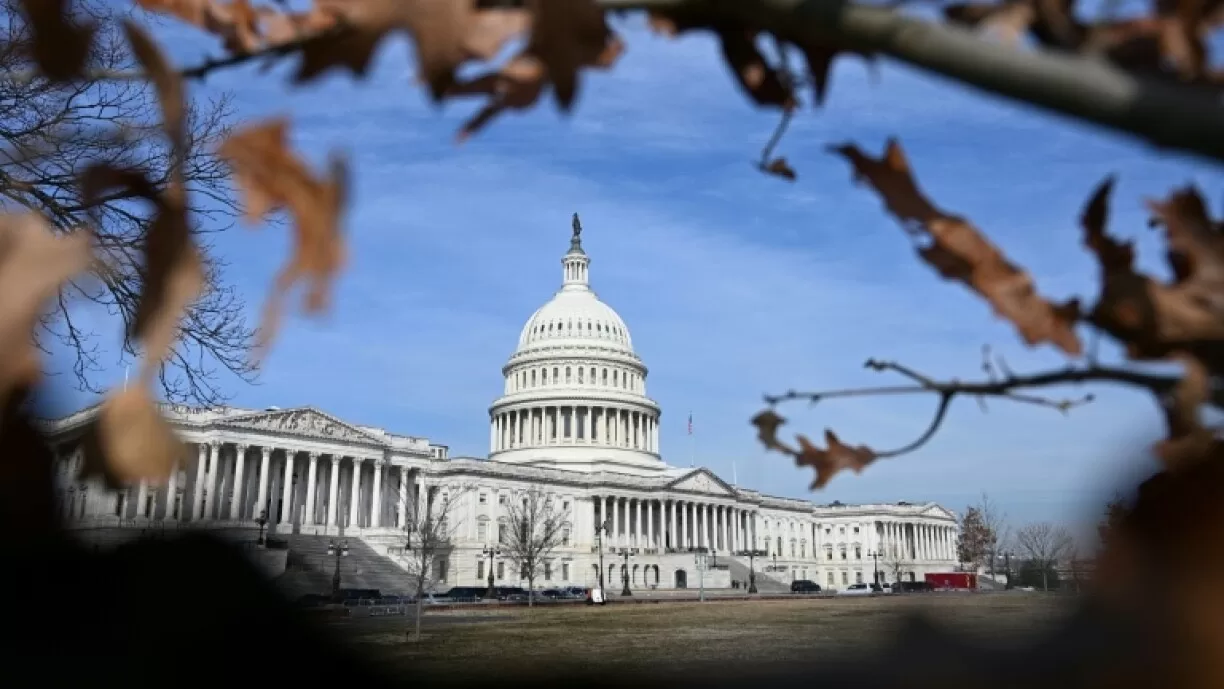
 Lindsey O. Graham Sanctioning Russia and Iran Act of 2026 is emerging as the most important bill for Ukraine in Congress this fall, with supporters seeing it as a chance to strike at the revenues sustaining Moscow’s war.
“The Sanctioning Russia Act is now the #1 priority for Ukraine advocacy,” Eugene Goncharov, Director of Policy at the American Coalition for Ukraine said. “This bill is the best chance we have to pass strong sanctions against Russia, saving Ukrainian lives and helping end this war.”
Sen. Lindsey Graham (R-South Carolina) was the driving force behind the legislation, spending more than a year pushing for its passage. But only after his sudden death in July did the Senate pass the measure, renamed in his honor, by an 86–11 vote, sending it to the House.
The House companion bill (H.R. 10076) was introduced by Rep. Michael McCaul (R-Texas). He has framed passage as both a personal promise to Graham and a practical tool to pressure Moscow toward ending the war.
"Nothing better would honor Lindsey's legacy than passing this bill," he said.
The Sanctioning Russia and Iran Act seeks to restrict Moscow’s ability to finance the war by targeting Russian officials, banks, energy revenues and sanctions-evasion networks, while authorizing tariffs on major buyers of Russian oil and gas. At Trump’s insistence, lawmakers added a five-year extension of sanctions on Iran’s energy and weapons sectors as a condition of his support.
A narrowing window in the House
Its path through the House is less certain, and time is running short. Sept. 14–17 is the remaining window for a vote before the midterm elections. Failure to act next week could push the bill into the postelection session beginning Nov. 9.
The congressional calendar adds urgency to the push, said Marianna Tretiak, Chair of the board of directors of the American Coalition for Ukraine, which coordinates Ukrainians and Americans in congressional advocacy for Ukraine. If the bill does not clear both chambers before the current Congress ends, lawmakers would have to reintroduce it in the next Congress and begin the legislative process again.
“If this doesn't pass at the end of this year, then we kind of go back to zero,” Tretiak said.

The House Rules Committee has moved the bill into the final procedural stage before a possible floor vote, signaling that House leadership is preparing to bring the bipartisan Russia sanctions bill before the full chamber. But a floor vote on the Sanctioning Russia and Iran Act of 2026 has yet to be confirmed.
The legislation faces an uncertain future in the House, Politico reports. Republicans are divided over the measure, Politico reported. Some lawmakers oppose further U.S. involvement in Russia’s war against Ukraine, including through new sanctions, while others are pressing House leaders to bring the bill to a vote.
Rep. Thomas Massie (R-Kentucky.) has long staked out an anti-sanctions position on principle - a stance he's applied consistently to Russia, Iran, and other nations throughout his time in Congress.
"Haven't seen it. Haven't heard about it," Massie said Aug. 31. "All I can say is in 14 years I've never voted to sanction a sovereign country."
Rep. Don Bacon (R-Nebraska), has pushed House leadership to bring the bill to a vote.
"I think it's very important to pass the sanctions bill," Bacon said Aug. 31. "It's a failure to not do so."
Democrats have also raised concerns about the powers the legislation would grant the White House, particularly new authority for President Donald Trump to impose tariffs as a means of pressuring Moscow to end the war.
Rep. Gregory Meeks (D-New York) made clear he does not support the bill in its current form. In a joint statement with Rep. Don Beyer (D-Va.) after the Senate passed the legislation, Meeks said the measure still hands Trump too much power.
"This bill's sanctions still contain the broadest possible waiver authority for President Trump, who already has the power to impose these sanctions on Russia under U.S. law but has refused to do so," Meeks said. "But the current text is unacceptable."
The bill has drawn support from senior Democrats as well, including Rep. Steny Hoyer (D-Maryland.), who co-led the House companion legislation alongside Rep. McCaul, and Rep. Marcy Kaptur (D-Ohio), co-founder and co-chair of the Congressional Ukraine Caucus, who signed on as an original co-sponsor. Kaptur has argued the moment demands urgency.
"Putin will not make peace until he is forced to," Kaptur said. "I have been a supporter of every bipartisan sanctions bill on the table to pressure Russia to end its illegal full-scale invasion."
Securing votes from both parties
Ukrainian advocacy groups are mobilizing in response, urging supporters to call their representatives and press for the bill’s passage.
“The sanctions act has passed in the Senate, but it’s incredibly important for people to contact their representatives now,” said Marianna Tretiak.
Dr. Maryna Baydyuk, President and CEO of United Help Ukraine, urged constituents to pair calls for support with demands for timely action. She emphasized that the congressional calendar makes the timing of those calls critical.
“This is absolutely the time to apply pressure and contact our representatives,” Baydyuk said. “This is more than asking elected officials to ‘support Ukraine’ in the abstract; it's a moment where specific action can make Russia pay for its crimes against civilians and for continuing to wage full-scale war more than four and a half years later.”
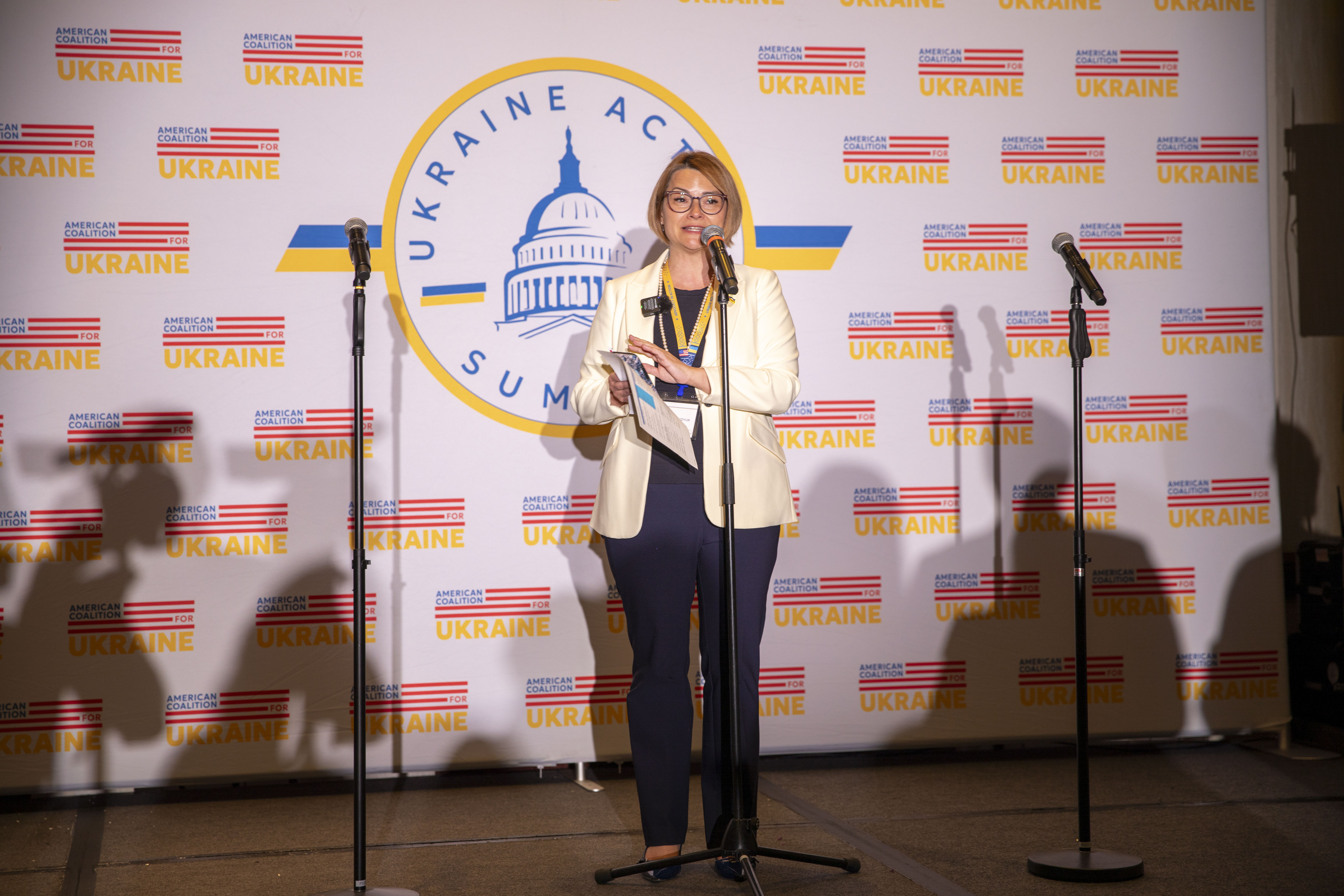
Ambassador Erin McKee, CEO of Nova Ukraine, emphasized the influence constituents can wield through direct contact with lawmakers.
“Calling or emailing your representative is one of the simplest and most effective ways to make your voice heard,” she said. “Members of Congress are elected to represent their constituents, and they pay close attention to the concerns they hear from people back home.”

Baydyuk said Ukraine advocates face a shift: previously, their main challenge was convincing Republicans to support Ukraine. Now, they must persuade Democrats to back the sanctions bill.
“Now, support from Democrats and representatives of the Democratic Party is very important to us, because without them, we see that this bill will not move forward in Congress,” she said.
Goncharov emphasized outreach to Democratic lawmakers.
“Especially if you live in a district with a Democratic representative. Some Democrats are hesitant to support this bill because it gives the president additional authority over tariffs,” he said.
Baydyuk urged constituents to contact even lawmakers with a reliable record of supporting Ukraine, saying past votes should not be taken as an assurance of support for this legislation. She also called on lawmakers to set aside political differences, emphasizing that civilian lives are at stake.
“These are not just political differences. First and foremost, these are the lives of people who are under threat every day in Kyiv, in the region and across Ukraine,” Baydyuk said. “We have seen massive attacks that do not stop, and these are human lives, the lives of civilians, the lives of children.”
Maryna Baydyuk pointed to what she described as intensified attacks on Kyiv over the preceding two weeks, involving ballistic missiles, drones and jet-powered drones. The daily strikes, she said, have brought further deaths and injuries.
“We see that there will be no end to this until real measures are taken - specifically, sanctions against Russia,” she said. “This is one of the few important measures that can move negotiations in the right direction.”
Cutting off Russia’s war funding
Ambassador McKee offered another argument for constituents seeking to persuade their representatives: The Russia Sanctions Act addresses one of the war’s central questions: how to reduce Russia’s ability to finance its aggression. The bill targets the revenues and international networks that allow Russia to sustain its war, including energy sales, the shadow fleet and intermediaries that help Moscow evade sanctions.
“One of its greatest strengths is that it recognizes Russia cannot sustain this war in isolation,” she said. “As long as the Kremlin can continue selling its energy and accessing global markets through intermediaries, it can continue generating the revenue that fuels its war machine.”
Tretiak offered another argument for both Democrats and Republicans: sanctions can sustain U.S. support for Ukraine without the direct budgetary cost of an aid package.
“This is something that the US can put into place that doesn't have a direct fiscal impact on our budget,”she said.
Reflecting on years of advocacy with the American Coalition for Ukraine, Marianna Tretiak said that the case for sanctions can be harder to communicate than the need for weapons. Missiles have a readily understood purpose; sanctions work across different layers of the economy, with effects that unfold over time.
“If we need missiles, we ask for missiles, we know what missiles do. Sanctions have an impact across different levels of the economy, and that impact is long-term,” Tretiak said.
Compared with military aid or other support for Ukraine, sanctions are less attention-grabbing, she said.
“You know, it's like financial policy. It's more obscure, more dense.”
Tretiak said sanctions have strained Russia’s economy and complicated its access to components needed for weapons and other technology. Russia’s efforts to obtain supplies through third countries underscore the need to keep closing gaps, she said. Financial restrictions and sanctions targeting buyers of Russian oil also put pressure on the country’s finances, she added.
“We've seen, firsthand, how much sanctions have already affected the Russian economy,” Tretiak said. “We've seen how difficult it is for Russia to get the key components they need for their bombs, for different technological things as a result of sanctions on different components.”
Bipartisan support for Ukraine
Ukraine advocacy groups are pinning their hopes on bipartisan support in Congress. They point to the Ukraine Support Act, another major piece of legislation that passed the House on June 4 with support from both parties after a discharge petition forced a vote. The measure combines security and reconstruction assistance for Ukraine with additional sanctions on Russia.
“The Ukraine Support Act also demonstrated that a bipartisan coalition in Congress was still willing to act on Ukraine,” said Ambassador Erin McKee, CEO of Nova Ukraine. “The successful bipartisan discharge effort in the House was clear evidence of that. It showed that support for Ukraine could still bring lawmakers from both parties together and move legislation forward.”
Maryna Baydyuk, president and CEO of United Help Ukraine, said The Ukraine Support Act House passage had helped energize the sanctions effort, even as the aid measure remained stalled in the Senate.
“The Ukraine Support Act hasn't moved forward in the Senate, but its House passage signaled that bipartisan support for Ukraine is still very much alive and that helped build momentum for the current push on Russia sanctions,” she said. “Right now, though, the Sanctioning Russia Act is our main advocacy priority.”
Both emphasized that the bills serve complementary purposes: strengthening Ukraine’s ability to defend and rebuild itself while weakening Russia’s ability to finance the war.
“The Russia Sanctions Act and the Ukraine Support Act are not competing pieces of legislation. They are complementary,” McKee said. “The Russia Sanctions Act focuses on increasing economic pressure on Russia by limiting its ability to finance the war. The Ukraine Support Act takes a much broader approach, combining security assistance, reconstruction, diplomacy, and sanctions into a comprehensive framework for supporting Ukraine.”
Taking the message to Capitol Hill
The effort gains momentum this Saturday in Washington, D.C., with the start of the Ukraine Action Summit, where supporters of Ukraine from all 50 states will meet with their lawmakers to press for the sanctions bill’s passage.
“What we are trying to do right now is, one, give our constituents the tools to communicate about the goals of this act,” Tretiak said.
Summing up, Ambassador McKee urged Ukraine supporters to keep the broader strategic goal in mind: sustaining U.S. support for Ukraine, with sanctions as one part of that effort.
“This bill is an important step, but it is not a substitute for continued military, humanitarian, and economic support for Ukraine,” she said.
Main photo: AFP
Author: Andrew Getman
