


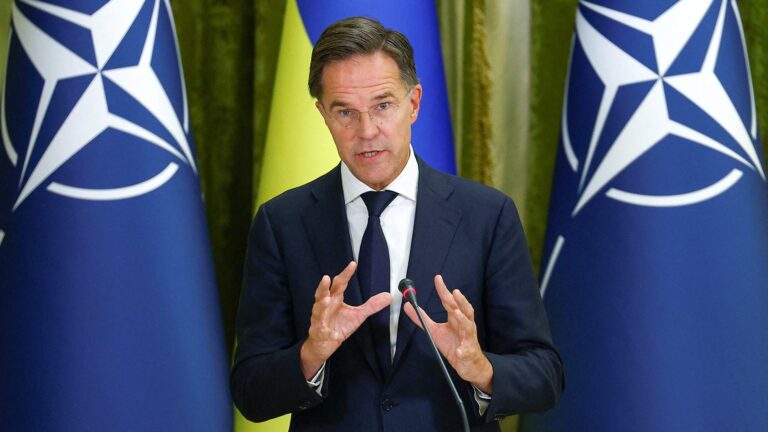
The Pentagon is considering a potential reduction of the US military presence in Europe, even as the US has approved new multi-billion-dollar investments, including in Ukrainian projects. Against this backdrop, Washington is advancing a sanctions bill against Russia that could affect countries purchasing Russian energy. The situation is also being discussed in the Kremlin, China, and India, while NATO Secretary General Mark Rutte is set to visit the US next week.
Pentagon Considers Reducing US Troop Levels in Europe to 40,000
Pentagon sees several options for adjusting US troop numbers in Europe, including the possibility of withdrawing at least 25,000 service members. Under one scenario, the reduction could reach 40,000 personnel—roughly half of the current US contingent on the continent. According to NBC News, there are currently about 80,000 US troops in Europe, including approximately 10,000 in Poland. Along with the troops, aircraft, ships, and other weaponry could be redeployed or withdrawn; Germany, Italy, and Spain would likely be the most affected by these changes.
No final decision on the reduction has been made yet. General Alexus Grynkewich, Commander of NATO Allied Air Command, is expected to present a preliminary assessment to US Secretary of Defense Pete Hegseth on September 18, with a final recommendation due by November 6. Options under consideration include reducing ground, air, and naval forces, as well as redeploying some units to NATO’s eastern flank countries. The review of the US military presence began in June as part of the Donald Trump administration's policy, which calls for European allies to assume greater responsibility for their own defense.
Russia uses converted training missiles for massive strikes on Ukraine
Russia has begun making extensive use of converted RM48U training missiles in strikes on Ukraine, allowing it to conserve stocks of more expensive and precise ballistic missiles. According to Ukrainian officials, RM48U missiles accounted for more than half of the 228 ballistic and hypersonic missiles launched at Ukraine in July and early August. In July, Russia carried out the highest number of ballistic and hypersonic strikes in a single month since the start of the full-scale invasion—158 in total, with 87 involving RM48U missiles. Reuters notes that while these missiles are less powerful and accurate than Iskanders, their mass deployment enables Russia to maintain the intensity of attacks without depleting its primary stockpiles of precision-guided missiles.
RM48U missiles are launched from S-400 air defense systems and travel along a ballistic trajectory at high speed. Ukrainian prosecutors and military intelligence have linked the use of these missiles to several strikes that resulted in civilian casualties, including an attack on a railway platform near Brovary. According to Ukrainian experts, RM48U missiles can deviate from their intended target by approximately 300 meters, and their warheads scatter debris over a wide area; however, Reuters has not been able to independently verify these findings. The Institute for the Study of War estimates that Russia may possess around 400 such missiles—compared to approximately 100 Iskander missiles—while Ukrainian intelligence has reported plans to increase RM48U production to 480 units by 2026. At the same time, Ukraine is facing a shortage of US-made Patriot interceptors, which serve as the primary defense against Russian ballistic missiles.
US Approves Over $8 Billion in Investments for Ukraine, Jordan, and African Nations
The US International Development Finance Corporation (DFC) has approved new investments totaling more than $8 billion for Ukraine, Jordan, and African countries. According to Reuters, the move aims to foster the development of critical infrastructure, energy, and digital technologies in US partner nations, as well as to support American exports. Approved projects include financing for the Ukrainian mobile operator Vodafone Ukraine and a loan for the energy company DTEK. The DFC also approved a $500 million trade facility designed to help US companies enter markets in South America, Southeast Asia, and Africa.
Separately, the DFC approved an €85 million loan for DTEK, which will be used to expand energy storage capacity. The financing for Vodafone Ukraine is intended to support the modernization of the country's critical telecommunications infrastructure during the war. "These projects will support billions of dollars in U.S. exports, protect critical infrastructure and resources in Ukraine, Jordan, and African nations, and strengthen the position of U.S. companies competing in some of the world's most important markets," said DFC head Ben Black.
NATO Secretary General Mark Rutte to Visit the US Next Week
NATO Secretary General Mark Rutte will visit the United States from September 22 to 24, traveling to the states of Iowa and New York. On Tuesday, September 22, he will meet with Iowa Governor Kim Reynolds and participate in an event hosted by the Chicago Council on Global Affairs. During the event, Rutte will deliver a speech and take part in a moderated discussion. While in Iowa, he will also visit the State National Guard Joint Force Headquarters.
Starting September 23, the NATO Secretary General will be in New York for the 81st session of the UN General Assembly. As part of his visit, Rutte plans to meet with world leaders and high-ranking officials. On September 24, he will speak at an event organized by the 9/11 Memorial & Museum. According to NATO, the visit will also include public events focused on the future of the Alliance and transatlantic relations.
The Kremlin, China, and India React to US Sanctions Bill Against Russia
The Kremlin stated that the bill passed by the US Congress to strengthen sanctions against Russia could complicate negotiations on ending the war against Ukraine. Kremlin spokesman Dmitry Peskov said that Moscow is monitoring the bill's progress and described the actions of US lawmakers as an "unfriendly act." "We are, of course, watching the progress of this document," he said. According to Peskov, the sanctions outlined in the bill could "complicate the search for a peaceful settlement" to the Russia-Ukraine war.
China also opposed the document, stating, that U.S. sanctions should not affect its economic and trade cooperation with other countries.
"Economic and trade cooperation between China and other countries is not directed against any third party and should not be subject to interference or coercion by third parties. China opposes extraterritorial jurisdiction and unilateral sanctions that lack a basis in international law and are not authorized by the UN Security Council," said Chinese Foreign Ministry spokesperson Geng Shuang. India announced, that it had taken note of the adopted document and would continue to purchase energy from various suppliers, taking "market dynamics" into account. At the same time, the Indian Foreign Ministry stated that New Delhi had already discussed the document's potential impact on bilateral relations with Washington and affirmed its readiness to protect its trade and economic interests.
On September 16, the U.S. House of Representatives passed a bill imposing sanctions on Russia and Iran, after which the document was sent to U.S. President Donald Trump.
Photo: Bukvy
Author: Danylo Pievchev