


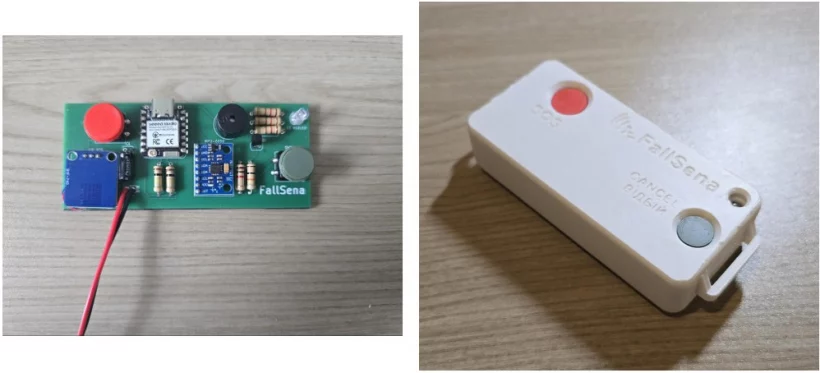
Dmytro Osyka, a Ukrainian student at High Tech High School in New Jersey, has developed "FallSena," a compact device designed to automatically detect falls and notify loved ones. The project was inspired by an incident involving his grandmother in Kyiv; after falling, she was unable to alert her family for several hours. The project is now moving into the practical implementation phase in Ukraine, with the next step being testing within the Ukrainian community in the United States.
The charity organization USA STANDS WITH UKRAINE reported this to Vilni Media.
The idea for FallSena stemmed from a simple yet critical issue: while a fall itself may last only a second, the time that elapses before someone realizes the elderly person needs help is often the deciding factor in the outcome. Dmytro began the project by researching statistics on falls among the elderly. According to the data he cited, more than one in four people aged 65 and older in the U.S. report a fall each year.
The young developer was particularly concerned about individuals who, after falling, are left alone and unable to get up or summon assistance.
"A fall might last a second. But the consequences depend on the time that follows. That is the time I wanted to reduce," Dmytro explains.
Behind the statistics lay a personal story. Dmytro’s grandmother lives in Kyiv and, despite her advanced age, refuses to leave Ukraine. One day, she fell and was unable to notify her family immediately; she remained alone for several hours. For her grandson, who was living in the US, an issue he had previously only encountered in statistics and research suddenly became personal. He could not change his grandmother's mind or move her to America. So, Dmytro asked himself a different question: "Is there a way for relatives to be automatically notified of a fall, even if the person cannot reach their phone?" That is how the development of FallSena began.
Before creating a prototype, Dmytro analyzed existing solutions. An emergency button requires the person to remain conscious and able to press it after a fall. Smartwatches can detect falls but require regular charging. Camera systems work only within a specific area and raise privacy concerns.
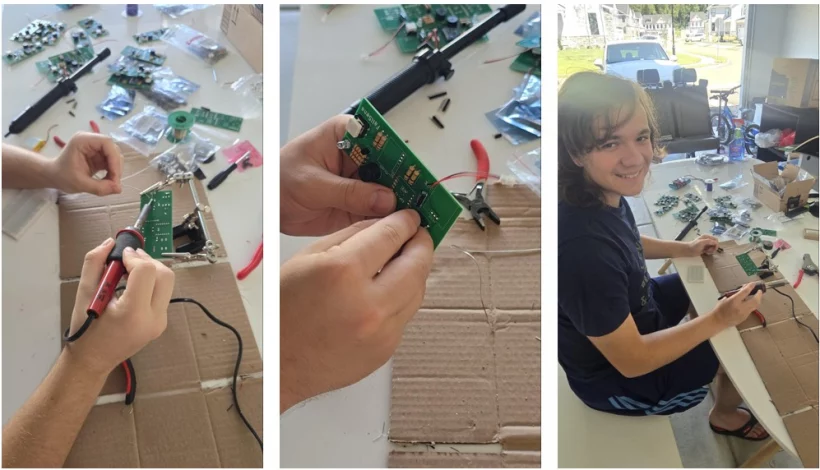
Consequently, he defined several key requirements for FallSena: the device had to automatically detect falls, be compact, not be confined to a single room, avoid recording video or audio, and quickly transmit a notification to a loved one. Practical engineering work followed. The first batch of 16 FallSena devices has now been produced.
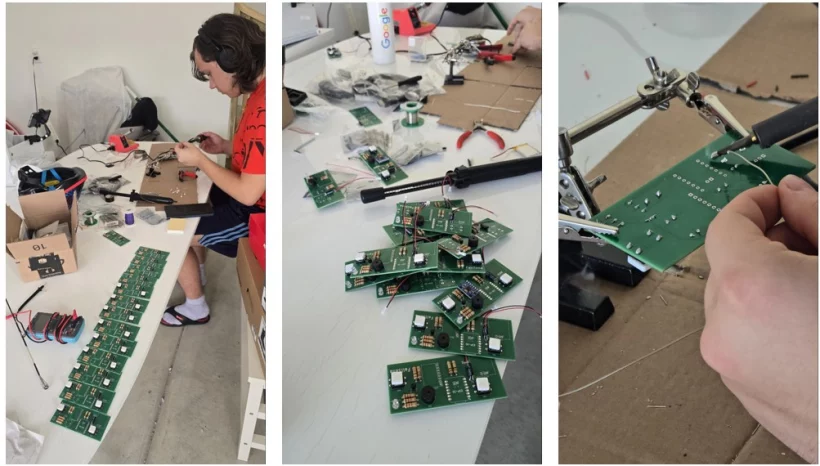
During his own testing, Dmytro conducted over 70 simulated falls across five types: forward, backward, sideways, from a chair, and sliding down a wall. More than 50 additional hours of testing were dedicated to the opposite task: verifying that the device would not mistake ordinary human movements for a fall. Tests covered walking, climbing and descending stairs, bending, sitting, movements during car rides, and other daily activities. The results showed that FallSena detected 97% of simulated falls and correctly refrained from triggering an alert in 98% of cases involving normal activity.
At the same time, Dmytro does not view these results as proof that the device is ready for full-scale use. Consequently, the next step for FallSena is not another laboratory demonstration, but testing in real-life, everyday conditions.
Dmytro decided to anchor this practical phase primarily in Ukraine. The testing involves the organization USA STANDS WITH UKRAINE, with which the young engineer has been collaborating for several years. The organization supports elderly people living alone in Ukraine, notably through its annual international "Christmas Gifts" initiative. This winter, alongside their traditional aid efforts, they plan to give select individuals the opportunity to test FallSena in their daily lives and share their experiences.
The organizers emphasize that FallSena is not currently positioned as a finished medical product and cannot replace a doctor, professional care, or emergency services. The testing is intended specifically to identify the development's weaknesses and refine future versions.
Dmytro was already known to the "USA Stands With Ukraine" organization before FallSena came into existence; for several years, he has been assisting the group with charity events and Ukrainian community initiatives.
At the same time, the project is entering its next phase in the United States. Initial discussions regarding the introduction and practical testing of FallSena have already taken place in New Jersey. Dmytro plans to start with the Ukrainian community—of which he is a member—so he is currently seeking test participants rather than buyers; he is looking for people willing to use the device in their daily lives and provide feedback on its pros and cons.
Recruitment for US-based test participants is now open. The initiative primarily targets families where an elderly person lives alone or spends a significant part of the day unsupervised. Ukrainian community organizations and initiatives that work with the elderly are also invited to collaborate.
You can express your interest by emailing USASTANDSWITHUKRAINE.corp@gmail.com, specifying your state of residence, the intended user of the device, and why this issue is relevant to your family.
Photo: USA STANDS WITH UKRAINE, hi-tech.ua
Prepared by: Inna Mikhno