


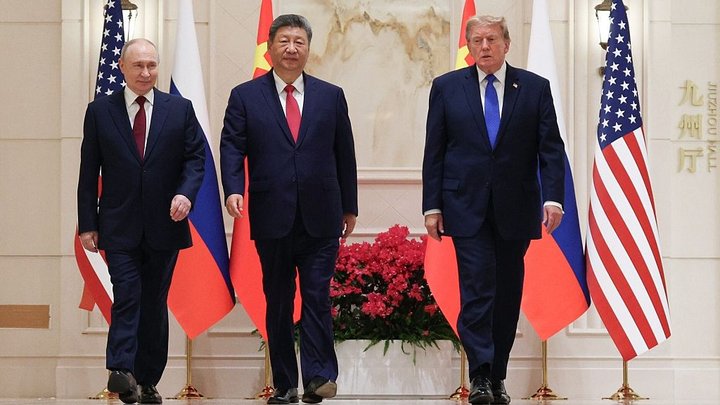
A summit of the "Coalition of the Willing" took place in Berlin, where future security guarantees for Ukraine were discussed. The US is considering providing Kyiv with guarantees modeled on NATO’s Article 5; however, Volodymyr Zelenskyy noted that the parties might interpret their content differently. German Chancellor Friedrich Merz affirmed Europe’s readiness to cooperate with the US, provided their objectives regarding peace in Ukraine remain aligned. Meanwhile, Moscow has rejected this format of guarantees, and a separate declaration issued by China, the US, and Russia made no mention of Ukraine at all.
Kushner: US Considers Security Guarantees for Ukraine Modeled on NATO’s Article 5
The United States is prepared to consider providing Ukraine with security guarantees modeled on NATO’s Article 5, provided they align with American interests and encompass a broader set of security measures. Jared Kushner stated this following the "Coalition of the Willing" summit in Berlin. According to him, Washington has persuaded Russia to consider this model as a potential basis for future agreements, although Russia itself remains skeptical of the idea.
Kushner emphasized that guarantees cannot rely solely on trust and promises; they require mechanisms to monitor compliance, ensure deterrence, and impose consequences for violations. He also spoke highly of the development of the Ukrainian military, describing it as one of the best in the world. US Special Envoy Steve Witkoff stated that Donald Trump seeks an end to the war, while Kushner emphasized:
"War is a negative-sum game: everyone loses. Peace is a positive-sum game."
Zelenskyy: Ukraine and the US may have different understandings of security guarantees modeled on NATO’s Article 5
President of Ukraine Volodymyr Zelensky stated, that Ukraine does not yet have a clear understanding of how security guarantees modeled on NATO’s Article 5—currently being discussed with representatives of the US administration—would actually function. Specifically, Kyiv would like to see an American military presence on Ukrainian territory, including the potential establishment of military bases. However, Washington has not yet provided a response regarding this prospect.
Zelenskyy emphasized that the key issue lies not merely in the formal provision of guarantees, but in the concrete actions partners would take in the event of a new Russian attack. According to him, the mechanism must be clearly understood by Ukrainian society, by citizens planning to return home, and by potential investors.
"Fine, great. Article 5, but without NATO. Okay—explain to us what that means. For me, the most important thing is how these countries would respond to aggression," the President stressed.
Merz: Europe Will Cooperate with the US on Peace in Ukraine, Provided Their Goals Align
European nations are prepared to continue working alongside the United States to bring an end to the war in Ukraine, provided that both sides remain committed to a shared objective: achieving a just and lasting peace while ensuring Europe’s security. This was stated by German Chancellor Friedrich Merz following the "Coalition of the Willing" summit in Berlin. He emphasized that achieving peace without Europe’s involvement would be difficult, and that cooperation with Washington increases the likelihood of successful negotiations.
Merz stated that any future negotiation process must involve Ukraine, Russia, the United States, and European partners. At the same time, he insisted on a specific sequence: peace in Ukraine must be achieved first, with discussions regarding Euro-Atlantic security to follow. The Chancellor also expressed support for strengthening NATO and expanding the role of European nations in the continent’s defense; he did not rule out the possibility of further talks with Moscow concerning military communication channels and risk reduction.
China, the US, and Russia Adopt a "Declaration on Peace" Without Mentioning Ukraine
The leaders of China, the United States, and Russia have adopted a joint "Declaration on Peace" that makes no mention of Russia’s war against Ukraine or military operations against Iran. The document consists of four points and outlines cooperation among the three nations on issues of international security, UN reform, and the stability of global energy markets. Separately, the parties emphasized the need to uphold the principle of sovereign equality and respect for the immunity of state officials.
Furthermore, Xi Jinping, Donald Trump, and Putin reaffirmed their stance on the inadmissibility of nuclear war and agreed to engage in dialogue aimed at reducing nuclear risks and preventing the proliferation of nuclear weapons. At the same time, the declaration includes a provision stating that the International Criminal Court (ICC) and similar bodies must not abuse their jurisdiction. It is worth recalling that in March 2023, the ICC issued an arrest warrant for Putin on suspicion of war crimes related to the unlawful deportation of Ukrainian children.
Moscow has rejected security guarantees for Ukraine modeled on NATO’s Article 5
Russia stated that security guarantees for Ukraine based on the principle of NATO’s collective defense are unacceptable to it, even if they do not entail formal accession to the Alliance. This was stated by Russian Deputy Foreign Minister Sergei Ryabkov. According to him, Moscow opposes any mechanisms that could serve as an alternative to Ukrainian NATO membership while providing an equivalent level of protection.
Ryabkov emphasized that Russia is prepared to discuss security guarantees only once it is acknowledged that Ukraine will not join NATO.
"Once that happens, I believe the issue of security guarantees could, in one way or another, be discussed," the Russian Foreign Ministry representative stated.
This position contradicts statements by Jared Kushner regarding Moscow’s willingness to consider guarantees modeled on Article 5. Meanwhile, Volodymyr Zelenskyy has already expressed doubt as to whether Ukraine and the United States share the same understanding of what such guarantees would entail.
Photo: Getty Images/Kremlin Press Service/Anadolu
Author: Danylo Pievchev