


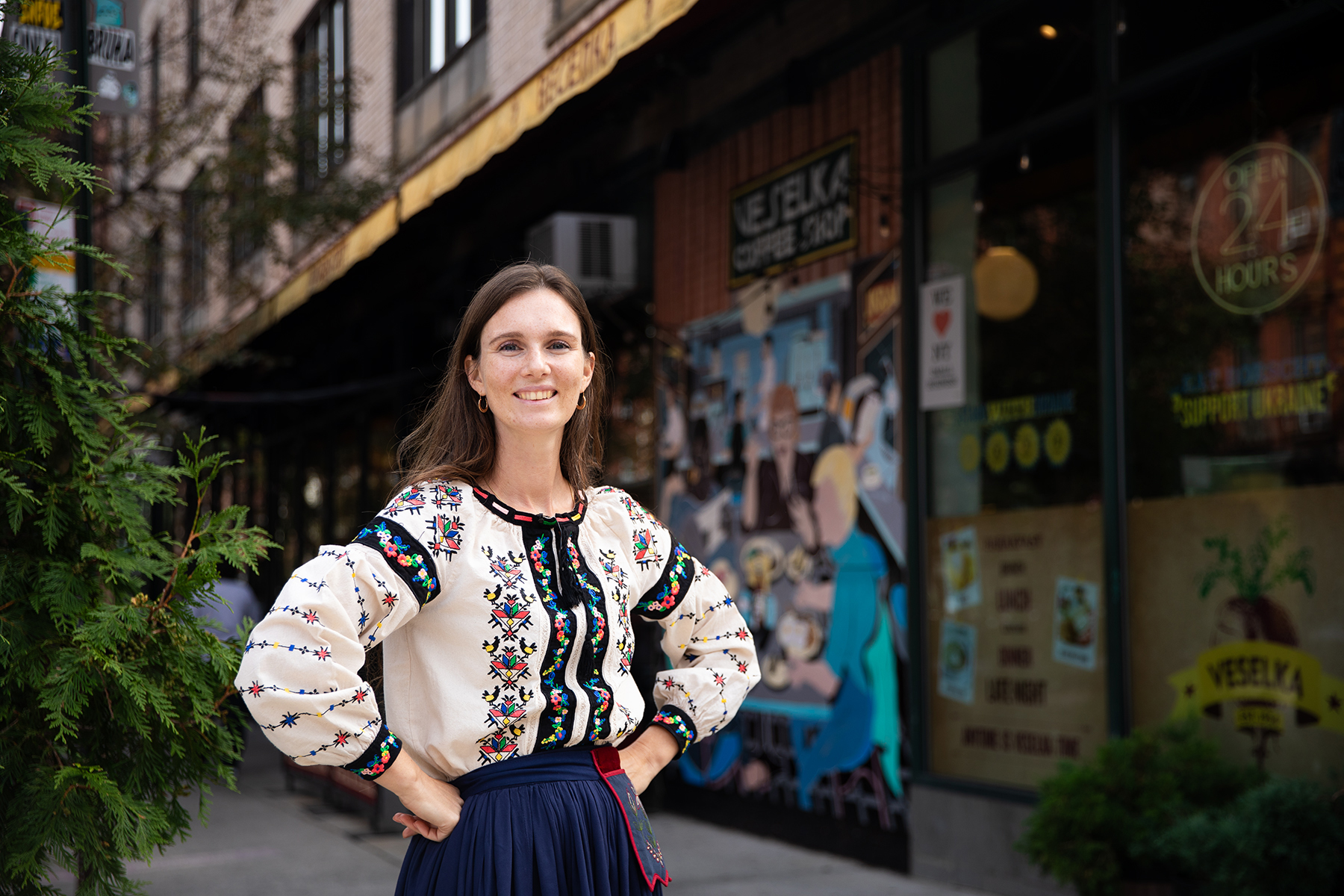
In New York, the "Little Ukraine" neighborhood—located within Manhattan’s East Village—has remained a hub for Ukrainian culture and community life for more than a century. Although most Ukrainian immigrants eventually moved to other areas, local churches, cultural institutions, and community organizations have helped preserve the neighborhood's distinct character.
This was reported by New York University (NYU).
"Little Ukraine"—also known as the "Ukrainian Village"—has existed in New York for over a hundred years. Spanning several blocks in the East Village, this small neighborhood has become a significant center for Ukrainian culture, education, and community life in the United States.
Anastasiia Vlasenko, a Visiting Assistant Professor and head of the Ukrainian Studies Initiative at NYU, led a walking tour of the neighborhood. She discussed its history, landmark institutions, and the role the Ukrainian community has played in preserving its national identity.
"Most New Yorkers walk past these three blocks without even realizing they are in the very heart of the 'Ukrainian Village,'" Vlasenko noted.
According to Vlasenko, following World War II, approximately 60,000 Ukrainians arrived in New York as refugees and settled in the East Village. Over the subsequent decades, a significant number of these residents moved to other parts of the city or beyond its borders. However, the Ukrainian quarter did not disappear—as often happens with ethnic enclaves after their residents move away.
"Typically, when residents leave ethnic neighborhoods, their history fades away. In this case, however, the neighborhood has survived thanks entirely to non-profit and religious organizations, which have served as the foundation for the Ukrainian community’s public life in the United States," the researcher explained.
During the tour, Anastasiia Vlasenko highlighted several iconic landmarks of "Ukrainian New York" that have remained hubs of cultural and civic life for decades. One stop was The Ukrainian Museum, which the researcher described as the heart of Ukrainian art and culture in the East Village. The museum introduces American audiences to Ukrainian artistic heritage, history, and contemporary culture.
Another significant institution is the Ukrainian National Home, which has hosted community meetings, theatrical performances, concerts, and cultural events for many years.
The route also included the renowned Ukrainian restaurant Veselka—one of the oldest Ukrainian eateries in the neighborhood. Here, visitors can enjoy traditional Ukrainian dishes such as borscht, varenyky (dumplings), and holubtsi (stuffed cabbage rolls). According to the researcher, Ukrainian cuisine remains a vital component of the community’s cultural presence in New York.
"When the full-scale invasion began in 2022, this neighborhood became a hub for civic engagement, resilience, and active democratic participation," she noted.
Ukrainian organizations and institutions, which have taken shape over decades, have become vital hubs for gatherings, civic initiatives, and support for Ukraine.
According to Vlasenko, many Ukrainians travel to the East Village every weekend, even if they no longer live in the neighborhood. They attend Ukrainian Saturday schools, participate in cultural and civic events, connect with members of the diaspora, and maintain ties to Ukrainian traditions.
A notable annual event is the Ukrainian Festival, held in May near St. George Ukrainian Catholic Church. The festival introduces Americans to Ukrainian music, dance, cuisine, and folk traditions, while also bringing together different generations of the Ukrainian community.
For Anastasiia Vlasenko, the history of "Little Ukraine" holds significance that is both cultural and academic. She studies how institutions of civil society and democratic participation—established long before the full-scale war—help Ukrainians maintain resilience and support their country.
"I am exploring how institutions of democratic participation and civic engagement help Ukraine endure today. The East Village serves as a vivid example of how these institutions function," Vlasenko explained.
For reference
Anastasiia Vlasenko is a Ukrainian political scientist and a visiting assistant professor at New York University. She works within the Department of Politics, the Department of Russian and Slavic Studies, and the International Relations Program. Vlasenko earned a bachelor’s degree in political science from the National University of Kyiv-Mohyla Academy and studied at Lund University in Sweden and New York University. In 2022, she received a Ph.D. in political science from Florida State University. She is also an alumna of the Fulbright international academic exchange program, through which she studied in the United States from 2014 to 2016. Previously, the researcher worked at Columbia University and the Harvard Ukrainian Research Institute.
Photo: Jonathan King/NYU
Author: Inna Mikhno