


Many Ukrainians remember Iryna Farion for her sharp statements, radical views, and numerous high-profile speeches on various platforms. However, only after her tragic murder has Ukrainian society begun to truly appreciate her contributions to the development of Ukrainian identity, her fight for the language, and her re-evaluation of historical figures and events that shaped the Ukrainian nation.

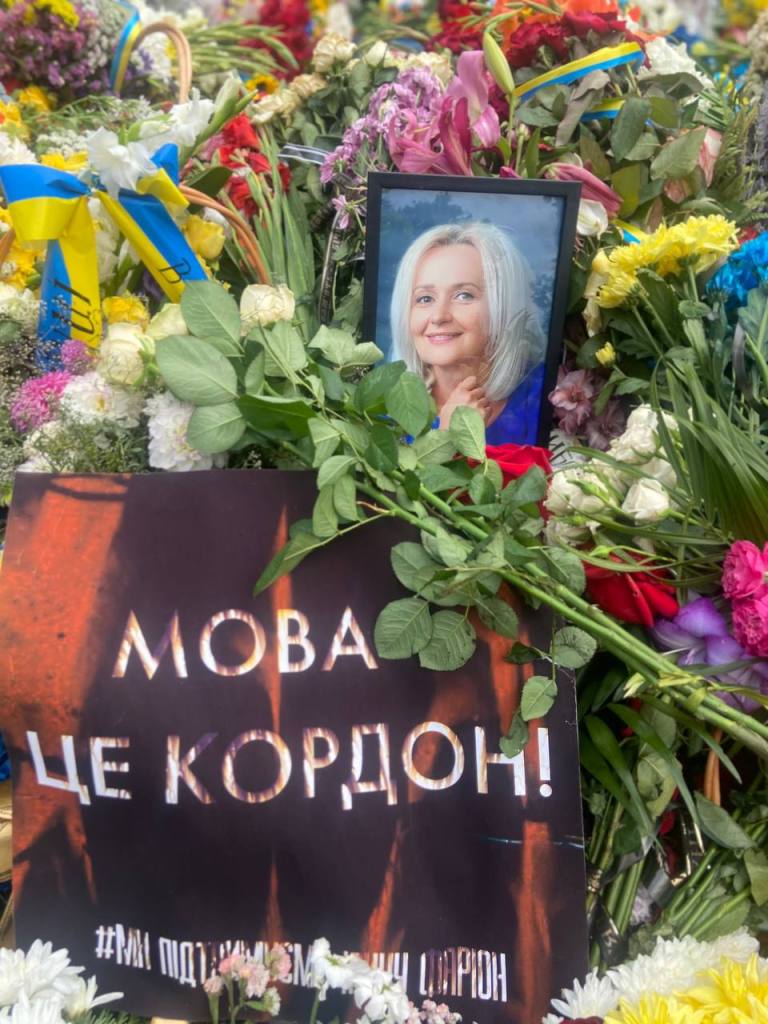
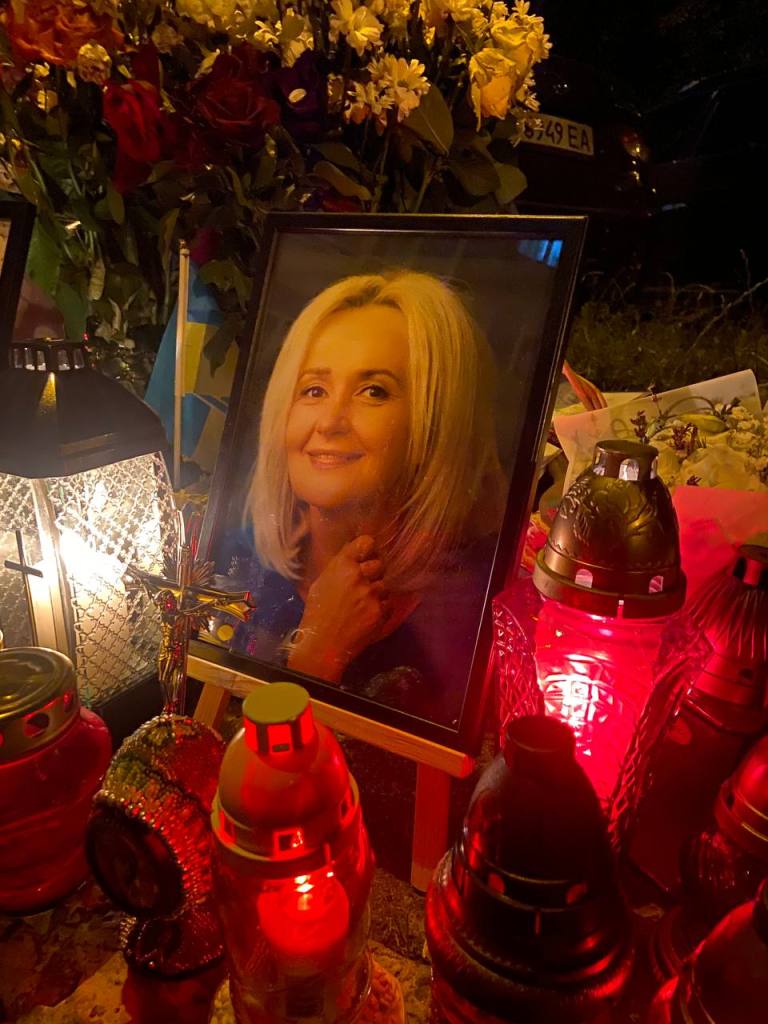
Iryna Farion often shared that her choice of philology was a subconscious decision influenced by teachers who firmly believed in the Ukrainian idea and her early readings of Ukrainian books. After graduating from the Faculty of Philology, she pursued an academic path, but at that time, no one at the university dared to explore linguistic-historical issues. Professor Mykhailo Khudash became her savior, supporting the topic of her dissertation, which resulted in one of the first monographs in Ukraine on the origin of Ukrainian surnames in 2001, titled "Ukrainian Surname Names of Precarpathian Lviv Region of the Late 18th - Early 19th Century."
In September 1991, Farion began working as a lecturer in the Department of Ukrainian Language, Literature, and Culture at Lviv Polytechnic University. For five years, she also taught courses at the Lviv Academy of Arts. In 1998, she and her students organized a poster exhibition on the language titled "Pass Our Treasure - The Native Language to Descendants," which lasted for nearly ten years under various names, spread abroad, and paved her way into politics.
Legislative Work
Iryna Farion's political journey was marked by her fight for the Ukrainian language and history. She initiated an appeal to the Constitutional Court regarding the unconstitutionality of the "Principles of State Language Policy" law by Kolesnichenko and Kivalov, and she developed significant legislative proposals such as imposing tariffs on Russian-language books, requiring higher education institutions to teach exclusively in the state language, amending the law on national minorities to integrate them into the Ukrainian space, removing the term "Great Patriotic War" from the legal-scientific lexicon, dismissing Dmytro Tabachnyk from the position of Minister of Education and Science, and posthumously awarding the Heroes of the Heavenly Hundred the title "Hero of Ukraine," among others.
As a deputy of the Lviv Regional Council from 2006-2012, Farion organized the "Nation's Treasure" advertising campaign, displaying portraits of Ukrainian cultural and political figures on billboards with their quotes. Simultaneously, she conducted the "Language on Wheels" campaign in Lviv's public transport, where leaflets urged passengers to "Speak correctly and beautifully." She also distributed stickers in kindergartens, drawing attention to the normative correctness of names and urging children to use proper forms instead of diminutives like Masha, Sasha, Dasha, or Pasha.
Academic Work
After the defeat of the Ukrainian political party "Svoboda" in the 2014 parliamentary elections, Farion returned to her academic and pedagogical work with renewed passion. In September 2015, she defended her doctoral dissertation on "The Social Status of Old Ukrainian Language in the 14th-17th Centuries" and became a professor at the Department of Ukrainian Language at Lviv Polytechnic University. In 2016, she received the Ivan Ogienko Prize for her monograph on this topic.
Farion's list of monographs covers many important topics, including the Ukrainian language question, Ukrainian orthography as a cultural-political choice, the societal and creative role of the Ukrainian language from the 11th to 19th centuries, and the status of the Ruthenian (Ukrainian) language in the Grand Duchy of Lithuania. These works have built an understanding that the Ukrainian language has existed, functioned fully, and played a significant role in society since the times of Rus'.
Farion also explored themes that expanded Ukrainians' cultural and historical knowledge. She researched the biography of Father Markiyan Shashkevych as a Ukrainian linguist, Stepan Bandera as a practitioner, theorist, and mystic of the nationalist movement, the linguistic world of composer Mykola Lysenko, and created a linguistic portrait of Ivan Puliuy from his letters. Additionally, she co-authored the book "Aphorisms and Sentences of Yuri Ilyenko. Well for the Thirsty."
Besides, Farion authored over 150 scientific articles and theses, continued to study Ukrainian surnames, discussed orthographic issues, and addressed the prestige problem of the Ukrainian language. She wrote reviews, educational programs, and blogs.


Promoting the Ukrainian Idea
A significant part of Farion's biography was the project "The Greatness of the Individual," in which she created over 150 programs since 2013, promoting notable figures in Ukrainian history, culture, and politics. These programs re-evaluated the paths and views of personalities such as Olga Kobylianska, Roman Shukhevych, Olena Teliha, Mykhailo Verbytsky, Oleksandr Konysky, Yuri Tyutyunnyk, Mykhailo Hrushevsky, Petro Yatsyk, Augustyn Voloshyn, and others. She also addressed historical processes and events, such as the Act of Proclamation of the Ukrainian State, the Valuev Circular, the Kengir uprising, the Baturyn tragedy, and the 90th anniversary of the Organization of Ukrainian Nationalists.
From 2019, on the NTA television channel, Farion created the intellectual-cultural project "The Gene of Ukrainians," featuring over 130 episodes that celebrated Ukrainian language, culture, and history through the lives of prominent individuals.
Oksana Mykytyuk, associate professor of the Department of Ukrainian Language at the National University "Lviv Polytechnic" and a close friend of Farion, wrote that this project demonstrated Farion's belief in the necessity of fulfilling her duty to all nationally conscious Ukrainians.
"I know that each of these episodes is built on an enormous source base. I see how Iryna goes to the library, reads letters and memoirs, amasses a vast amount of material, analyzes hundreds and thousands of pages of different books, works on herself day and night, to then speak the truth beautifully, thoughtfully, and calmly, sometimes a harsh truth, but so necessary for Ukrainians," wrote Mykytyuk.
To popularize Ukrainian books, Farion founded the project "From the Book to the Goal," inviting significant nationalist-minded personalities to Lviv Polytechnic monthly from 2011 to 2019 for presentations of their works. In seven years of systematic work, the institution hosted 92 authors and held 58 presentations. For her educational activities, she received the Borys Hrinchenko Prize in 2008 and the Dmytro Nychka Prize in 2013 for promoting and popularizing Ukrainian books.
Mykytyuk argued that Farion always knew how to work with students, as after her classes, everyone either fell in love with the Ukrainian language forever or understood that they were "a stranger or an occupier on this land."
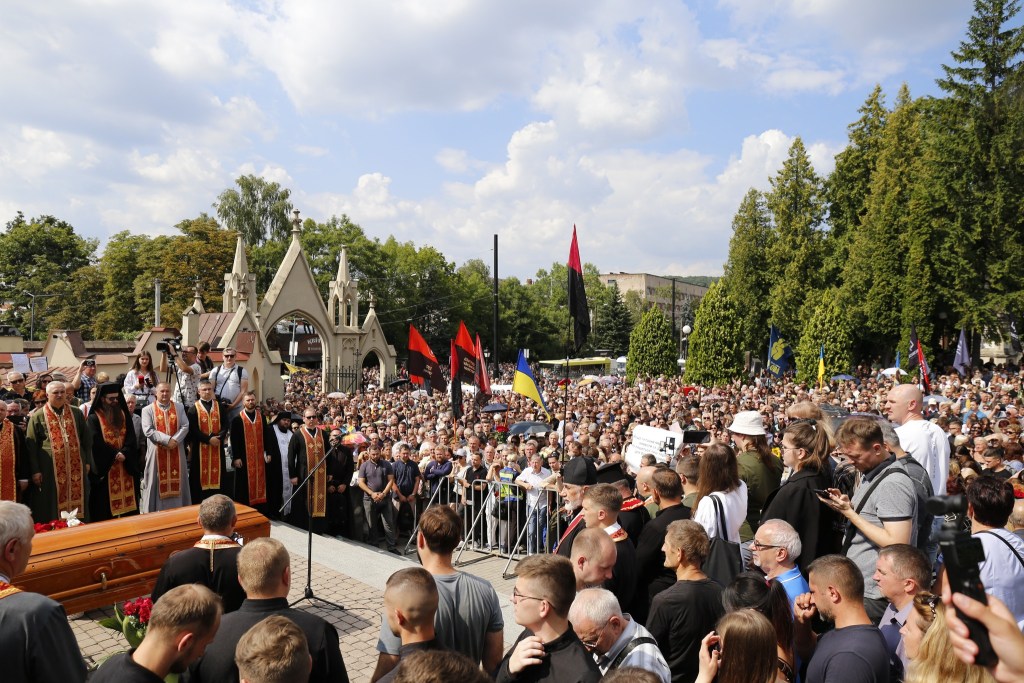
Farion also actively maintained her YouTube channel, where she offered a course on Ukrainian language culture and did not spare criticism for either the Ukrainian authorities or, unsurprisingly, the Russians. In her last video, she announced a brief pause as she planned to go on vacation with her grandchildren. However, a day before that, her life was cut short by a gunshot to the temple. During the march to Lychakiv Cemetery, people chanted the slogan: "One language, one nation, one Homeland — Ukraine." This is what Iryna Farion managed to comprehend, multiply, and spread through her work and worldview.
Epilogue
Iryna Dmytrivna's character was well illustrated by her former student, now the First Deputy Head of the Sambir District Military Administration, Pavlo Hrabskiy. After the tragic death of the prominent Ukrainian, he shared this post on his Facebook:
"Iryna Dmytrivna once administered an exam in Ukrainian language for my group FL-33 (NU LP, 2010), and my turn came.
— Hrabskiy, you've missed many classes, where have you been? Where are you from?
— Staryi Sambir district.
— Oh, I'm from there too.
— Iryna Dmytrivna, all talented people are from the Staryi Sambir district.
Iryna Farion looked up, lightly chuckled in her characteristic manner, and asked:
— Well, Hrabskiy, what's your favorite quote from Shevchenko?
— Real struggle begins only when all strength is gone! — I replied automatically, as I had memorized this phrase that Iryna Dmytrivna constantly repeated to us young students!
— Get out of my sight, 5!
That's how I will always remember Iryna Farion!"
Anastasia Krupka, для Vilni Media