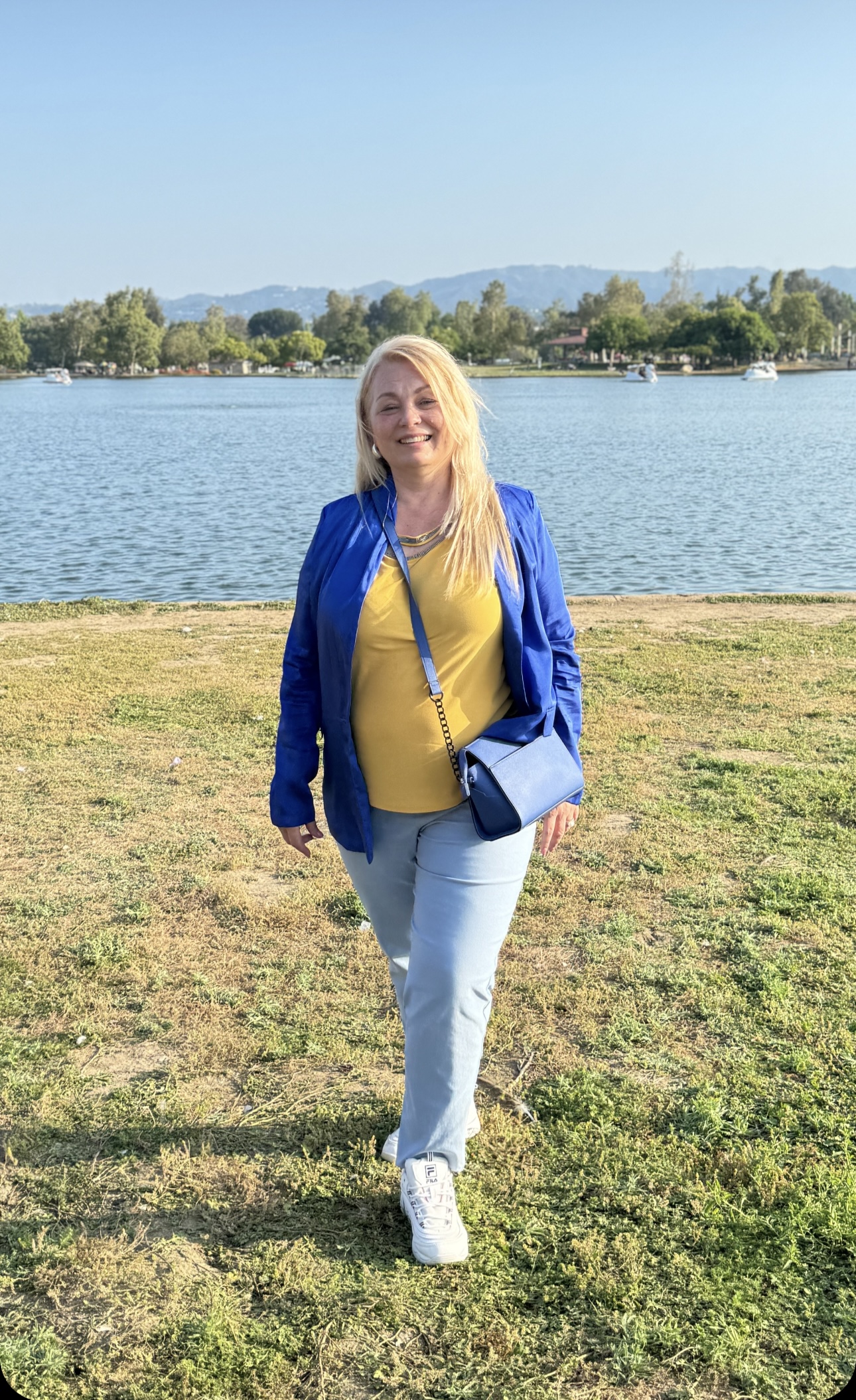
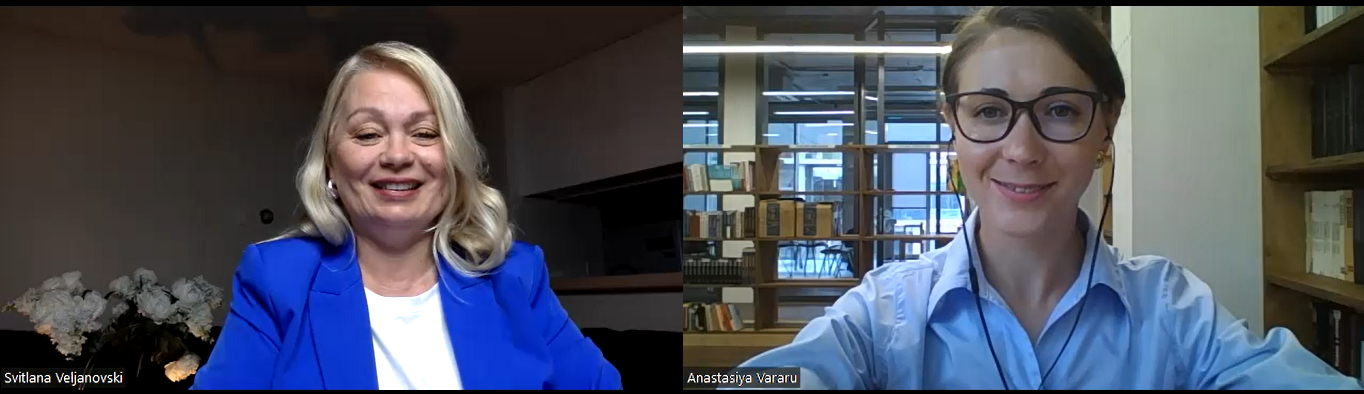
More than 15 years ago, Svitlana Velyanovsky left Ukraine with her daughter and moved to the United States. Her path to becoming a psychotherapist in Los Angeles was filled with numerous challenges. Today, she not only helps her American clients overcome difficulties, but also actively cares about the mental health of her compatriots. She actively supports her country during the war. Her story is an example of how, at any age, despite the challenges of emigration, and despite her age, one can find a vocation and become a source of support for others.
Right before the full-scale invasion, on February 20, 2022, Svitlana flew from Los Angeles to Kyiv. One of her close relatives was hospitalized and was in serious condition.
So the woman, well aware of the risks, goes to Ukraine.
- In America, we trust the news and the words of our government," she says. "So when they told us that war was imminent, we knew it was serious. But I had no choice. My son was in the hospital and miraculously survived, and I had to come to him.
Although Svitlana's supervisor in the United States understood the reason, she did not want to let her go to Ukraine, where a full-scale war was about to break out. She agreed only on the condition that Svitlana would continue to conduct remote group and individual therapy.
- On February 24, as promised, I conducted online therapy for drug addicts," recalls Svetlana. "When a person is on the verge of death and life because of drugs or alcohol, they need strong motivation. My example of traveling to Ukraine, despite warnings of war, became such a source of inspiration for many of my clients. During therapy, I drew parallels between the war and the fight against addictions. I told my clients: look at the Ukrainian soldiers who are now sitting in the trenches. They risk their lives for the sake of their families. They can be killed, but they are there because they are protecting their loved ones. And you are dying from drugs or alcohol. What are you dying for? For temporary pleasure? Think about your family, who is also losing you.
Moving to the USA
Svitlana Velyanovsky came to the United States as a bride. She met a successful American through a dating site. The foreigner had been coming to Ukraine for five years to "visit". In 2009, when she was 42, Svitlana married him, and they moved to the United States with their daughter, while Svitlana's eldest son remained in Ukraine.
- It was a completely different world," says Svitlana, impressed by the level of inclusiveness in the new country. "I lived in the Soviet Union until I was 25, where people never dreamed of such things. People on buses help each other when, for example, someone has an epileptic seizure, take care of the elderly. I saw special buses with stairs that lowered.
A new life away from home, in a completely foreign country, prepared new challenges for the mother and daughter.
- It was a very difficult relationship from the very beginning. As a psychologist, I quickly realized that I had fallen into a trap from which I had to escape. We divorced almost immediately," says Svitlana about her marriage to an American.
In fact, once on the street, the mother and her 18-year-old daughter ended up in a shelter for victims of domestic violence, where they lived for four months.

- I was shocked by the way the state helped us: lawyers, warm clothes, food, a room to live in," she recalls.
While living in the shelter, Svitlana noticed that many immigrants from the post-Soviet space also ended up in shelters because of domestic violence. She notes that only a small number of women had successful marriages with foreigners. Most faced abuse and violence. And few of them sought help.
- In my opinion, only 3% of the women who decided to leave their home country to marry a foreigner at that time had good relationships. The rest faced abuse and domestic violence. Just imagine what those women went through! "Migration in itself is a trauma, and when domestic violence is added to it, it is a complex trauma that will take many years to work with," the psychologist explains.
According to Svitlana, this topic is particularly relevant today, when many Ukrainian women are fleeing the war to the United States and Canada. It is important for refugee women to be careful and cautious when entering into relationships with foreigners. The woman also recommends not to devalue their war-related traumas and to seek help from specialists. After all, emotionally and physically exhausted, these women often leave an equally traumatizing environment, which makes taking care of their own health and safety even more important.
A student in her 50s
After her stay in the shelter, the government helped Svitlana and her daughter move to California. There she found a promising job in sales and later worked at one of the most prestigious hotels in Los Angeles. Surrounded by successful people, she listened to their success stories and tried to find answers to the question of how past experience and education could help determine her life direction: "I tried on everything I heard. But I couldn't get on the path I needed to be on."
The decisive year was 2014. When Russia began its invasion of Ukraine. Reading the news, Svitlana realized how many people would need psychological help and support. This was an important impetus for the woman - it was then that she decided to help her nation, which was in the midst of war. At the time, Svitlana's son was also taking part in the fighting in the Donetsk region.
- For my family, for me, the war started back then. Sleepless nights. Excitement every time he went on a mission. I realized that I urgently needed to acquire the competence to help my people, my son and all the guys who went to war. So I decided to start studying psychotherapy.
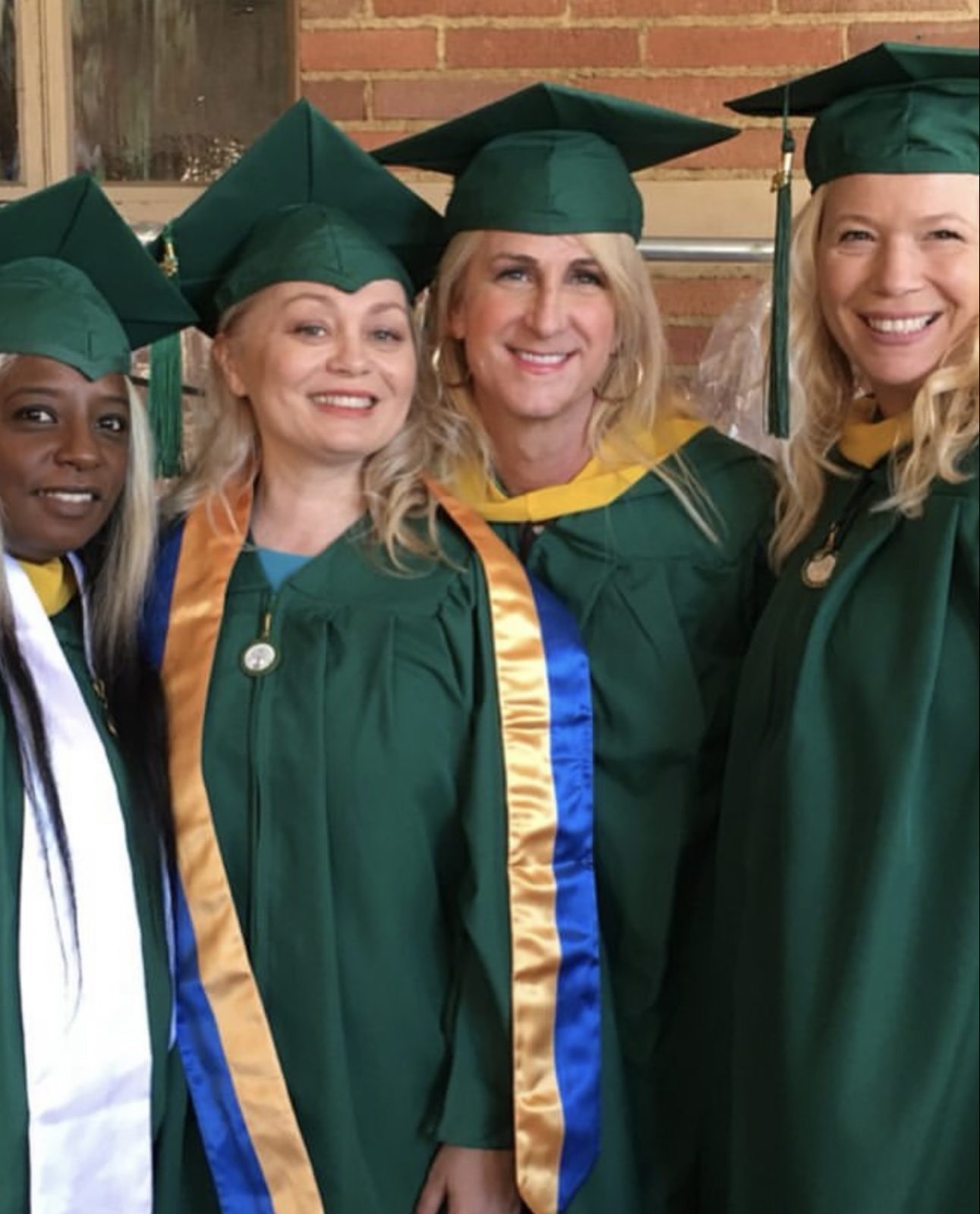
Svitlana Velyanovsky joined the Antioch University in California at the age of 50. For 2 years and three months, she studied Family Psychotherapy with a specialization in trauma work.
Studying was a big challenge. A lot of workload, lack of knowledge of the language. In addition, at that time Svitlana was studying at the Ukrainian private psychological school of Natalia Kholodenko, where she learned techniques directly from practitioners, not from textbooks.
- Those were the most difficult times in my life," Svitlana admits, "but I knew why I had to go through this path. In my second year, we all went to a mandatory internship. We signed contracts with agencies, and I started working in an elementary school with children aged 7-11, along with a group of other students in different schools.

Psychotherapy in the American way
Svitlana has lived in Los Angeles (LA) for over 10 years and works as a psychotherapist in a local agency. She notes that Los Angeles County and the neighboring Orange County, located in the southeastern United States, are unofficially considered the capital of psychotherapy. More than 20 thousand psychotherapists work in this region. As for the United States as a whole, according to the woman, there are approximately 40 thousand psychotherapy professionals across the country. These are specialists in various areas: eating disorders, domestic violence, alcohol and drug addiction, sexual relationships, clinical illnesses, etc.
- Unfortunately, in Ukraine, many people still do not perceive psychotherapy as something commonplace, but here it is the norm. It is important to get rid of stereotypes and seek help if you feel psychologically uncomfortable. "Many Ukrainians who come here do not seek out local psychotherapists," Svitlana notes, "because they either don't know that this is the capital of psychotherapy or are afraid of the high prices.
Svitlana explains that Ukrainians are often embarrassed to go to psychotherapists because of fear of judgment or stereotypes that have developed since the Soviet era. Noticing Ukrainians in her environment who neglect their mental health, Ms. Wielianowski talks on her Instagram page about government programs in the United States that cover the cost of psychotherapy through Ukrainian insurance policies.
- It's important to understand that there are many programs in the U.S. that cover the cost of psychotherapy through government and health insurance," she notes, "Many Ukrainians don't even know that they can get free help by contacting the appropriate agencies.
Calling on her fellow Ukrainians to seek help, especially when it comes to mental health, Svitlana provided list of organizations in the United States, which Ukrainians can apply to. Also, through its Instagrampage talks about preventive means of self-care.
- For many Ukrainians, especially those who have traveled abroad, the war has become a source of enormous stress. People believe that their mental health does not require treatment, saying, "we will survive, it will pass somehow." However, this is a very dangerous mistake. If a person cries every day for more than two weeks in a row, it can be a sign of clinical depression. Sometimes people don't realize that their constant tears or aggressive reactions to trivial things are signs of traumatic experiences that require professional help," Svitlana warns.
Svitlana emphasizes that prolonged neglect of symptoms can lead to serious consequences, including panic attacks, paranoia, and suicidal intentions. Therefore, the expert urges Ukrainians not to neglect psychotherapeutic help.

Reference.. Between 2022 and 2024, the increase in the number of mental disorders among Ukrainians has become a critical problem. According to According According to the World Health Organization (WHO), an estimated 9.6 million Ukrainians may suffer from mental illnesses, including depression, anxiety disorders, and post-traumatic stress disorder (PTSD). The consequences are particularly dangerous for IDPs and those directly affected by the fighting.
Recent study survey showed that 83% of Ukrainians affected by the conflict reported that they or their relatives had experienced stressful or traumatic events. Of these, 30% have already sought psychological help, demonstrating the growing need for such services.
- We now have a chance to help ourselves and our children overcome these traumas. If we don't take care of our mental health today, it will have long-term consequences for the next generation. If you don't work with childhood traumas, then a person carries these unresolved problems into society. Here in the United States, it is well understood that we all come from childhood, and all traumas originate there. Therefore, the work of mental health agencies is funded half by the state and half by business. It's a kind of investment in the mental health of the nation," the psychotherapist notes. "That's why psychotherapy has been perceived as a norm and a necessity in America for many years, starting from school age. There are usually 2-3 psychotherapists per elementary school, and we work every day. Sometimes a school has a full-time psychologist or psychotherapist, but an agency provides additional help. The mental health of a nation should start in childhood, especially when it comes to Ukrainian children who look at the world through the prism of their experience of war and trauma from the fighting.
Ukrainian dinner in California: a celebration of traditions and culture to help Ukraine
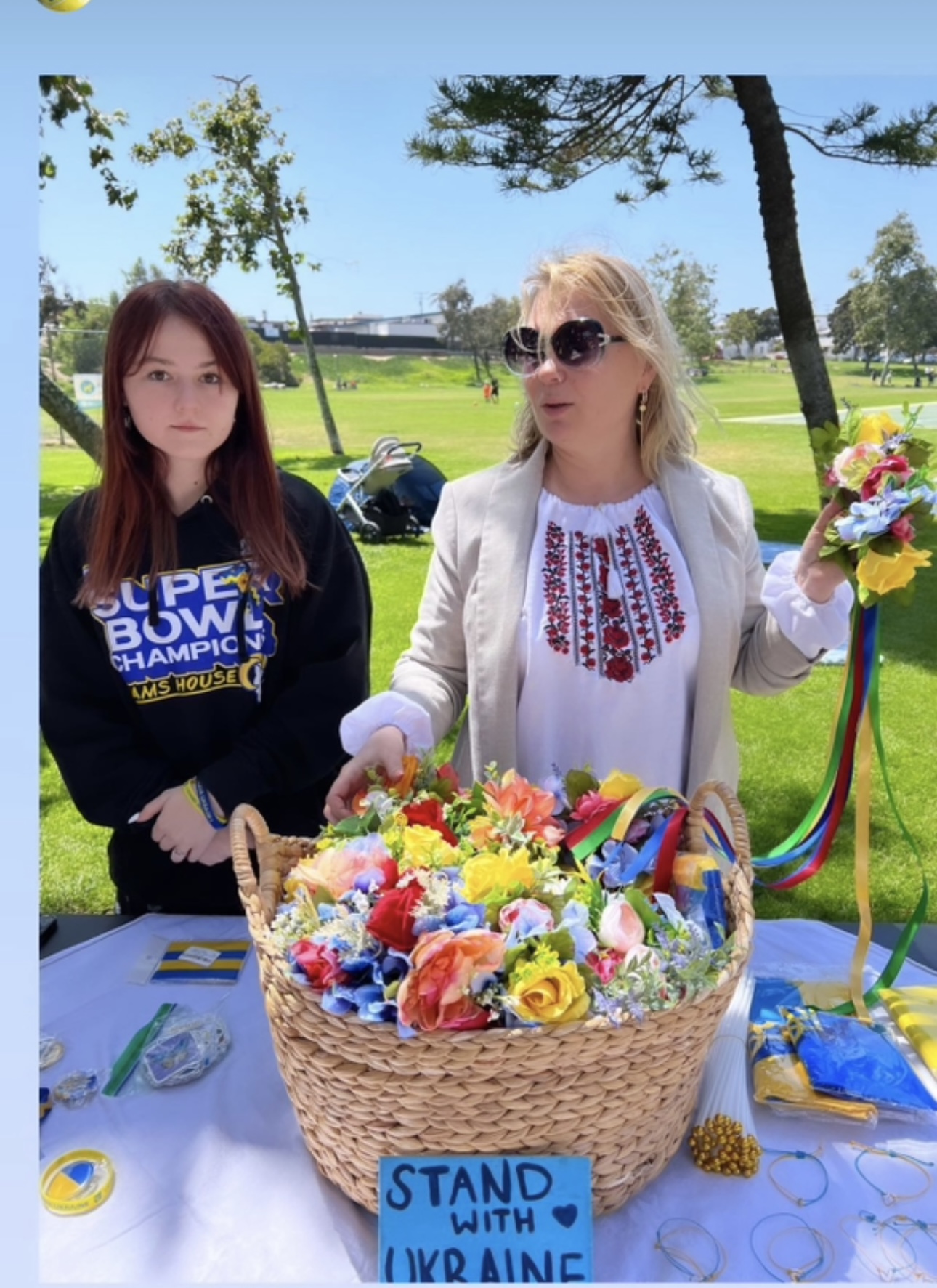
In addition to psychotherapy, Svitlana and her family actively support Ukraine. They regularly hold meetings, organize various events, go to rallies, collect and send humanitarian aid.
On September 7, 2024, a private home in Ventura County, California, hosted a charity Ukrainian Dinner, a private event for 50 guests that was open to the public by invitation only. All funds raised during the event will be used to purchase clothes, toys, electronic devices and other items to be sent to Ukraine for the Christmas, Hanukkah and New Year holidays.
The event was initiated by the non-profit organization Angels of Ukraine, whose president is Svitlana's daughter.
- "We are all united here," says Svitlana, "It is an important part of our work to support our homeland and remind Americans of the war in Ukraine.
During the first months of the war, while in Ukraine, Svitlana volunteered in military hospitals and saw with her own eyes the terrible consequences of the war: young men with amputations, dozens of ambulances. When the explosions occurred in Vinnytsia, the entire hospital was shaking from the shockwaves.
- It was only the beginning, but even then I realized how large-scale these trials would be for our people.
Amidst the hardships of living in a foreign country, Svitlana Velyanovsky was able to find her calling through her desire to be useful to her nation. Her journey shows that no matter where you are, you can always be part of the struggle for a better future for your people.