


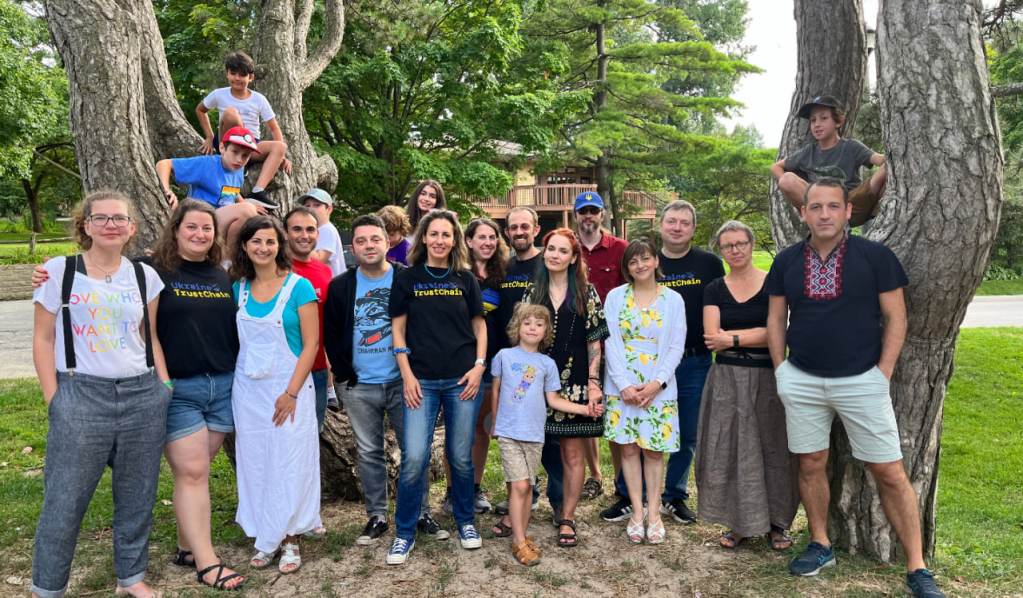
February 24, 2022 gave birth to thousands of volunteer initiatives in Ukraine and across the world. Almost overnight, self-organized groups emerged to support refugees, gather humanitarian aid, purchase lifesaving equipment for soldiers, provide medical assistance, ensure the continuity of education, rebuild destroyed structures, and much more.
Two years and eight months later, many of these initiatives have lost steam or are struggling to stay afloat. Public enthusiasm for Ukraine has waned; resources are tight; and even the most dedicated volunteers feel the exhaustion seeping in.
But some organizations continue to thrive, overcoming hopelessness and overwhelm. One such nonprofit is Ukraine TrustChain - which may very well be the largest Ukrainian-American nonprofit you’ve never heard of.
UTC has a succinct and compelling mission: help where large international NGOs cannot, moving quickly and addressing the greatest needs, all while spending less than 0.1% on overhead. Since its launch, UTC has raised over $10 million and facilitated the delivery of over $100 million of humanitarian support to Ukraine. This month, UTC board members Lilia Kogan and Ilya Knizhnik shared their perspectives on UTC’s journey and the road ahead.
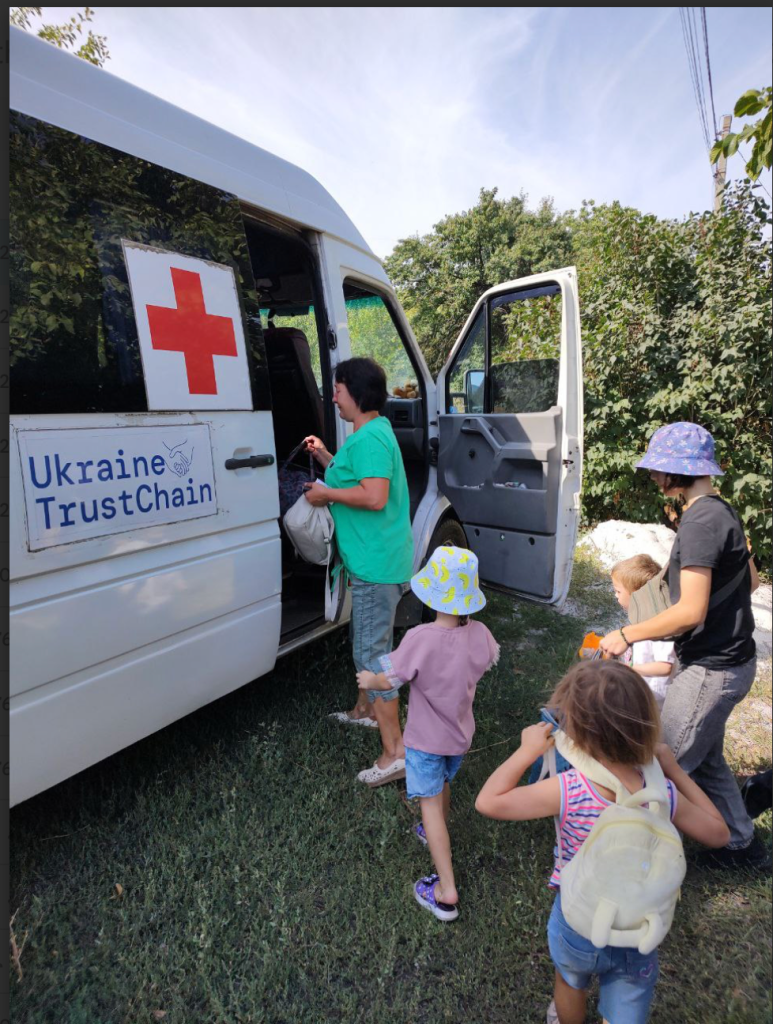
Starting with a Bottle of Formula
Like most volunteer initiatives that emerged in those first days of full-scale war, Ukraine TrustChain was born spontaneously, from an urgent need and an inability to turn away.
It all began with a desperate phone call. A surrogate mother in Kyiv had given birth days after the invasion began; she desperately needed formula for the newborn twins. Friends reached out to friends, and word reached Daniil Cherkasskiy in Chicago, UTC’s founder. He, in turn, reached out to contacts in Ukraine, searching for someone who could help.
According to Ukraine Trustchain’s website, “Through a series of connections, Daniil met Natalia, a real estate agent and young mother. Instead of evacuating Kyiv, she stayed, narrowly escaping shelling as she drove from pharmacy to pharmacy — risking her life for a stranger’s babies. The first link of trust was established.”
Soon, Daniil had amassed a team of volunteers in the US to support Natalia’s humanitarian work in Ukraine. Through their growing network, they connected with other selfless Ukrainians who had dedicated themselves to evacuating people in dangerous areas, bringing food to the hungry, and responding to other urgent needs that popped up across the war-torn nation. Today, UTC supports well over a dozen grassroots volunteer teams operating across Ukraine.
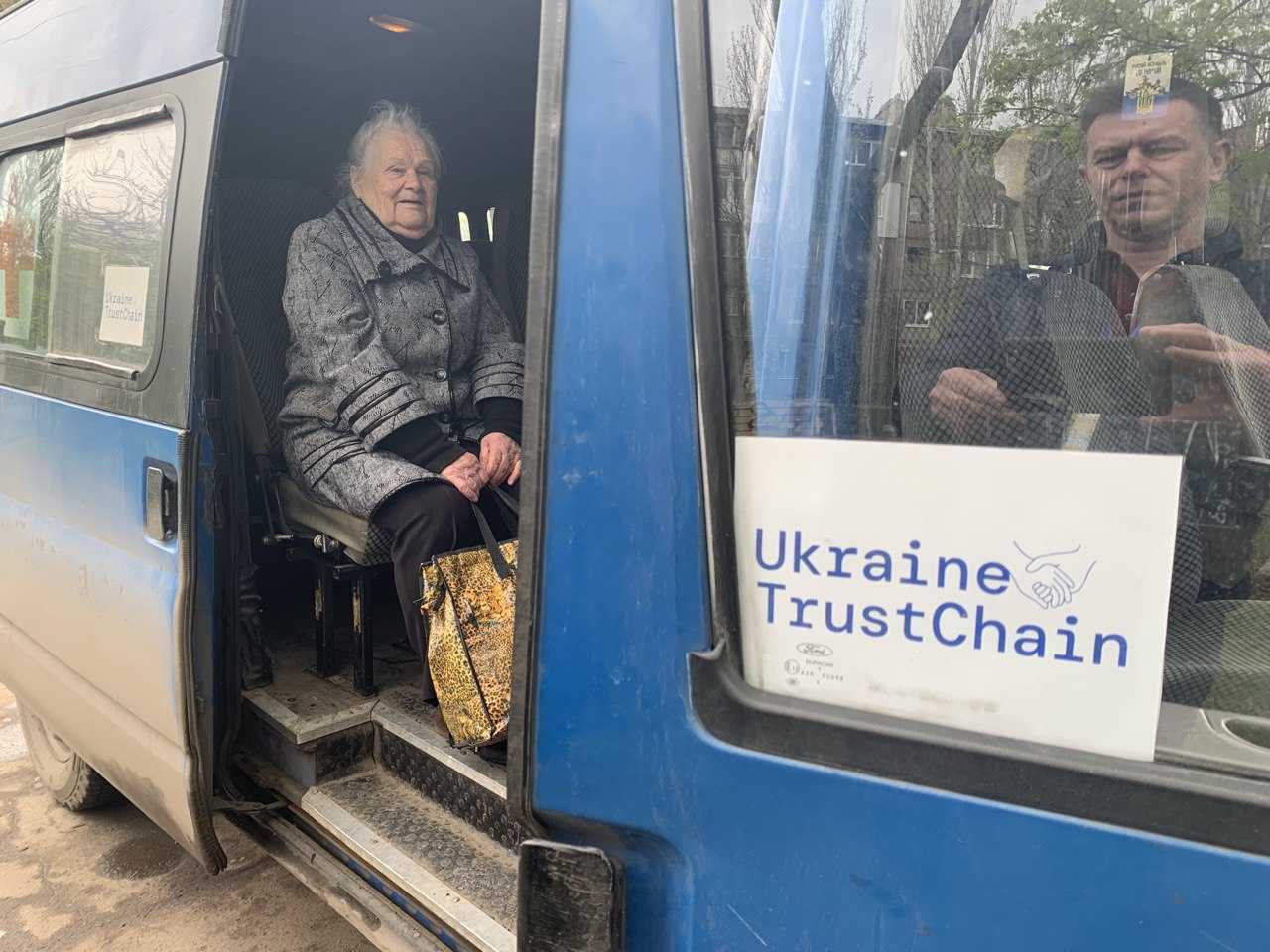
A Nimble Leadership Team
Despite its scale and nationwide reach, UkraineTrustChain is run entirely by volunteers. A board of 8 directors leads the organization. All are based in the US and take responsibility for different areas of work. Another dozen volunteers support specific tasks like social media, accounting, and maintaining the organization’s website.
The team meets weekly on Zoom and uses Slack to communicate between meetings. To keep their decentralized volunteer team organized, they’ve set up separate group chats for every workstream. They are in touch with the volunteers they support in Ukraine on a near-daily basis.
While the team is organized, this structure isn’t rigid. When needed, team members support each other and plug into areas of greatest need.
Trusting Local Volunteers: How UTC Allocates Resources
As in every humanitarian crisis, urgent needs always exceed the resources available. Choosing how to allocate funding to maximize impact is a key part of the UTC team’s work. While the team takes several approaches to deciding how to spend its funds, they follow one central principle: trust the expertise of those on the ground.
Since its founding, UTC has opted to support community-based volunteer teams in Ukraine rather than running its own projects. Most of the donations UTC sends to Ukraine are structured as weekly unrestricted grants to these teams. This approach offers two critical benefits: peace of mind (volunteers can count on a certain amount of funding each week) and flexibility (teams on the ground can determine the areas of highest need and adapt quickly). In turn, volunteers report on how the money was spent, ensuring transparency and accountability.
UTC also funds special projects, with suggestions coming directly from its volunteer teams on the ground. When evaluating such projects, UTC’s leadership looks for opportunities to have the largest possible impact. For instance, one recent project provided seeds to 20,000 farmers in Ukraine, which would then yield crops feeding yet more Ukrainians.
Equally impactful are opportunities to close funding gaps, catalyzing aid from other donors. Ilya shared an example of a UTC-supported volunteer team that receives food aid from donors in Europe. “Each trip brings in food aid that may be worth half a million dollars. But what we pay for is transportation,” Knizhnik said. “If no one pays for the transportation, that aid will be stuck there for months or may never make it to Ukraine. So those kinds of donations have a very significant multiplier effect.”
Overcoming Ukraine Fatigue
Like every nonprofit serving Ukrainians today, UTC has had to contend with a decrease in international media attention and public support for Ukraine over the past year. The UTC team has noticed a decline in contributions from new donors; earlier this year, they decreased the regular monthly support they provide to each of their volunteer teams in Ukraine, and are no longer adding new teams to their network.
However, the community of several thousand committed donors they have built since February 2022 remains active. “Some of our most loyal donors, they’re aware of Ukraine fatigue, so they’re trying to overcome this [by giving more],” Lilia explained.
The clear and life-changing impact of UTC’s work, communicated in weekly newsletters, keeps supporters motivated. Some donors make regular contributions, even occasionally increasing their contribution amount. Others organize fundraisers on UTC’s behalf - everything from Facebook fundraisers to an annual 5K race. An anonymous anchor donor who has supported the organization since its launch also helps provide financial stability.
The Power of Human Connection
As the third year of the full-scale invasion draws to a close, donors aren’t the only ones experiencing fatigue. Volunteers may also struggle with the weight of the seemingly unending challenge ahead of them. As Lilia and Ilya look back on nearly three years of tireless work, they point to several factors that have kept UTC thriving.
The first is efficiency - streamlining tasks until their overall workload became sustainable. In early 2022, UTC’s volunteer leaders each spent well over 40 hours/week managing the organization. By forgoing non-essential tasks, such as large, centrally organized fundraising galas, they have reduced the commitment to a much more manageable degree.
The second is what Ilya calls naivete - flexibility, optimism, and the willingness to try things that other, more experienced nonprofits might deem impossible.
But the aspect of the work that both Lilia and Ilya highlight most is their relationships - with the other board members in the US as well as the volunteers in Ukraine. These connections often become personal, with conversations spilling over from project updates to discussing their lives, their children, and more. And during difficult moments, it’s these relationships that motivate the UTC team. Ilya explained, “The volunteers in Ukraine are absolutely amazing: they risk their lives to help others. You feel things are getting tough, [you think], ‘what are we accomplishing?’, and then you have one call with the volunteers and you walk away so inspired.”
Lilia described the validating feeling of receiving and passing on the gratitude that flows from donors, who are grateful for the opportunity to have a direct impact, and the volunteers receiving essential support week after week. UTC, in her eyes, serves as a conduit, passing on this gratitude - true to its name, a chain sharing support and love one link at a time.
Author: Katerina Manoff