


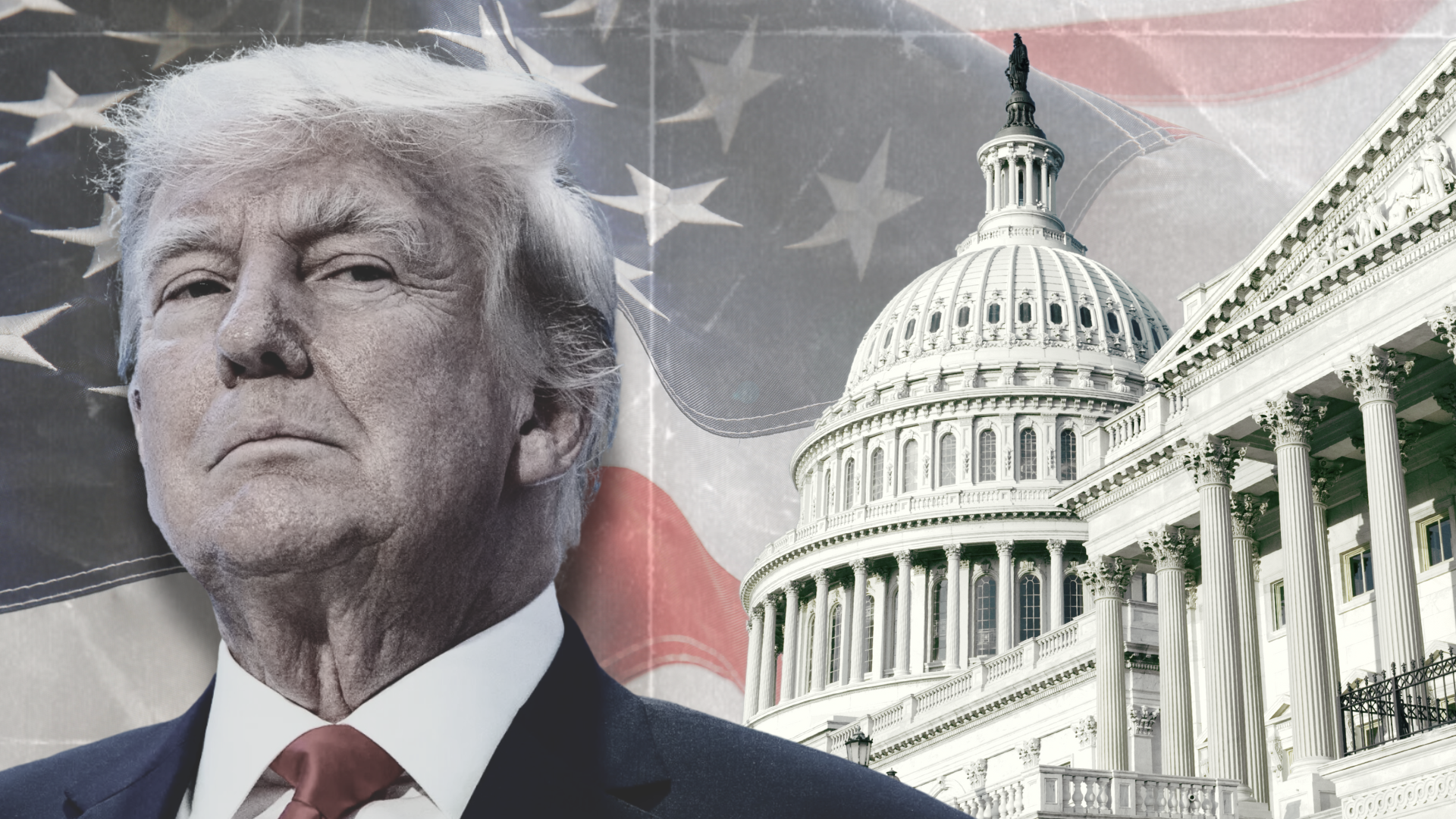
Donald Trump's victory in the 2024 elections marks the definitive end of an era that lasted from the conclusion of World War II until this year. The United States will no longer be the country it was in the 20th and early 21st centuries, and the world will also undergo significant changes.
A temporary setback or the end of an Era?
According to most sociological studies, the key factors behind the Democrats' defeat were their policies on minority rights, their enthusiasm for social-democratic economic approaches that have led to stagnation, and, in the opinion of a significant number of voters, overly lenient stances on immigration, including illegal immigration.
"Exit polls reveal the main reason for Trump’s victory. Voters rejected the leftist platform of Vice President Kamala Harris and the Democrats, which focused on progressive social issues while largely neglecting the economy.
In contrast, Trump’s emphasis on ‘kitchen table’ issues such as the economy and immigration proved far more effective than Harris and the Democrats' focus on abortion rights, particularly among young, Latino, and Black voters – groups Harris needed to win over," noted Douglas Schoen and Carly Cooperman in The Hill.
Unlike 2022, when Democrats won the midterm elections by rallying around the defense of abortion rights, this year’s decisive topics were the economy and illegal immigration. The Democratic Party failed to highlight these issues adequately in its campaign. Even among the youngest voter group (18–34 years old), support shifted 6% more toward Trump, according to the same article.
"The scale of the Democrats’ defeat, combined with polling data, provides a clear roadmap for how the party might recover in 2026 and then in 2028. However, whether the party chooses to follow this roadmap and develop a centrist, economically focused platform, or instead doubles down on leftist social issues, remains to be seen," the authors concluded.
These commentators represent a widely held view among Democrats that the current defeat is part of the usual paradigm of U.S. political life – a temporary setback that could be corrected in the next elections, possibly even the midterms. This could happen if the policies of the victors – Donald Trump and the Republican Party – prove to be too radical, prompting the majority of voters to demand a pendulum swing to the left, as occurred in the 2020 and 2022 elections.
However, the changes this time could be far more profound and, to some extent, irreversible. This is driven not only by the more decisive and skillful approaches of Trump’s second term but also by deep processes within the Democratic Party.
The defeat of the Democratic Party – in all its dimensions: the presidential election, both chambers of Congress, and to a significant extent, governorships – primarily reflects the exhaustion of its policies as presented to voters in this year's campaign. The attempt to rejuvenate the presidency by nominating Kamala Harris – a representative of the generation following directly after Biden's, which is naturally receding from the stage – did not save the party from its main failure: the loss of its former base, the middle class, which has historically been the cornerstone of American society. This occurred for several reasons.
First, the growing elitism among the party’s leadership, donors, and voters, who now belong to a new generation of highly educated, successful senior executives and employees of large tech companies. Essentially, a new class of affluent and ultra-wealthy individuals has emerged, guided by “progressive” approaches and worldviews. This shift has its justifications – after all, internet technologies have unlocked unprecedented opportunities for the free exchange of information globally, fostering a sense of world unity, shared humanity, and concern for the environment. These values are natural for this class. However, the downside of this process has been their detachment from the “ground” – the practical concerns of the middle class and workers in manufacturing sectors. This disconnect is especially damaging to the Democratic Party in key “battleground” states, where the population largely belongs to the groups left behind by the rapid pace of scientific and technological progress and the progressive agenda.
Secondly, the Democratic Party’s excessive focus on minorities – racial, ethnic, gender, immigrant, and others – has become a significant issue. At one stage, such efforts were justified: historically marginalized minorities required compensatory actions, particularly in light of the social and moral values shaped by the victory over Nazism. However, the party became so engrossed in these compensatory measures that it began implementing various quotas and percentage targets for minorities. This often led to "reverse discrimination" against the majority population (again, especially in key battleground states) and a devaluation of individual merit and personal or professional qualifications in decisions related to employment, education, and more.
Thus, if the Democratic Party fails to reconnect with the middle class and “ordinary” workers on a new, contemporary foundation – particularly in the states that determine presidential election outcomes – the future of the party appears highly uncertain.
Corporate managers or administrative employees?
Against the backdrop of these challenges, the victory went to Trump’s opponents, despite several significant controversies. Neither the guilty verdict delivered by a jury against the presidential candidate, nor fervent warnings about his authoritarian tendencies and unpredictability, nor even Trump’s own fiery speeches – where he openly expressed intentions to target his political adversaries and organize "mass deportations" of illegal immigrants – deterred voters. These factors, despite directly contradicting the values of American society, evoking parallels with dictators, and posing threats to the U.S. system of checks and balances, did not shift the election outcome.
The meeting between President-elect Donald Trump and incumbent President Joe Biden at the White House, held without any disruptions or visible tension, does not guarantee a smooth transition of power or an untroubled tenure for the most powerful nation. On the contrary, this calm may merely foreshadow a storm of extraordinary turbulence, at least in the first two years of Trump’s presidency.
Buoyed by his victory, Trump immediately announced appointments to key leadership positions in all 15 executive departments and his administration.
The appointment of Marco Rubio, a senator from Florida who served on the Foreign Relations Committee and is known for his tough stance on China, Iran, and russia, as Secretary of State did not raise objections even among political opponents. There was also no controversy surrounding the appointment of Mike Waltz, a congressman from Florida and the first Green Beret veteran elected to Congress. "Waltz called on Europe to provide greater support for Ukraine and urged the U.S. to adopt a tougher stance in its aid, aligning with the key foreign policy goal of the newly elected president. He was also a strong critic of the Biden administration’s withdrawal from Afghanistan in 2021," noted Alex Gangitano and Brett Samuels in
Elise Stefanik’s nomination as Ambassador to the UN also caused little stir. A fervent defender of Israel but skeptical of Ukraine, she previously led the Republican caucus in the House of Representatives and was elected from upstate New York.
Other Trump appointees are perceived as at least controversial. This primarily includes the team that will implement strict border security policies and combat illegal immigration. This team includes Stephen Miller, Senior Advisor for Domestic Policy, the architect of immigration policy during Trump’s first term, who became notorious for methods such as separating immigrant families, including small children, when they crossed the border illegally. It also includes Kristi Noem, former Governor of South Dakota, as Secretary of Homeland Security. However, the main role will be played by the "Border Czar" (that is, a leader with a special task in a specific area) Tom Homan. He previously headed Immigration and Customs Enforcement (ICE) and will oversee all borders, including land, sea, and air. Noem and Miller, during Trump’s first term, "separated 4,000 children from their parents," according to the authors.
However, the most objections were raised against four appointees. For the position of Attorney General, Trump nominated Matt Gaetz, a congressman from Florida. Gaetz became notable in the fall of 2023 during the federal budget approval process when he unexpectedly led a rebellion against then-Speaker Kevin McCarthy over his cooperation with Democrats, forcing the House of Representatives to hastily hold new elections for Speaker, resulting in the election of Mike Johnson. However, the uproar against Gaetz was not due to this but rather to allegations of his involvement in trafficking underage prostitutes. This matter was investigated by the Congressional Ethics Committee. Ultimately, Gaetz withdrew his candidacy, and Trump quickly found a replacement – former Florida Attorney General Pam Bondi. She had defended Trump during his first impeachment and had proven her loyalty to him. "To prosecute bad prosecutors who go after Trump," she declared as her credo.
Another controversial nomination is Tulsi Gabbard for the position of Director of National Intelligence.
“Gabbard is a veteran of the Iraq War. She served as a member of the House of Representatives from Hawaii and as vice-chair of the Democratic National Committee. However, two years ago, she left the Democratic Party, partly due to disagreements over support for Ukraine in the war with russia. She criticized the Biden administration for providing military aid to Kyiv. After leaving the Democratic Party, she worked with the conservative television channel Fox News.
In one of her interviews, Tulsi Gabbard stated that Ukraine should not be defended because, in her opinion, it is not a democracy. She also spoke about biolaboratories allegedly funded by the United States in Ukraine – claims propagated by russian propaganda following the full-scale invasion of Ukraine, with no evidence to support them. Gabbard also opposed economic sanctions against russia,” notes Valentyn Baryshnikov on Radio Svoboda (russian edition). на радіо «Свобода» (рос. редакція).
Supporters of Trump and Trumpism (and perhaps Gabbard herself, including her colleagues in the House of Representatives) emphasize that she, as a member of Congress, expressed her opinions and fiercely criticized intelligence agencies for what Trump and his followers perceived as politicization against the 45th president and the existence of the so-called “deep state.” What is meant by this term is not entirely clear. From the context, it can be inferred that Trumpists use this concept to refer to a bias toward the Democratic Party and, consequently, prejudice against conservatives.
Since it was the Democrats who accused Trump and his initial circle in 2017–2018 of "inappropriate" ties with russia (allegations that were, in fact, quite substantiated), this "deep state" is seen as excessively biased regarding the "russian threat." By this logic, one can partly explain the greater sympathy of Trump-supporting Republicans for putin's regime. This stance may also reflect a hidden admiration among Trumpists for the absolute power seized by the russian dictator, enabling him to do whatever he pleases.
Other Republicans and Democrats stress that they will subject every nominee to thorough scrutiny, including examining "files" prepared by the FBI on individuals deemed "unreliable." Gabbard may be rejected as a result of such an investigation.
Significant objections were also raised against the nomination of Pete Hegseth as Secretary of Defense. A veteran of the wars in Afghanistan and Iraq, Hegseth lacks experience in leadership or an understanding of geopolitical dynamics. However, he has loudly criticized the Pentagon's "diversity" policies and those within the Armed Forces. He opposed the "constraints" placed on troops in combat by the Geneva Conventions, defended soldiers accused of war crimes, denied the role of women in combat operations (a position sharply at odds with reality), and accused NATO allies of insufficient contributions to their own defense – these facts are reported by Meg Kinnard in Associated Press.
He also faces accusations, at the very least, of a sexually motivated assault on a woman (whose name has not been disclosed) in 2017 at a hotel in Monterey, California. This story has been covered by numerous media outlets and contains contradictions. For example, according to an article by Kelly Rissman in The Independent police first learned about the incident from a nurse at a hospital where the woman sought treatment five days later, unable to recall the details of how it occurred. No formal charges were filed against Hegseth, though a police report on the incident exists. Hegseth himself claims the encounter was consensual, yet in 2023, he paid her a significant sum for her silence.
In any case, these controversies and scandals combined could lead to the withdrawal of Hegseth's nomination. Trump will likely find a similar replacement for him who will carry out his plans to "cleanse the Pentagon" of "progressives" (that is, minorities – and women?).
There are many complaints about the nomination of Robert F. Kennedy Jr. for Secretary of Health and Human Services, particularly due to his opposition to mandatory vaccinations for children.
As for the newly created semi-shadow division for "government efficiency," led by Elon Musk and Vivek Ramaswamy, its exact role remains unclear. Musk contributed to Trump’s election in a manner reminiscent of how Berezovsky “helped” elect putin. However, the media is abuzz with speculation about whether two lions – Trump and Musk – can coexist in the same “den” of the state apparatus. There are already disputes between Musk and Boris Epshteyn, one of Trump’s longest-serving aides.
The nominations put forth by Trump clearly demonstrate not only that the primary criterion for selecting personnel is proven loyalty to him personally and to his vision of domestic and foreign policy but also that these appointees (either through their actions or repeated statements) have shown fundamental agreement with the core points of Trump’s agenda.
Trump’s chosen candidates view harsh policies against immigrants as entirely acceptable, showing little concern that mass deportations of "illegal foreigners," bolstered by rhetoric such as "all countries send us their criminals" and "they taint the blood of our nation," will inevitably affect legal immigrants as well. For these officials, the primary metric in their reports will be the number of deportations, and no one will bother with "minor collateral details" like the thousands of ruined lives.
Similarly, Trump’s appointees are unlikely to worry about the thousands of civil servants who will be dismissed either for ideological incompatibility or for "inefficiency" as defined by Trump (or Musk). "Trump has promised to weaken civil service rules that protect federal bureaucrats from being fired if they disagree with their superiors’ decisions," writes Doyle McManus in Los Angeles Times. Will highly skilled investigators, intelligence officers, or military personnel be forced out for these reasons – or simply due to an unbearable work atmosphere?
Overall, Trump’s appointees “will help determine whether Trump can dismantle the system of checks and balances enshrined in the Constitution by the Founders and turn the executive branch into an instrument of the will of a potential autocrat,” concludes McManus.
Will he succeed, and to what extent? The answer to this critical question will come not from words but from actions – by Congress (including the president's party members), the government institutions Trump seeks to reshape, and U.S. civil society.
It is already evident, however, that Trump and his supporters at all levels have very far-reaching plans. To some extent, they will undoubtedly succeed in reshaping the United States in their image and vision. This means that the U.S., and to a significant degree the entire Euro-Atlantic world, will never again be as they were. But only the concrete reality of the next four years—the cumulative result of countless interacting factors – will define the limits of this transformation and the direction it will take.
Author: Nadiya Banchyk