


 How to Make Contemporary Ukrainian Literature Not Just Translated but Read
The Ukrainian narrative, along with Ukrainian authors, is slowly but surely carving a path into the catalogs of foreign publishers. Since the beginning of russia's full-scale invasion, the number of translations into foreign languages has been growing. According to data from the Ukrainian Book Institute, 80 translations of Ukrainian books into various languages were published last year, 19 more than in 2023. Unsurprisingly, English ranked among the top languages for translations. From this perspective, things appear to be going well for Ukrainian books. But do we really know what happens to these books after they roll off the press and land on bookstore shelves?
This conversation risks being reduced to mere statistics if we don’t explore the reactions of American readers. Are they even aware of these new translations? Are they interested in purchasing these books? Which names of Ukrainian authors have they heard of?
These questions came to mind following a recent conversation with Oleksandra Koval, the director of the Ukrainian Book Institute (UBI). I was surprised to learn how challenging it is for the institute to establish connections with publishers and promoters. One of the painfully obvious reasons is insufficient government funding and a lack of personnel (or rather, minds) to expand UBI’s capabilities.
Another reason is weak communication between UBI and American literary institutions. This applies not only to publishers — Ms. Oleksandra tactfully avoided naming one such publisher — but also to larger players. One of these is the U.S. Library of Congress, from which UBI has been waiting for a response to a request for quite some time. What is this request about? Technically, UBI could receive reports on how translated Ukrainian books are performing in American bookstores. This includes combat literature (written by military personnel) and war literature (written by both military and civilians on the topic of war). However, UBI currently lacks the data needed to determine whether these books are popular among American readers. One of the few sources that allow for comparative insights is the reporting on the results of the Translate Ukraine support program over the past three years.
In 2023, no books by Ukrainian military authors or about the russo-Ukrainian war were translated into English. In 2024, only one book by a Ukrainian serviceman was published in the United States in English: "Chronicle of a Hunger Strike: Four and a Half Years" by Oleg Sentsov. Two other books — Arthur Dron’s anthology "We Were Here" and Pavlo Kazarin’s "The Wild West of Eastern Europe" — were published in English in the United Kingdom and Germany, respectively. While these numbers are insufficient to draw conclusions about the demand for military literature or books about the war, it’s hard to deny their potential to keep the media and readers’ minds focused on russian aggression. Therefore, it is crucial to emphasize this genre.
In practice, however, the institute faces a brick wall, lacking adequate information about the popularity of specific books. As a result, the Ukrainian Book Institute (UBI) cannot monitor how the publications it supported for translation are distributed in bookstores and libraries. This means that while UBI ensures the translation and release of books abroad, it learns only the fact of their publication, not how they are received. In the meantime, these books might sit unnoticed on shelves, eventually removed due to a lack of interest or insufficient promotion, while Ukrainian bibliophiles celebrate the growing number of translations.
On a brighter note, Oleksandra highlighted a growing interest in Ukrainian classics. According to her, this helps frame Ukrainian literature as deeply rooted in tradition, rather than as something that emerged from nowhere. I absolutely agree with her.
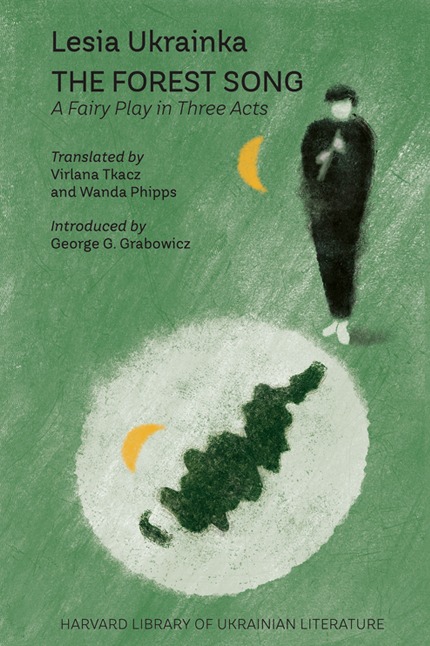
But what should be done with contemporary Ukrainian literature? Unfortunately, I am not directly involved in the book industry, so I cannot offer a qualified opinion. However, as a reader and someone who follows book bloggers to some extent, I place my hopes in them — specifically, Ukrainian bloggers.
It’s important to approach this issue from a broader perspective before narrowing in on potential solutions.
Book bloggers, regardless of the platform, are trendsetters for their audiences. Some of them hold degrees in philology, which arguably makes them greater literary experts than I am. However, if they’re still clinging to the “bones” of russian authors out of inertia from their university curricula, it seems Ukrainian readers have already outpaced them.
To avoid making empty claims, let me provide a few examples: Jack Edwards and Hannah Azerang (host of the channel "A Clockwork Reader") are among the most popular book bloggers on YouTube. However, you won’t find much (or any) mention of Ukrainian literature on their channels. I suspect there are a couple of reasons for this.
The first is simply a lack of familiarity with Ukrainian literature, evidenced by the predictable selection of books they might explore. When I say books, I mean Ukrainian classics that appear in the top results of a Google search, along with Andriy Kurkov. Occasionally, I’ve come across a book unfamiliar even to me — Vita Nostra by the husband-and-wife duo Maryna and Serhiy Diachenko. I suspect I was too young to be aware of their work at the time. One intriguing observation is that all of these authors have written, or continue to write, in russian. While I don’t have enough information to draw definitive conclusions, I’d venture to suggest that the privileged status of the russian language helped these authors “break into” the market. Additionally, over the past two decades, there were simply more translators working from russian.
The second reason is the lack of sufficient promotion to potential audiences. On one hand, many well-known publishers are translating Ukrainian books. Ukrainian studies programs at American universities are also actively developing this area. Here are a few examples: the Ukrainian Research Institute at Harvard University, HarperCollins (which translated the Diachenkos), and Penguin Random House (which published Ukraine by Artem Chapay). It’s worth noting that the Ukrainian Book Institute has successfully facilitated opportunities for translating Ukrainian authors abroad through its annual Translate Ukraine project.
On the other hand, it seems that these books rarely break out beyond university initiatives to reach a wider audience. Perhaps the secret to success lies in publisher-to-publisher collaborations, but this requires a well-established network of human connections — a strong network. For instance, in the U.S., authors typically have their own agents who promote their books and advocate for their interests. In Ukraine, however, this profession almost doesn’t exist. Its functions are partially taken over by translators or even by the authors themselves. The absence of a critical mediator like an agent, coupled with authors’ lack of knowledge on how to promote themselves, creates a closed and somewhat liminal situation. Foreign publishers don’t have Ukrainian writers on their radar, and Ukrainian authors often lack the connections (and sometimes the English proficiency) to secure an American literary agent.
Of course, this doesn’t apply to established names like Serhiy Zhadan or Oksana Zabuzhko, whose reputations precede them. However, even they rarely appear in the recommendations of English-speaking bloggers on YouTube or TikTok. A cursory search on TikTok yields results not for Zhadan or Zabuzhko but for Kurkov or even Gogol (who is still more widely known as a russian author). While there are smaller accounts offering more diverse options, they rarely make it into recommendation feeds, as one might expect.
It’s worth noting that not only Ukrainian authors write about Ukraine. American authors of Ukrainian descent (and even some without it) have found ways to incorporate and reflect on their dual ethno-national heritage in literature. In other words, there is original English-language literature about Ukraine, written by authors who borrow from and attempt to make sense of the Ukrainian mentality and history. This idea occurred to me while reading the literary criticism of Hanna Uliura for Local History.
The English-speaking characters in these books, who find themselves in Ukrainian geographic or cultural contexts, often feel like prototypes of the authors themselves. It’s fascinating to view Ukraine through the lens of an author-researcher. What do they write about?
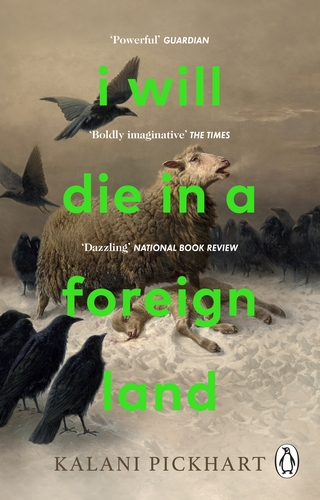
In this section, I’ll draw on Hanna Uliura’s insights as well as my own impressions. It’s hardly surprising to encounter portrayals of Ukrainians as somber stoics or reminders of painful experiences embedded in our national memory. Sofi Oksanen, for example, writes about surrogate babies born to Ukrainian women, while Kalani Pickhart’s I Will Die in a Foreign Land (which I’ve already added to my shopping list) weaves a narrative filled with characters bearing the trauma of Chornobyl, the struggles of the Maidan protests, same-sex relationships, and reflections on their roots. In the end, the themes explored by these authors aren’t too different from those addressed by Ukrainian writers themselves.
Ironically, but not unexpectedly, the average American reader is unaware of most talented Ukrainian writers, just as Ukrainian readers are largely unfamiliar with authors who write about this once-exotic country. Hanna Uliura’s observation particularly resonated with me: the episodes set in Ukraine are slower and more nerve-wracking compared to those set in the characters’ home countries— they are meant to be uncomfortable. In these stories, Ukraine serves as a purgatory, a place of transformation.. Україна в їх історіях — це чистилище, територія переродження. I encourage you to read read both of Hanna Uliura’s articles and pick a book that resonates with you.
Let’s summarize the interim findings: collaboration between Ukrainian literary institutions (in our case, the Ukrainian Book Institute, or UBI) and American counterparts faces numerous roadblocks, making it difficult to track the real progress of Ukrainian translated books. The profession of a literary agent is practically nonexistent in Ukraine, creating a communication gap between authors and American translators or publishers.
I suspect these gaps are being navigated through personal connections between publishers. In other words, unqualified professionals are taking on part of the work meant for communications specialists. This is merely patching holes, not building a new, well-paved highway. But what else could one expect from a country that was culturally subordinated to russia for so long? My point is that we should be lenient in evaluating the work of Ukrainian literary institutions. They are doing everything possible to pull Ukraine out of the shadow of Tolstoyevsky-dom without dragging it along. In other words, the goal is for Ukrainian literature to be discussed not as a counterpoint to russian literature but as a standalone phenomenon. This is a long-term endeavor, and often a thankless one.
It’s important to give credit to UBI — they consistently run programs supporting translations and art competitions aimed at producing quality books. Additionally, they regularly represent Ukraine at international book fairs and festivals. In 2024 alone, Ukraine was showcased at the London, Bologna, and Frankfurt Book Fairs, among others.

I recall mentioning the "blogger-rescuers" earlier, and we’ll definitely return to them. But before that, let’s make one last stop — at publishing houses. This detour was inspired by a specific case: the establishment of The Tompkins Agency for Ukrainian Literature in Translation (TAULT) in 2019. Its founder, translator Zenia Tompkins, is of Ukrainian descent. The agency’s mission is to publish young Ukrainian authors and those who have received international recognition, thereby popularizing contemporary Ukrainian literature in the United States. Among the authors they have published or plan to publish are well-known names like Oleksandr Mykhed, Taras Prokhasko, Vakhtang Kipiani, and Tanya Malyarchuk.
What does this case teach us? First, the promotion of Ukrainian literature is primarily driven by Ukrainians or the diaspora—no surprise there. But this passion can ignite interest among other publishers. Second, agencies like TAULT can serve as a bridge between Ukrainian writers and American readers. And who can strengthen and amplify this connection the most? That’s right—bloggers.
In her commentary, Hanna Uliura pointed out that book bloggers are a “powerful promotional channel,” and it’s surprising that publishers don’t utilize this resource. Once again, it turns out that the efforts of motivated bloggers benefit them more than the publishers, who could guide this energy into a mutually beneficial direction. However, it’s unlikely such a “collaboration” could work between American publishers and Ukrainian bloggers — the playing fields are just too different. What’s left is the conscientious Ukrainian blogger, who will enthusiastically promote translated Ukrainian books to an American audience. And that means deciphering the secrets of TikTok and YouTube algorithms in their spare time.
But don’t mistake me for a pessimist — the mere fact that we’re discussing how to make Ukrainian books visible to the world is already a positive development. Just a few decades ago, the challenge was making Ukrainian books visible within Ukraine itself. Our literature was systematically suppressed for years, so it’s only logical that it will take years of persistent effort to bring it back to life. After all, a book truly lives only when it’s read.
Author: Kateryna Chornomaz